Close Menu
  • MAKİNELER ve İMALAT
    • Tools & Equipment
    • Computer-Aided Drawing
    • CAD/CAM Education
    • CNC Machine Programming
    • Casting Technologies
    • Electrical & Electronics Technologies
    • Hydraulics & Pneumatics
    • Manufacturing Processes
    • Manufacturing Technologies
    • Occupational Safety
    • Mold & Die Design
    • Solid Modeling
    • Welding Technology
    • Machine Elements
    • Mechanical Trade Drawing
    • Materials Science
    • Automotive & Vehicle Technologies
    • Robotics Technologies
    • Health Technologies
    • Defense & Aerospace Technologies
    • Descriptive Geometry
    • Technical Drawing
    • Software & Hardware Technologies
    • Innovative Manufacturing Methods
  • TEKNOLOJİ ve YAŞAM
    • OTOMOBİLLER ve TAŞIT
      • Vehicle & Engine Knowledge
      • Safe Driving
      • Sürüş Destek Sistemleri
    • Genel Kültür
      • Movies & TV Shows
      • Görsel ve Grafik Sanat
      • Books & Literature
      • Music
      • Sports
      • History
      • History of Technology
    • GÜNDELİK YAŞAM TEKNOLOJİLERİ
    • Hobbies & Entertainment
    • Internet Technologies
    • Health
    • Mobile Technologies
Makine Eğitimi
  • Machines & Manufacturing
    Machine Elements
    Hydraulics & Pneumatics
    Technical Drawing
    Computer-Aided Design & Manufacturing
    Basic Manufacturing Processes
    Manufacturing Processes
    Industry Technologies
    Other Technical Courses
    Motion & Power Transmission
    Simple Machines
    Chains & Sprockets
    Shafts & Journals
    Gears
    Cams
    Couplings
    Belts & Pulleys
    Springs
    Bearings
    Keys
    Fastening Joining
    Retaining Rings
    Screws, Bolts & Nuts
    Cotter Pins
    Flanges
    Welding
    Rivets
    Pins & Bolts
    Washers
    Calculators
    Gear Ratio Calculator
    Spring Constant Calculator
    Belt Pulley Ratio Calculator
    Other Machine Elements
    Slides & Linear Guides
    Brakes
    Flywheels
    Clamps
    Shock Absorbers
    Gaskets & O-Rings
    Seals & Sealing Elements
    Hydraulics
    Introduction to Hydraulics & Principles
    Hydraulic Systems & Applications
    Accumulators
    Filters
    Motors
    Pumps
    Valves
    Pneumatics
    Introduction to Pneumatics & Principles
    Pneumatic Systems & Applications
    Pneumatic Circuit Components
    Valves
    Cylinders
    Silencers
    Motors
    Compressors
    Dryers
    Conditioning Units
    Common Topics & Maintenance
    Hydraulic & Pneumatic Maintenance
    Study Notes, Exams & Tests
    Technical Drawing
    Introduction to Technical Drawing
    Geometric Drawings
    Perspective & Projection
    Orthographic Views
    Dimensioning
    Sectioning
    Assembly & Detail Drawings
    Tolerances
    Surface Finish Symbols
    Mechanical Engineering Drawing
    Screws, Bolts & Nuts
    Pulley Drawings
    Gear Drawings
    Shafts & Journals
    Bearing Drawings
    Pins & Bolts
    Spring Drawings
    Welds in Technical Drawing
    Washers
    Cotter Pins
    Technical Drawing Exercises
    Mechanical Drawing Exercises
    Gear Exercises
    View Extraction Exercises
    Pulley Exercises
    Pin & Bolt Exercises
    Threaded Fastening Exercises
    Descriptive Geometry
    Computer-Aided Drawing
    AutoCAD Drawing Lessons
    Computer-Aided Drawing Exams
    Solid Modeling & Animation
    Solid Model Drawing Files
    Solid Model Assembly Examples
    Solid Model Drawing Lessons
    3D CAD Software Reviews
    Solid Modeling Exercises
    CNC Programming
    CAM
    Measurement & Inspection
    Dial Indicators
    Calipers
    Gauges
    Micrometers
    Materials Science
    Steels
    Cast Iron
    Aluminum
    Plastics
    Material Testing & Hardness Measurement
    Occupational Safety
    Workshop Safety
    Safety When Working With Electricity
    Machine Safety Rules
    Hand Operations
    Filing
    Marking
    Cutting Operations
    Reaming
    Tapping
    Threading With a Die
    Drill Bit Sharpening
    Working With Machines
    Basic Turning Operations
    Basic Milling Operations
    Shaper Machine
    Machining
    Turning
    Milling
    Grinding
    Innovative Manufacturing Methods
    EDM (Electrical Discharge Machining)
    Laser Machining
    Waterjet Machining
    3D Printing
    3D Scanners
    Welding
    Rolling
    Casting
    Mold & Die Design
    Mechanical & Hydraulic Presses
    Blanking & Piercing Dies
    Bending Dies
    Drawing Dies
    Plastic Injection Molds
    Extrusion Dies
    Compound Dies
    Progressive Dies
    Blow Molds
    Spinning Dies
    Spray Molds
    Manufacturing of Machine Parts
    Automotive & Vehicle Technologies
    Motor Vehicle Manufacturing
    Raw Material Production
    History of Technology
    Health & Medical Technologies
    Defense & Aerospace
    Robotics Technologies
    Software & Hardware Technologies
    Mechanics - Strength of Materials
    Physics Topics
  • Technology & Life
    Hobbies & Entertainment
    Sports
    Music
    Vehicle & Engine Knowledge
    Vehicle Maintenance & Repair
    Safe Driving
    Driver Assistance Systems
    History
    Movies & TV Shows
    Books & Literature
    Computers & Internet
    Computer Tips
    Software Reviews
    Hardware & Peripherals
    Practical & Safe Internet Use
    Visual & Graphic Art
    Mobile Technologies
    Travel
    Science
    Health
    First Aid Knowledge
    Everyday Technologies
Makine Eğitimi
Home»Vehicle & Engine Knowledge»Engine Parts and Their Functions, Illustrated
28 August 2026Updated:28 August 2026

Engine Parts and Their Functions, Illustrated

Engine Parts and Their Functions

This article covers engine parts and their functions, with pictures. We’ll look at the parts of the engine and what each one does. This engine parts topic is part of driving school lesson notes and will also be useful for driving test preparation. Here are our topics:

  • Fixed (Stationary) Engine Parts
    1. Cylinder (Engine Block)
    2. Cylinder Head
    3. Oil Pan
    4. Radiator
    5. Carburetor
    6. Air Filter
    7. Manifold
    8. Oil Filter
    9. Ignition Coil
    10. Distributor
    11. Spark Plugs
    12. Alternator
    13. Voltage Regulator
  • Moving Engine Parts
    1. Crankshaft
    2. Camshaft
    3. Pistons
    4. Oil Pump
    5. Fuel Pump
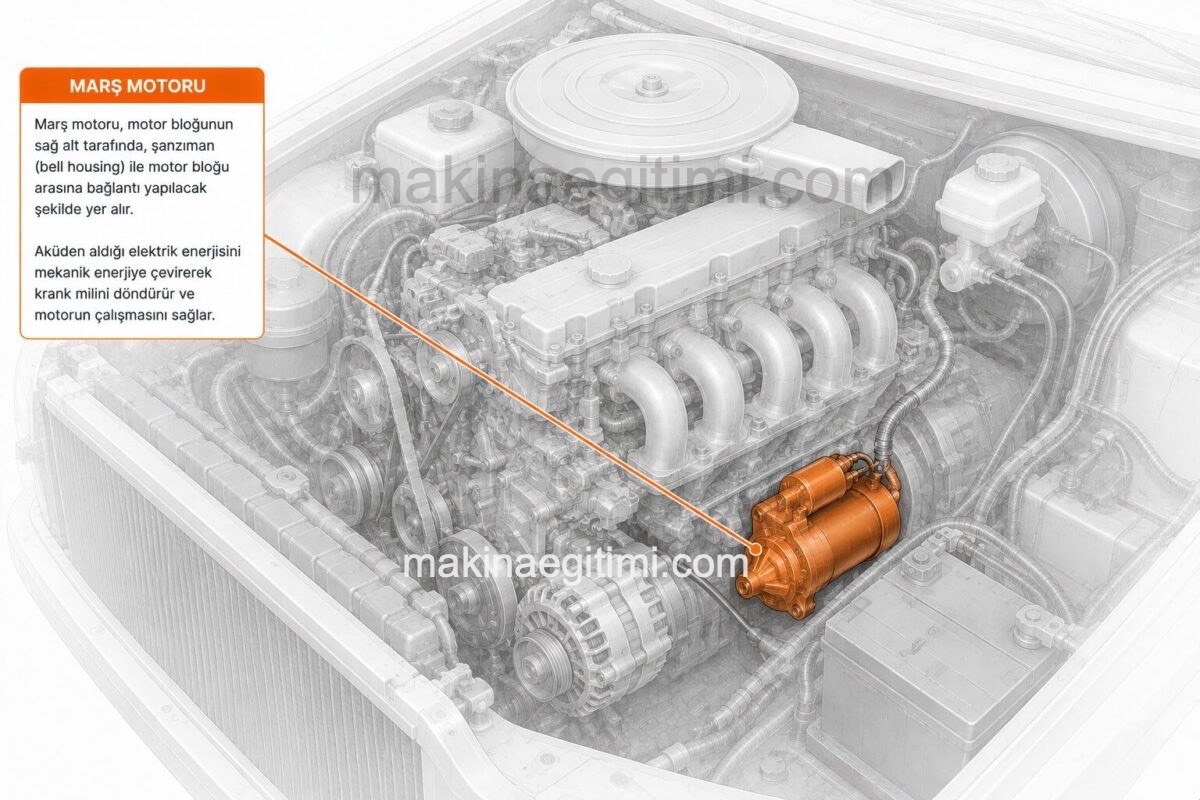
    6. Starter Motor
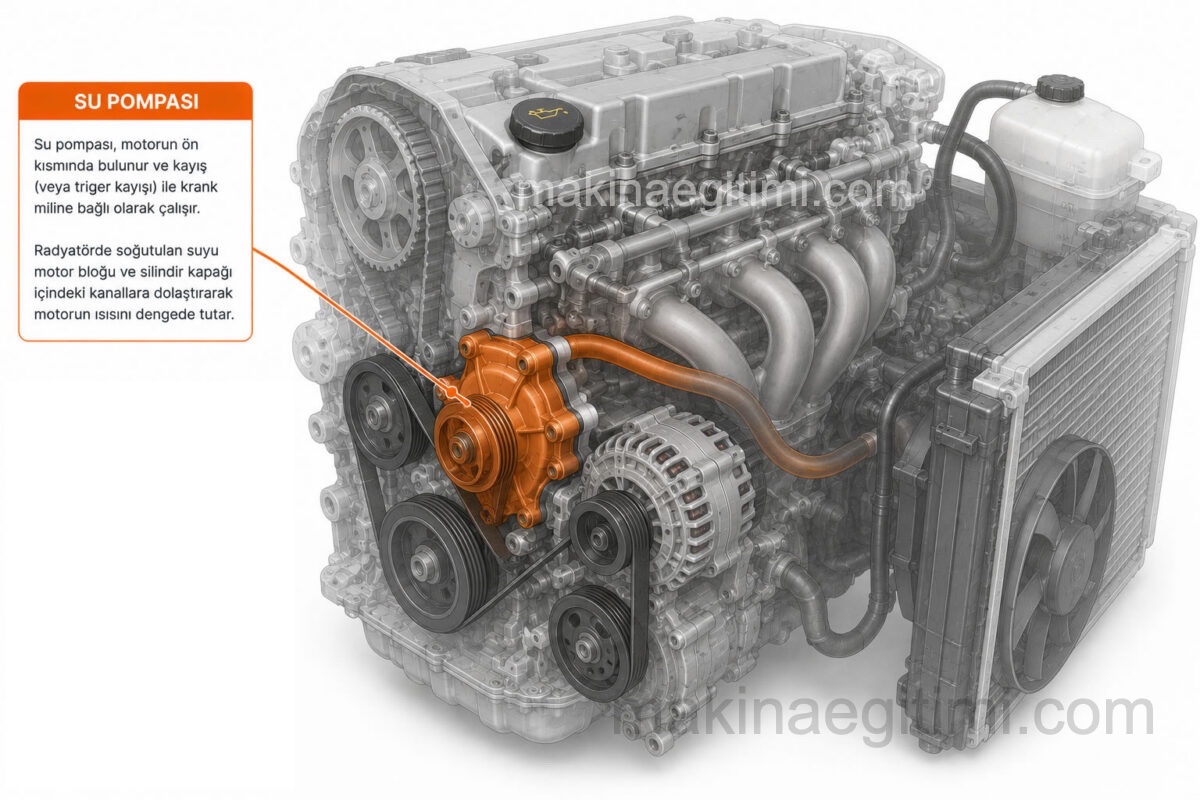
    7. Water Pump
    8. Injection Pump
    9. Fuel Injector
    10. Valves
  • Key Differences Between Diesel and Gasoline Engines
  • Video: Engine Parts and Their Functions
  • Related Questions

Fixed (Stationary) Engine Parts

Cylinder (Engine Block)

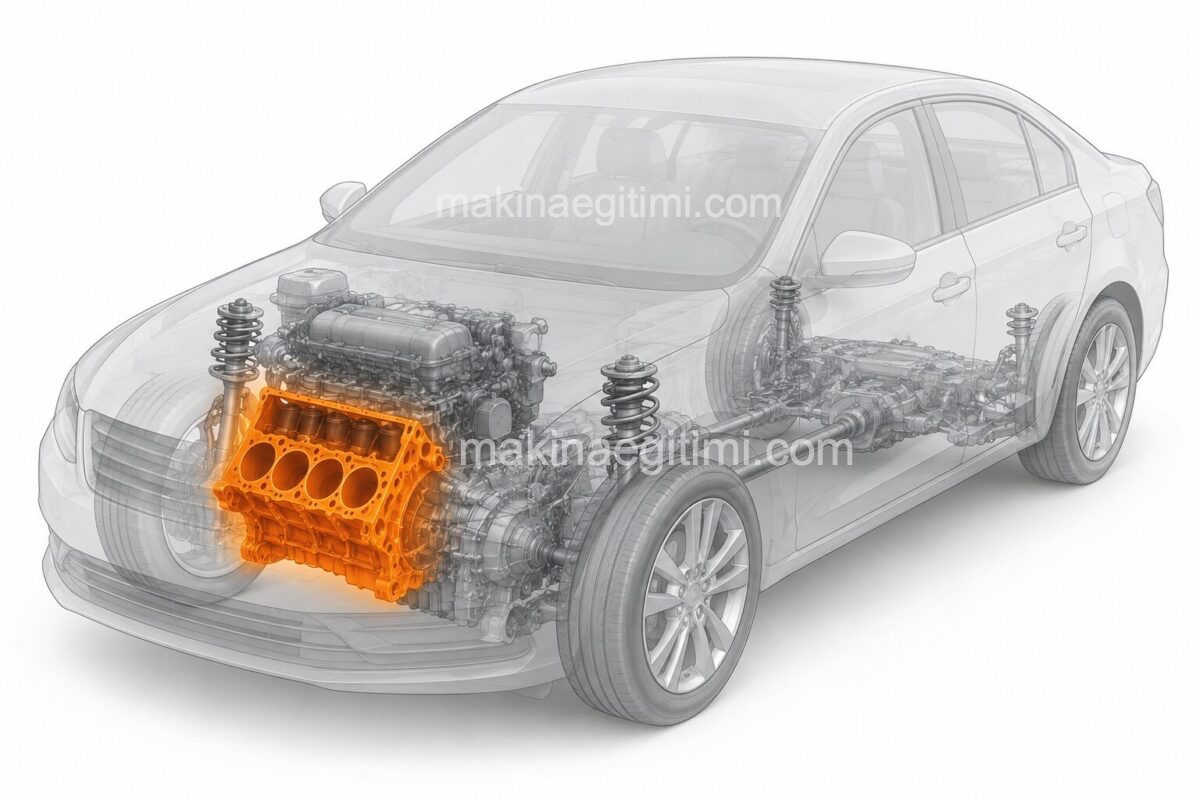
Forms the body of the engine. Besides housing the cylinders, crankshaft, camshaft, and oil pump, it also provides the mounting points for fuel system components, the distributor, oil filter, alternator, and starter motor.

engine parts, engine block
Engine block
location of the engine block in the vehicle
Location of the engine block inside the vehicle

Cylinder Head

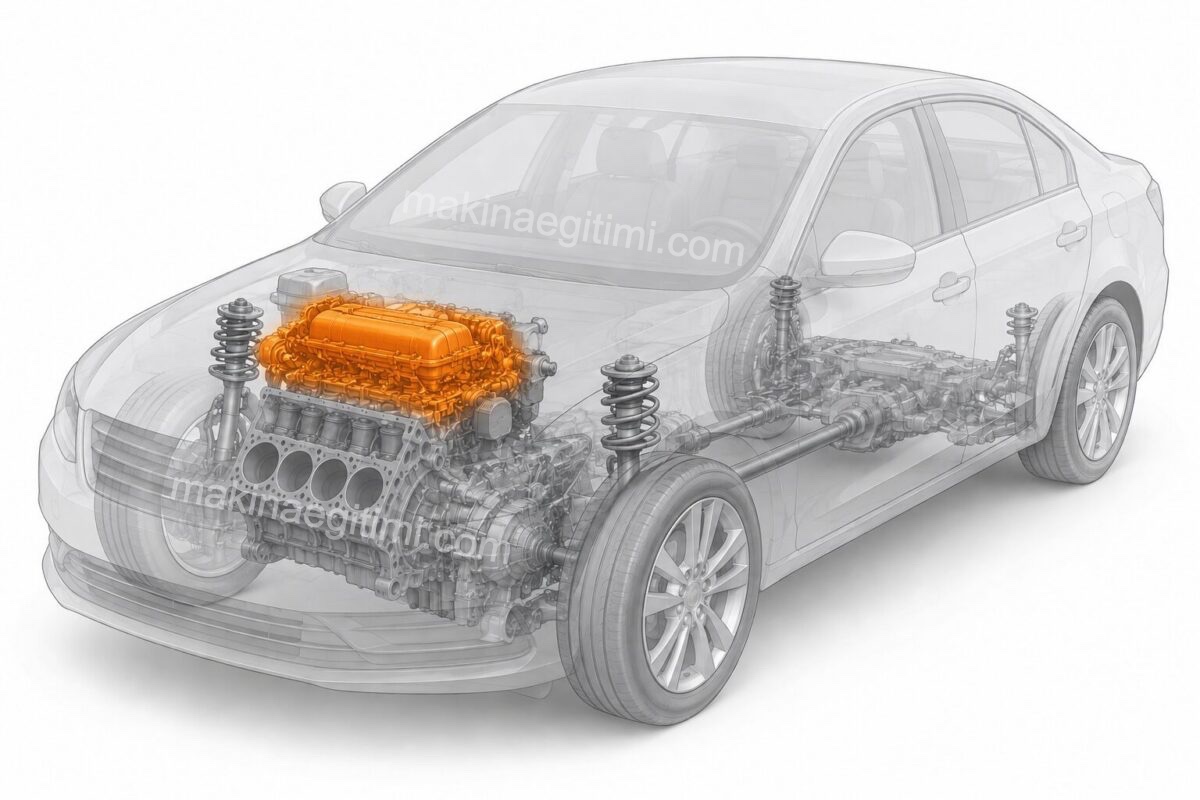
Seals off the top of the cylinder block, forming the combustion chambers. It carries the spark plugs, the injectors on diesel engines, and the valve mechanism. There are water passages around the combustion chambers.

engine parts, cylinder head
Cylinder head
location of the cylinder head inside the vehicle
Location of the cylinder head inside the vehicle

Oil Pan

What does the oil pan do? : A sheet-metal part that seals off the bottom of the cylinder block, protecting the engine. It serves as the reservoir for the engine oil.

engine oil pan
Oil pan
location of the oil pan in the vehicle

Radiator

The radiator’s job: On water-cooled engines, it holds the coolant and helps cool down the coolant that has heated up in the system.

vehicle parts, radiator
Radiator
location of the radiator inside the vehicle

Carburetor (Found Only on Older Gasoline Vehicles)

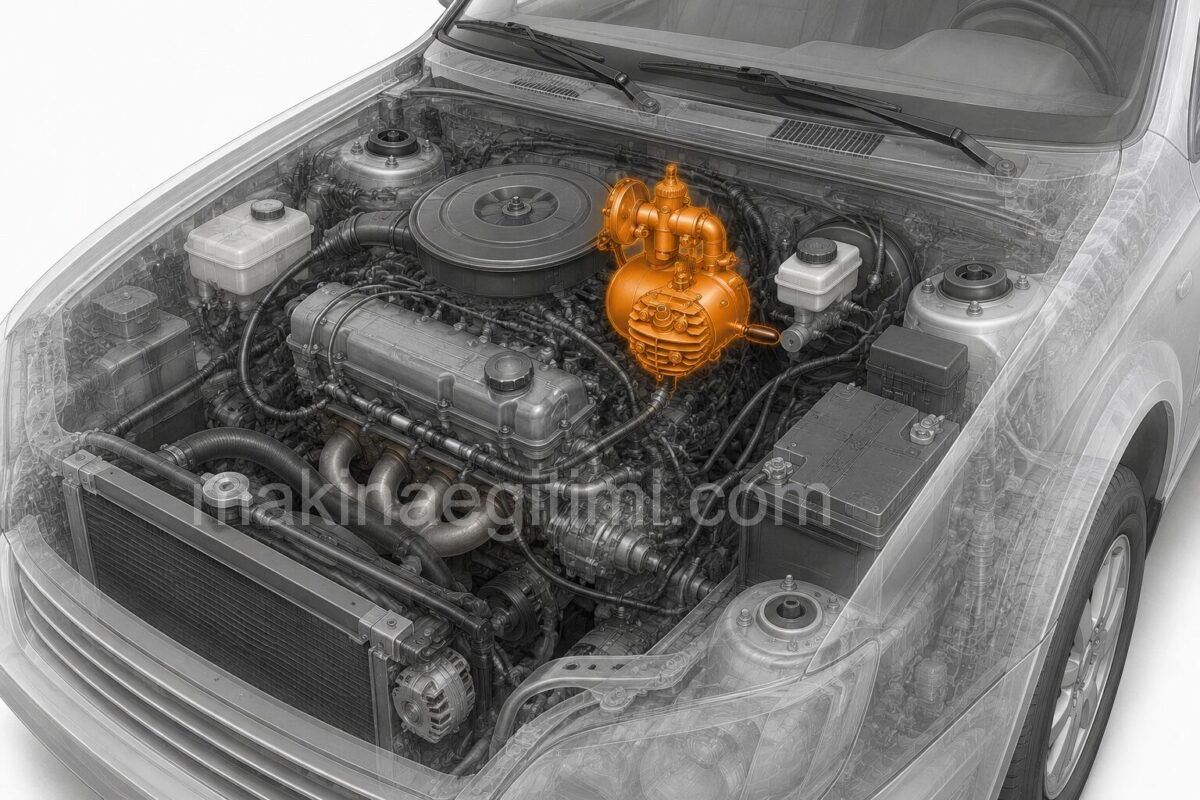
The carburetor is the component that mixes gasoline and air, in vapor form, at roughly a 1/15 (fuel/air) ratio depending on conditions, to obtain the heat energy the engine needs. It’s mounted on the intake manifold.

engine parts, carburetor
Carburetor
location of the carburetor inside the vehicle
Location of the carburetor inside the vehicle

Air Filter

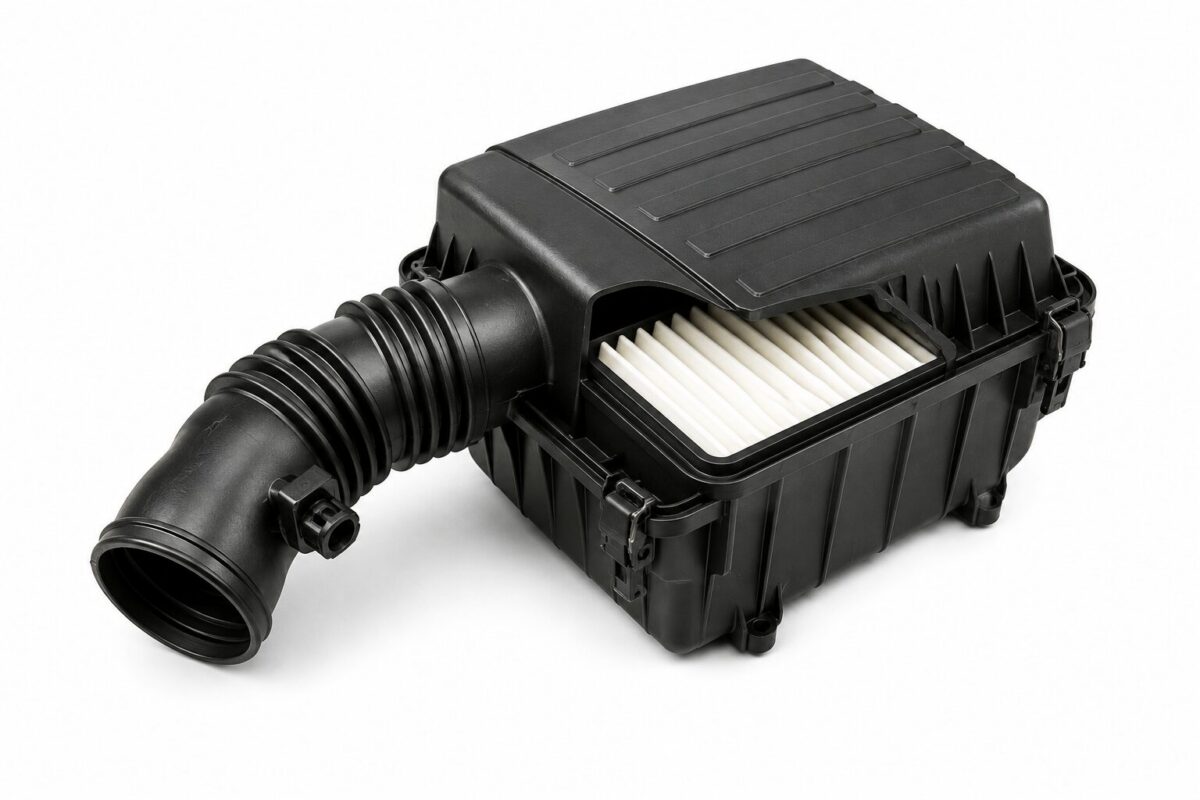
What does the air filter do: The component that cleans the outside air before it enters the engine.
engine air filter
Air Filter
location of the air filter

Manifold

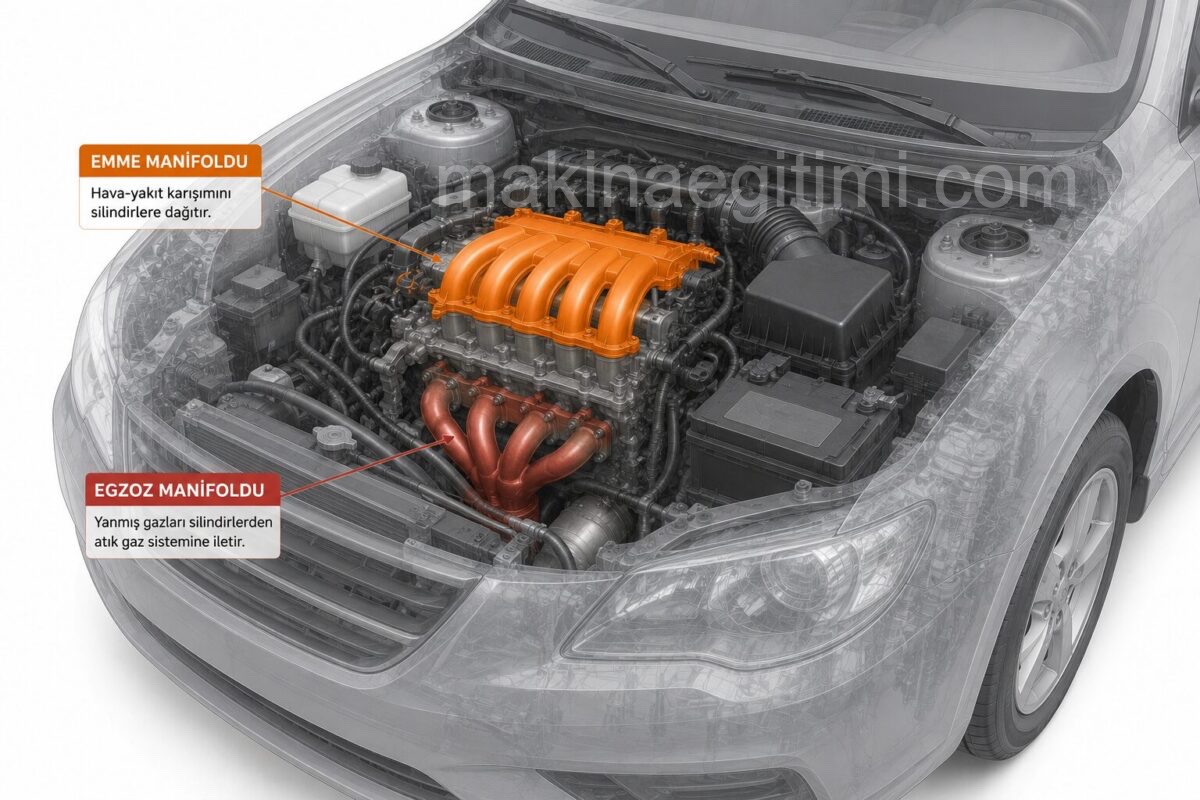
There are two kinds of manifold: intake and exhaust. The intake manifold distributes the fuel-air mixture from the carburetor to the cylinders. The exhaust manifold collects the exhaust gases produced by combustion and sends them to the exhaust pipe.

engine parts, manifold
Manifold
locations of the manifolds inside the vehicle
Locations of the intake and exhaust manifolds

Oil Filter

The oil filter strains out contaminants circulating in the engine oil, keeping the engine lubricated with clean oil. This helps reduce friction and wear between engine parts.

It’s usually located on the bottom or side of the engine block, and is replaced at regular intervals during oil changes.

engine oil filter
Oil filter
engine oil filter and its location in the vehicle
The oil filter’s typical location on the engine (varies by vehicle model)

Ignition Coil (Found Only on Gasoline Vehicles)

What does the ignition coil do : Steps up the 12-volt direct current from the battery to 18,000-25,000 volts.

ignition coil
Ignition coil
location of the ignition coil inside the vehicle

Distributor

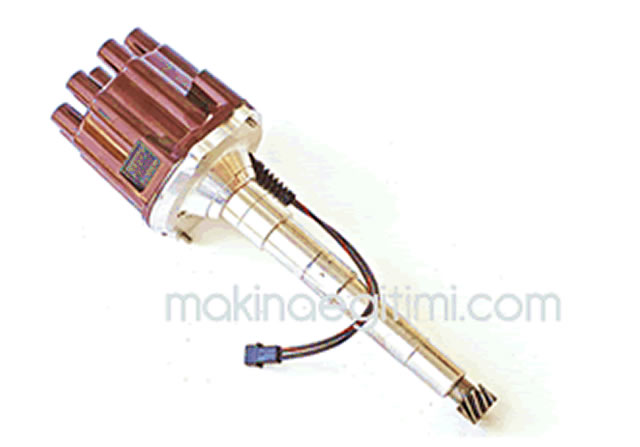
What does the distributor do : Distributes the high voltage coming from the ignition coil to the spark plugs, in firing order.
engine distributor
distributor and its location on the engine

Spark Plugs (Found Only on Gasoline Vehicles)

The spark plug’s job : Ignites the compressed fuel-air mixture in the combustion chamber with a spark.

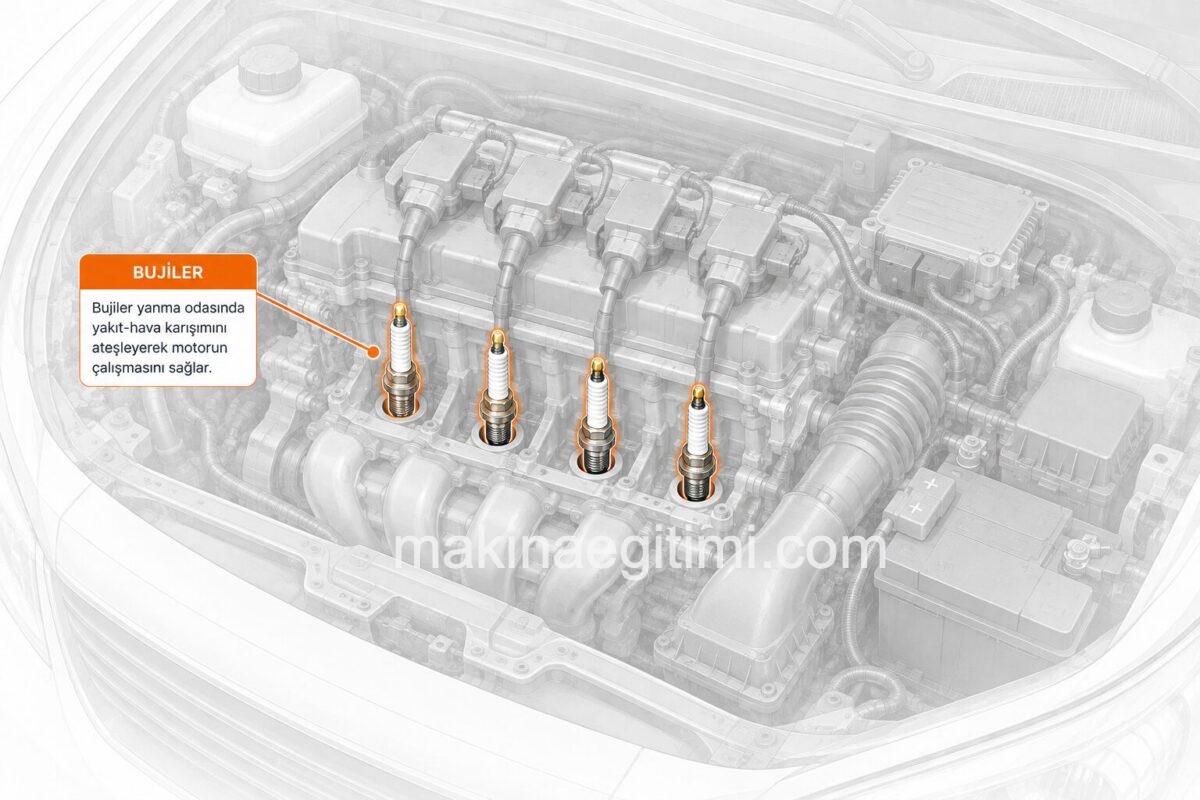
Related Post Buji Arızaları ve Nedenleri
spark plug and its function
Spark plug
location of the spark plugs on the engine

Alternator (Charging Dynamo)

The alternator converts mechanical energy into electrical energy while the engine is running, and supplies the vehicle’s electrical needs.

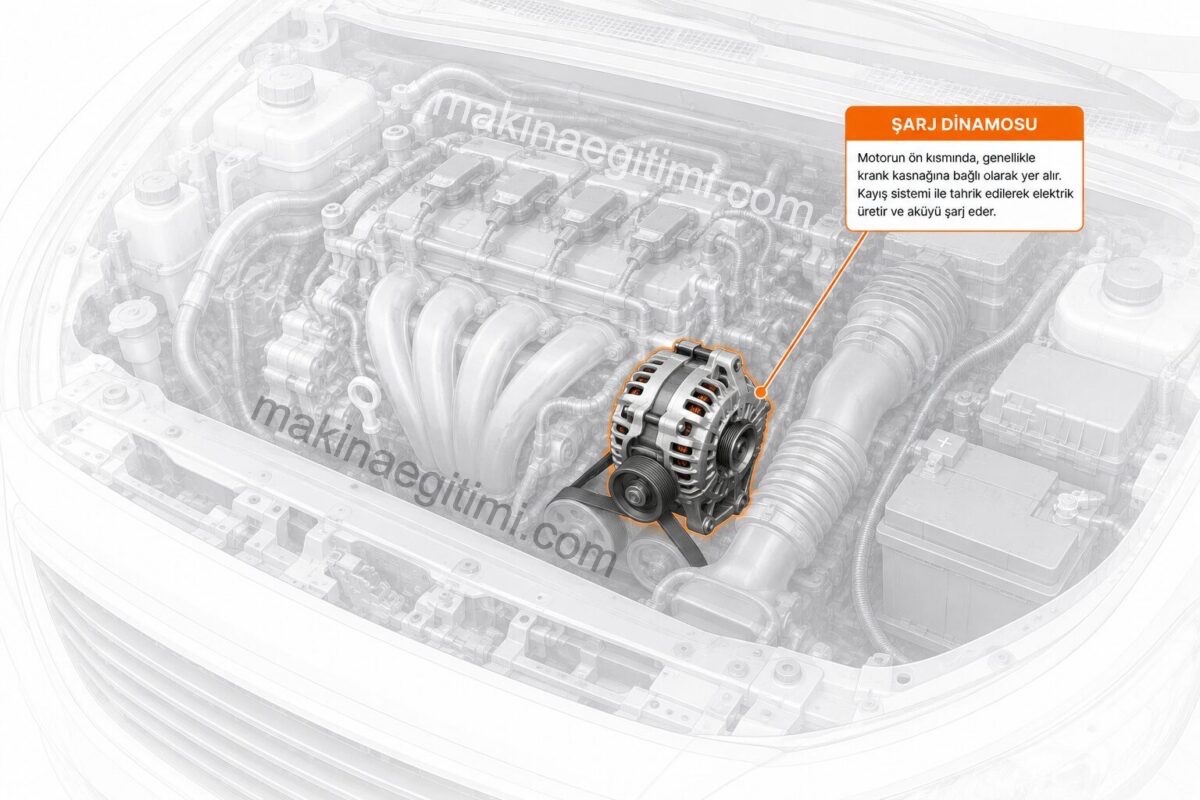
alternator
Alternator
location of the alternator inside the vehicle
Related Post Şarj Dinamosu nedir. Ne işe yarar.

Voltage Regulator

The voltage regulator’s job : regulates the current and voltage produced by the alternator. In modern automobiles it’s usually integrated into the alternator itself.

engine parts, voltage regulator
Voltage regulator
In modern vehicles, the voltage regulator is integrated into the alternator.

Moving Engine Parts

Crankshaft

What the crankshaft does: Converts the vertical motion coming from the pistons, via the connecting rods, into rotary motion. There’s a gear and a pulley at the front end of the crankshaft. The gear drives the camshaft. The pulley drives the water pump and alternator. 

what is a crankshaft and what does it do
location of the crankshaft in the engine block
Location of the crankshaft in the engine

Camshaft

The camshaft is a critically important engine part. Driven by the crankshaft via a timing belt or chain, it controls the opening and closing timing of the engine’s valves. 

camshaft
location of the camshaft on the engine
Related Post Eksantrik mil (Kam Mili) nedir. Ne işe yarar. Nasıl Çalışır?

Pistons

What pistons do: Their movement inside the cylinder produces the engine’s strokes. During the power stroke, the piston transmits the resulting force to the connecting rod.

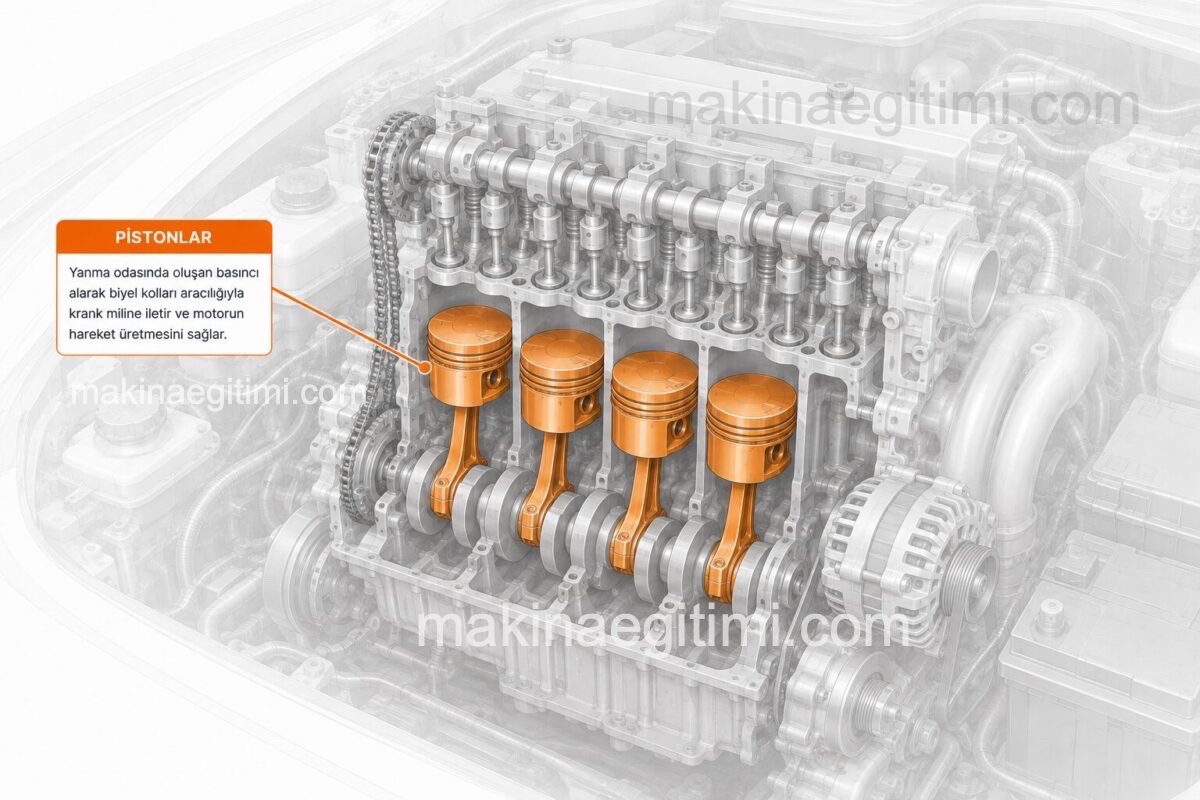
what pistons do in an engine
location of the pistons on the engine

Oil Pump

What the oil pump does: Draws oil from the oil pan and pumps it to all the engine parts that need lubrication.

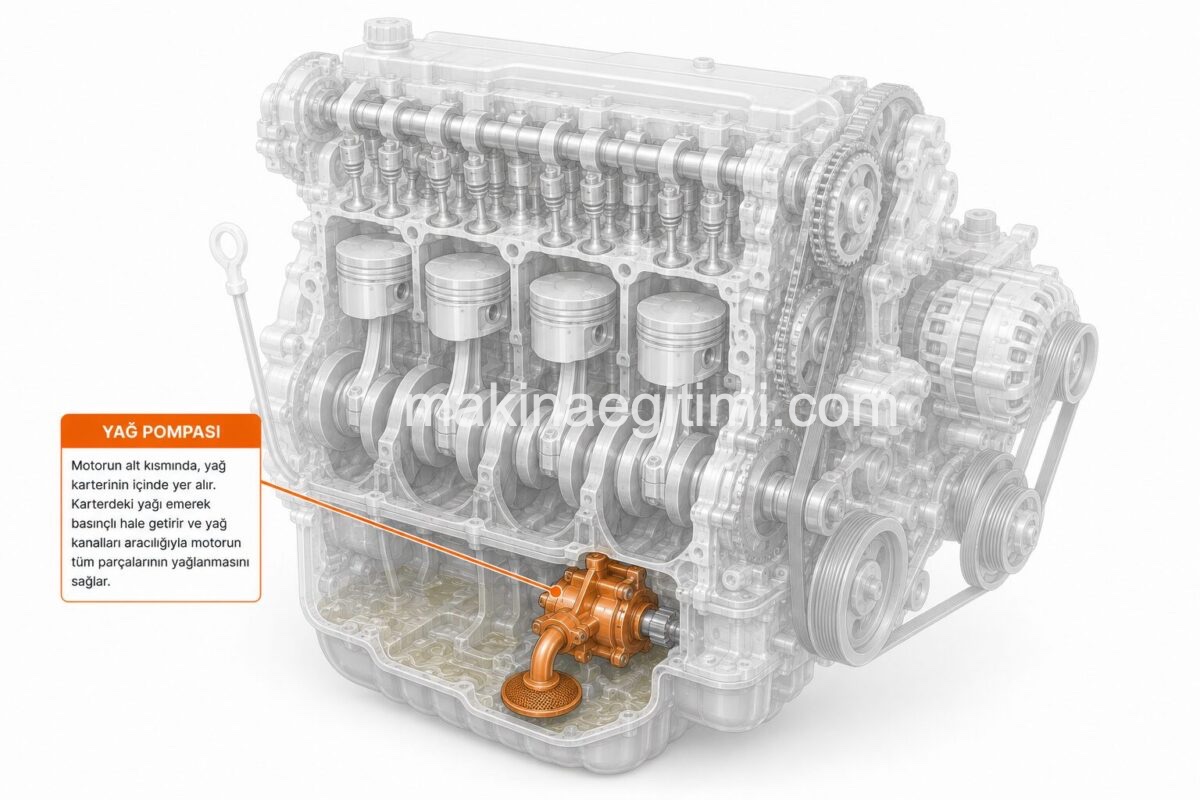
what does an oil pump do
Related Post Motor Yağ Pompası Çeşitleri
location of the oil pump on the engine
Related Post Motor yağlama sistemi ve Kısımları

Fuel Pump

The fuel pump draws fuel from the fuel tank and sends it to the fuel system and engine at a specific pressure. On most modern gasoline and diesel vehicles, there’s an electric pump integrated into the tank unit, inside the fuel tank itself.

engine parts, fuel pump
location of the fuel pump inside the vehicle
Related Post Araç Yakıt Sistemi Bileşenleri ve Görevleri

Starter Motor

What the starter motor does : A DC electric motor that gives the engine its initial turning motion.

vehicle engine parts, starter motor
Related Post Marş Motoru Nedir, Ne İşe Yarar?
starter motor and its location inside the vehicle

Water Pump

What the water pump does: Circulates the coolant through the engine.

what a water pump does
location of the water pump on the engine

Injection Pump (Found Especially on Diesel Vehicles)

What the injection pump does : A characteristic component of classic diesel engines. Pumps diesel fuel to the injectors under high pressure, in firing order.
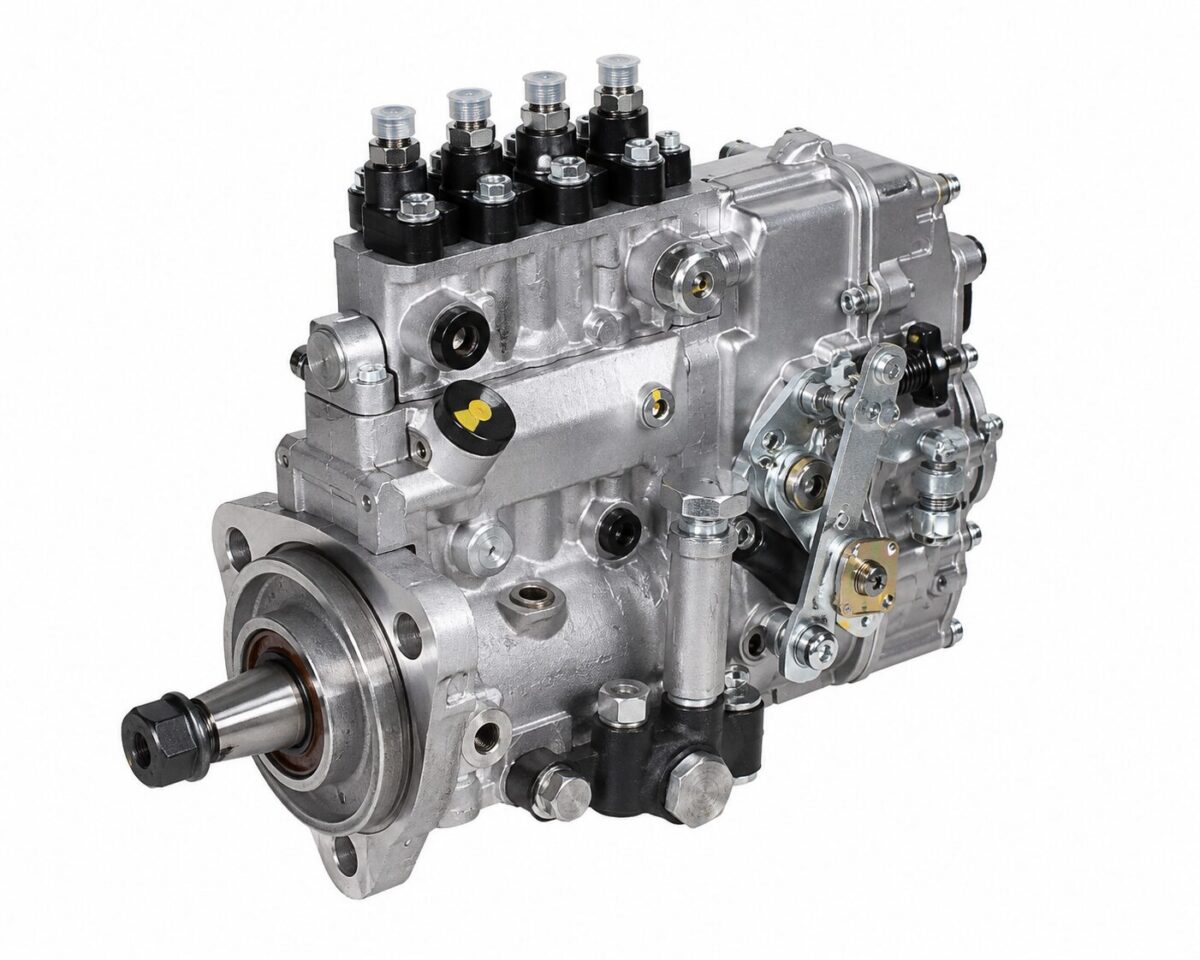
engine injection pump
injection pump and its location on the engine

Fuel Injector

The fuel injector sprays fuel into the combustion chamber under high pressure as extremely fine droplets. This lets the fuel mix better with the air and burn more efficiently.

fuel injector
fuel injector and its location on the engine

Valves

Valves: Intake valves let just air (on diesel engines) or the fuel-air mixture (on gasoline engines) enter the cylinder. Exhaust valves let the burned gases exit the cylinder.

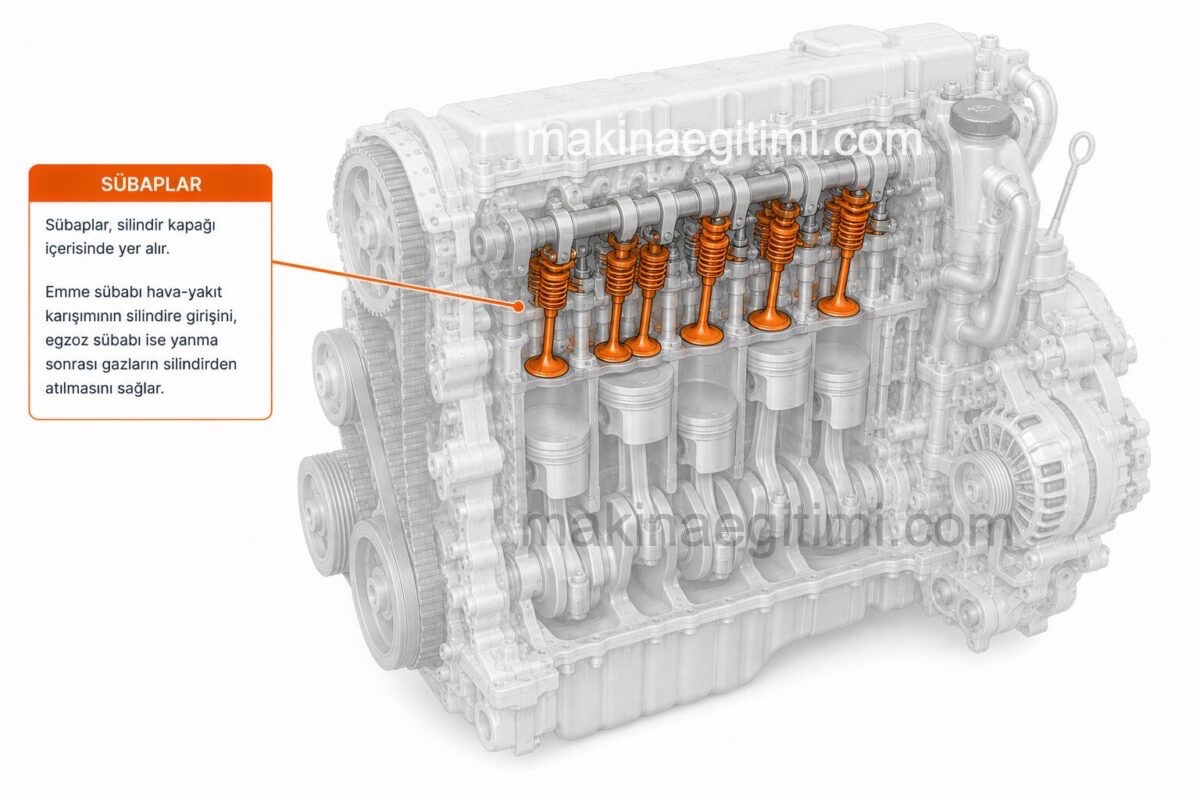
valve
valves and their locations on the engine

Key Differences Between Diesel and Gasoline Engines

You may have noticed that some of the parts we described above are only used on gasoline vehicles. That’s because of differences in how diesel and gasoline engines actually operate.

In a gasoline engine

The system works roughly like this:

Battery → Ignition coil → Spark plug → Spark → Combustion of the fuel-air mixture

The ignition coil steps up the battery’s roughly 12 V to a much higher voltage. This high voltage creates a spark at the spark plug and ignites the mixture.

In a diesel engine

In a diesel engine, the principle is different:

Air → Compression → Very high temperature → Diesel fuel injection → Spontaneous ignition

The piston compresses the air by a very high ratio. The temperature of the compressed air rises to the point where diesel fuel can ignite. The injector then sprays diesel fuel at high pressure, and the fuel ignites on its own in the hot, compressed air. As a result:

In a diesel engine → No ignition coil → No spark plugs → No spark.

There is, however, one very important part here:
Glow plug : Diesel engines may have glow plugs. The glow plug helps warm the combustion chamber, especially on a cold start. However;

The glow plug does not ignite the fuel with a spark.

It only helps the combustion chamber reach a sufficient temperature at the start. Once the engine is running, normal diesel combustion continues thanks to the heat generated by compression.

The Role of Fixed Parts


Fixed parts like the engine block and cylinder head form the main structural framework that carries the moving components.

Synchronization of Moving Parts


Moving parts like the piston, crankshaft, and camshaft operate in sync via the timing system.

Linear-to-Rotary Conversion


The connecting rod is the critical link that converts the piston’s linear motion into the crankshaft’s rotary motion.

Video: Engine Parts and Their Functions

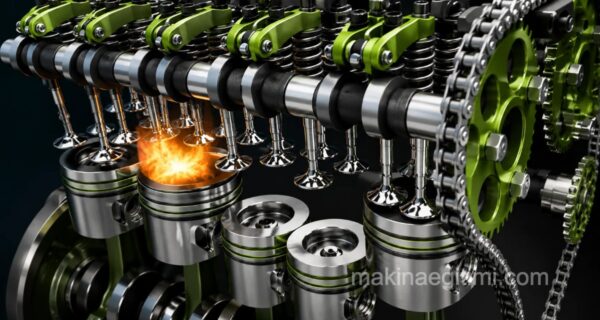
In the animation below, you can get a better sense of the placement and role of some engine parts (crankshaft, pistons, spark plugs, valves, timing belt, and camshaft). 

Related Questions

The carburetor is a fixed part responsible for mixing air and fuel in the correct ratio before it enters the engine, and it’s mounted to the engine block. Unlike moving parts, it stays in place and only regulates the flow of air and fuel passing through it.

The coil steps up the battery’s low voltage to a voltage high enough to create a spark at the spark plug. Without this high voltage, the spark plug couldn’t produce a spark strong enough to ignite the fuel-air mixture.


Related Posts

Motor Yağı Seçimi Nasıl yapılır How to Choose Engine Oil Vehicle drivetrain components and operation diagram Vehicle Drivetrain: Components, How It Works, and Common Failures what is a coilover What Is a Coilover (Coil Spring Shock Absorber)? What Is It For? coilover suspension advantages and disadvantages Coilover (Coil Spring Shock Absorber) Advantages and Disadvantages What Is a Camshaft, How Does It Work What Is a Camshaft? What Does It Do? How Does It Work? Elektrikli Araçlarda Neden Tek Vites Kullanılır? Why Do Electric Cars Use a Single Gear? tensile force Forces That Affect Engine Parts scooter Properties and Advantages of Scooters
Share. Facebook Twitter WhatsApp Tumblr Email Telegram Copy Link

Leave A Reply Cancel Reply


Removing Stains from a Leather Couch
When Fiction Becomes Reality: 6 Novels That Predicted the Future
  • Contact
  • Terms of Service
  • Privacy & Cookie Policy

Type above and press Enter to search. Press Esc to cancel.