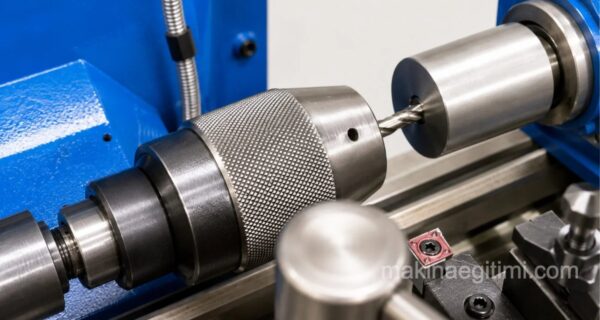
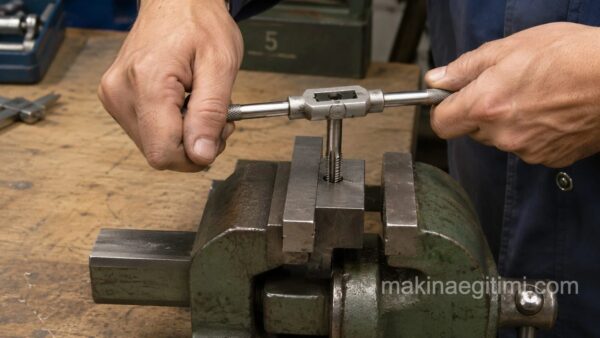
Machine technology manufacturing operations, drill bit sharpening topic. Drill sharpening process steps. Drill sharpening mistakes.
Drill Bit Sharpening
Although high-speed steel drills are more commonly used in manufacturing work, smaller-diameter ones (1/4 inch or smaller) are still made of carbon steel. Industry no longer uses carbon-steel drills because they are softer and not durable enough for serial production.
If the cutting tip turns bluish, this means there is a loss of hardness in this section. In this case, the drill should be shortened until this soft section is gone. This isn’t just extra work while drilling — it’s also wasting the drill. Therefore, plenty of coolant should be used. Sharpen a high-speed steel drill dry, don’t dip it in water to cool it, otherwise cracks will form at the cutting edges.
Drill Bit Sharpening Machine
In workshops where a large number of drilling operations are performed, it’s economical to have a drill sharpening machine. A drill of any size, length, and diameter can be easily set up on this machine in a short time.
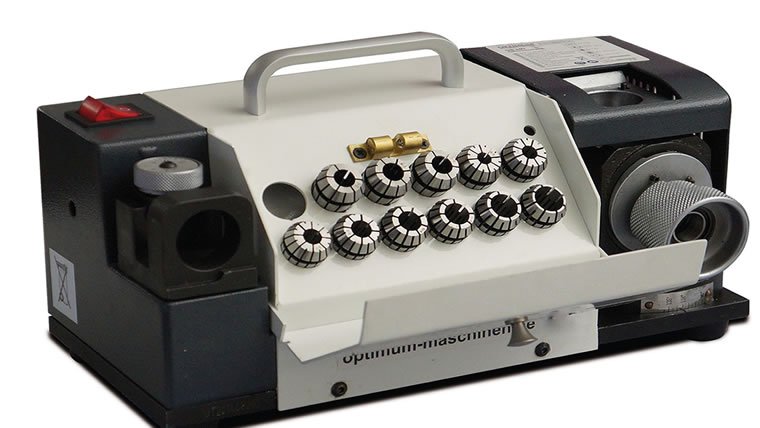
This machine can sharpen a drill so that the cutting edges are of equal length, can form the desired angles with the axis, and can give the correct clearance angle. However, in many cases, sharpening drills by hand is recommended. Sometimes it’s even considered necessary. For this reason, a fitter is expected to be able to do this job well and quickly. Before covering how a drill is sharpened, let’s take a look at what the ideal point angles of a drill should be for healthy drilling.
Drill Sharpening Angles
a) Point Angle
For drilling steels, the drill’s point is normally sharpened to 118°.

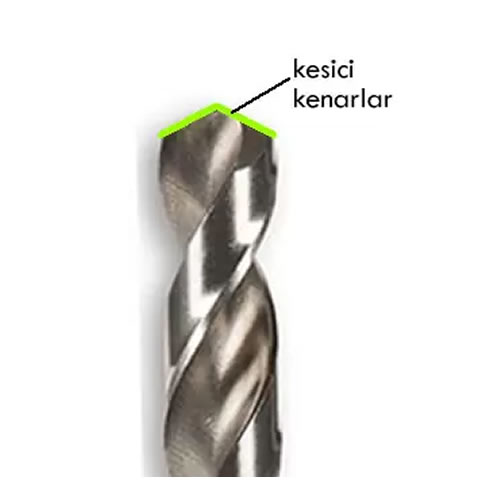
b) Chisel Edge Angle
When sharpening a drill, the chisel edge connecting the cutting edges must be given an inclination of 55°.
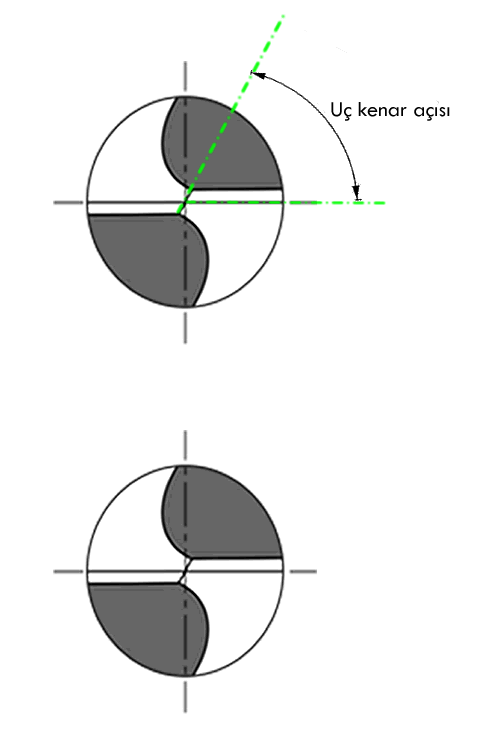

c) Clearance Angle:
When sharpening a drill, the cutting surfaces should be given a clearance angle of about 8°-12° toward the back (12°-15° for aluminum, 12° for brass, 12°-15° for soft and medium-hard steels, 7°-12° for hard steels). For good cutting, the drill must have a certain amount of lip clearance. Lip clearance is a clearance given to the cutting edges that allows them to bite easily into the metal being cut.

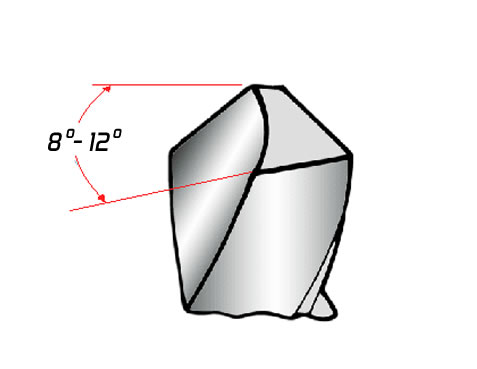
The drill’s point angle, chisel edge angle, and clearance angle are the angles we create through the sharpening process.

Drill Sharpening Mistakes
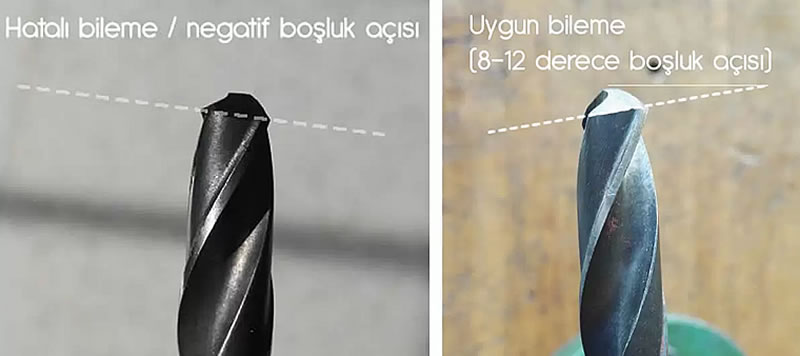
Mistake: Zero Clearance Angle
Such a surface only rubs against the material it touches. Since the heel is in the same plane as the cutting edge, it prevents the drill from cutting into the material. If there isn’t a sufficient clearance angle, the drill will break because it can’t cut the material.

Mistake: Too Much or Too Little Clearance Angle
The drill shouldn’t be given too much clearance angle, since this thins the cutting edge so much it can’t conduct away the heat generated. Too much clearance angle also weakens the cutting edge, since it doesn’t leave enough material behind the cutting edge to support it.
With too little clearance angle, if too little clearance angle is given during drill sharpening, the drill won’t cut well and will either strain and break, or wobble and enlarge the hole diameter.
Mistake: Cutting Edges Not Equal and Symmetrical
Since the point won’t be centered, the drill will produce a hole larger than its diameter. Even if the cutting edges are equal in length, if they aren’t at a symmetrical angle to the drill axis (59° + 59° = 118°), the drill will run out and work under strain.

A: Cutting edges are not equal and not symmetrical. B: Cutting edges are equal but not symmetrical.
How Is a Drill Sharpened?

Hold the drill as shown in the figure above (hand positions can be changed if it allows more comfortable working)

Adjust the drill’s axis so it makes an angle of 59°, approximately 60°, with the face of the grinding wheel. (Half the point angle = 118°/2 = 59°) This provides the correct angle between the cutting edges.
Theoretically, if the cutting edges are sharpened to make 59 degrees with the axis, the drill will give good results for most materials. For this reason, the drill should be held so it makes a 59-degree angle with the face of the wheel.

Checking the drill’s point angle (image above)
To measure the relative length and angles of the cutting edges, there are many measuring and checking tools and gauges made by various companies. Where a special gauge isn’t available, a protractor can be used to check the angles.

Some machinists find and apply practical solutions on this topic. As seen in the example above. Since the outer angles of a hex nut are 60 degrees, a pair of nuts can also serve as a practical gauge.

the drill’s first contact with the wheel should be at the cutting edge. (figure above)
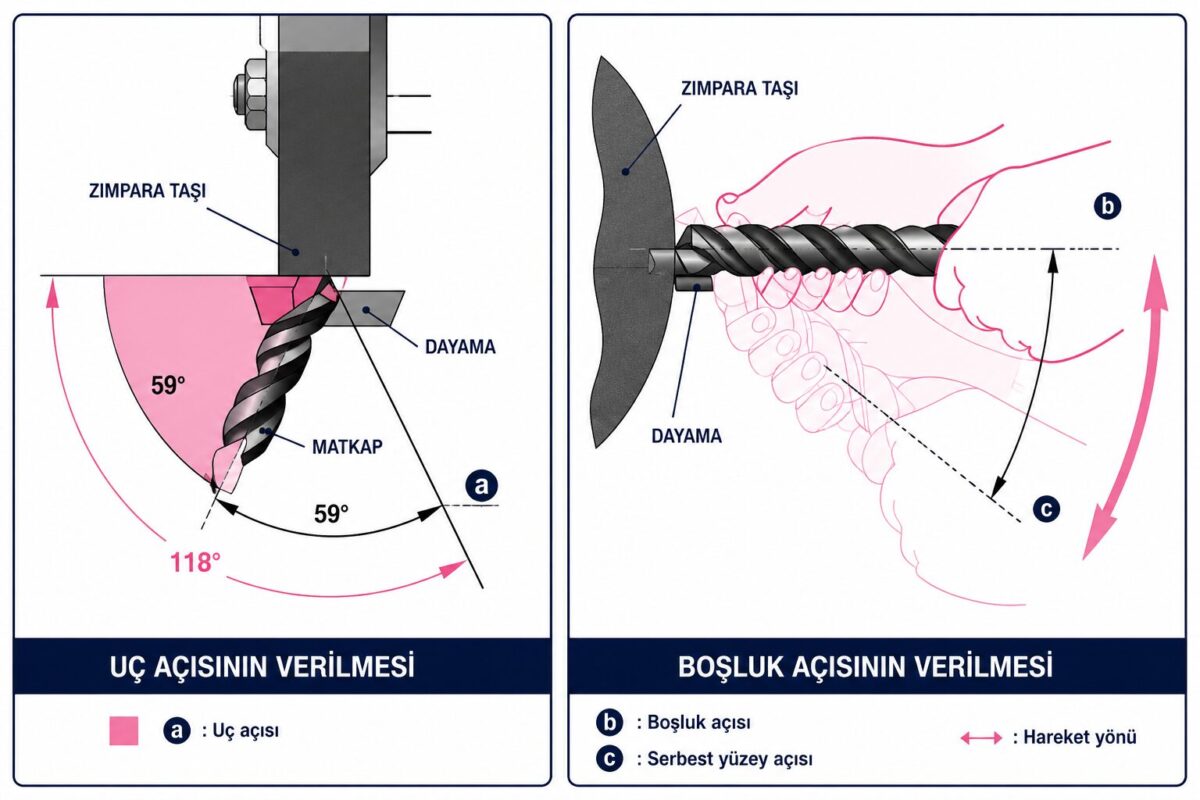
Hold the edge to be sharpened parallel to the top surface of the horizontal rest.
Press the drill against the wheel while holding the right hand (the drill’s handle) slightly lower than the left hand. Holding the handle slightly lower gives the clearance angle. Sharpen the other edge the same way.
How to Sharpen a Drill, Video
If the right hand is held too low, an excessive clearance angle is given. If it isn’t held low enough, a clearance angle may not be given at all, and this clearance angle can even become negative.
Don’t grind one edge excessively before moving to the other. When you finish sharpening both edges similarly; both should be the same length and should make the same angles with the drill’s axis.
Don’t rotate the drill while sharpening it; hold it as if hinged in the left hand and rock it slightly to provide the clearance, then grind the heel section.
Sharpen from the cutting edge toward the heel. Sharpening should never be done from the heel toward the cutting edge.
Drill Point Angles for Different Materials
The point angles of twist drills are generally 118°, but this varies from 60° to 150° for different materials
150° for very hard materials
125° for heat-treated steels and forged materials
118° for ordinary work
90° for soft cast iron
60° for wood, hard rubber, bakelite, and fiber
CLICK HERE FOR THE RELATED ONLINE MINI TEST
Related Posts