Close Menu
  • MAKİNELER ve İMALAT
    • Tools & Equipment
    • Computer-Aided Drawing
    • CAD/CAM Education
    • CNC Machine Programming
    • Casting Technologies
    • Electrical & Electronics Technologies
    • Hydraulics & Pneumatics
    • Manufacturing Processes
    • Manufacturing Technologies
    • Occupational Safety
    • Mold & Die Design
    • Solid Modeling
    • Welding Technology
    • Machine Elements
    • Mechanical Trade Drawing
    • Materials Science
    • Automotive & Vehicle Technologies
    • Robotics Technologies
    • Health Technologies
    • Defense & Aerospace Technologies
    • Descriptive Geometry
    • Technical Drawing
    • Software & Hardware Technologies
    • Innovative Manufacturing Methods
  • TEKNOLOJİ ve YAŞAM
    • OTOMOBİLLER ve TAŞIT
      • Vehicle & Engine Knowledge
      • Safe Driving
      • Sürüş Destek Sistemleri
    • Genel Kültür
      • Movies & TV Shows
      • Görsel ve Grafik Sanat
      • Books & Literature
      • Music
      • Sports
      • History
      • History of Technology
    • GÜNDELİK YAŞAM TEKNOLOJİLERİ
    • Hobbies & Entertainment
    • Internet Technologies
    • Health
    • Mobile Technologies
Makine Eğitimi
  • Machines & Manufacturing
    Machine Elements
    Hydraulics & Pneumatics
    Technical Drawing
    Computer-Aided Design & Manufacturing
    Basic Manufacturing Processes
    Manufacturing Processes
    Industry Technologies
    Other Technical Courses
    Motion & Power Transmission
    Simple Machines
    Chains & Sprockets
    Shafts & Journals
    Gears
    Cams
    Couplings
    Belts & Pulleys
    Springs
    Bearings
    Keys
    Fastening Joining
    Retaining Rings
    Screws, Bolts & Nuts
    Cotter Pins
    Flanges
    Welding
    Rivets
    Pins & Bolts
    Washers
    Calculators
    Gear Ratio Calculator
    Spring Constant Calculator
    Belt Pulley Ratio Calculator
    Other Machine Elements
    Slides & Linear Guides
    Brakes
    Flywheels
    Clamps
    Shock Absorbers
    Gaskets & O-Rings
    Seals & Sealing Elements
    Hydraulics
    Introduction to Hydraulics & Principles
    Hydraulic Systems & Applications
    Accumulators
    Filters
    Motors
    Pumps
    Valves
    Pneumatics
    Introduction to Pneumatics & Principles
    Pneumatic Systems & Applications
    Pneumatic Circuit Components
    Valves
    Cylinders
    Silencers
    Motors
    Compressors
    Dryers
    Conditioning Units
    Common Topics & Maintenance
    Hydraulic & Pneumatic Maintenance
    Study Notes, Exams & Tests
    Technical Drawing
    Introduction to Technical Drawing
    Geometric Drawings
    Perspective & Projection
    Orthographic Views
    Dimensioning
    Sectioning
    Assembly & Detail Drawings
    Tolerances
    Surface Finish Symbols
    Mechanical Engineering Drawing
    Screws, Bolts & Nuts
    Pulley Drawings
    Gear Drawings
    Shafts & Journals
    Bearing Drawings
    Pins & Bolts
    Spring Drawings
    Welds in Technical Drawing
    Washers
    Cotter Pins
    Technical Drawing Exercises
    Mechanical Drawing Exercises
    Gear Exercises
    View Extraction Exercises
    Pulley Exercises
    Pin & Bolt Exercises
    Threaded Fastening Exercises
    Descriptive Geometry
    Computer-Aided Drawing
    AutoCAD Drawing Lessons
    Computer-Aided Drawing Exams
    Solid Modeling & Animation
    Solid Model Drawing Files
    Solid Model Assembly Examples
    Solid Model Drawing Lessons
    3D CAD Software Reviews
    Solid Modeling Exercises
    CNC Programming
    CAM
    Measurement & Inspection
    Dial Indicators
    Calipers
    Gauges
    Micrometers
    Materials Science
    Steels
    Cast Iron
    Aluminum
    Plastics
    Material Testing & Hardness Measurement
    Occupational Safety
    Workshop Safety
    Safety When Working With Electricity
    Machine Safety Rules
    Hand Operations
    Filing
    Marking
    Cutting Operations
    Reaming
    Tapping
    Threading With a Die
    Drill Bit Sharpening
    Working With Machines
    Basic Turning Operations
    Basic Milling Operations
    Shaper Machine
    Machining
    Turning
    Milling
    Grinding
    Innovative Manufacturing Methods
    EDM (Electrical Discharge Machining)
    Laser Machining
    Waterjet Machining
    3D Printing
    3D Scanners
    Welding
    Rolling
    Casting
    Mold & Die Design
    Mechanical & Hydraulic Presses
    Blanking & Piercing Dies
    Bending Dies
    Drawing Dies
    Plastic Injection Molds
    Extrusion Dies
    Compound Dies
    Progressive Dies
    Blow Molds
    Spinning Dies
    Spray Molds
    Manufacturing of Machine Parts
    Automotive & Vehicle Technologies
    Motor Vehicle Manufacturing
    Raw Material Production
    History of Technology
    Health & Medical Technologies
    Defense & Aerospace
    Robotics Technologies
    Software & Hardware Technologies
    Mechanics - Strength of Materials
    Physics Topics
  • Technology & Life
    Hobbies & Entertainment
    Sports
    Music
    Vehicle & Engine Knowledge
    Vehicle Maintenance & Repair
    Safe Driving
    Driver Assistance Systems
    History
    Movies & TV Shows
    Books & Literature
    Computers & Internet
    Computer Tips
    Software Reviews
    Hardware & Peripherals
    Practical & Safe Internet Use
    Visual & Graphic Art
    Mobile Technologies
    Travel
    Science
    Health
    First Aid Knowledge
    Everyday Technologies
Makine Eğitimi
Home»Vehicle & Engine Knowledge»What Is the ABS Braking System, What Does It Do, How Does It Work
30 August 2026

What Is the ABS Braking System, What Does It Do, How Does It Work

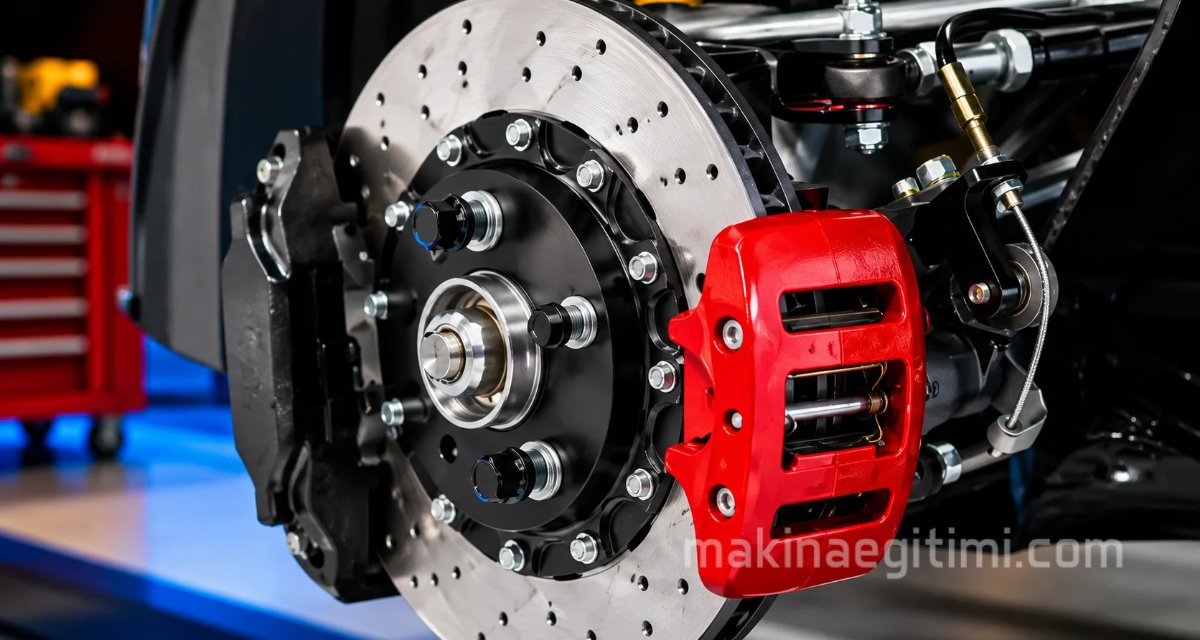
ABS braking system

In this article we’ll answer questions like what is ABS braking and what does ABS do. We’ll cover the components of the ABS system and explain, with illustrations, how ABS works.

  • What is ABS?
  • What Does ABS Do
  • How Does the ABS Braking System Work?
  • Advantages of the ABS Braking System
  • Related Questions

What is ABS?

ABS stands for “Anti-Lock Braking System” — it’s a type of active safety system in the vehicle. It’s also known as an anti-skid braking system.

Anti-lock brakes were first tested on railcars and aircraft in the 1950s. The ABS braking system was used in the 1960s on the world’s first four-wheel-drive Formula 1 car.

What Does ABS Do

Have you ever had to slam the brakes while driving to avoid a sudden collision? It can be frightening, but it’s something almost everyone encounters at some point.

When a fast-moving vehicle brakes suddenly, there’s a chance of ‘wheel lock’. Wheel lock means that instead of slowing down gradually, the affected wheel stops suddenly. Because of wheel lock, the driver loses control of the vehicle and it goes off the road. To prevent this and stop wheel lock, ABS releases and reapplies the brakes in millisecond intervals. This way, ABS prevents the vehicle from skidding.

what does ABS do

Whenever a driver suddenly brakes a fast-moving vehicle, there’s always a chance of ‘wheel lock’. Wheel lock means that instead of slowing down gradually, the affected wheel stops suddenly. Because of wheel lock, the driver loses control of the vehicle and it goes off the road. To prevent this and stop wheel lock, ABS releases and reapplies the brakes. It does this repeatedly, in millisecond intervals. This way, thanks to the ABS braking system, the vehicle is prevented from skidding.

Thanks to anti-lock braking systems (ABS), today’s vehicles are safer than ever. ABS is now standard on nearly all new cars and motorcycles, and it helps with traction control and lets the driver maintain steering authority while braking.

Multiple Brake Pulses Per Second


The ABS system can toggle brake pressure on and off 15-20 times per second to prevent wheel lock.

Preserves Steering Control


By preventing wheel lock during sudden braking, ABS keeps the driver from losing steering control.

In Use Since 1978


Modern electronic ABS systems first entered series production in Mercedes-Benz vehicles in 1978.

How Does the ABS Braking System Work?

Not all ABS systems are identical, but generally, when the driver brakes hard, sensors on the wheels help monitor when the brakes are being applied, and then release and reapply the brakes to prevent lock-up. This is basically how the ABS braking system’s logic works. Now that we know what ABS braking is and what ABS does, we can look at how the ABS braking system works.

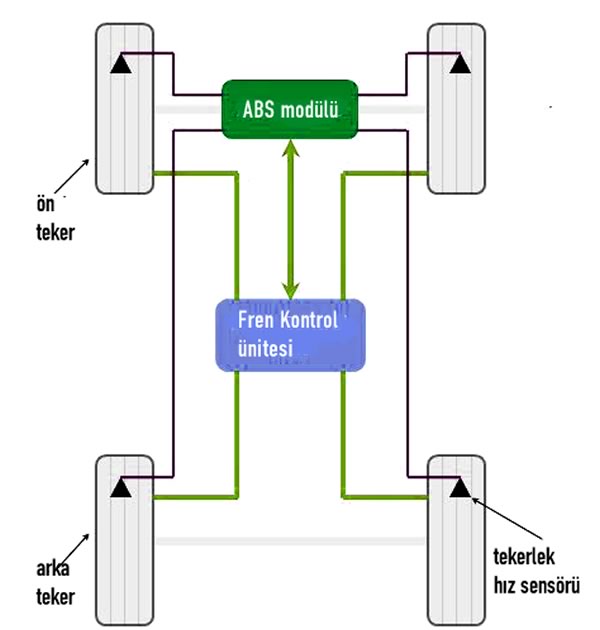
At this point you might be wondering, “how do ABS brakes work?” To better understand the answer to this question, let’s examine the main components of anti-lock braking systems.

Components of the ABS braking system:

  1. Wheel speed sensors:
  2. ABS control module
  3. Brake control unit
  4. Valves
  5. Hydraulic pump:
how the ABS braking system works

After receiving a very low speed signal from the wheel speed sensor, the ABS module instructs the brake control unit to reduce the braking force on that wheel. Reducing braking force means reducing the hydraulic pressure in the brake line acting on that wheel. The Brake Control Unit lowers the line pressure using the valves in the system. As braking force decreases, the wheel starts spinning faster again, which prevents wheel lock. Since the wheel doesn’t lock up, the vehicle’s steerability remains intact. This means the vehicle continues to respond to driver input without spinning out. Once the Brake Control Unit returns to normal operation, a pump also restores the hydraulic pressure in the brake line to its original level.

Advantages of the ABS Braking System

  1. ABS preserves the vehicle’s steerability and stability during panic braking.
  2. It reduces braking distance by 10% or more, especially on wet surfaces.
advantages and benefits of the ABS braking system
behavior of a vehicle with and without ABS during sudden braking

When driving in extreme weather conditions, it’s important not to assume ABS will behave exactly as it does under normal conditions. Always be careful — drive slowly, leave more space for the vehicle to stop, and pay close attention to how your vehicle responds to the road.

In this article, we tried to explain what ABS is and how ABS brakes work. We gave details about the parts and components of the ABS braking system. We tried to explain how a vehicle behaves during sudden braking with and without ABS brakes. Wishing you happy days and safe driving until our next article.

Related Questions

A locked wheel stops rolling and starts sliding; a sliding tire provides much less steering and braking force than a rolling tire. This causes the driver to lose both braking distance and steering control.

This rapid on-off toggling keeps the wheel right at the point just before full lock-up — the point at which the maximum braking force is achieved. This way the driver gets strong braking without losing steering control.

Related Posts

modern agricultural machinery State-of-the-Art High-Efficiency Agricultural Machinery how the adaptive braking system works What Is the Adaptive Braking System. How Does It Work LED headlight technology in vehicles Features and Advantages of LED Headlights robots and automobile production Robotic Welding Applications on the Automotive Assembly Line Fuel Cell Electric Vehicles (FCEV) Fuel Cell Electric Vehicles (FCEV) Bi-xenon headlight versus halogen headlight Bi-Xenon Headlights and Their Advantages what is an ivt transmission Hyundai IVT – Intelligent Variable Transmission Technology robots and automobile production How Are Robotic Welding Cells Used in Automotive Production?
Share. Facebook Twitter WhatsApp Tumblr Email Telegram Copy Link

Leave A Reply Cancel Reply


The Birth and Golden Age of Jazz: From New Orleans to the World
The Fall of Constantinople: A City’s Downfall, an Era’s Dawn
  • Contact
  • Terms of Service
  • Privacy & Cookie Policy

Type above and press Enter to search. Press Esc to cancel.