

In this article, we’ll look at what a diesel particulate filter is and what it does. If you’re curious about the purpose and function of a diesel particulate filter, keep reading.
What Is a Diesel Particulate Filter
The component that filters the black particulates formed by combustion in diesel vehicles and present in the exhaust gas is called a diesel particulate filter.
The Diesel Particulate Filter’s Function
The diesel particulate filter’s function is to clean the exhaust gas of particulates, reducing exhaust particulate emissions. A diesel particulate filter is only found in diesel vehicles.

Why the Diesel Particulate Filter Became Necessary
In diesel vehicles, especially during sudden acceleration when the accelerator pedal is pressed hard, that is, when the engine has a rich mixture (excess fuel-low air), a lot of particulates are released from the exhaust. These particulates are actually carbon particles that didn’t get time to burn in the combustion chamber.
A diesel particulate filter’s construction takes the form of a metal cylindrical-elliptical housing. Inside the particulate filter is a block with a ceramic honeycomb structure impregnated with precious metals.
Although structurally similar to a catalytic converter’s honeycomb block, the channels in the particulate filter’s block are open at one end and closed at the other.

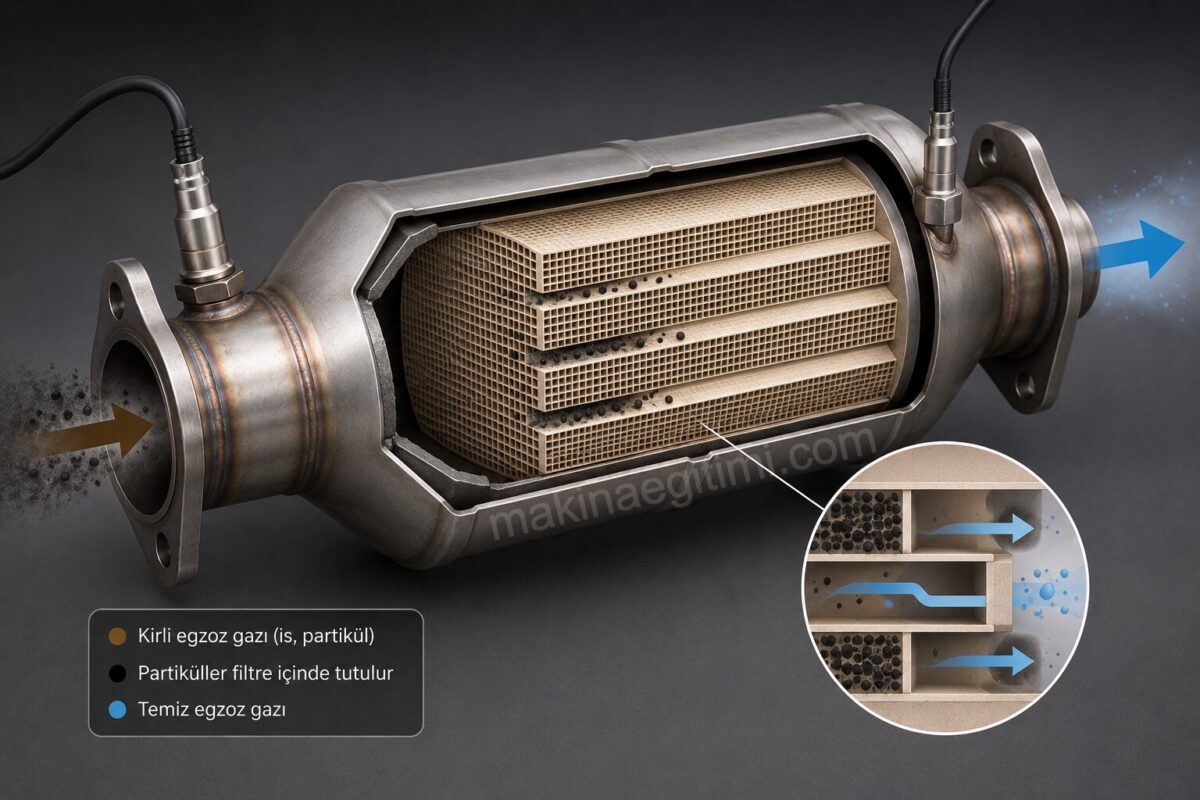
NOx and particulate emissions from diesel engines are a greater threat to the environment. To reduce this impact, automotive engineers developed the DPF to comply with the stricter Euro-6 emission standard. The term DPF stands for Diesel Particulate Filter. It’s used in diesel engines that comply with Euro-6 emission standards.
Soot Capture Rate
DPF filters can capture approximately 85-100% of the soot particles in exhaust gas.
Regeneration Process
The DPF regularly goes through a high-temperature process called “regeneration” to burn off and clean out accumulated soot.
Euro 5/6 Standard Requirement
The DPF has become mandatory in diesel vehicles to meet the Euro 5 and Euro 6 emission standards.
What Does a Diesel Particulate Filter Do
Manufacturers use the diesel particulate filter to filter, store, and burn the soot particles produced by diesel combustion.
To reduce emissions from diesel vehicles, diesel particulate filters capture and store exhaust soot, which needs to be periodically burned off to renew the filter. This renewal process burns off the excess soot accumulated in the filter, preventing harmful exhaust emissions and the black smoke you commonly see from diesel vehicles during acceleration.
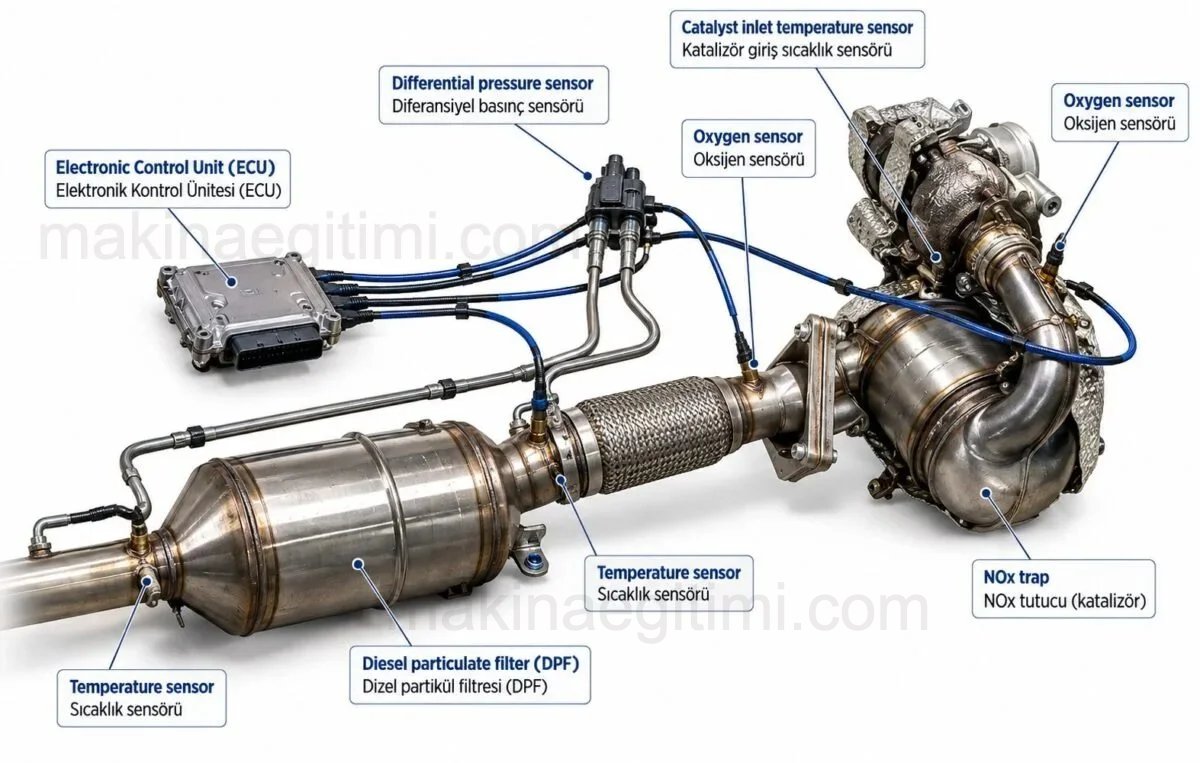
Diesel particulate filters work by capturing soot particles from the engine exhaust and preventing them from reaching the environment. The particulate filter is designed to capture and hold solid particles until they’re oxidized, or burned off within the DPF itself, through a process called regeneration.
In this article, we looked at what a diesel particulate filter found in diesel vehicles is and what it does. What can happen if the diesel particulate filter fills up. If you’re wondering what to do when you encounter a diesel particulate filter warning on your vehicle’s instrument panel, see the related articles below.
Related Questions
The way diesel engines combust fuel produces more soot and carbon particles than gasoline engines. This filter was developed specifically for diesel engines to capture these particles.
In a catalytic converter, gas passes freely through the channel and is chemically cleaned. In a particulate filter, the goal is to physically capture solid particles; the channel structure with one end closed forces the gas to filter through the wall before it can exit through a neighboring open channel.
Related Posts
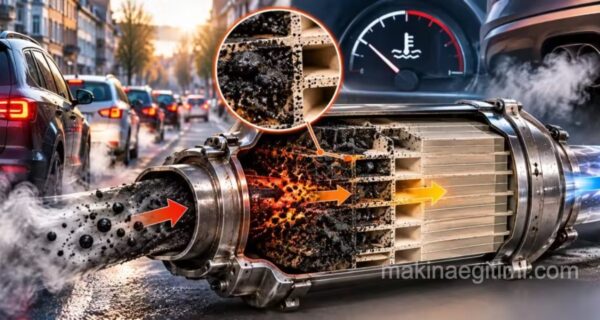 Diesel DPF Problems Explained: Why Short Trips Kill Your Particulate Filter
 What Is a Diesel Particulate Filter Fault. How Is It Detected
 What the Markings on a Car Tire Mean
 What Is a Clutch? How Does It Work? Failures and What Drivers Should Know
 The Biggest and Craziest Engines of All Time
 What Is a Coilover (Coil Spring Shock Absorber)? What Is It For?
 What Is a Camshaft? What Does It Do? How Does It Work?
 Parts of the Engine, Illustrated Explanation