

This article covers engine parts and their functions, with pictures. We’ll look at the parts of the engine and what each one does. This engine parts topic is part of driving school lesson notes and will also be useful for driving test preparation. Here are our topics:
Fixed (Stationary) Engine Parts
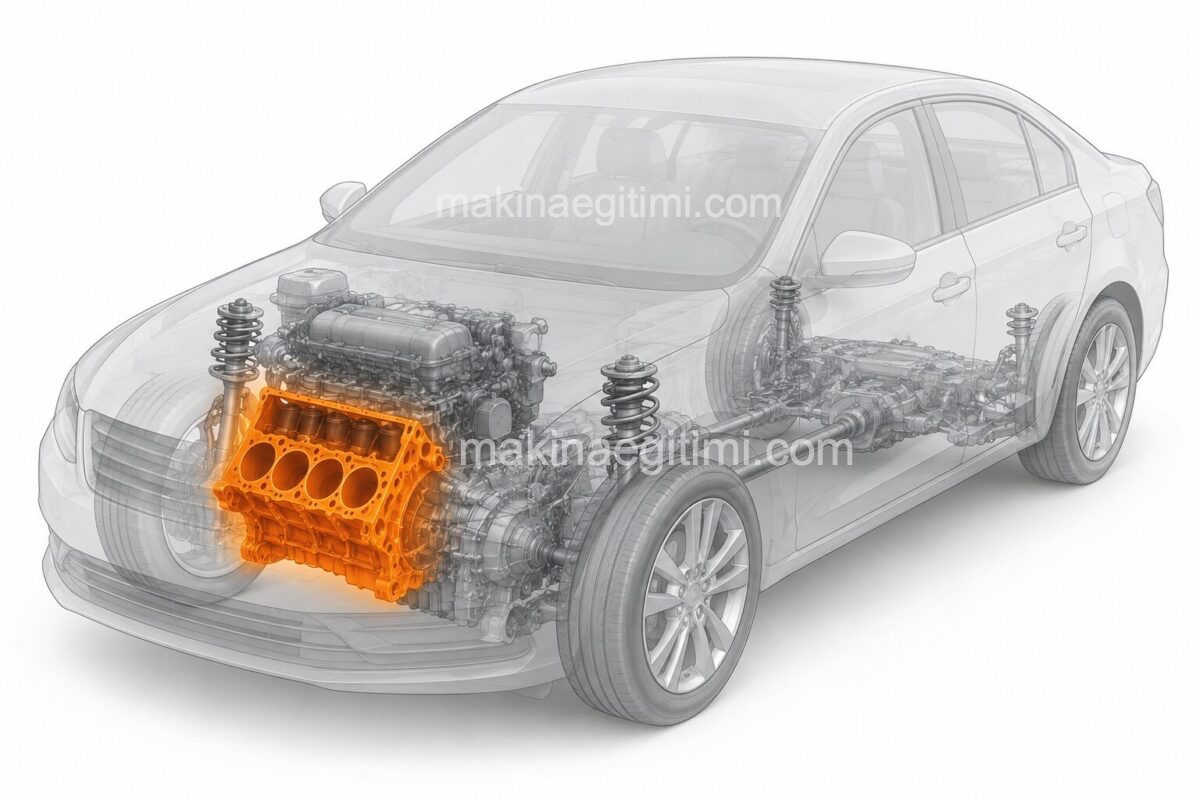
Cylinder (Engine Block)
Forms the body of the engine. Besides housing the cylinders, crankshaft, camshaft, and oil pump, it also provides the mounting points for fuel system components, the distributor, oil filter, alternator, and starter motor.

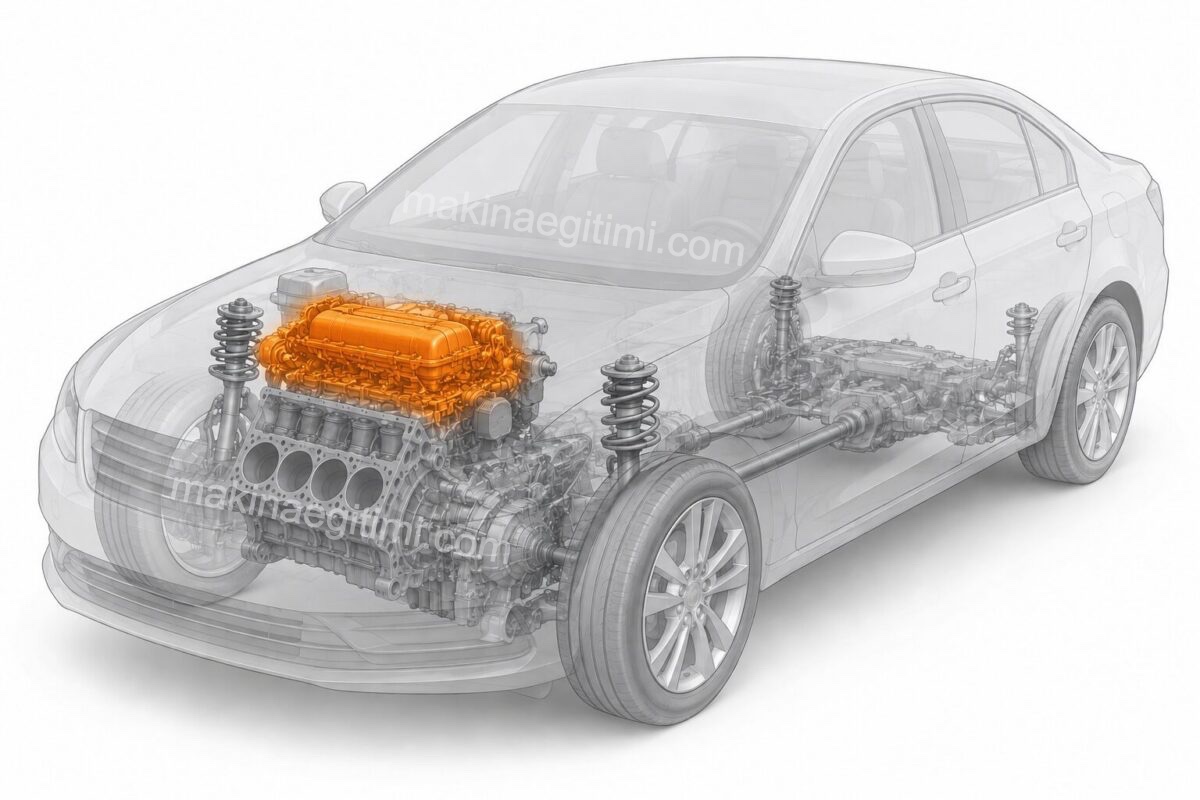
Cylinder Head
Seals off the top of the cylinder block, forming the combustion chambers. It carries the spark plugs, the injectors on diesel engines, and the valve mechanism. There are water passages around the combustion chambers.

Oil Pan
What does the oil pan do? : A sheet-metal part that seals off the bottom of the cylinder block, protecting the engine. It serves as the reservoir for the engine oil.


Radiator
The radiator’s job: On water-cooled engines, it holds the coolant and helps cool down the coolant that has heated up in the system.


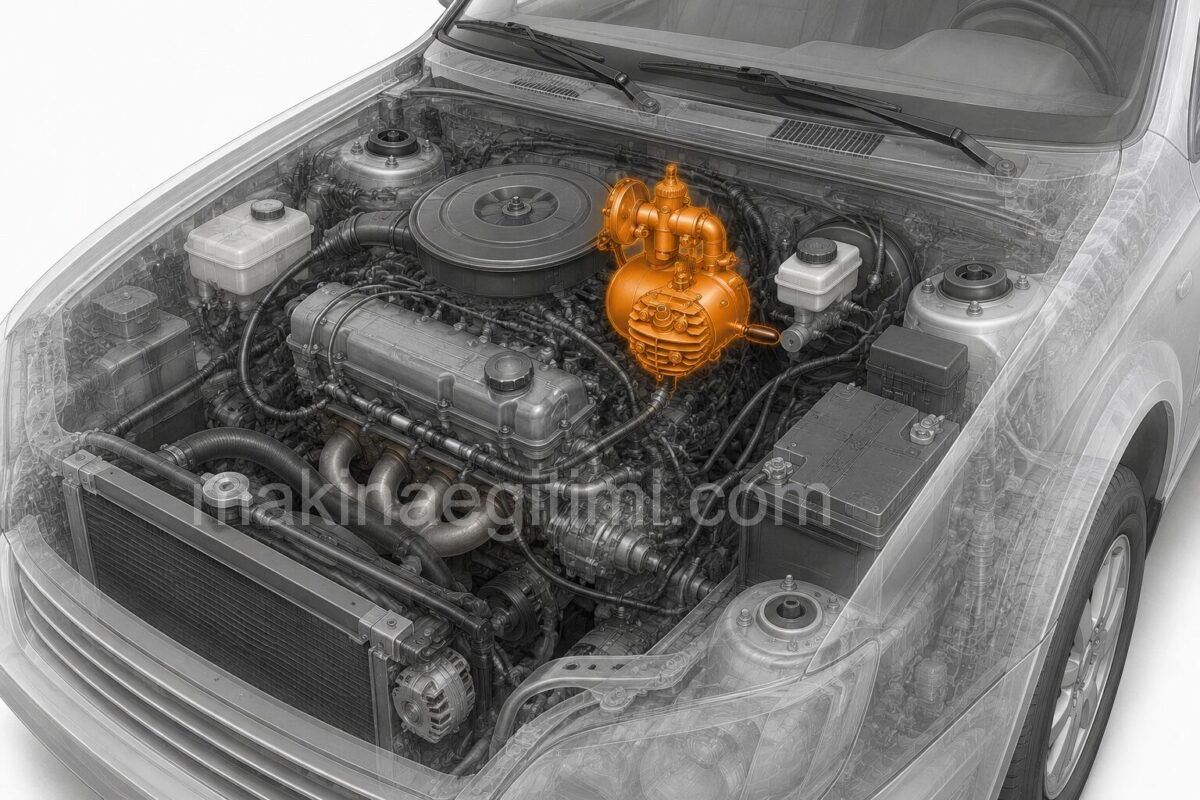
Carburetor (Found Only on Older Gasoline Vehicles)
The carburetor is the component that mixes gasoline and air, in vapor form, at roughly a 1/15 (fuel/air) ratio depending on conditions, to obtain the heat energy the engine needs. It’s mounted on the intake manifold.

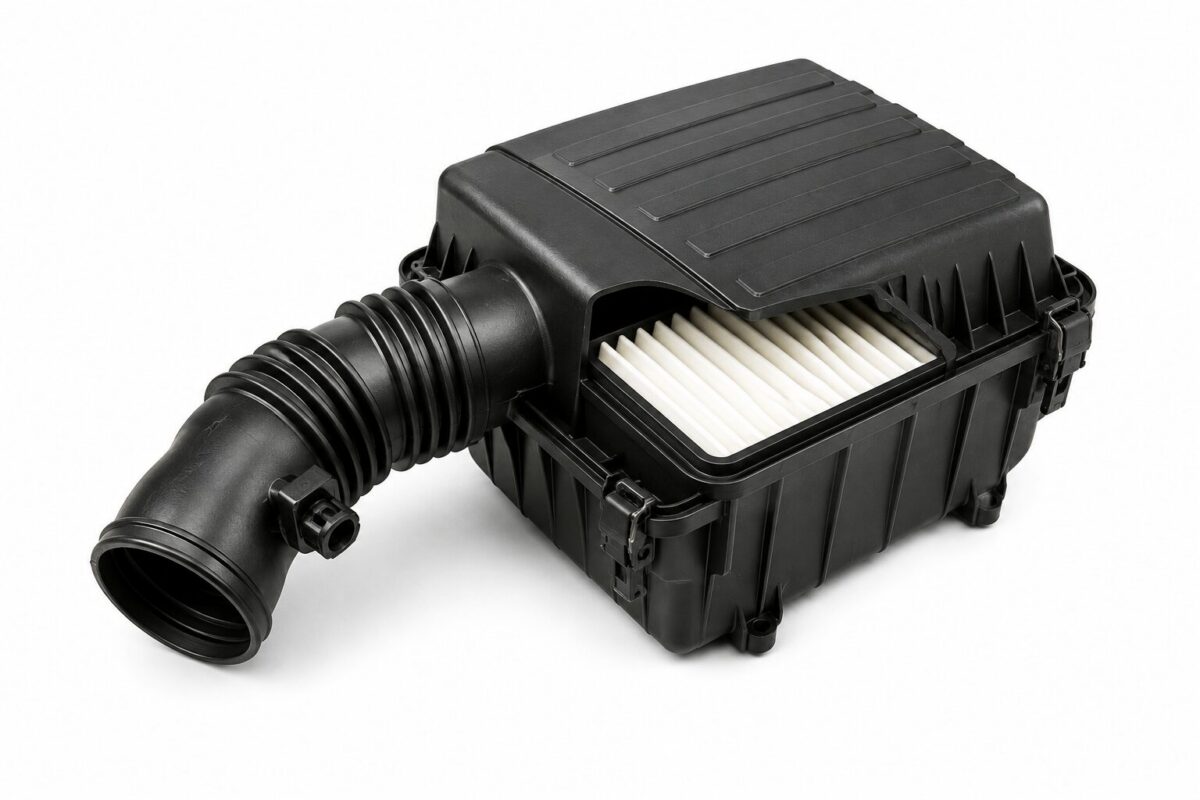
Air Filter
What does the air filter do: The component that cleans the outside air before it enters the engine.

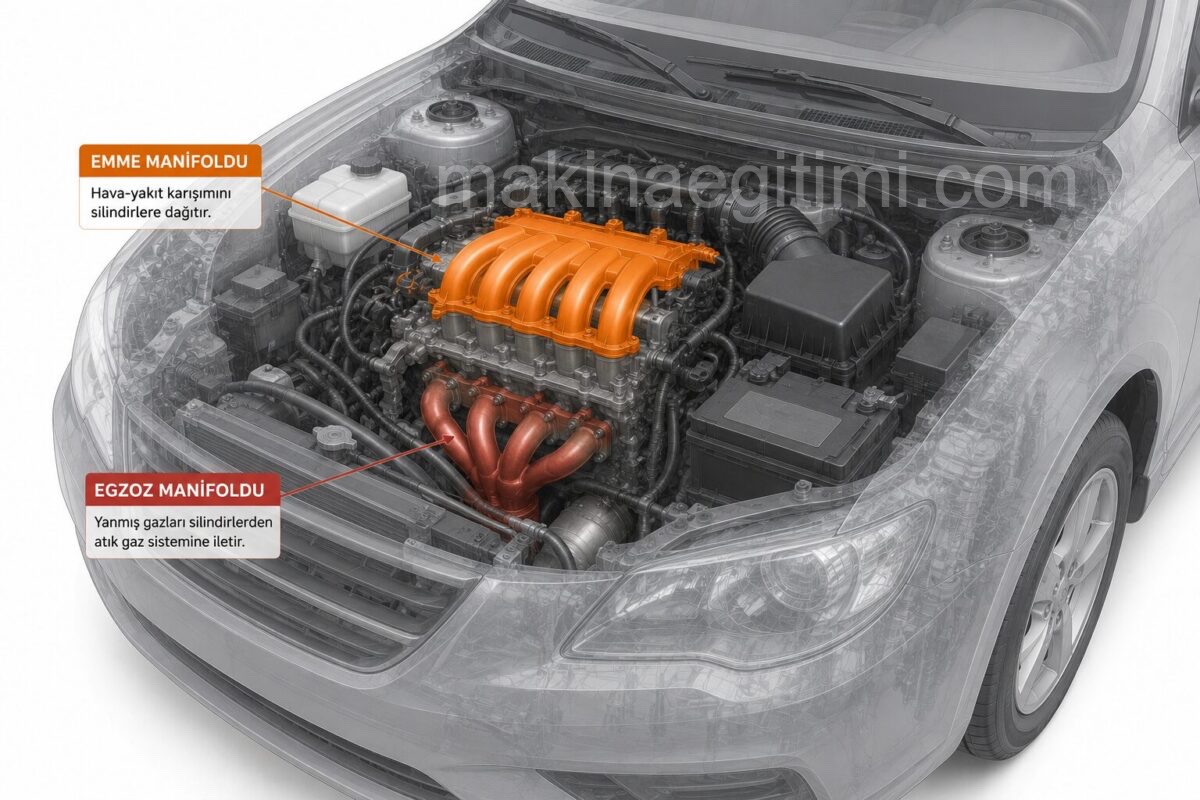
Manifold
There are two kinds of manifold: intake and exhaust. The intake manifold distributes the fuel-air mixture from the carburetor to the cylinders. The exhaust manifold collects the exhaust gases produced by combustion and sends them to the exhaust pipe.

Oil Filter
The oil filter strains out contaminants circulating in the engine oil, keeping the engine lubricated with clean oil. This helps reduce friction and wear between engine parts.
It’s usually located on the bottom or side of the engine block, and is replaced at regular intervals during oil changes.


Ignition Coil (Found Only on Gasoline Vehicles)
What does the ignition coil do : Steps up the 12-volt direct current from the battery to 18,000-25,000 volts.


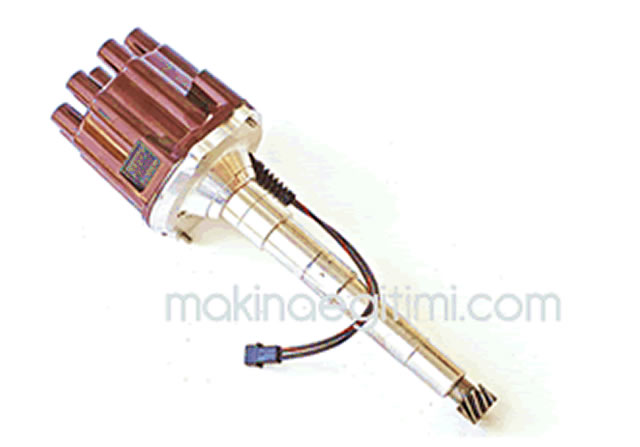
Distributor
What does the distributor do : Distributes the high voltage coming from the ignition coil to the spark plugs, in firing order.

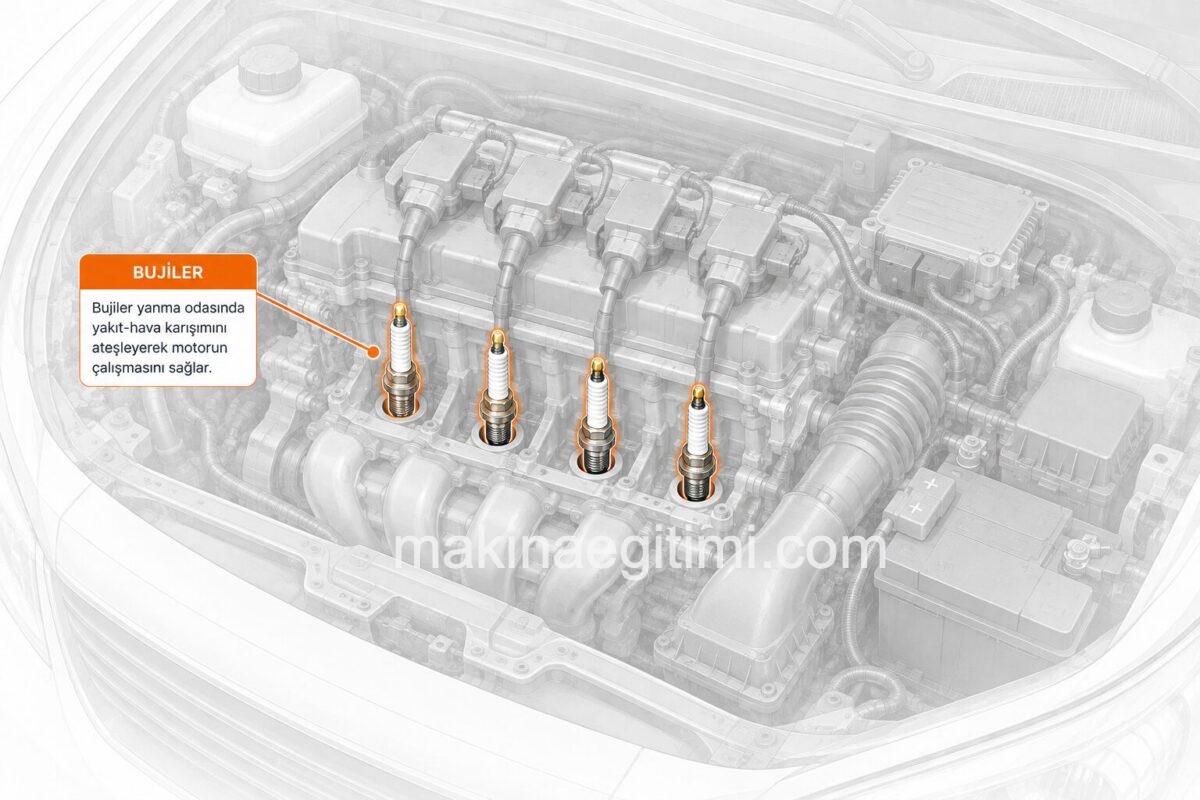
Spark Plugs (Found Only on Gasoline Vehicles)
The spark plug’s job : Ignites the compressed fuel-air mixture in the combustion chamber with a spark.

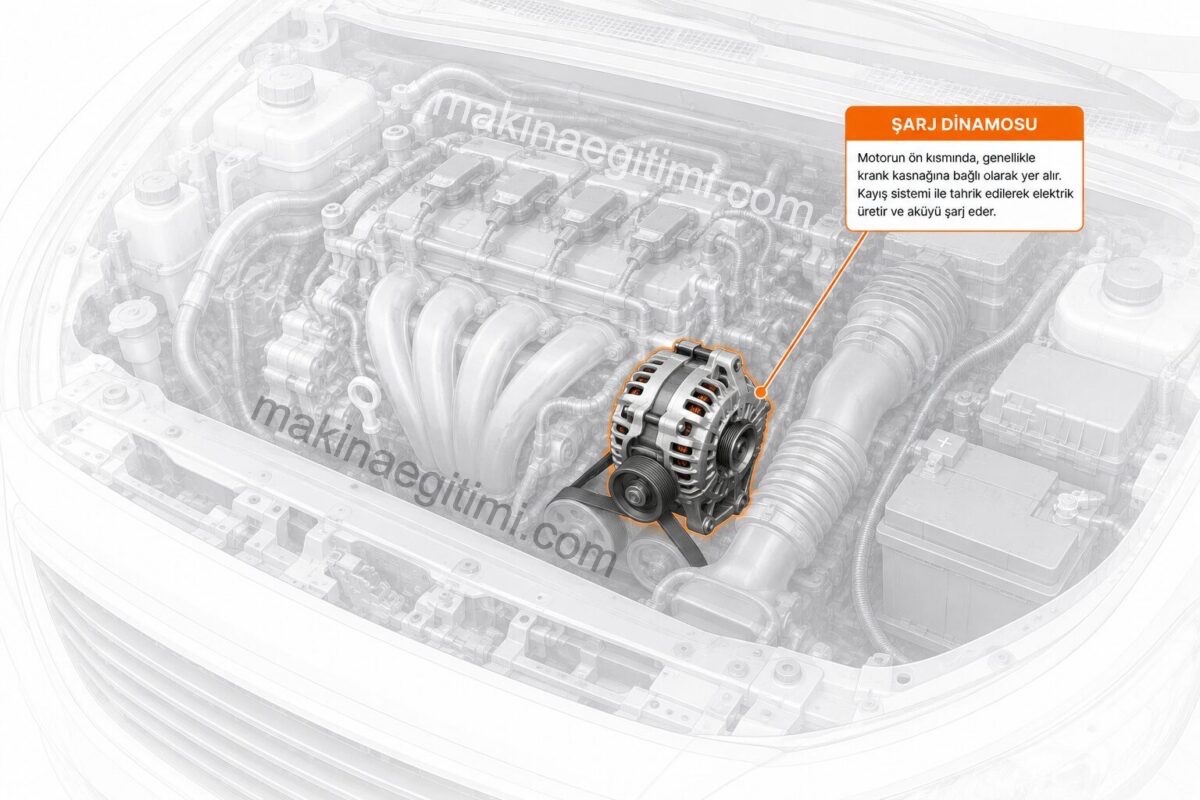
Alternator (Charging Dynamo)
The alternator converts mechanical energy into electrical energy while the engine is running, and supplies the vehicle’s electrical needs.

Voltage Regulator
The voltage regulator’s job : regulates the current and voltage produced by the alternator. In modern automobiles it’s usually integrated into the alternator itself.


Moving Engine Parts
Crankshaft
What the crankshaft does: Converts the vertical motion coming from the pistons, via the connecting rods, into rotary motion. There’s a gear and a pulley at the front end of the crankshaft. The gear drives the camshaft. The pulley drives the water pump and alternator.


Camshaft
The camshaft is a critically important engine part. Driven by the crankshaft via a timing belt or chain, it controls the opening and closing timing of the engine’s valves.


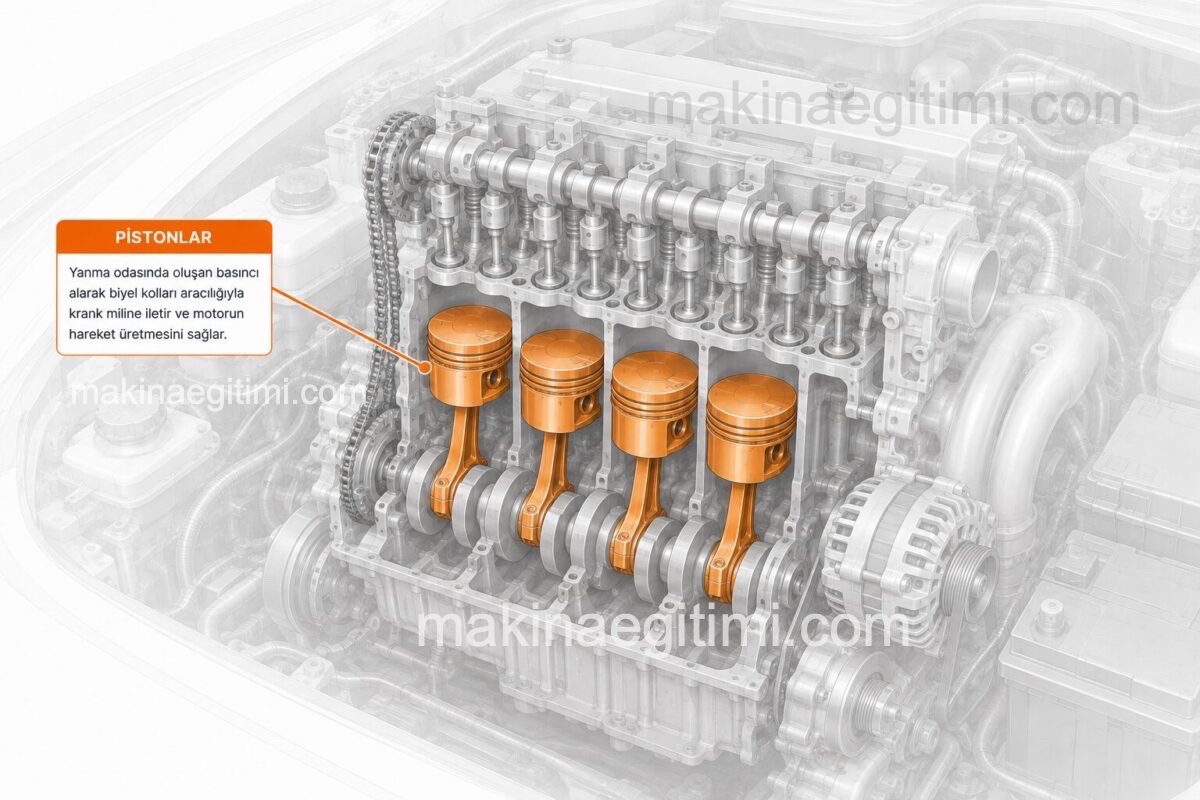
Pistons
What pistons do: Their movement inside the cylinder produces the engine’s strokes. During the power stroke, the piston transmits the resulting force to the connecting rod.

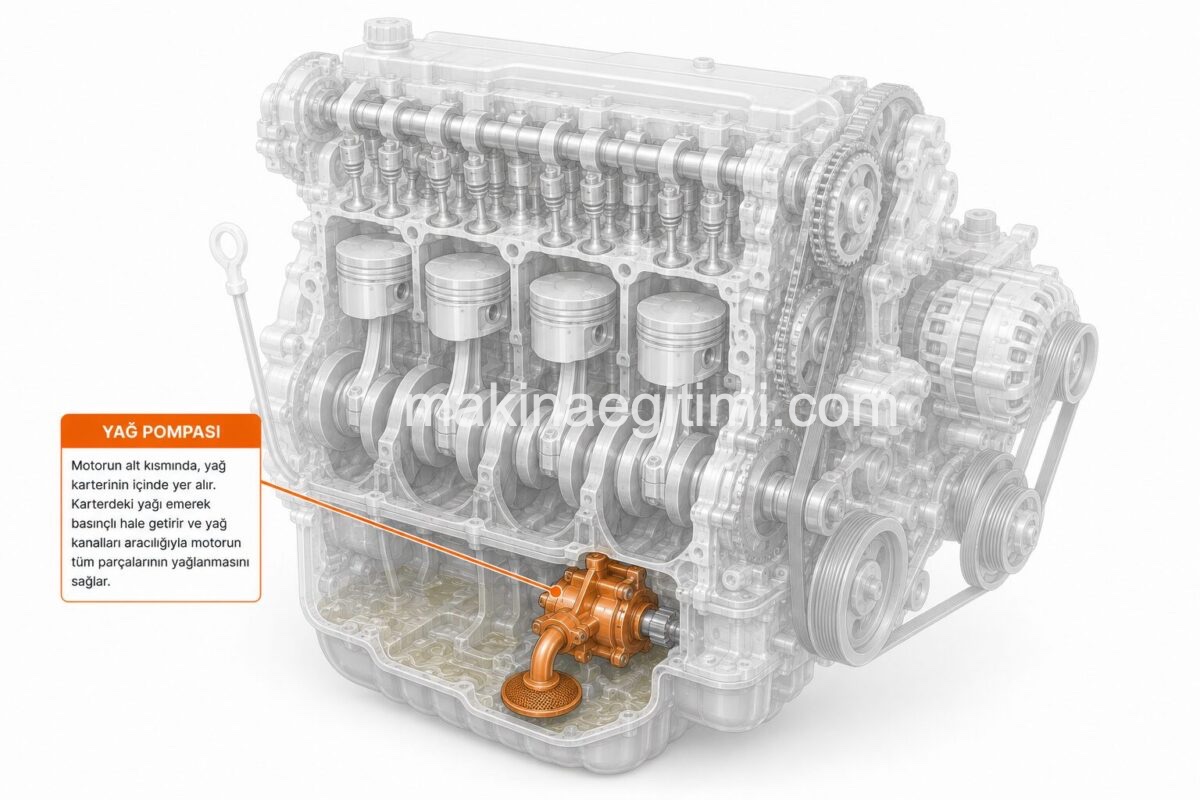
Oil Pump
What the oil pump does: Draws oil from the oil pan and pumps it to all the engine parts that need lubrication.

Fuel Pump
The fuel pump draws fuel from the fuel tank and sends it to the fuel system and engine at a specific pressure. On most modern gasoline and diesel vehicles, there’s an electric pump integrated into the tank unit, inside the fuel tank itself.


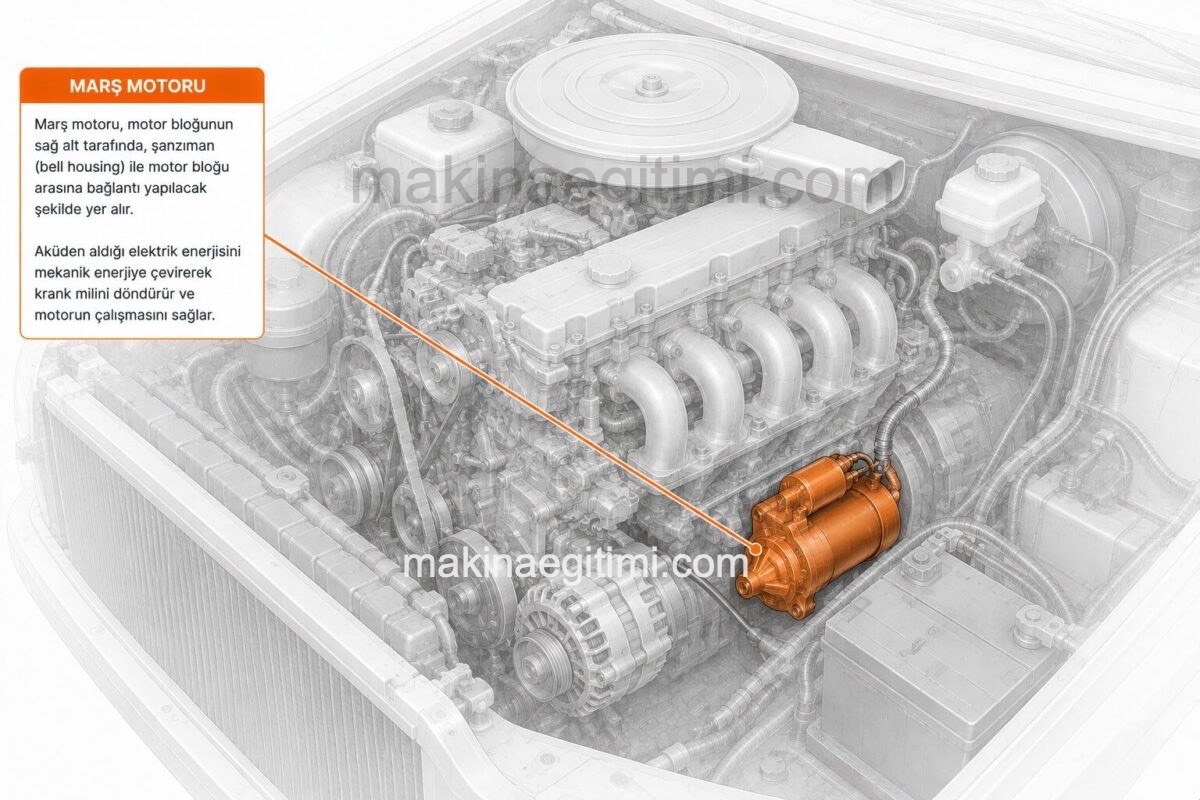
Starter Motor
What the starter motor does : A DC electric motor that gives the engine its initial turning motion.

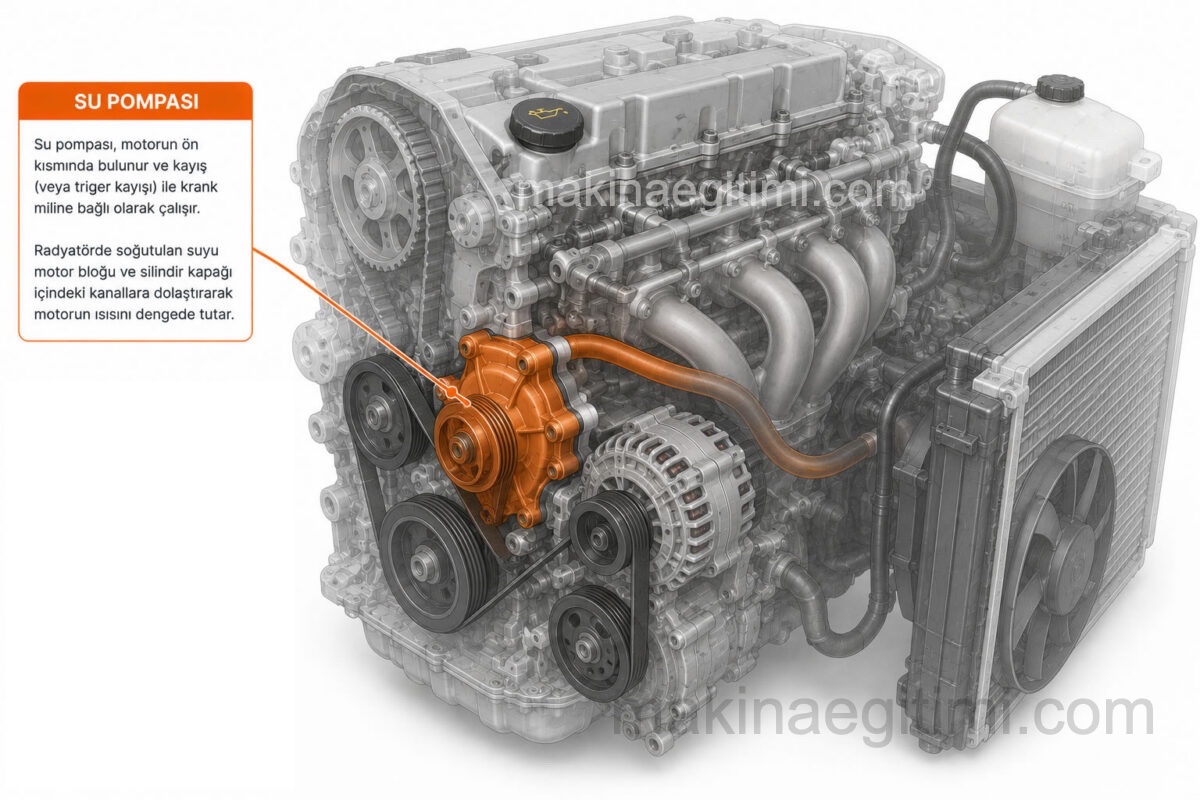
Water Pump
What the water pump does: Circulates the coolant through the engine.

Injection Pump (Found Especially on Diesel Vehicles)
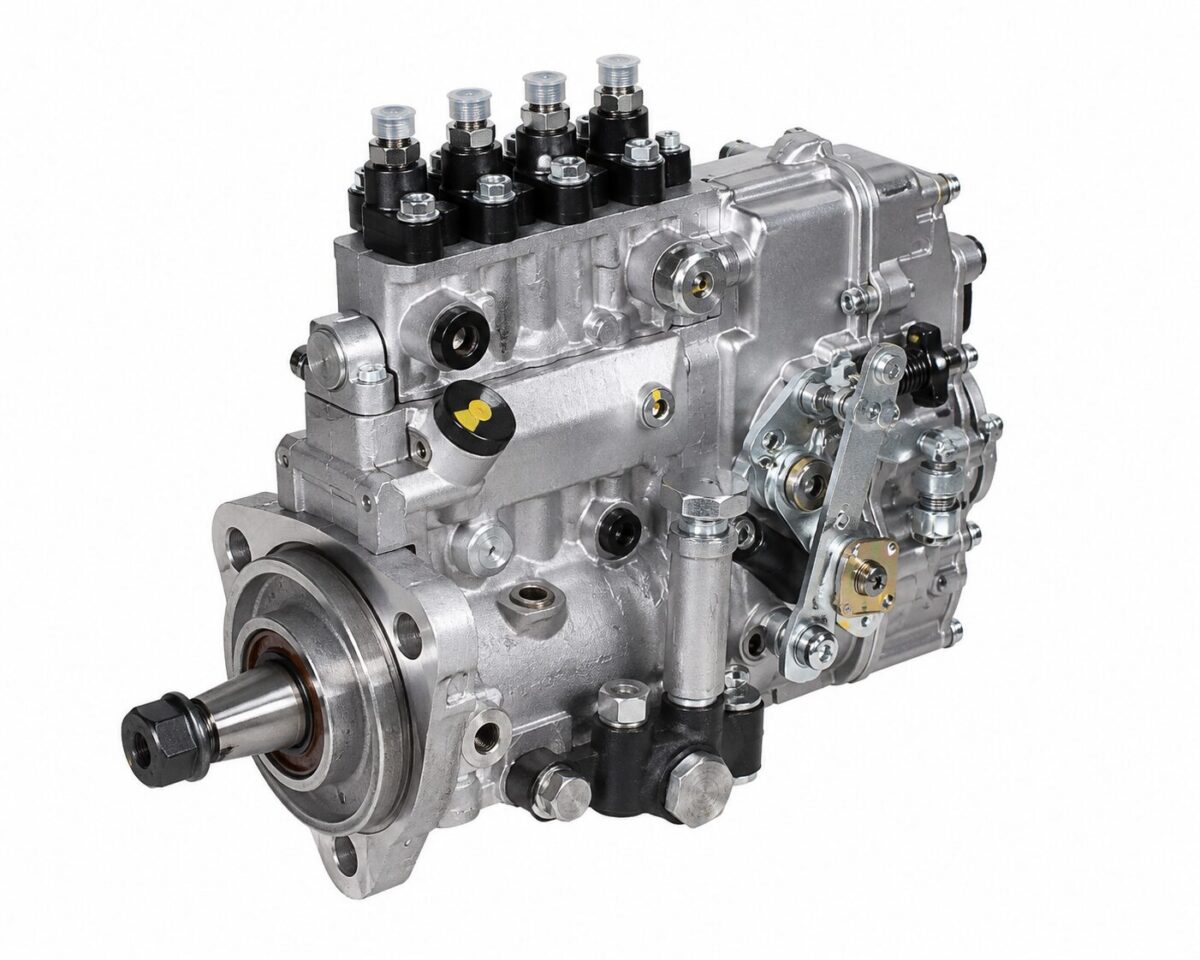
What the injection pump does : A characteristic component of classic diesel engines. Pumps diesel fuel to the injectors under high pressure, in firing order.

Fuel Injector
The fuel injector sprays fuel into the combustion chamber under high pressure as extremely fine droplets. This lets the fuel mix better with the air and burn more efficiently.


Valves
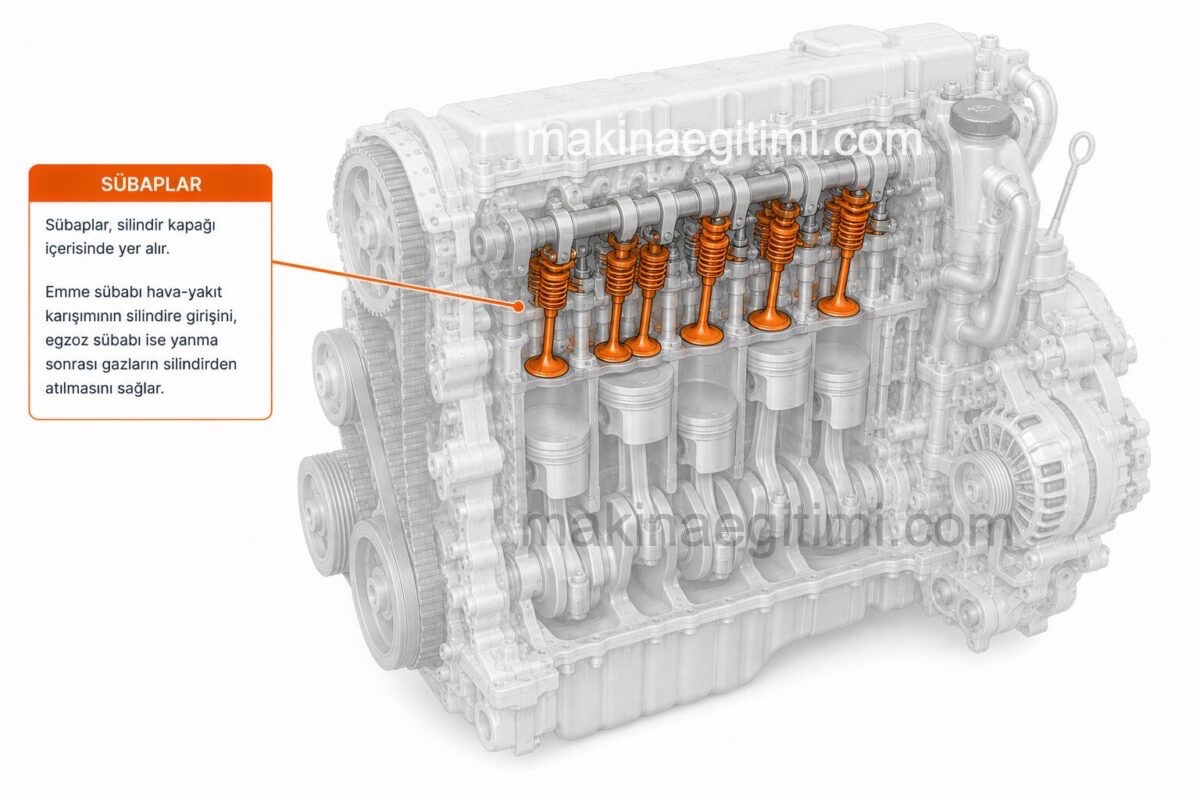
Valves: Intake valves let just air (on diesel engines) or the fuel-air mixture (on gasoline engines) enter the cylinder. Exhaust valves let the burned gases exit the cylinder.

Key Differences Between Diesel and Gasoline Engines
You may have noticed that some of the parts we described above are only used on gasoline vehicles. That’s because of differences in how diesel and gasoline engines actually operate.
In a gasoline engine
The system works roughly like this:
Battery → Ignition coil → Spark plug → Spark → Combustion of the fuel-air mixture
The ignition coil steps up the battery’s roughly 12 V to a much higher voltage. This high voltage creates a spark at the spark plug and ignites the mixture.
In a diesel engine
In a diesel engine, the principle is different:
Air → Compression → Very high temperature → Diesel fuel injection → Spontaneous ignition
The piston compresses the air by a very high ratio. The temperature of the compressed air rises to the point where diesel fuel can ignite. The injector then sprays diesel fuel at high pressure, and the fuel ignites on its own in the hot, compressed air. As a result:
In a diesel engine → No ignition coil → No spark plugs → No spark.
There is, however, one very important part here:
Glow plug : Diesel engines may have glow plugs. The glow plug helps warm the combustion chamber, especially on a cold start. However;
The glow plug does not ignite the fuel with a spark.
It only helps the combustion chamber reach a sufficient temperature at the start. Once the engine is running, normal diesel combustion continues thanks to the heat generated by compression.
The Role of Fixed Parts
Fixed parts like the engine block and cylinder head form the main structural framework that carries the moving components.
Synchronization of Moving Parts
Moving parts like the piston, crankshaft, and camshaft operate in sync via the timing system.
Linear-to-Rotary Conversion
The connecting rod is the critical link that converts the piston’s linear motion into the crankshaft’s rotary motion.
Video: Engine Parts and Their Functions
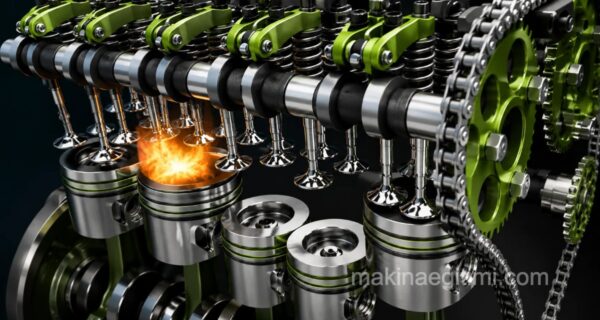
In the animation below, you can get a better sense of the placement and role of some engine parts (crankshaft, pistons, spark plugs, valves, timing belt, and camshaft).
Related Questions
The carburetor is a fixed part responsible for mixing air and fuel in the correct ratio before it enters the engine, and it’s mounted to the engine block. Unlike moving parts, it stays in place and only regulates the flow of air and fuel passing through it.
The coil steps up the battery’s low voltage to a voltage high enough to create a spark at the spark plug. Without this high voltage, the spark plug couldn’t produce a spark strong enough to ignite the fuel-air mixture.
Related Posts
 How to Choose Engine Oil
  Vehicle Drivetrain: Components, How It Works, and Common Failures
  What Is a Coilover (Coil Spring Shock Absorber)? What Is It For?
  Coilover (Coil Spring Shock Absorber) Advantages and Disadvantages
  What Is a Camshaft? What Does It Do? How Does It Work?
  Why Do Electric Cars Use a Single Gear?
  Forces That Affect Engine Parts
  Properties and Advantages of Scooters