

What Is Aluminum Extrusion, How Is It Done? Topics covered;
What Is Aluminum Extrusion?
Aluminum extrusion is the process of pressing heat-treated aluminum billets and forcing them through a die with a predetermined profile, cutting them into the desired shapes. This is a versatile and economical production method used in various industries, especially construction, automotive, aerospace, and electronics.
The aluminum extrusion process begins with a heated aluminum billet being placed into the die in the extrusion press.
The press slowly pushes the aluminum billet through the die, and it is cut to the desired shape and size. The extruded aluminum profile is then cooled and cut to the required shape and dimensions, making it ready for use.
Aluminum extrusion offers many advantages. These include light weight, durability, good thermal and electrical conductivity, aesthetic appeal, high recycling potential, and economical production.
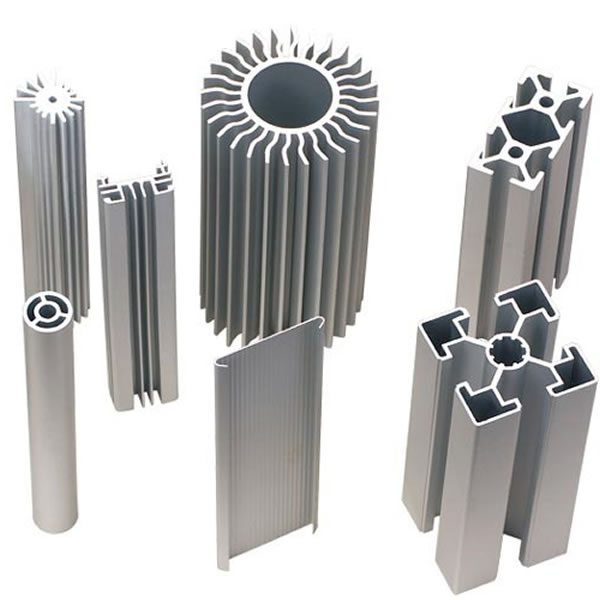
For this reason, aluminum extrusion is widely used in many areas of modern industry. Aluminum extrusion is a process commonly used in the manufacturing industry to create parts with a uniform cross-section profile. Aluminum is used for its ductility, mechanical strength, and cost-effectiveness.
How Is Aluminum Extrusion Done?
Aluminum is forced through a die designed and manufactured to produce the desired cross-section. Extrusion can be carried out at high temperatures (350°C+) to reduce work hardening, or at room temperature to improve surface quality and strength.


Steps of the Aluminum Extrusion Process
As an end-to-end process, aluminum extrusion consists of the following steps:
- The die is first typically manufactured from tool steel using electrical discharge machining (EDM) and/or milling.
- An aluminum alloy billet is heated. The normal temperature range will be 420°C-500°C.
- The billet is loaded into the extrusion machine with a lubricant to reduce friction in the process.
- A high-pressure ram forces the aluminum billet through the machine and into the die.
- Nitrogen is supplied, creating an inert atmosphere and allowing it to flow through the die sections. This extends the life of the die.
- The extruded aluminum exits the die in the required shape and passes to an exit table, then to a cooling table.
- After cooling, the extrusion is cut to the required length, typically achieved by a sawing operation. However, at Get It Made we prefer to use wire EDM to ensure a clean cut.
- Finally, the extrusions undergo further machining or finishing operations if required.
Extrusion Temperature
The aluminum extrusion process is typically carried out at a temperature between 400-500°C.
Die Pressing Force
Extrusion presses push aluminum through the die with a force reaching up to several thousand tons, depending on the profile size.
Profile Complexity
Extrusion enables economical production of long profiles with complex cross-sections that are difficult to produce by casting or machining.
What Are Aluminum Extrusions Used For?
Aluminum extrusion is widely used in manufacturing work to create parts with a fixed cross-section. The areas of use for aluminum extrusion are as follows:
- Industrial applications
- Architecture and Construction
- Automotive
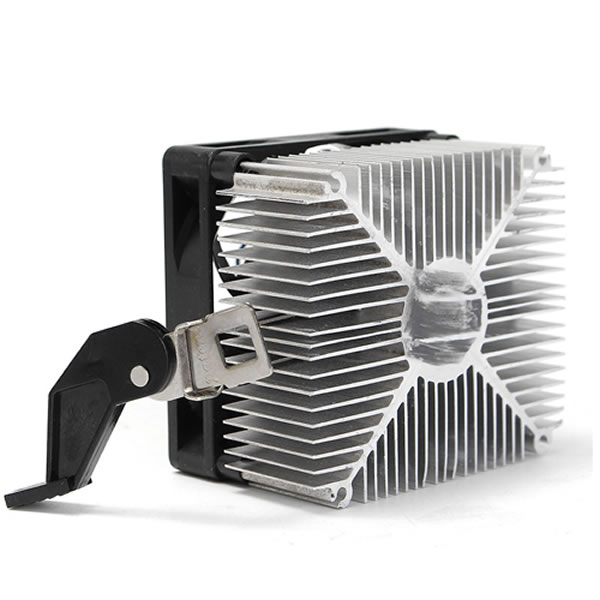
- Signage and Lighting

Advantages of Aluminum Extrusions
✅ Complex cross-section parts
The main advantage of aluminum extrusions is the ability to produce highly complex cross-sections of varying lengths, which are typically very difficult or impossible to produce with alternative manufacturing methods.
✅ Tailor mechanical performance
The strength of aluminum extrusions can be tailored by adjusting the wall thickness and internal structural profile of the extrusion. This means strength can be concentrated exactly where it is needed, without adding unnecessary extra material.
✅ Excellent strength-to-weight ratio
Aluminum extrusions are lightweight (1/3 the weight of steel) and have a great strength-to-weight ratio. This makes them a popular choice for applications in the aerospace industry, where weight reduction is a priority.
✅ Low and high volume production
Once the die has been produced, there is flexibility in order volume — both low and high volume extrusions can be produced economically. Uniquely, we have no Minimum Order Quantity for the amount of extrusion required. Whether you need a production run or just a one-off custom extrusion, Get It Made has the delivery capability and flexibility for your project.
✅ Low-cost parts produced quickly
Extrusion is a very efficient process because parts can be produced continuously, making the cost per unit much lower compared to alternative production methods. Once the die has been produced, parts can be manufactured for delivery within a few days, making extrusion excellent for parts produced on demand.
Disadvantages of Custom Aluminum Extrusions
❌ Initial setup costs
Although usually not very high, there is an initial startup cost to producing the extrusion die.
However, this cost is quickly offset by the low cost of producing the aluminum extrusion.
❌ Design constraints
Due to the nature of the extrusion process, parts must have a uniform cross-section. There are other design considerations to take into account, which are covered in more detail in the Custom Aluminum Extrusion Design Guidelines section.
Related Questions
Heated aluminum is pressed through a die with a specific cross-section shape. Whatever shape the die opening is, the resulting aluminum profile takes that same shape.
Parts produced with this method are both lightweight and durable, and complex cross-sections can be achieved in a single operation. Since aluminum is also recyclable, production is relatively economical as well.
Related Posts
 Laser Cutting Working Principle, Advantages and Disadvantages
  What Is Electrical Discharge Machining (EDM). Machining with EDM
  Properties of Laser Beams and Their Working Principle
  Mold Making With the Selective Laser System
  2018 Skoda Octavia: Footage From the Production Lines
  Operations Performed on a Lathe
  How Is a Splined Shaft Made? Splined Shaft Manufacturing
  Applications of Lasers