

In 1824, a theater hall in Vienna rose to its feet in applause. On stage, the composer conducting the massive symphony premiering that night stood with his back to the audience; unable to hear the applause, he kept standing there even after the orchestra’s final note. When a soloist beside him gently touched his arm and turned him around, he saw a hall full of people standing, applauding him through tears. That composer was Ludwig van Beethoven, and the piece was the 9th Symphony, which we still listen to today. And Beethoven had written this magnificent work during a period when he could hear almost nothing at all.
In this article, we’ll explore what may be one of the most incredible stories of perseverance in music history: Beethoven’s struggle with hearing loss, and the immortal works he created in the midst of that struggle.
A Young Genius, the Start of a Brilliant Career
Beethoven was born in Bonn in 1770, and at a young age he moved to Vienna, where he began to be recognized as one of the most talented pianists and composers of his time. By the late 1790s, his career was truly on the rise; he was composing under the patronage of noble families and receiving great acclaim at concerts. It was right around this time, around 1798, while still in his late twenties, that he began to notice a strange ringing in his ears.
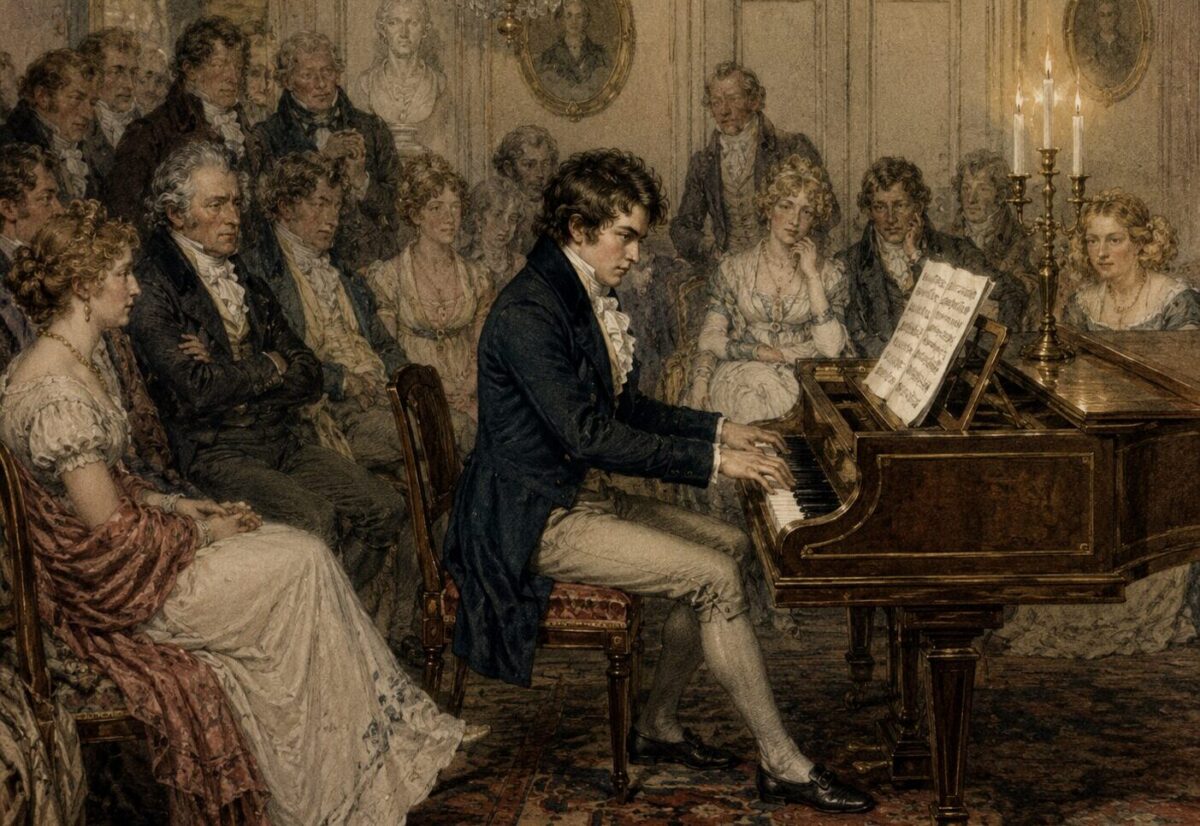
At first, he thought it was a temporary ailment. But over time, the ringing intensified, and he began to struggle to hear loud sounds and to follow people’s conversations. For a musician, this was one of the most terrifying nightmares imaginable.
The Heiligenstadt Testament: A Letter From the Depths of Darkness
In 1802, with his hearing loss now unmistakable, Beethoven withdrew to Heiligenstadt, a quiet town near Vienna. There, he wrote a letter to his brothers that he never sent — it was later found among his belongings. This letter is known today as the “Heiligenstadt Testament” and is regarded as one of the most heartbreaking documents in the history of music.
In the letter, Beethoven confessed that the people around him thought him arrogant or antisocial, when the real reason was that he was trying to hide his hearing loss. He even wrote that he had considered suicide, but that his devotion to art had kept him alive. While this letter documents Beethoven’s darkest moment, it was also a turning point; after writing these lines, rather than fighting his deafness, Beethoven chose to live alongside it and continue composing.
Reborn in Silence: The 3rd Symphony and What Followed
Shortly after returning from Heiligenstadt, Beethoven composed his 3rd Symphony (“Eroica”); this work was utterly different from the symphonies of its time, both in scale and emotional intensity. Music historians view this piece as evidence of the new boldness Beethoven brought to music after overcoming his personal crisis.

As his hearing loss progressed, Beethoven had to change how he communicated with the piano. He would strike the keys harder to try to feel the vibration, and it’s said he even placed a rod against the piano’s body and held the other end between his teeth, trying to perceive the sound’s vibration through his skull. When composing, he no longer relied on his ears, but on the logic of the notes on the page and the store of sound in his memory.
In Total Silence: The Mastery of His Final Years
By the late 1810s, Beethoven was almost completely deaf. To follow conversations, he asked visitors to write their questions in small notebooks; these “conversation books” are today an invaluable historical record of his daily life.
Despite this, it was during this period that Beethoven wrote his deepest and most innovative works: his late piano sonatas, his final string quartets, and, of course, the 9th Symphony.
The 1824 premiere of the Ninth Symphony ended with that emotional moment we described at the start of this article. Beethoven was no longer composing with his ears, but with years of musical experience and the sound within his own inner world; and the “Ode to Joy” theme he wrote in this silence has since become, as a symbol of humanity’s unity and brotherhood, the official anthem of the European Union.
What Caused Beethoven’s Deafness?
The exact cause of Beethoven’s hearing loss is still not fully known. Autopsy reports and later analyses point to possible causes including a chronic inner-ear condition, lead poisoning, or an autoimmune disorder, but no definitive diagnosis has ever been reached.
In 2023, a DNA analysis conducted on strands of Beethoven’s hair found genetic markers pointing to liver disease, but it could not clarify the direct cause of his hearing loss. So even two centuries later, this mystery has yet to be fully solved.
Hear the Music Written in Silence (8 YouTube Recommendations)
If you listen to eight works from different periods of Beethoven’s life in order, you can feel, step by step, how his hearing loss deepened his music:
- Piano Sonata No. 8 “Pathétique” (1798, early period)
- Piano Sonata No. 14 “Moonlight” (1801, as hearing loss began)
- Symphony No. 3 “Eroica” (1803-1804, the turning point after Heiligenstadt)
- Symphony No. 5 (1808, confronting fate)
Daniel Barenboim plays Beethoven Sonata No. 8 Op. 13 (Pathetique)

Beethoven: Piano Sonata No. 14 Moonlight Sonata | Daniel Barenboim
Beethoven – Symphony No. 3 in E flat major (Op. 55) Eroica Berliner Philharmoniker
Beethoven: Symphony No. 5, 1st movement | Paavo Järvi and the Deutsche Kammerphilharmonie Bremen
- Für Elise (1810)
- Symphony No. 7, 2nd Movement “Allegretto” (1812)
- Symphony No. 9 “Ode to Joy” (1824, composed while completely deaf)
- String Quartet No. 14, Op. 131 (1826, the depth of his final years)
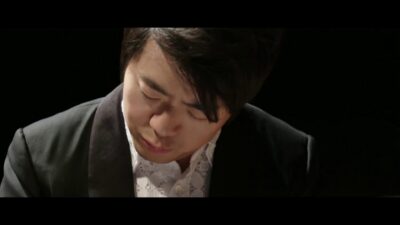
"Für Elise" Performed by Lang Lang

Beethoven – Symphony No.7 in A major op.92 – II, Allegretto
![Symphony No. 9 [Beethoven] - Ode to Joy (Finale)](https://www.makinaegitimi.com/wp-content/uploads/2026/09/yt-CeO-trAbi7U-scaled.jpg)
Symphony No. 9 [Beethoven] – Ode to Joy (Finale)
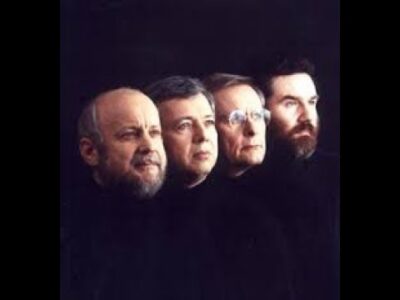
Beethoven String Quartet No 14 Op 131 in C♯ minor Alban Berg Quartet
If you listen to these works in chronological order, you’ll notice how Beethoven’s music evolves over time into an increasingly inward-looking, complex, and deep structure; almost as though, the more he lost the sound of the outside world, the louder he expressed the sound of his inner world.
Beyond a Legacy: Why Does It Still Inspire?
Beethoven’s story isn’t just an anecdote from music history — it’s also one of the most striking examples of human perseverance. For a musician, hearing loss was like a blow struck at the very center of his profession.

But Beethoven saw this blow not as the end of his career, but as an opportunity to redefine his music. Every time we hear “Ode to Joy” today, we are, in fact, listening to a sound created entirely within the inner world of a man who could hear nothing at all.
The European Union Anthem and Beethoven
“The ‘Ode to Joy’ theme from Beethoven’s 9th Symphony became, centuries later, a symbol of Europe’s unity and solidarity. In 1985, it was adopted by the European Union as its official anthem.”
In the final movement of his 9th Symphony, Beethoven set to music the German poet Friedrich Schiller’s poem “An die Freude” (“Ode to Joy”). The symphony was first performed in 1824.
So why this particular piece?
The connection here is quite meaningful. One of the central ideas in Schiller’s poem is the brotherhood and unity of humankind. Beethoven embraced this idea as well. As a result, the piece resonated with Europe’s vision of unity, peace, freedom, and solidarity.
That’s why European institutions chose the piece as a symbol to represent Europe’s shared values.
When did it become the European anthem?
| Year | Event |
|---|---|
| 1824 | Beethoven’s 9th Symphony was performed for the first time |
| 1972 | The Council of Europe adopted Beethoven’s “Ode to Joy” theme as the Anthem of Europe |
| 1985 | The leaders of the European Community adopted the piece as the official anthem of the European Union |
The EU’s official page also confirms this history.
Schiller’s lyrics are not used in the EU anthem. Only Beethoven’s music is used. The purpose of this is to express shared European values through the universal language of music, without tying the anthem to the language of any single European country.
Frequently Asked Questions
Beethoven began noticing a ringing in his ears around 1798, while still in his late twenties, and his hearing loss progressed over time, becoming almost total deafness by the late 1810s.
The Heiligenstadt Testament is a letter Beethoven wrote to his brothers in 1802 but never sent; in it, he confessed the despair and thoughts of suicide he experienced due to his hearing loss, but also stated that his devotion to art kept him alive.
Yes, by the time he composed the 9th Symphony, which premiered in 1824, Beethoven had experienced almost total hearing loss, and he wrote the work largely relying on his inner musical memory.
No, the exact cause is still unknown; various theories have been proposed, including chronic inner-ear disease, lead poisoning, and autoimmune disorders, but no study — including the 2023 DNA analyses — has produced a definitive diagnosis.
Beethoven continued composing by relying on the powerful musical memory he had developed over the years, the structural logic of musical notation, and methods of physically feeling vibration (such as direct contact with the piano).
The “Ode to Joy” theme from Beethoven’s 9th Symphony.
In the final movement of his 9th Symphony, Beethoven set to music the German poet Friedrich Schiller’s poem “An die Freude” (“Ode to Joy”). One of the central ideas in Schiller’s poem is the brotherhood and unity of humankind. Beethoven embraced this idea as well. As a result, the piece resonated with Europe’s vision of unity, peace, freedom, and solidarity.
Schiller’s lyrics are not used in the EU anthem. Only Beethoven’s music is used. The purpose of this is to express shared European values through the universal language of music, without tying the anthem to the language of any single European country.
Related Posts
 The Most Famous Film Scores and Their Composers: Themes That Shaped Cinema History
  What Is the Difference Between Classical Guitar and Acoustic Guitar?
  Music Terms: Tempo, Harmony, Chord, Syncopation and More
  The History of the Guitar: The Journey from Its Origins to the Electric Guitar
  The Story of The Beatles: From Liverpool to a Worldwide Legend
  What Is Classical Music? Periods, Great Composers and History
  The Life Story of Michael Jackson: The Legendary Journey of the King of Pop
  The Birth and Golden Age of Rock ‘n’ Roll: From Memphis to the World