

In our machine documentaries section, we bring you a visual walkthrough on the topic: how is a Zippo lighter made?
How Is a Zippo Lighter Made
A roughly 5-minute video showing the manufacturing process of Zippo lighters.
Since the earliest times, people have wanted to make fire. And thousands of years after using sticks to make fire, all that’s needed now is to strike a lighter. For a spark to appear, the components inside the lighter have to work together.
Zippo Manufacturing and Assembly
These lighters start out as large brass coils fed into a hydraulic press. First, cutting and bending dies are used to form the top and bottom surfaces of the lighter case.
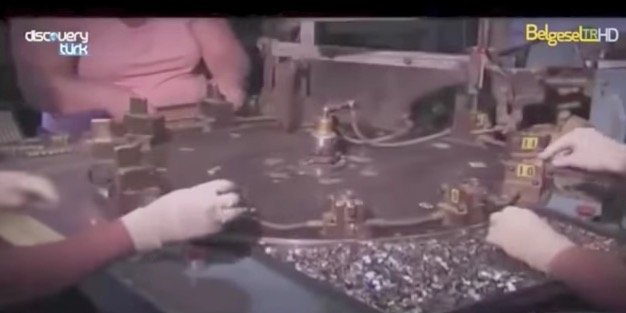

Here, workers place a small hinge onto the top of the case so the lighter can open and close. One worker loads the hinges into the machine, and another positions the top and bottom halves of the cases.
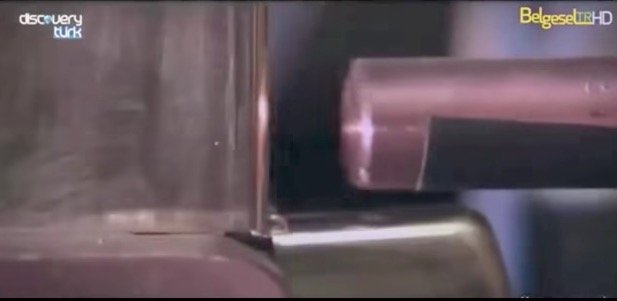
Then a robotic spot welder takes over the job of welding the hinges onto the case. Although the weld appears to just barely touch the case, it actually sends 480 volts of electrical current through the contact point to fuse the hinge to the case. Welding prepares the cases, and a robotic arm pushes them out of the machine.
Increasing the Durability of the Zippo Lighter
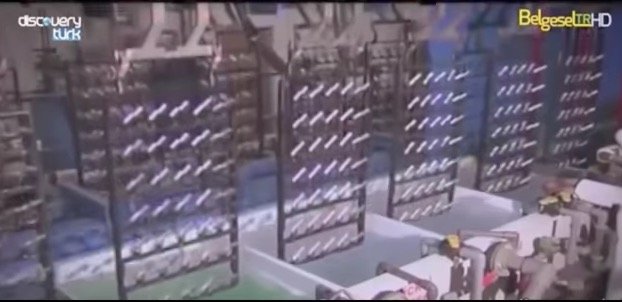
Next, the brass Zippo cases are dipped into a series of blue and green baths. These baths aren’t so much for cleaning the cases as for strengthening them. The green bath contains a certain amount of nickel. So what does the nickel do here? Nickel adheres to the cases and protects the soft brass against wear and abrasion. Afterward, the cases are dipped into a blue solution containing enough chromium to make their surfaces shinier and easier to clean. It’s just enough to protect the case from dirt and rust.

While the cases are drying, another hydraulic press shapes the steel insert parts that equip the inside of the lighter, like a small fireplace.
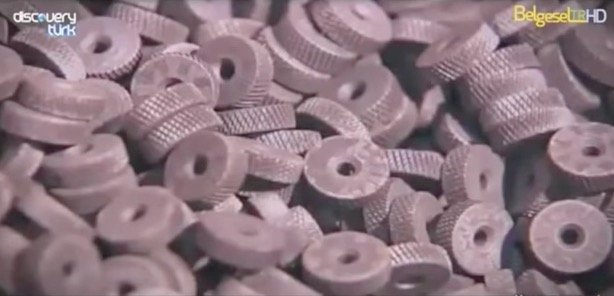
First come the wheels that we spin with our thumb. This grinds the flint placed inside the insert to produce a spark. The resulting spark ignites the wick located at the top and this creates the flame. These wheels are made from quite strong carbon steel. This way, they don’t wear out for 20 years or more. A robotic arm checks that the teeth on the wheel are facing the correct direction.

Then the machine adds the wick. The wick is made from a cotton-like thread. It’s bound with copper to reinforce it. Then a small cotton pad is added to hold and absorb the lighter fluid. This way, the flammable liquid doesn’t slosh around inside the lighter. The felt pad on top of the cotton helps prevent leaks.
Then the flint is attached to the end of a spring and placed inside the insert. Another machine tests all the inserts to make sure a spark is produced when the wheel is turned.

A robotic arm collects the completed inserts. After this stage, workers take over the job of placing the inserts inside the cases. The hinges are tested to make sure the case opens and closes properly without the hinge sticking.
In our machine documentaries section, we’ve featured a video and illustrated walkthrough of a documentary on how a Zippo lighter is made. See you in our next episodes.
Related Posts
 How Are Piston Rings Made? How Are Piston Rings Manufactured?
  Aluminum Production. How Is Aluminum Produced
  How Are Washers Made
  How Are Bearings Made? Video
  The Complete Manufacturing Process of the China-Made Jetta VS5
  Metal Hardening Methods
  Professional 3D Scanners and Their Applications
  Broaching. What Is It. How Is It Done