

Occupational Safety in Electrical Interior Installations
Plug and Socket Systems
Plugs must be of a design and type that cannot be inserted into sockets used for different voltages within the same facility.

The insulating components of intermediate plug-socket arrangements must be properly protected. Broken and cracked plugs and sockets must not be used.
In the plug and socket system, the grounding contact elements must make contact before the current-carrying contact elements.
Connections of Electrical Machinery
The protection type of electrical machinery must be selected to suit the conditions of the location where it is installed, and the live parts and connections of electric motors in areas with excessive moisture, steam, or oil must be properly protected.
Connections to electrical machinery must be selected and made in a way that withstands vibrations that may occur during operation.
Fuses
Fuses used in alternating or direct current circuits must be mounted inside an enclosed panel, and fuses rated above 32 amperes must be controlled by at least one switch or disconnector. This switch or disconnector must be arranged so that the panel box cover cannot be opened without first cutting off the current, and current cannot be applied before the cover is closed. When energizing with a high-breaking-capacity switch, the necessary precautions must be taken against the risk of the switch exploding.

Before fuses are replaced, the circuit must be de-energized and the absence of voltage must be verified. If the fuse cannot be de-energized, the circuit must be interrupted using circuit breakers; when the installation is put back into service, considering the possibility that the fuse may blow again, the person replacing the fuse must be provided with and required to use the necessary personal protective equipment to protect their hands and face.
Non-original fuses, patched fuses, or fuses bridged with wire must not be used in electrical installations.
Distribution Panels
Distribution panels, boards, control equipment, and similar installations located within reach of employees at the workplace must be inside a locked cabinet or enclosure. The front and rear working surfaces of main power panels made of sheet metal must be covered with insulating material that does not conduct electric current and can withstand the applied voltage.
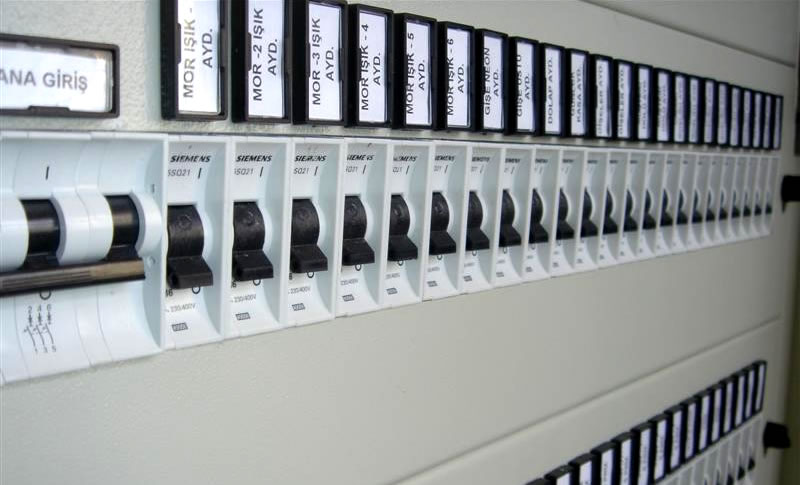
Fuses and switches on the distribution panel or similar equipment must be manufactured and protected in accordance with the relevant standards and the provisions of the Electrical Interior Installations Regulation. Fuses, switches, and disconnectors on the panel or board must be labeled to indicate the area they control.
The metal enclosure of distribution panels and boards, along with all metal parts not carrying live current, must be grounded.
Main distribution panels with a voltage not exceeding 1000 Volts must be arranged so that every part requiring maintenance or adjustment is easily accessible, conductors can be easily traced, switches or control devices can be operated from the front of the panel, and all measuring and control instruments and signaling devices can be easily seen from the front face of the panel.
For main distribution panels with a voltage exceeding 1000 Volts, the metal enclosures of cells and all equipment operating at high voltage must be grounded or properly insulated, and all metal arms and other metal connections must be grounded.
Transformers and Capacitors
Workplaces where transformers, capacitors, and similar equipment are installed must be adequately ventilated, and their walls and doors must be fire-resistant.
Transformers, capacitors, and similar equipment must be connected and checked in a way that prevents residual charge, and signs indicating the presence of this equipment and explaining the precautions to be taken before touching it must be placed in suitable locations.
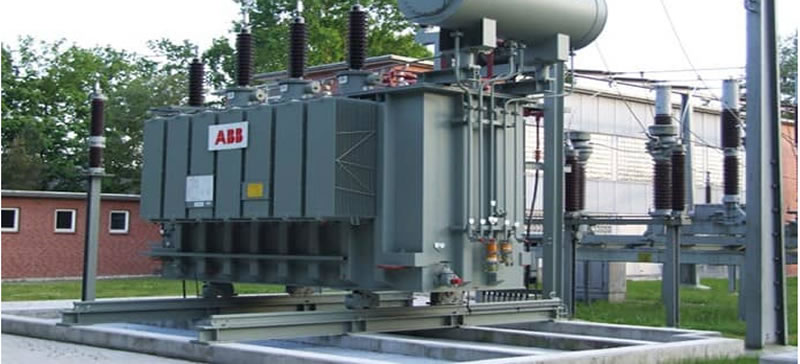
Air-cooled transformers installed at the workplace must be kept sufficiently far from combustible materials, or separated from combustible materials by a heat-resistant, non-combustible partition, or suitably enclosed.
Transformers and other high-voltage equipment in capacitor centers must be placed in dedicated cells enclosed by barred or wire-mesh doors. High-voltage cells must be equipped with insulated stools, rubber gloves, neon test lamps, switching rods, fire extinguishers, grounding/short-circuit equipment, and signage bearing switching instructions, etc.
Battery Rooms
Stationary lead-acid battery installations must be kept in specially built, well-ventilated rooms or cells with floors made of acid-resistant material. Battery rooms must be dry, cool, free of vibration, and protected from temperature fluctuations.
If sufficient ventilation cannot be provided through windows, doors, etc., artificial ventilation arrangements such as spark-free exhaust fans, ventilation pipes, or ducts must be used depending on the size of the battery installation. These pipes and ducts must be made of material resistant to electrolyte action and must not open into smoke flues or areas with open flame.
Battery casings must be made of glass, hard rubber, plastic, or similar non-conductive material and must be placed on solid, non-conductive stands. The insulating materials used to secure lead-acid batteries must be resistant to the electrolyte.
When preparing acid for batteries, water must never be added to acid. Acid must be added to water slowly and in small amounts. Employees must be provided with and required to use appropriate face shields, rubber aprons, rubber gloves, and similar personal protective equipment.

Conductors, cables, and equipment selected for damp and similar locations must be used in the electrical installations of battery rooms. Incandescent lamps and sealed-type fixtures must be used in these areas, and commutator-type exhaust fans that could produce sparks must not be used.
Switches, sockets, and similar electrical devices that could produce sparks capable of causing ignition during operation must be placed outside battery rooms.
Hand Tools
Pliers, needle-nose pliers, screwdrivers, and similar hand tools used in electrical work must be properly insulated, and the handles of oil cans, brooms, brushes, and other cleaning tools must be made of non-conductive material.
The handles of portable electric hand tools must be coated with, or made of, non-conductive material of adequate type and thickness, and these tools must be equipped with spring-loaded circuit breakers that must be held down continuously to keep the circuit closed.

Portable electric tools that must be used suspended should be hung from a spring, a cable, or the end of a chain and balanced with appropriate counterweights.
Moving portable heavy electric tools from one place to another must be done using special slings or harnesses, and these slings/harnesses must not be used during operation. Workers using portable electric tools must not wear loose clothing or garments with wide hems, and must wear insulated gloves suitable for the job.
Electric hand tools must be inspected by authorized personnel before use, and tools with faulty grounding, excessively sparking motors, or damaged sockets, plugs, switches, or connection cables must not be used.
When electric hand tools are not in use, their cords must be unplugged, coiled up, and stored in a suitable place.
Also see the related topic: Occupational Safety with Hand Tools
Portable Conductors
Portable or trailing conductors must not be used permanently at the workplace.
A sufficient number of properly grounded electrical outlets must be installed in locations where portable conductors are needed.

Portable electrical cable conductors must be multi-core, covered with durable rubber or plastic material, flexible enough to bend when needed, reinforced with metal for added strength, and their coverings must not be damaged; their connections must be kept in good condition.
Portable extension cables must not be left plugged in or lying loose on the floor when not in use. These cables must not be spliced. Crushed cables or cables with damaged insulation must not be used.
Grounding Requirement
A grounding system in electrical interior installations is required to protect the user from electric shock in the event of a leakage current.
Ground-Fault Relay
Residual current devices (RCDs) cut the circuit within milliseconds, preventing fatal electric shocks.
Cable Cross-Section Calculation
If a cable’s cross-section in an electrical installation is not correctly calculated for the current load it will carry, there is a risk of overheating and fire.
Related Slides and Documents


Related Questions
This different design makes it physically impossible to accidentally plug an incompatible device into a socket with the wrong voltage. This protects both the device and the user from the risk of overvoltage or a short circuit.
Since high-amperage fuses carry large currents, the current must be safely cut beforehand when working on them. The switch provides this disconnection, eliminating the risk of electric shock during maintenance.
Related Posts
 What Is Personal Protective Equipment (PPE)? What Are Its Types?
  Safe Forklift Use. Forklift Safety Rules
  Occupational Health and Safety in Welding Work
  Safety Rules for Working on a Lathe
  Workplace Safety and Misuse of Hand Tools
  Occupational Safety on Press Machines
  5S Management in Workshops and Factories
  Occupational Safety When Working With Electricity