
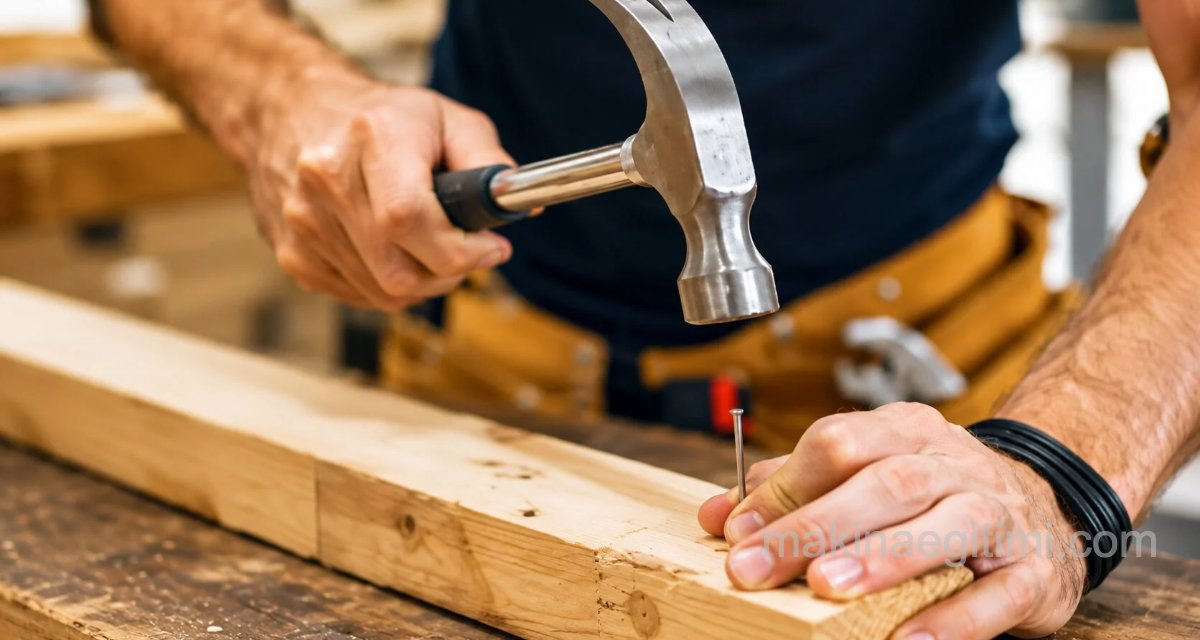
Workplace safety with hand tools is a subject that shouldn’t be neglected. Misuse of hand tools can cause injury accidents at workplaces, and improper use of hand tools can lengthen job times, leading to unnecessary lost time. The safety precautions to take when using hand tools are important.
Workplace Safety Rules for Hand Tools
For example, we sometimes use the same hand tool for different jobs to get something done. However, one of the most important rules for avoiding accidents when using hand tools is to do every job with the tool made specifically for it.
The most common workplace accidents with power tools are electric shocks. To prevent these accidents: use grounded outlets. Don’t use hand tools whose cords are worn, stripped, or that have been crudely repaired. Don’t use power tools in environments with flammable or explosive materials. During maintenance, repairs, or part replacement, power tools must be disconnected from electricity. Low voltages should be used whenever possible in wet and damp environments. Hand tools shouldn’t be stored unsafely at height where they could fall on people. Anyone using very noisy hand tools should wear ear protection.
General Precautions for Workplace Safety with Hand Tools
Hand tools should be suitable for the job being done.
They should be used correctly.
They should be well-maintained.
Maintenance should be performed by qualified people.
Appropriate personal protective equipment should be used. (such as gloves, goggles)
They should be stored in a suitable place.
Don’t strike hand tools with an external object.
Faulty hand tools should be replaced or repaired.
Handles shouldn’t come off easily, and shouldn’t be broken or cracked.
Handles shouldn’t be oily or slippery.
When working with small parts, secure them with a vise.
Don’t intervene with hand tools on running, moving machinery without first stopping it.
Don’t horse around with hand tools.
Misuse of Hand Tools
We’ll cover the safety precautions for using hand tools, going through different tools. One of these is open-end wrenches and box wrenches.
Wrench Misuse
The most important problem encountered with open-end and box-end wrenches is applying force incorrectly, and applying it with impact.

When more force needs to be applied to a nut or bolt, fitting a pipe over the wrench damages the wrench’s jaw or body.
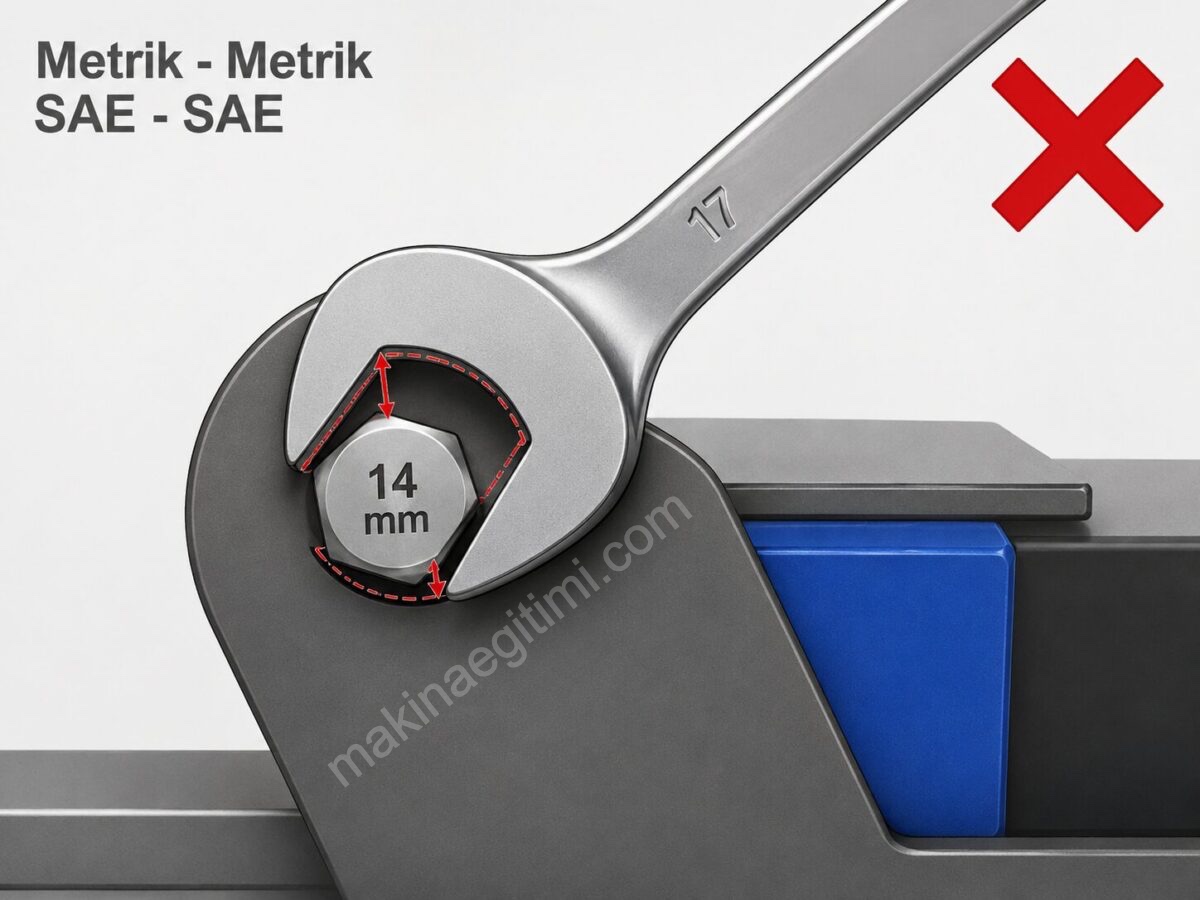
The wrench size and the nut/bolt size should match
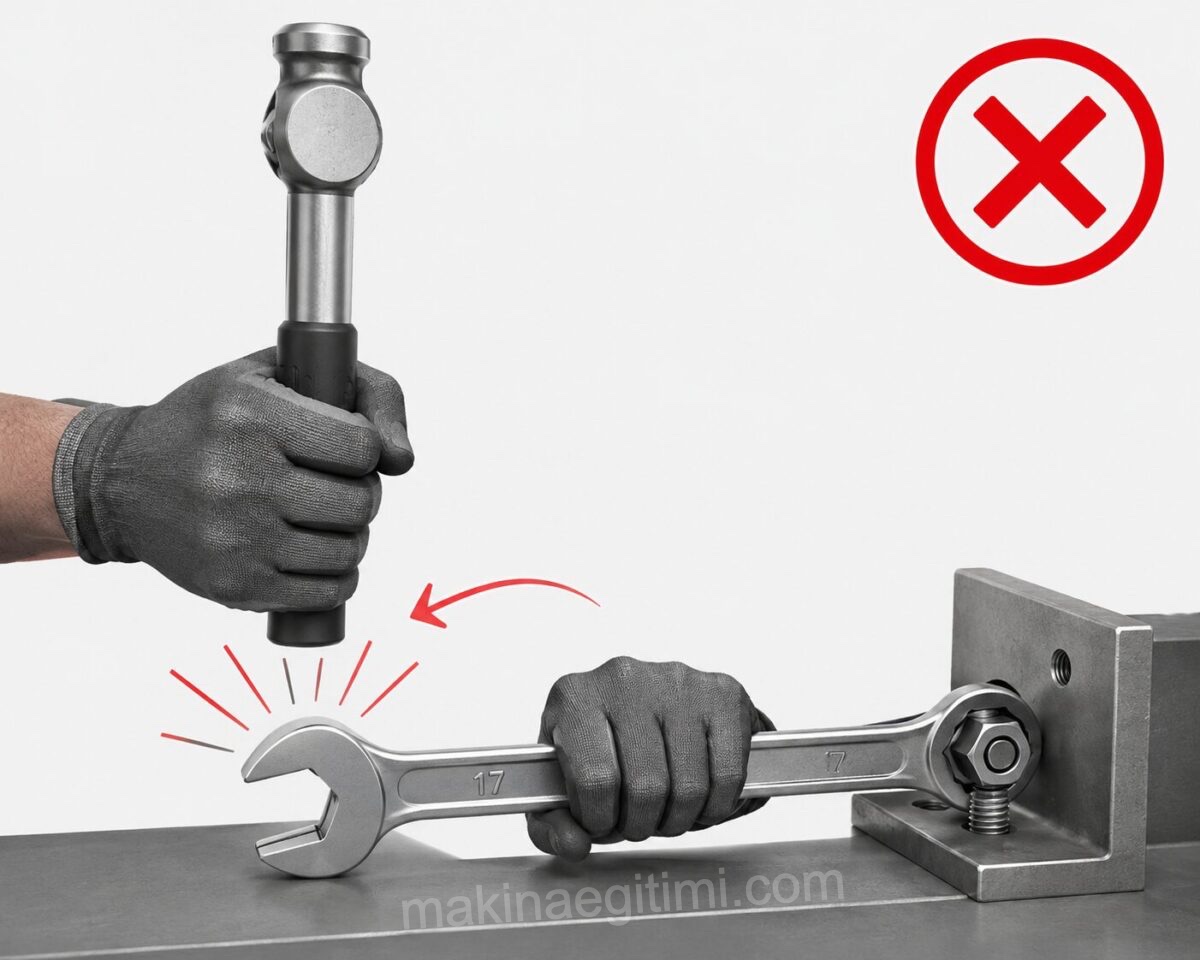
Wrenches should never be struck with a hammer to apply more force.

On rusted screws and bolts, the rust problem should be resolved first.
Screwdriver Misuse
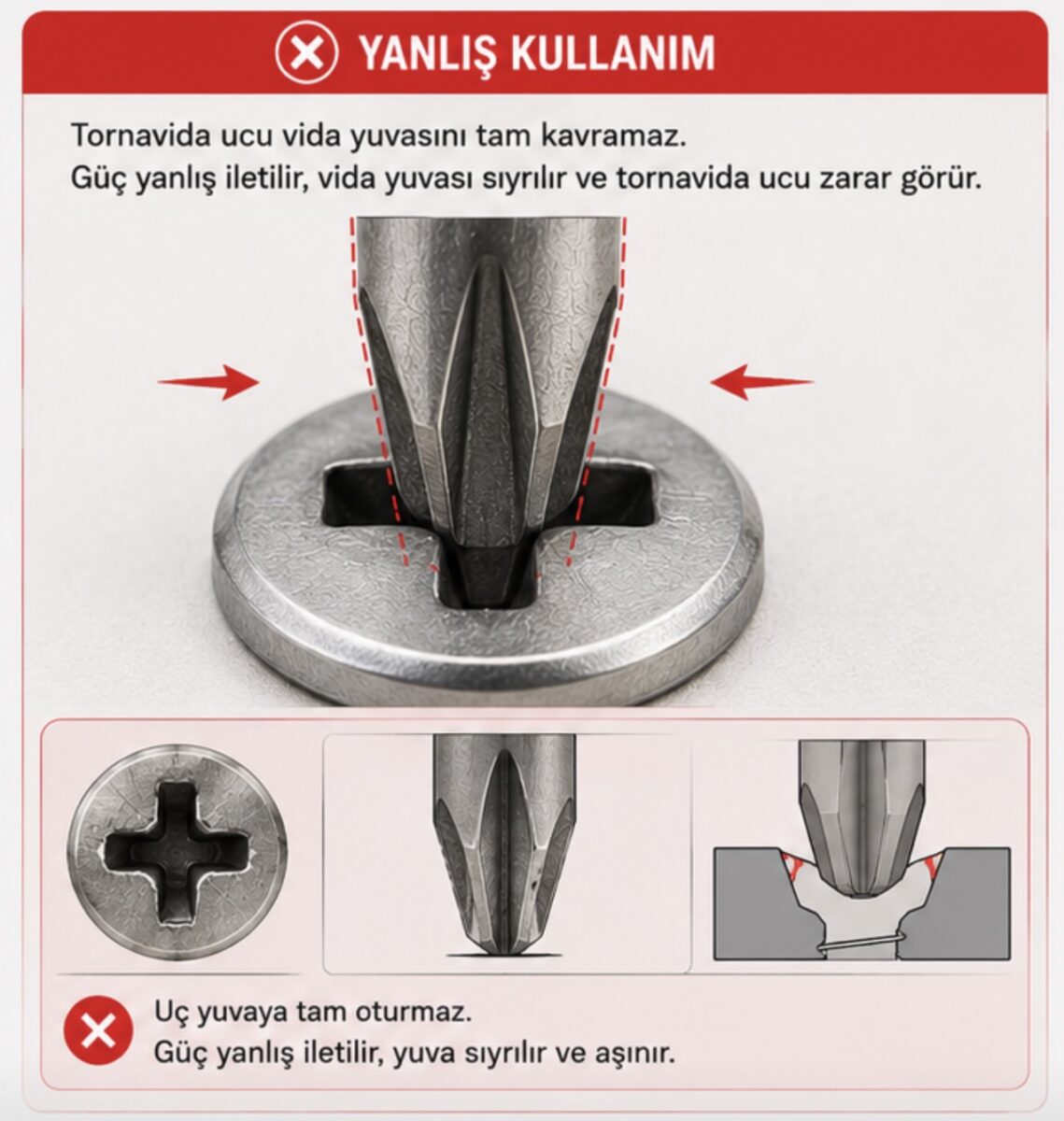
Screwdrivers should be used that fully seat into the screw head and grip the widest possible surface. If the screwdriver’s gripping surface doesn’t seat properly against the screw’s surface, wear begins on the surfaces. Either the screwdriver becomes unusable, or the screw head gets stripped.
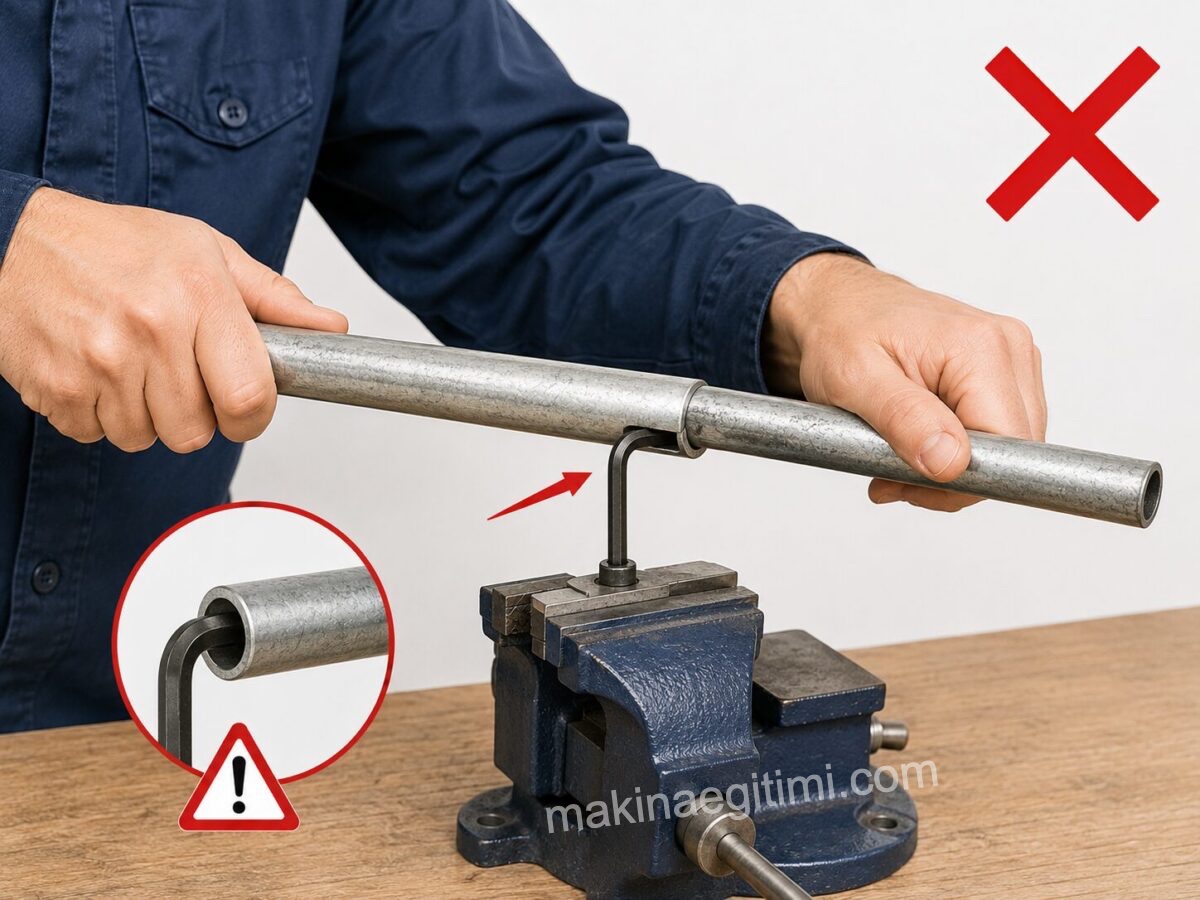
Since Allen wrenches are manufactured to a standard size for applying a set amount of force, they shouldn’t have an extension bar fitted to apply uncontrolled force.
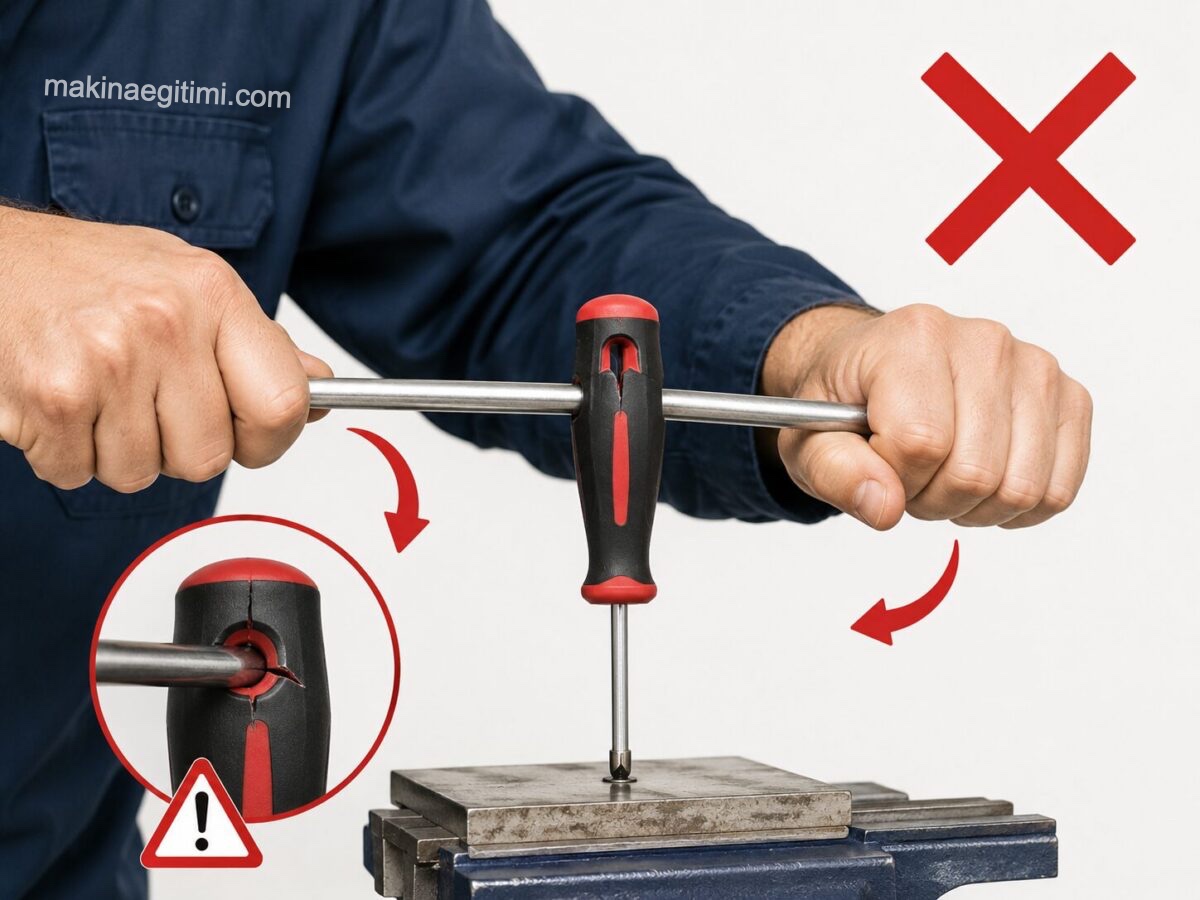
Force shouldn’t be applied by fitting a pin into a screwdriver’s hanging hole. If force is applied by fitting a pin into the hanging hole found on the handle of socket-tip screwdrivers, for a purpose other than what it’s meant for, the handle will be damaged.
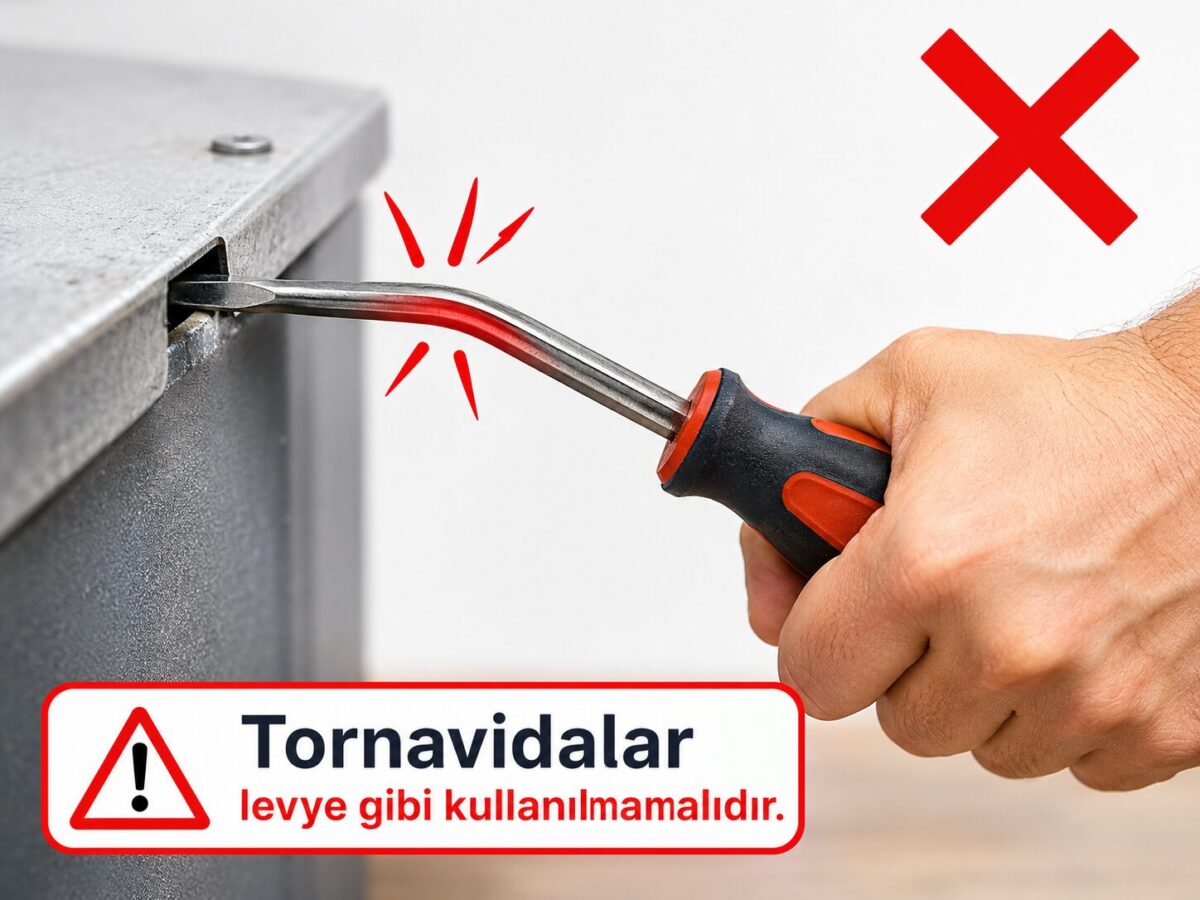
Screwdrivers shouldn’t be used as a pry bar. Since screwdriver tips are manufactured hardened, if used in place of a chisel or pry bar the tip can break, and the shaft can bend.
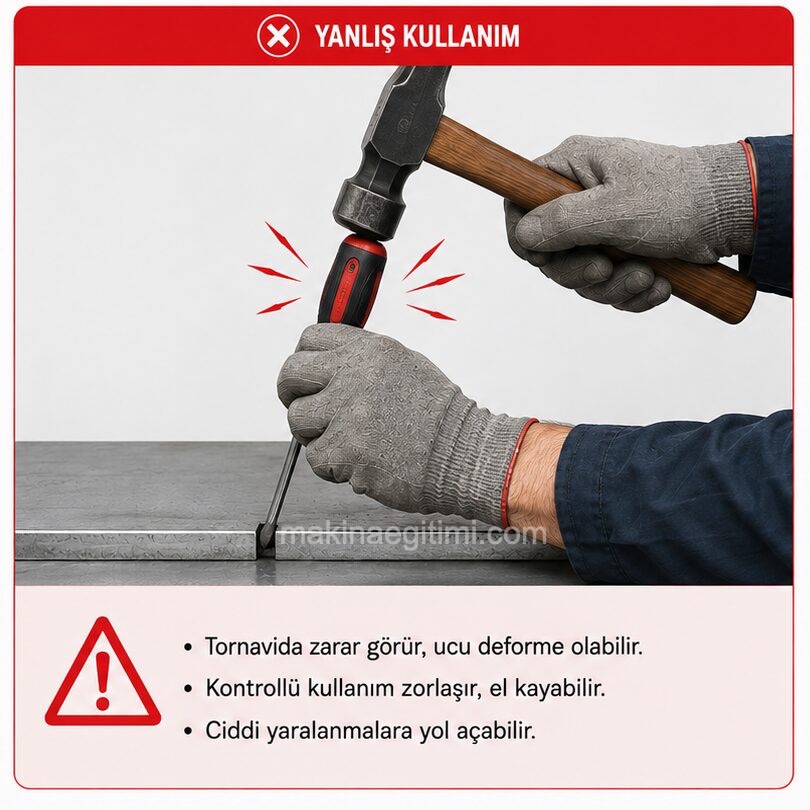
Screwdrivers shouldn’t be used as a chisel
Misuse of Pliers – Side Cutters – Needle-Nose Pliers – Water-Pump Pliers – Pipe Wrenches
Sets made for electronics work shouldn’t be used in place of general-purpose pliers.
Using pliers whose insulation has been damaged for electrical work is a workplace health and safety hazard.
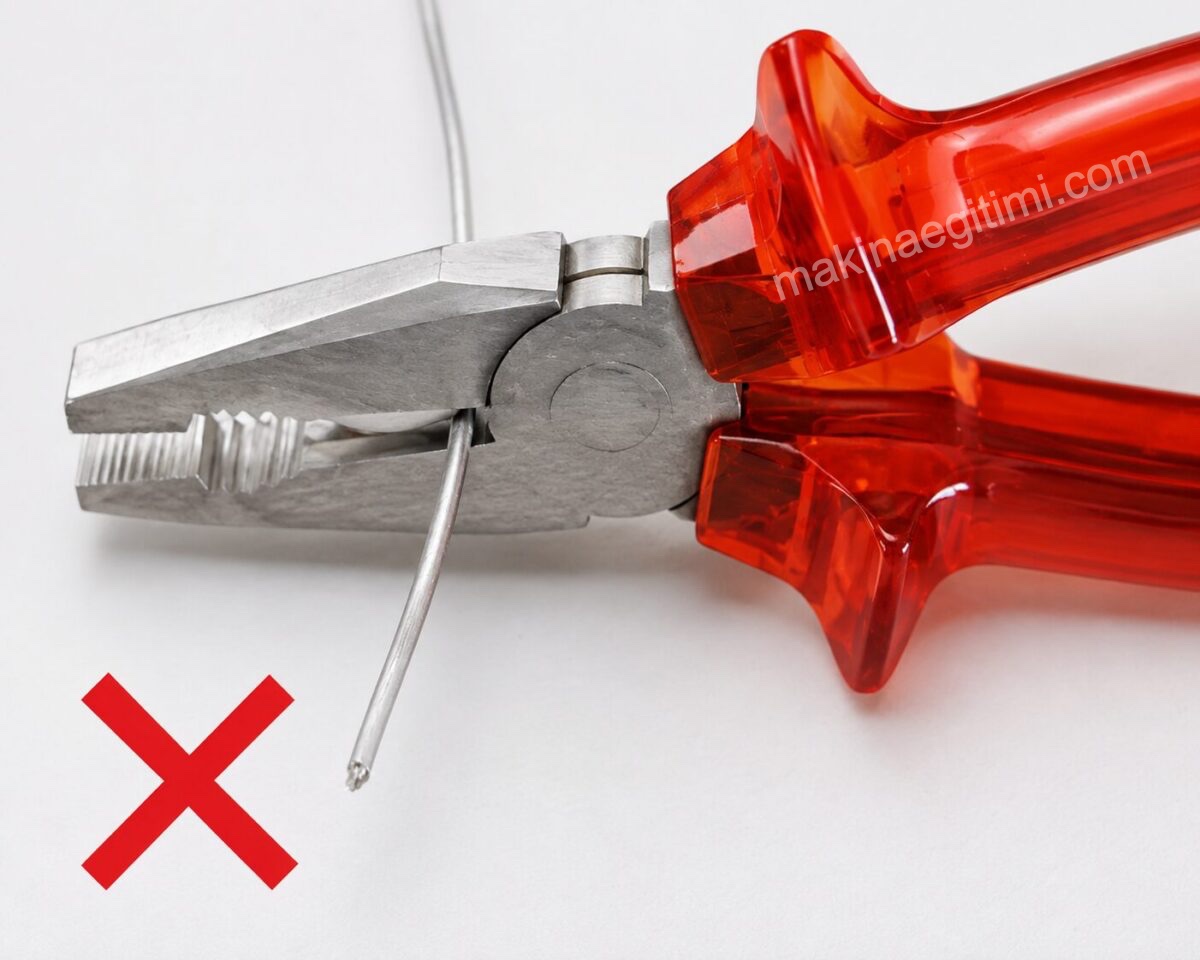
Hand tools in the pliers, side-cutter, and needle-nose pliers group should be used to cut soft wires such as copper, aluminum, and construction wire. Don’t cut hard wire with pliers
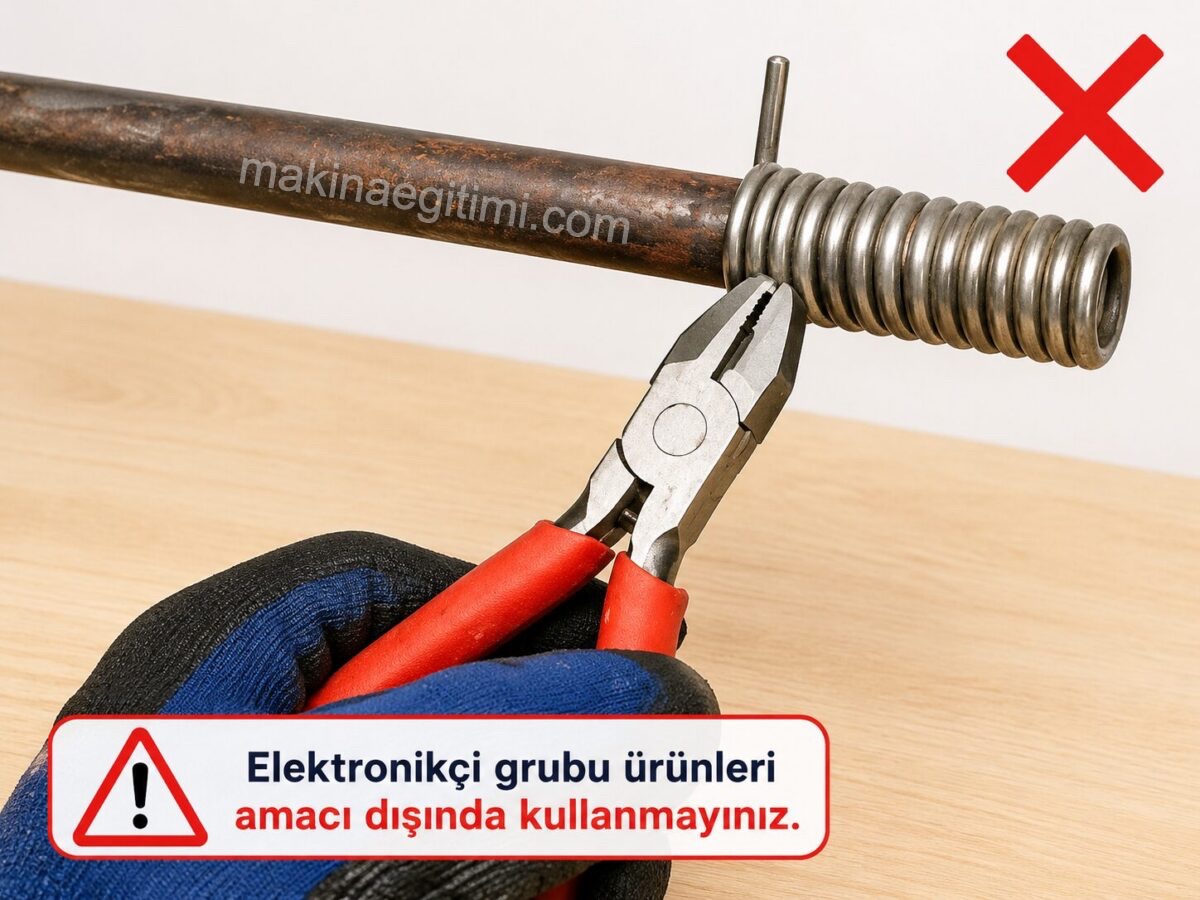
Don’t use electronics-group products for a purpose other than intended
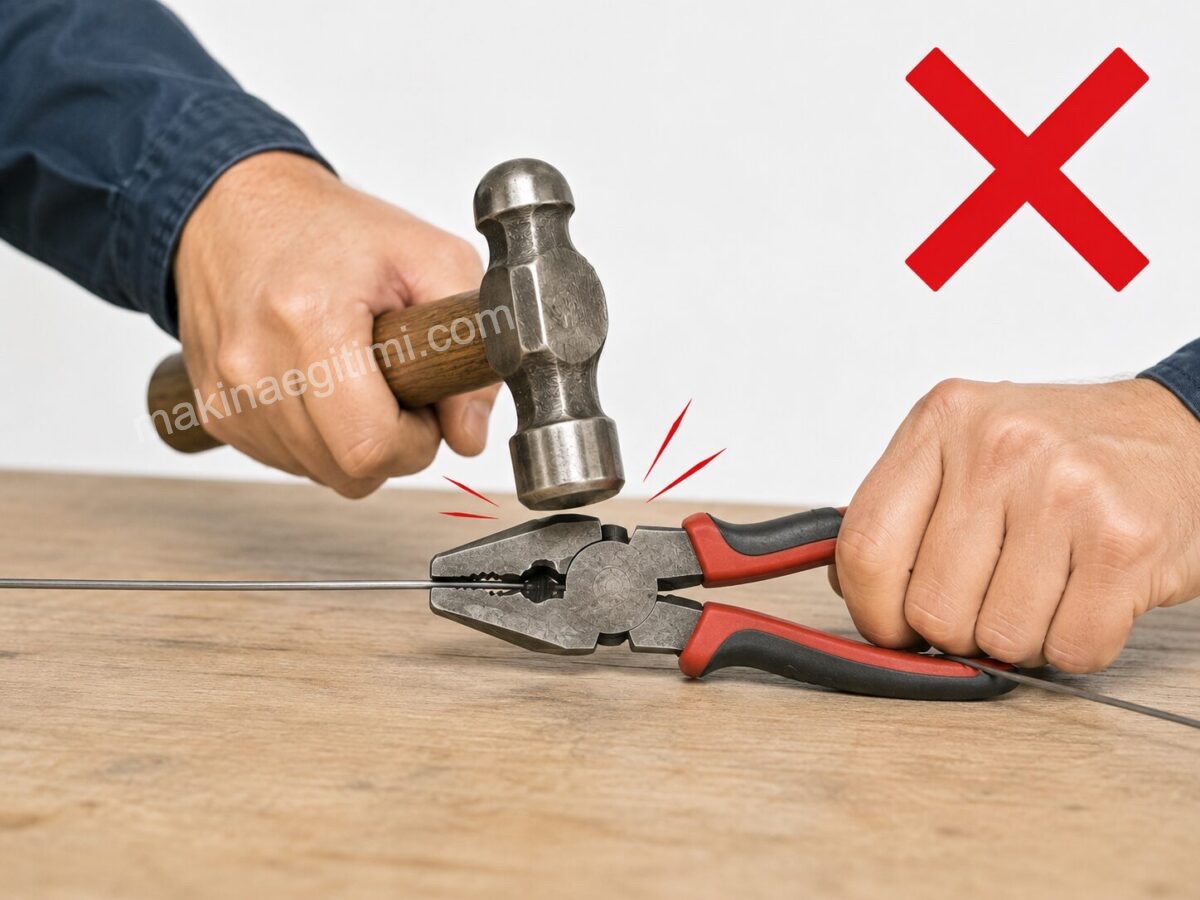
These hand tools shouldn’t be struck with a hammer or subjected to impact.
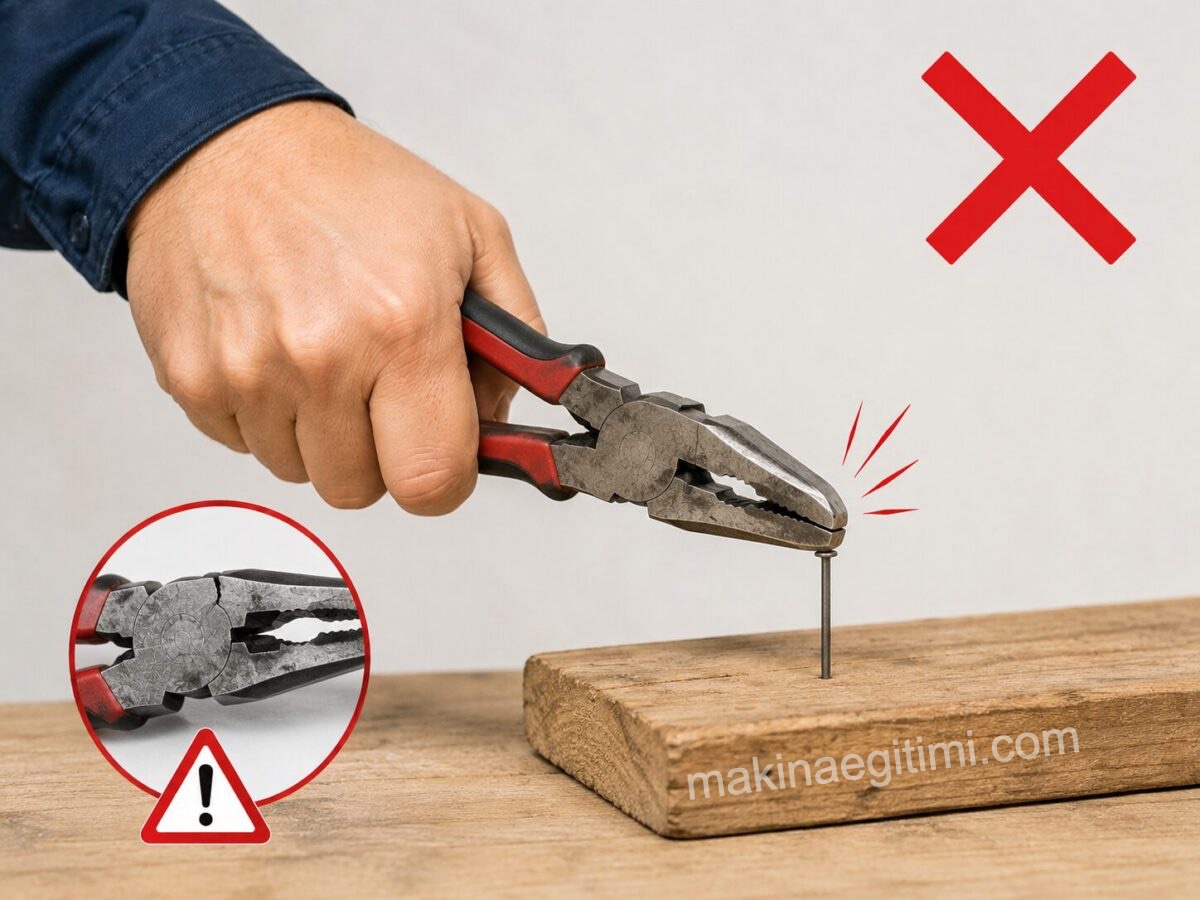
Don’t use pliers like a hammer
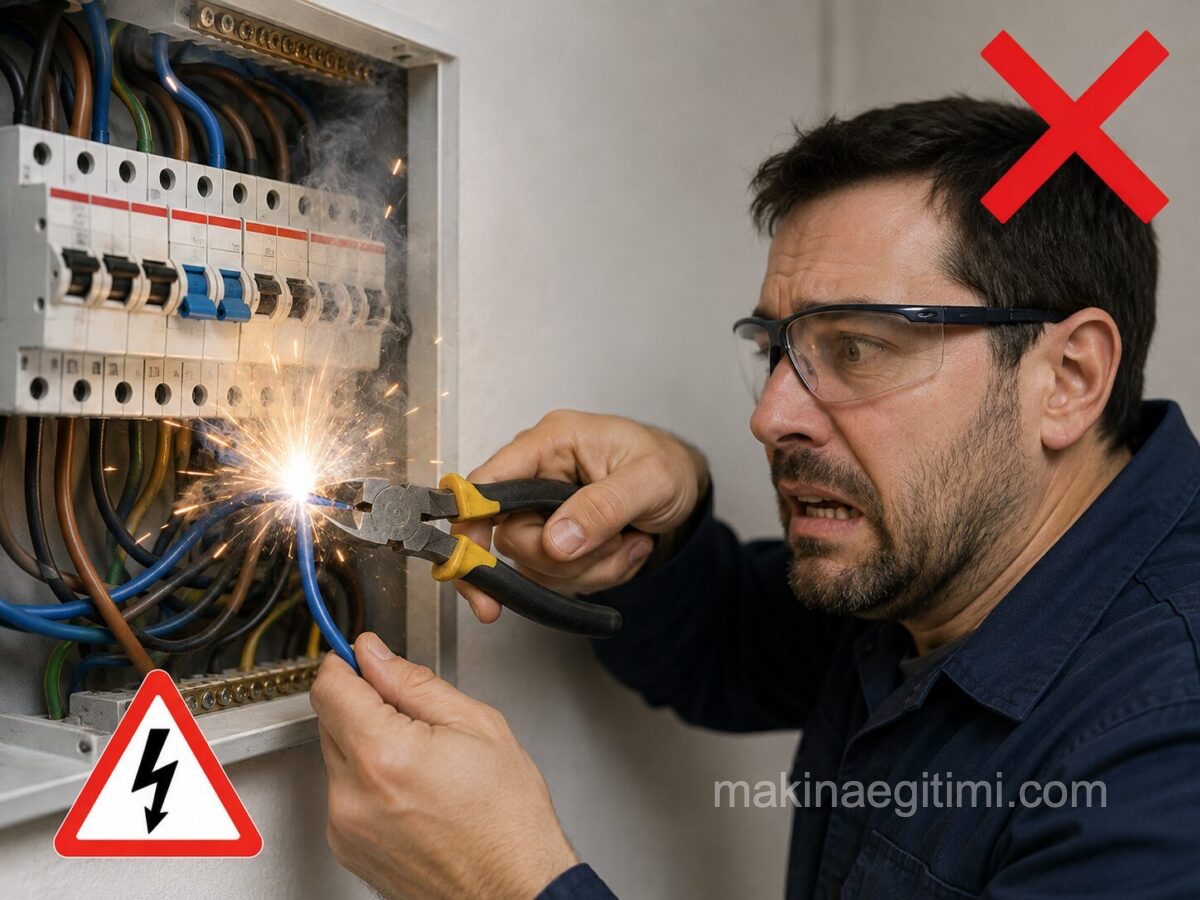
Avoid situations that could create an arc when cutting live wires with hand tools like side cutters.
Shears and Their Use
We’ll continue our coverage of safety precautions for using hand tools with shears. Shears should be used for their intended purpose. After use, they should be cleaned and stored properly oiled. If the shears’ blades need to be sharpened, this should be done by a qualified person.
When cutting metal, take care to choose shears suited to the metal’s diameter.
Misuse of Hammers and Chisels
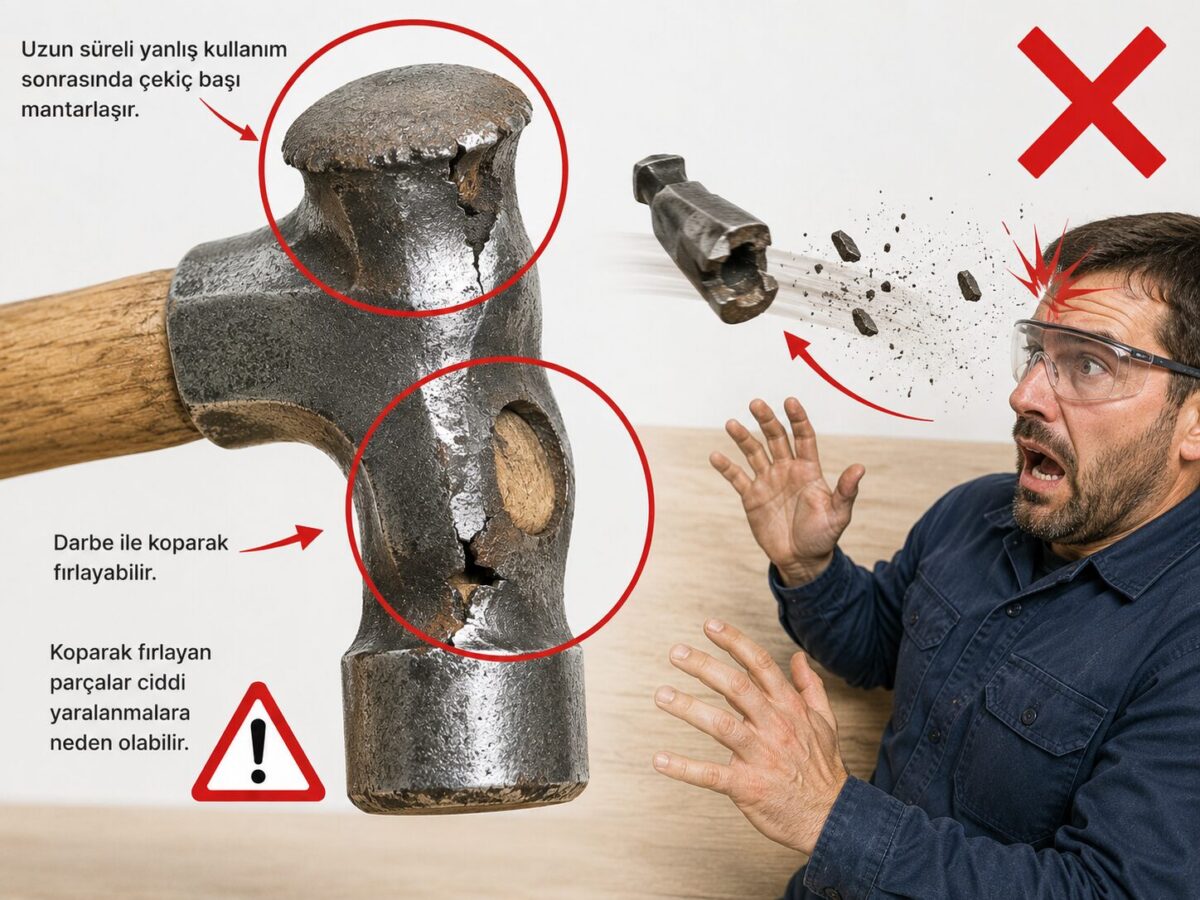
The hammer’s edges, tip, and corners shouldn’t be exposed to impact. When hammers with a hardened head and face are used for a long time, the material starts to deform (flow). Burrs form on the hammer’s face. If these burrs aren’t cleaned off, they can fly off and injure someone.

Chisels will also show wear, burring, and mushrooming at their tip during use. Grinding the tip to repair it will spoil the chisel’s factory-hardened properties. When cleaning off the mushrooming that forms on hammers and chisels, a cutting fluid should be used so the material’s hardness isn’t affected.
Related Questions
Using a tool for a job it wasn’t designed for increases both the risk of the tool breaking and the chance of it moving uncontrollably. The right tool both keeps the job safe and protects the user from unexpected accidents.
Since water conducts electricity easily, using a high-voltage tool in a damp environment carries a serious shock risk. Low voltage keeps the current that would pass through the body in the event of a leak at a level that doesn’t pose a life-threatening danger.
Related Posts
 Occupational Health and Safety in Welding Work
 Safety Rules for Workers on Hydraulic and Pneumatic Machines
 5S Management in Workshops and Factories
 What Is Personal Protective Equipment (PPE)? What Are Its Types?
 Occupational Safety When Working With Electricity
 Safe Forklift Use. Forklift Safety Rules
 Occupational Safety on Press Machines
 Safety in Electrical Interior Installations