
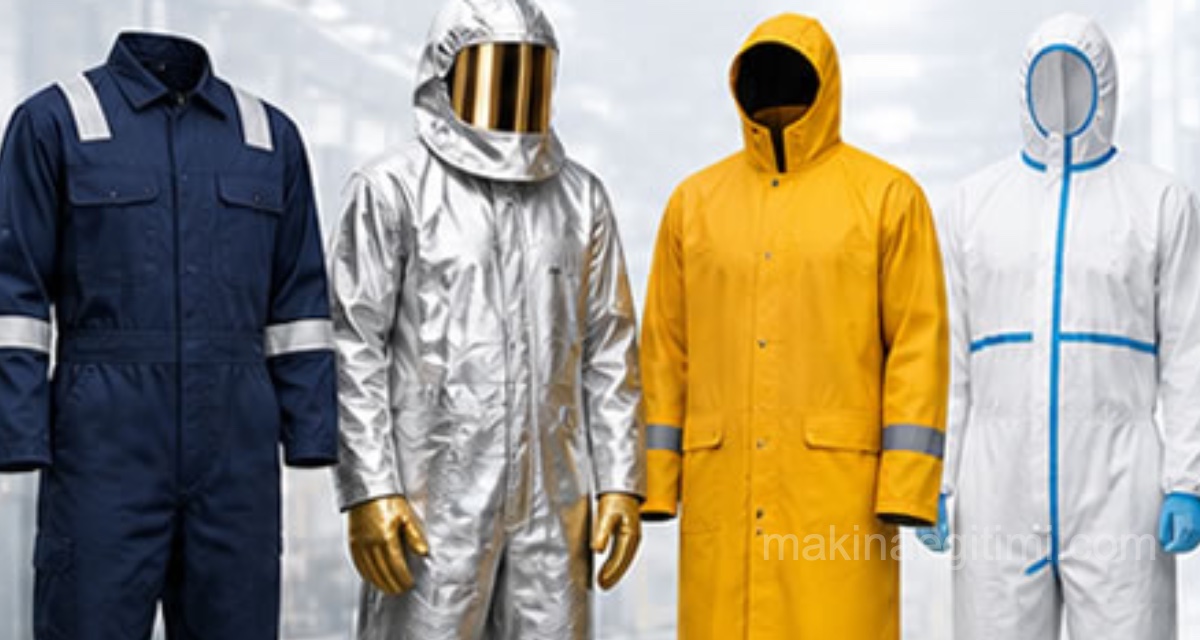
One of the most fundamental elements of workplace safety is selecting and using the right equipment to protect workers from hazards on the job. The general name for this equipment is Personal Protective Equipment (PPE). In this article, we cover what PPE is, what types of it exist, and why proper use is so important.
What Is Personal Protective Equipment (PPE)?
Personal Protective Equipment (PPE) is the general name for any tool, device, or gear worn, attached, or carried by a worker to protect against one or more health and safety hazards. PPE does not eliminate a hazard; it only reduces or prevents the hazard’s effect on the worker. For this reason, in workplace safety, PPE is considered the last step in the hierarchy of controls: first the source of the hazard is eliminated, then engineering and administrative controls are attempted, and PPE is used as a final shield against whatever risk remains.
Why Is Personal Protective Equipment Mandatory?
Under Turkey’s Occupational Health and Safety Law No. 6331 and the associated “Regulation on the Use of Personal Protective Equipment in Workplaces,” an employer is required to provide appropriate PPE to workers when workplace risks cannot be fully eliminated through engineering or administrative controls, and to supervise the workers’ use of this equipment. PPE must bear the CE mark, be appropriate for the work being performed, and be inspected regularly.
Types of Personal Protective Equipment
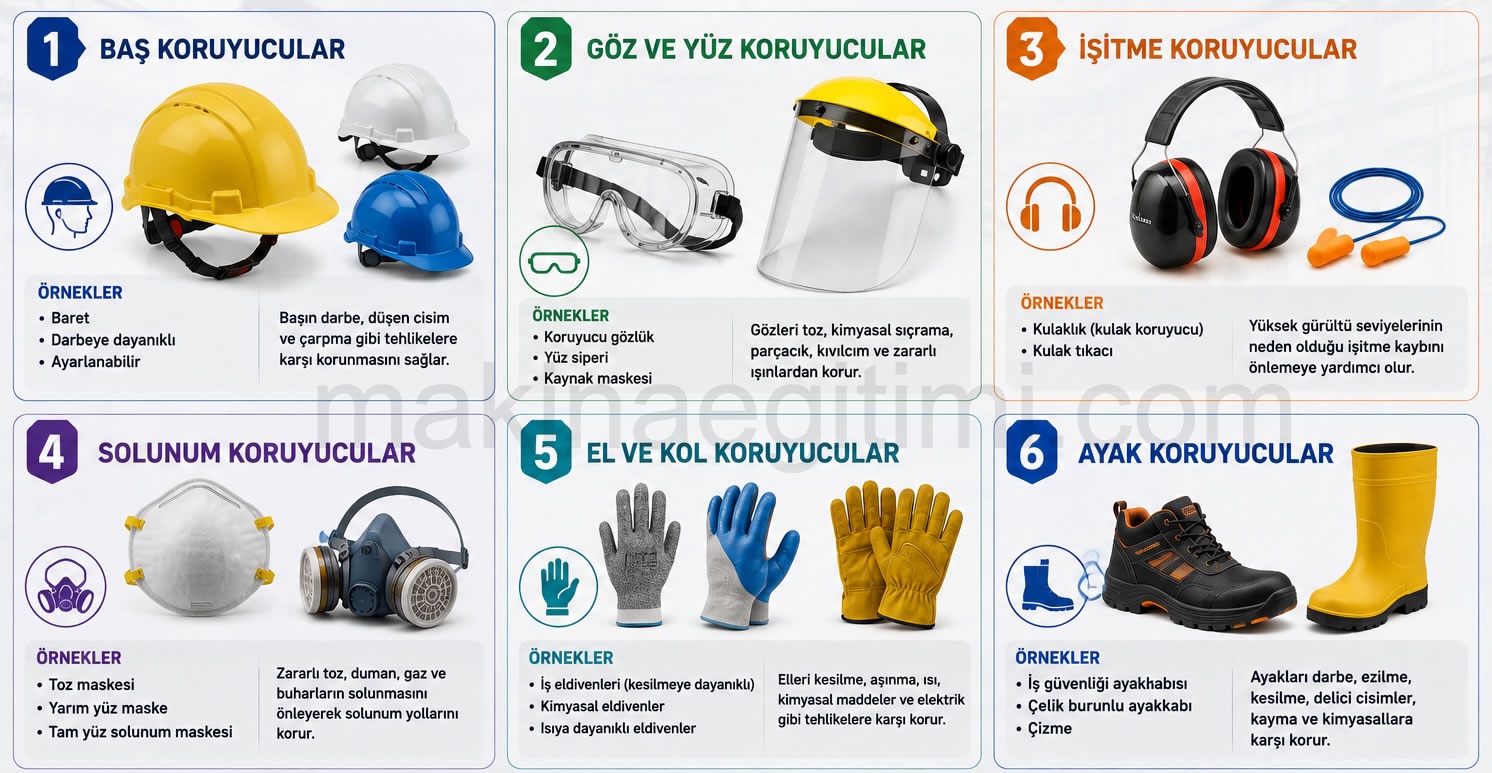
Head Protection
Hard hats (safety helmets) protect the head against falling objects, impacts, and electric shock. They are mandatory in construction, mining, and heavy industry facilities.
Eye and Face Protection
Safety glasses and face shields protect the eyes and face against hazards such as flying chips, welding light, chemical splashes, and dust. Welding masks, used in welding work, also have special filters against harmful UV and infrared radiation.
Hearing Protection
Ear plugs and earmuffs are used to prevent hearing loss in high-noise environments (above 85 dB). They are mandatory in workshops with noisy equipment such as CNC machines, presses, and compressors.
Respiratory Protection
Dust masks, gas masks, and respirators protect the lungs against welding fumes, paint solvents, metal dust, and harmful gases. The filter class of the mask used (FFP1, FFP2, FFP3) should be selected according to the type of hazard present in the environment.
Hand and Arm Protection
Work gloves protect hands against cuts, punctures, burns, chemical contact, and electric shock. Depending on the task, cut-resistant, heat-resistant, or electrically insulated gloves should be chosen. Choosing the wrong gloves (for example, wearing loose gloves near a rotating machine) can increase the risk of an accident rather than prevent it.
Foot Protection
Steel-toe work shoes protect the feet against falling objects, sharp punctures, and slippery floors. Insulated-sole models are used for electrical work, while acid/chemical-resistant models are used in chemical environments.
Body Protection
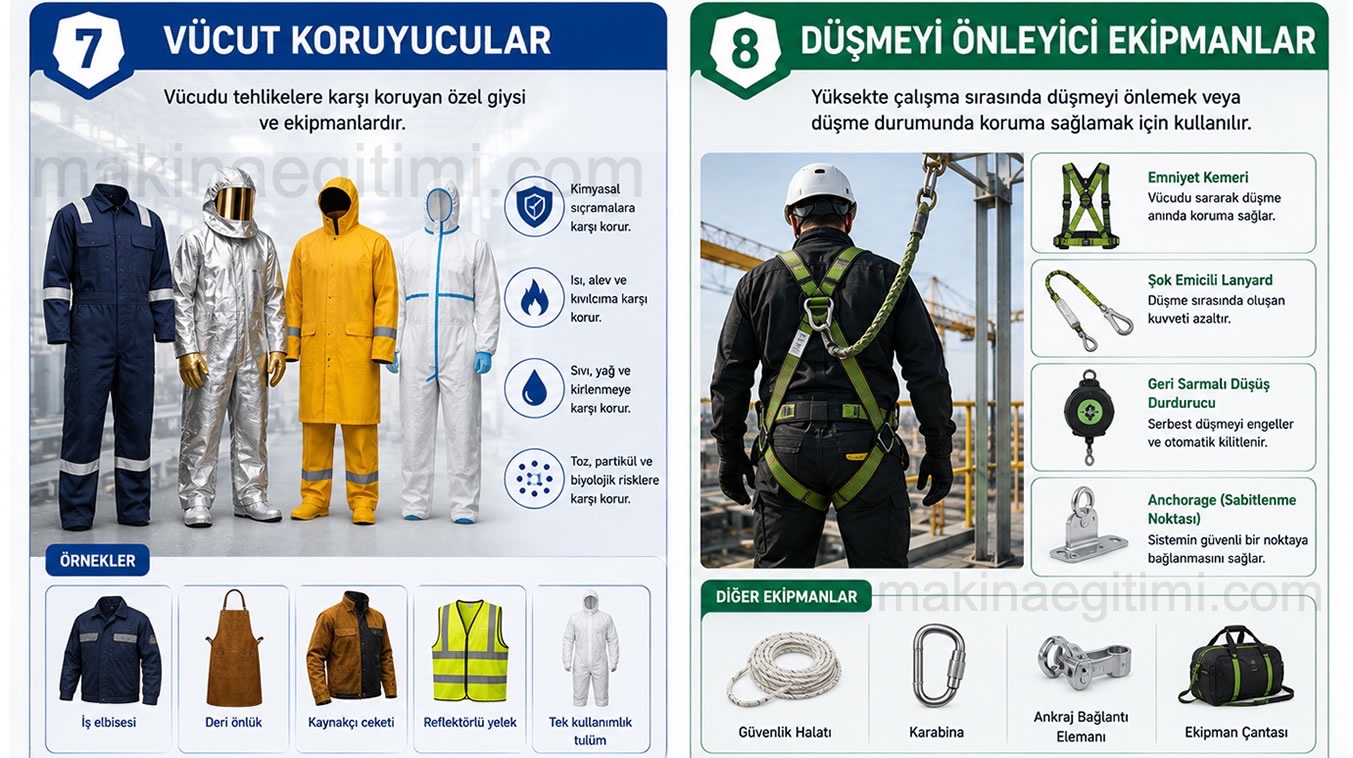
Reflective vests increase visibility, while aprons, coveralls, and welder’s jackets protect the body against sparks, hot metal particles, and chemical splashes.
Fall Protection Equipment
Safety harnesses, ropes, and carabiners are used against the risk of falling in work performed at height (roofs, scaffolding, poles).
How to Choose the Right PPE?
- First, a risk assessment should be carried out in the workplace to identify which hazards are present.
- The chosen PPE must be certified (CE marked) against the relevant hazard.
- PPE must be the right size/type for the user’s body and the task being performed; equipment that is too large or too small provides no protection.
- It should be inspected regularly, and any PPE that is damaged or has reached the end of its service life should be replaced immediately.
- Workers should be trained on the proper use of PPE; improperly used PPE can provide less protection than not using it at all.
Personal protective equipment is the last and most visible line of defense in preventing workplace accidents and occupational diseases. However, it must be remembered that PPE alone is not enough; the real goal is to eliminate or reduce the hazard at its source. PPE should be considered part of a holistic workplace safety culture, together with the other measures taken.
Related Posts
 Occupational Safety When Working With Electricity
 5S Management in Workshops and Factories
 Safety in Electrical Interior Installations
 Safety Rules for Workers on Hydraulic and Pneumatic Machines
 Safety Rules for Working on a Lathe
 Occupational Health and Safety in Welding Work
 Safe Forklift Use. Forklift Safety Rules
 Workplace Safety and Misuse of Hand Tools