
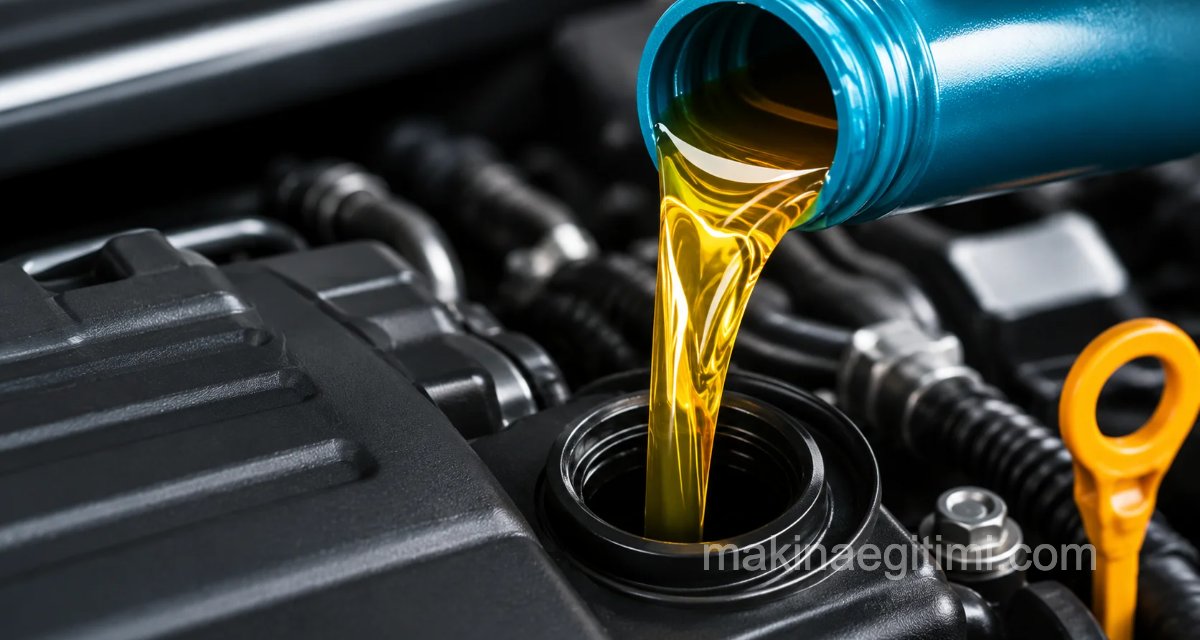
The engine lubrication system is the system in vehicles responsible for circulating between or over surfaces that work against each other, to prevent direct contact, ease the flow of motion, clean the working surfaces, cool them, and thereby extend the life of the moving parts.
Parts of the Engine Lubrication System

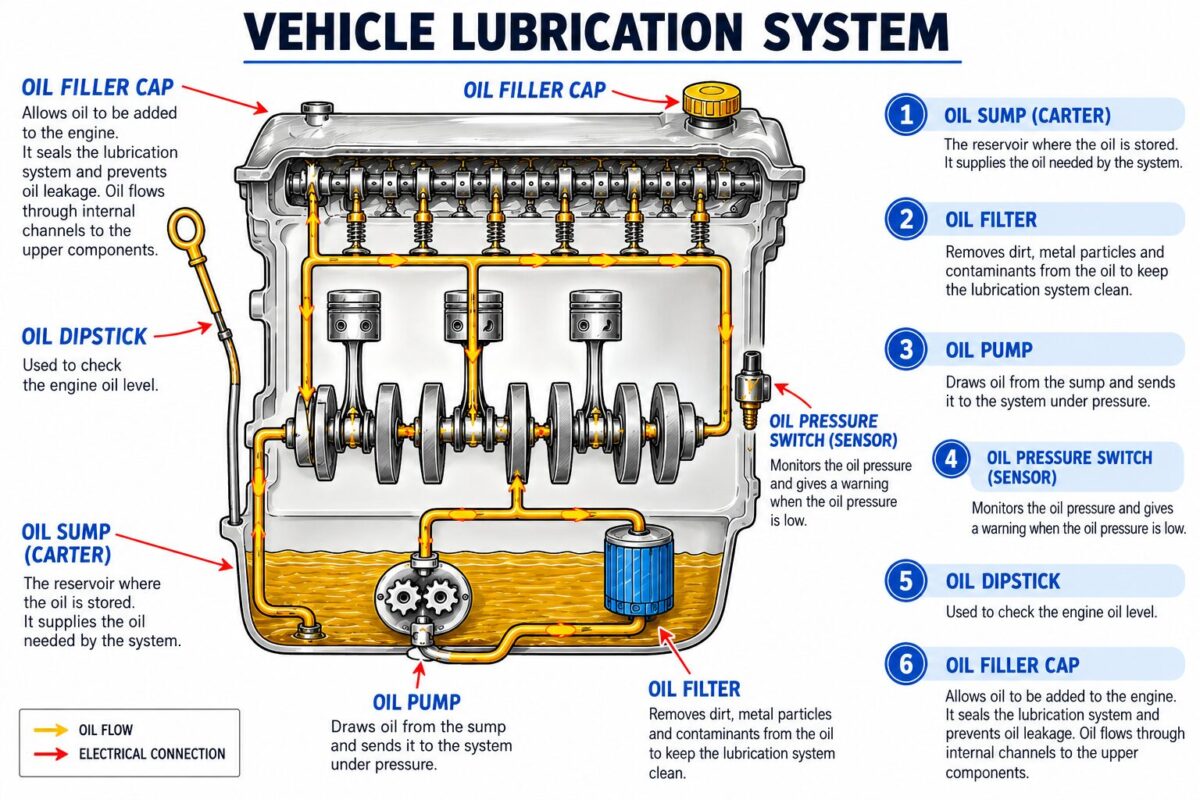
Oil Pan
Closes off the bottom of the engine block. Serves as a reservoir for the engine oil and helps it cool.

Oil Pump
Pumps the oil stored in the pan, under a certain pressure, to all the parts that need lubrication. It gets its motion from the camshaft.

Oil Filter
Cleans the oil circulating in the system.

Oil Pressure Switch
Also known as: THE OIL PRESSURE SENSOR.
The sensor that sends the signal to the oil gauge

Oil Gauge
Shows the pressure of the oil circulating in the lubrication system. In some vehicles it’s a dial gauge, in others a warning light.

Engine Oil Dipstick
Used to check the oil level in the pan.
How Does the Engine Lubrication System Work?
While the engine is running, the oil pump takes oil from the pan and sends it to the crankshaft main bearings, connecting rod bearings, camshaft bearings, valve train, and all rubbing parts. Once the oil has done its job, it returns to the pan.
Cleaning and Maintenance of the Engine Lubrication System
Checking the Engine Oil
With the vehicle on level ground and before starting the engine, the dipstick is pulled out. After wiping it with a clean, lint-free cloth, it’s put back in. It’s pulled out again and the level is checked. The level should be between the two marked points, or just past the middle.
What Happens When the Engine Oil Runs Low?
If oil appears to be missing on the engine oil dipstick, lubrication will be incomplete, causing the engine to run without adequate oil, which is extremely hazardous.
What Happens If Too Much Engine Oil Is Added?
If the oil is above the top line, there’s too much oil. The engine starts burning oil, and it damages the front and rear crankshaft seals. The oil level should be between the two lines.
What Do You Do If the Oil Gauge Shows No Pressure While the Engine Is Running?
If the oil warning light suddenly turns on or the gauge shows no pressure while the engine is running, turn off the ignition immediately, check the oil level first, then check the oil pressure switch. If the fault can’t be identified, take the vehicle to a service center without starting the engine.
Changing the Engine Oil and Oil Filter at the Mileage Intervals Specified in the Vehicle’s Owner’s Manual: The engine oil and oil filter need to be changed according to the manufacturer’s recommendations and the quality of the oil used.
Determining the Type of Oil Used in the Engine: Oil is used according to the manufacturer’s recommendation.
Oil Burning Problem
Why Does an Engine Burn Oil?
The engine can burn oil due to worn piston rings, cylinders, or valve guides, or because there’s too much oil.
What Color Smoke Does an Oil-Burning Engine Emit?
In engines that burn oil, the exhaust gas is blue in color.
Pressure Lubrication System
In modern engines, oil is distributed under pressure with the help of a pump to all moving parts inside the engine.
Role of the Oil Filter
The oil filter traps metal particles and contaminants in the engine oil, preventing wear on moving parts.
Oil Pressure Sensor
Low oil pressure is detected by the sensor and relayed to the driver as a warning on the instrument panel.
Related Questions
This gauge reports the oil pressure in the system to the driver in real time, using information from the oil pressure sensor. If pressure is low, it indicates lubrication is insufficient, providing an early warning to prevent engine damage.
The camshaft rotates continuously as long as the engine is running, and transmitting this motion to the oil pump ensures the pump keeps circulating oil in step with the engine’s running speed. This guarantees uninterrupted lubrication for as long as the engine runs.
Related Posts
 Blue Smoke from the Exhaust and Its Causes
 What Is a Carburetor? What Does It Do? How Does It Work?
 What’s Under the Hood? A Guide to the Engine Bay
 What Is a Starter Motor, What Does It Do?
 How Does a Vehicle’s Charging System Work? Components, Jobs, and Failures
 Engine Noises and What They Mean
 What Is a Clutch? How Does It Work? Failures and What Drivers Should Know
 Why Doesn’t the Engine Start? Reasons the Engine Fails to Start.