
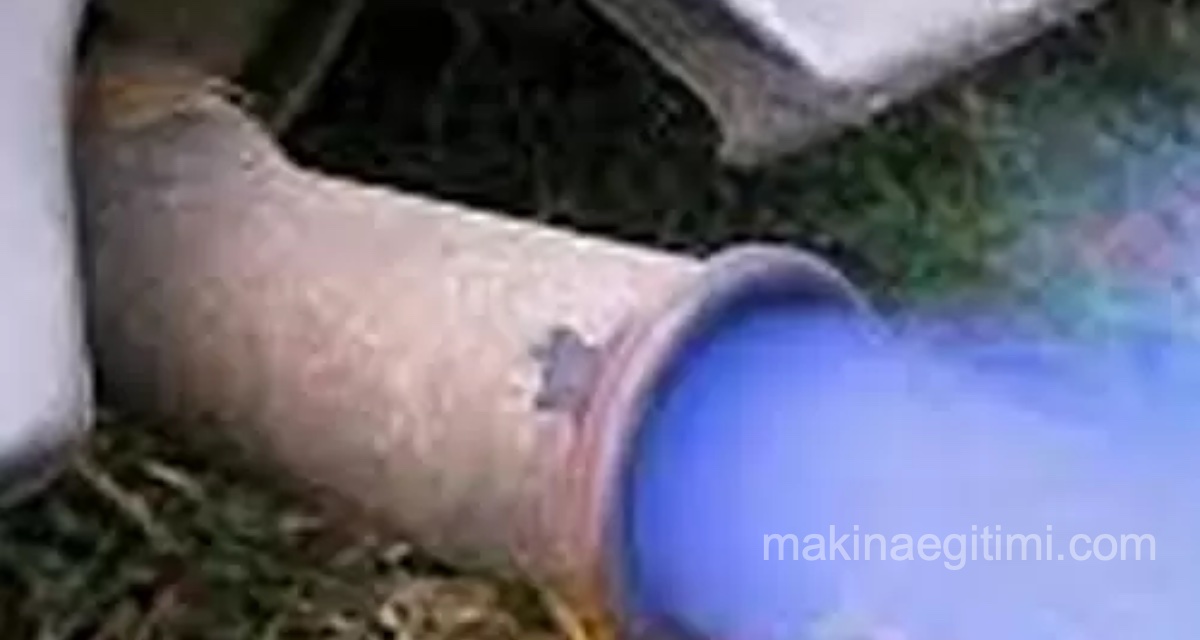
Blue smoke coming from the exhaust means that oil has leaked into the combustion chamber in the cylinders, and the engine is burning oil. If blue smoke is coming from your exhaust and you’re wondering why, keep reading.
Blue Smoke Coming from the Exhaust

Why does the engine burn oil?
Worn piston oil rings fail to scrape the oil off the cylinder walls, so the oil that remains on the cylinder wall burns together with the fuel during combustion, resulting in black smoke.
When valve seals lose their properties and their sealing ability, engine oil from the rocker cover leaks into the cylinders, and the engine burns oil. If the clearance between the valve stem and the valve guide bore has increased due to wear, engine oil can also leak into the cylinder through this clearance, causing the engine to burn oil.
As a result of a blown cylinder head gasket, oil in the oil galleries can pass into the combustion chamber, causing the engine to burn oil.
Other Possible Causes of Blue Smoke from the Exhaust
- Fuel injection fault: Due to a fuel injection fault, the vehicle may burn excess fuel, which can cause blue smoke.
- Clogged fuel filter: Due to a clogged fuel filter, sufficient fuel may not reach the vehicle, which can cause blue smoke.
- Fuel pump failure: Due to a fuel pump failure, sufficient fuel may not reach the vehicle, which can cause blue smoke.
- Low engine oil level: Due to a low engine oil level, friction between engine parts can increase, which can cause blue smoke.
- High levels of NO2 and NO gases in the exhaust gases: These gases are a normal product formed during the engine’s combustion. However, if the amount of these gases is very high, blue smoke can occur.
To determine whether any of these causes is present, the vehicle needs to be inspected by a service center. Also, especially if there’s a large amount of blue smoke, it indicates a serious fault related to the vehicle’s combustion system.
Cause of Blue Smoke
Blue smoke from the exhaust is generally caused by engine oil leaking into the combustion chamber and burning.
Piston Ring Wear
Worn piston rings are one of the most common causes of oil leakage and blue smoke.
Turbo Seal Failure
In turbocharged engines, worn turbo shaft seals can also let oil mix into the intake system and produce blue smoke.
Related Questions
The job of the valve seals is to prevent the oil that lubricates the rocker mechanism from running down the valve stem into the combustion chamber. When the seals harden and can no longer do their job, this oil is no longer blocked and leaks into the combustion chamber.
If more fuel than necessary is injected due to a fault, this excess fuel can’t fully combust. When the resulting mixture of partially burned fuel and oil exits the exhaust together, it can appear as bluish smoke.
Related Posts
 Engine Lubrication System and Its Parts
 5 Tips for Cleaning Pet Hair
 Why Does the Engine Burn Too Much Oil? The Oil Consumption Problem
 Why Does a Car Tire Crack? Why Does It Rot?
 How Is Engine Oil Checked? Engine Oil Check
 Preventing and Removing Mold Inside a Vehicle
 How Is Car Window Fogging Prevented
 Why Does the Battery Warning Light Come On? Signs of a Battery Fault