
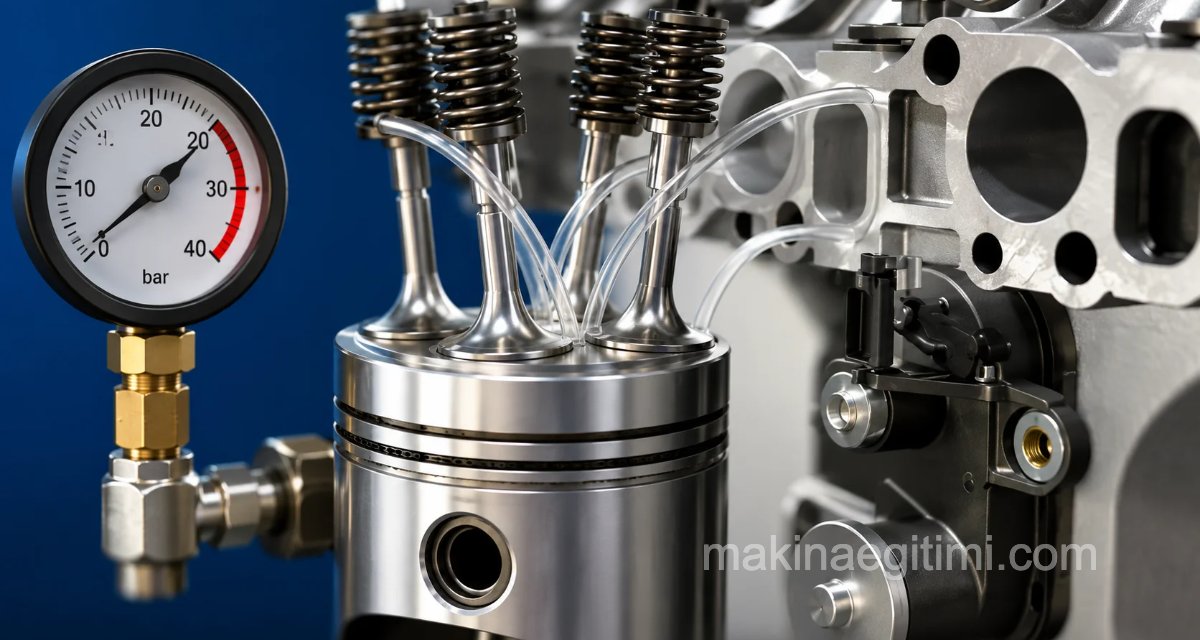
In this article, part of our motor vehicles engine knowledge section, we’re devoting our attention to the intake manifold. What is an intake manifold? How can you tell an intake manifold is faulty? What happens if the intake manifold takes in extra air? What is the intake manifold’s job? We’ll cover topics like these, along with checking for leaks in the intake manifold and intake manifold leaks in general.
Intake Manifold
Your car breathes. Just like you. It takes in air, breathes out, and exhausts. But air, and especially the oxygen it contains, is just as important to your car’s life (or at least its motion) as it is to your own life.

In internal combustion cars (and despite electric cars starting to enter the market, most cars — including hybrids — still have internal combustion engines), what makes motion possible is a series of small explosions that occur in the combustion chambers. The fuel for these explosions is usually gasoline.
But without oxygen, explosions aren’t possible and combustion doesn’t happen. For the engine to run, there needs to be the right air-fuel mixture in your car’s cylinders.
The Intake Manifold’s Job
If a car is like your body, we could say the engine is the body’s heart, and the intake manifold is its lungs. The intake manifold is a series of tubes that distributes the air coming into the engine equally to each of the cylinders, so the right amount of air can mix with the right amount of gasoline.

Most internal combustion engines run on a four-stroke process, and during the first stroke (called the intake stroke), air in the intake manifold is drawn into each cylinder through a valve. These intake valves then close for the other three strokes (compression, combustion, and exhaust) and reopen when the cycle starts over. It’s the intake manifold’s job to make sure enough air is available every time a valve opens for an intake stroke, and that every cylinder gets as much air as every other one.
How Does the Intake Manifold Work?
What Happens If the Intake Manifold Takes In Extra Air?
What happens if the intake manifold leaks? Intake manifold leaks aren’t common, but they do happen sometimes. You’d actually expect a leak in the intake manifold to result in air escaping, meaning less air reaches your car’s cylinders. But that’s not what happens. Quite the opposite — since the air pressure inside the manifold is below the ambient air pressure surrounding the engine, the manifold actually sucks in extra air through the leak. This throws too much air into the cylinders and reduces the amount of gasoline that can be mixed with it alongside it, which results in less effective combustion. So if the intake manifold takes in extra air, your engine’s efficiency will drop.
Remember that each time one of these small explosions happens in one of your car’s cylinders, it turns the crankshaft. If there’s too much air and not enough gasoline for combustion, the explosions will be weaker and your engine will have to work harder to turn the crankshaft. So if you notice your car responding more sluggishly every time you press the accelerator — if you’re saying “I step on the gas and the car doesn’t move” or “I step on the gas but the car reacts late” — a leak in the intake manifold could be the culprit.
How Can You Tell the Intake Manifold Is Faulty?
That said, there are other possible causes of poor performance in a car. How do you tell whether your car’s reluctance to accelerate is coming from a leak in the manifold? One method is simply to listen to your engine. Your car might be trying to tell you something’s wrong, so pause for a moment and try to understand what it’s saying. You’ll actually need to pause, because you can usually hear it while the engine is idling. You might hear hissing or whistling sounds while the engine idles. The engine might stall very slowly. Or, when you turn off the ignition, it might keep running a bit longer. All of these can be signs of an intake manifold leak.

Checking the intake manifold for leaks
Some experts recommend spraying a small amount of starting fluid onto the intake manifold gaskets while the engine idles. If the engine reacts in any way to this — for example, by suddenly speeding up — that indicates fluid is being drawn in through a leak. All of these signs are a warning that you should visit a mechanic for a definitive leak check.
Air Distribution Job
The intake manifold distributes the air coming from the air filter equally to every cylinder of the engine.
Sign of a Vacuum Leak
A crack in the manifold gasket can cause a vacuum leak, leading the engine to idle roughly.
Variable Geometry Design
Some modern engines use a variable-geometry intake manifold to optimize performance across different RPM ranges.
Related Questions
A leak lets in extra, uncontrolled air outside of the amount calculated by the engine control unit. This extra air throws off the fuel-air mixture ratio, causing the engine to run roughly or weakly.
Just as the lungs carry oxygen to the body, the intake manifold distributes the air the engine needs for combustion evenly to the cylinders. Without this air, the fuel can’t burn, and the engine can’t run.
Related Posts
 Coilover (Coil Spring Shock Absorber) Advantages and Disadvantages
  What Does the Noise from the Valves Mean?
  What Is Engine Braking? Does It Damage the Vehicle?
  What Is a Turbocharger? How Does It Work? Advantages and Disadvantages
  Is It Harmful to Drive Off Without Warming Up the Engine?
  Properties and Advantages of Scooters
  What Is a Carburetor? What Does It Do? How Does It Work?
  What the Markings on a Car Tire Mean