

Why doesn’t the engine start? The reasons an engine fails to start can be grouped under a few headings: we can classify these as fuel system-related reasons (Gasoline / Diesel), electrical system-related reasons, and reasons related to a mechanical fault inside the engine.
Reasons the Engine Fails to Start
Fuel System-Related Reasons
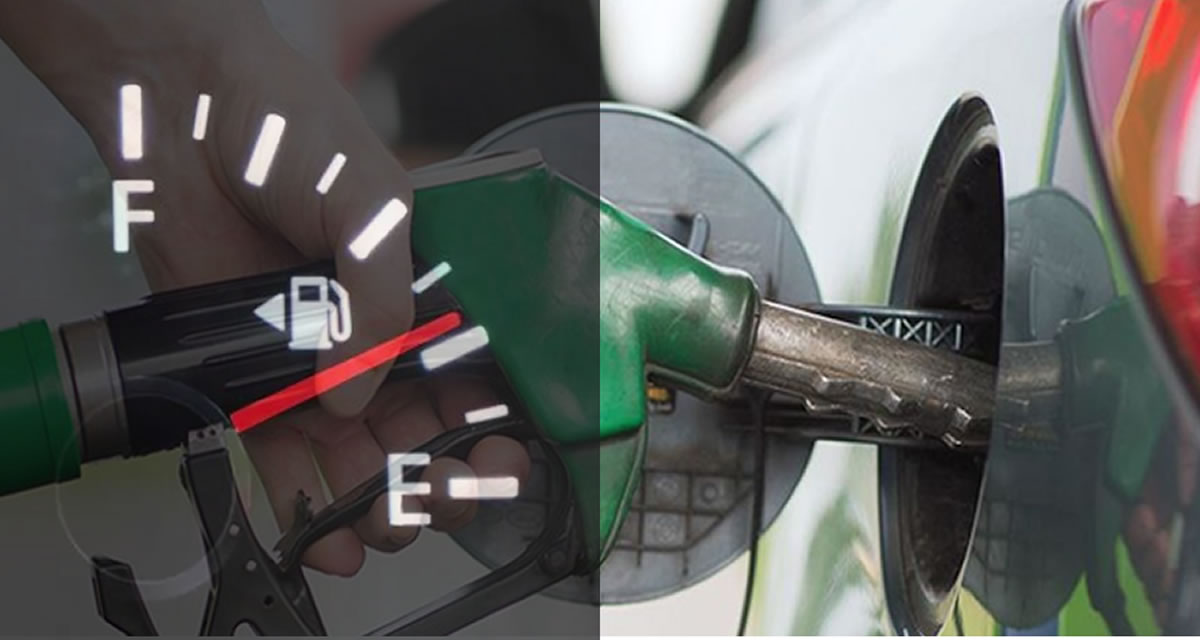
No fuel
The reason the engine won’t start may be one of the following: the fuel gauge isn’t working properly or is faulty, so you may not know whether there’s enough fuel to start the engine. For example, if the fuel gauge needle is at the very bottom, it means fuel is insufficient. Similarly, if it stays stuck at the very top, the gauge is faulty. If you can’t see any reading on the fuel gauge, add at least 1 liter if you’re driving a motorcycle, or at least 5 liters if you’re driving a car.
Water in the fuel tank
If, for any reason, water leaks into the fuel tank and therefore the fuel system, your engine may not start.
SOLUTION: Remove the fuel tank and drain its contents completely. Then fill it with fresh/clean fuel. Depending on the situation, you may also need to remove and clean the injectors or the carburetor.
Clogged fuel filter / fuel pump
Replace the fuel filter element as recommended by the manufacturer. Replace the fuel pump.
Related article: How is a fuel pump fault diagnosed
Restricted Airflow
The engine isn’t starting due to restricted airflow to the engine. This may be caused by obstructions such as dry leaves in the front grille vents or a clogged air filter.
SOLUTION: Clear the obstructions in the air intake ducts.
Clogged air filter
One reason the engine won’t start may be a clogged air filter. Remove the air filter element and clean/replace it as recommended by the manufacturer.
Pay attention to the dashboard lights. If the “check engine” light stays on, there is a problem with the engine management system. In this case, you may need to consult a qualified technician.
Reasons a Diesel Engine Fails to Start
Fuel Injection Pump (FIP) Solenoid
If the solenoid connection that activates fuel supply to the FIP is disconnected, the diesel engine will not start.
SOLUTION: Connect the wire to the FIP solenoid and secure it firmly / Replace a blown solenoid fuse.
Clogged injectors
If your engine’s injectors are clogged, the engine will not start. Carbon deposits on the injector tips block them, causing faulty/insufficient injection.
SOLUTION: Remove and clean the injectors. Check the correct injection pressure.
Checking Battery Voltage
A healthy vehicle’s battery should read around 12.4-12.7 volts when the engine is off.
Fuel Pump Failure
One common cause of an engine failing to start is a faulty fuel pump that can’t deliver enough pressure.
Checking the Ignition System
Worn spark plugs or faulty ignition coils can completely prevent the engine from running.
Why Doesn’t the Engine Start?
Problems Related to the Electrical System

The Battery Charge May Not Be Sufficient.
If your car’s/motorcycle’s battery drops below 9 volts, it may not start the engine. A battery must supply at least 10 volts to start the engine.
Related article: How do we tell the battery is dead
The Cause May Be the Spark Plugs
The spark plugs may be faulty or may not be making proper contact, so the ignitions needed to start the engine may not be occurring.
Related article: How is a spark plug replaced
Related article: Spark Plug Faults and Their Causes
The Battery Cable May Be Loose
If your car’s/motorcycle’s battery cable is loose, it may not start the engine. In this case, you may hear a clicking sound when you turn the ignition key.
SOLUTION: Tighten the battery terminals sufficiently.
Mechanical Component Failures
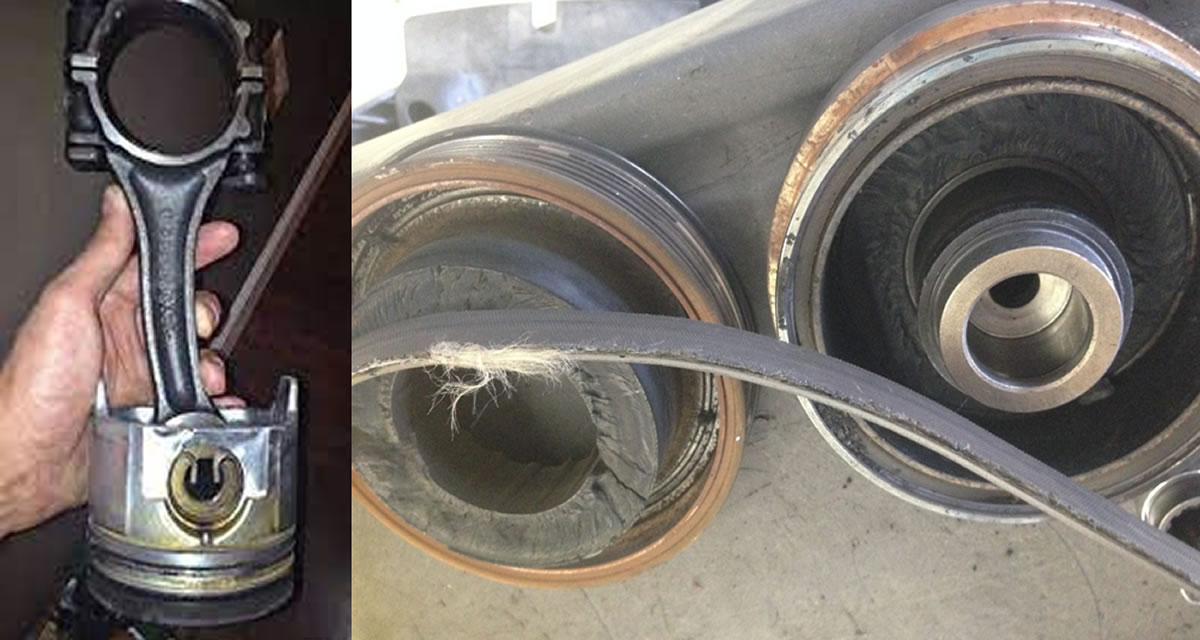
Mechanical failure inside the engine
There can be many causes of mechanical failure in an engine, such as pistons seizing, valves breaking, connecting rods bending, pulleys breaking, etc.
SOLUTION: A poorly maintained engine can lead to this kind of mechanical failure. For this reason, the engine needs to be thoroughly inspected and analyzed to determine the exact nature of the cause.
Clogged muffler
One reason the engine won’t start may be a blockage in the muffler or exhaust pipe. If the muffler/exhaust pipe is clogged or there is an obstruction, the engine won’t start either.
SOLUTION: Clear the blockage in the exhaust pipe and clean it.
Summary
If the car’s engine won’t start, the likely reasons may be the following:
- Your car’s fuel tank may be empty or the fuel filter may be clogged, so sufficient fuel flow to start the engine may not be occurring.
- Your car’s battery may not be charged or may be defective, so sufficient power to start the engine may not be available. The battery cable may be loose.
- The injectors may be faulty or clogged, so they may be struggling to supply sufficient fuel flow to the engine.
- The distributor may be faulty, so it may be struggling to supply the necessary spark energy to the engine.
- The air ducts may be clogged. The fuel filter or air filter may be clogged.
- If the muffler/exhaust pipe is clogged or there is an obstruction, the engine won’t start either.
- The spark plugs may be faulty or may not be making proper contact, so the ignitions needed to start the engine may not be occurring.
- Your car’s sensors may be faulty or not working, so they may be struggling to supply correct information to the engine control module.
- The engine control module may be faulty or not programmed, so it may be unable to give the necessary commands to start the engine.
For these reasons, it’s recommended that you check the car with proper equipment. It may also need to be checked by a technical service center.
Related Questions
The engine needs a fuel-air mixture to combust; when water enters this mixture, combustion cannot occur. Water can also damage sensitive parts such as the injectors or carburetor.
If the gauge stays stuck at the very bottom or the very top, it is likely faulty. In this case, you can test whether fuel shortage is actually the problem by adding a certain amount of fuel to the tank (for example, 5 liters for a car).
Related Posts
 What Is Engine Braking? Does It Damage the Vehicle?
  How Does a Vehicle’s Charging System Work? Components, Jobs, and Failures
  10 Basic Things Every Driver Should Know
  What Is a Drum Brake System, How Does It Work
  Characteristics and Advantages of Rear-Wheel-Drive Vehicles
  How Does a Manual Transmission Work? The Synchromesh Mechanism
  What Is an Intake Manifold? Its Job, and Diagnosing a Fault
  Types of Engine Oil Pumps