
In this article, we’ll cover what a diesel particulate filter (DPF) fault is in diesel vehicles. What causes it, how a diesel particulate filter fault is detected, and why the particulate filter clogs.
Diesel Particulate Filter Fault
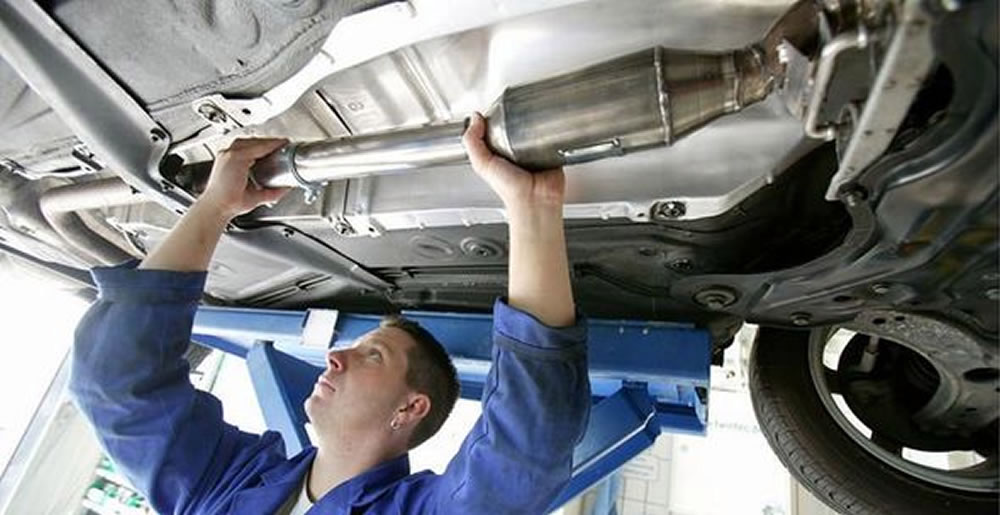
If a particulate filter cleaning (regeneration) process can’t be completed on its own or by the ECU while driving, the diesel particulate filter fills up and clogs. In this case, a fault lamp or a “particulate filter full” warning lamp lights up on the driver’s dashboard. In this situation, you can take the vehicle onto a road where high engine RPM is possible and drive a long distance, allowing the filter to burn off the particulates and clean itself. Alternatively, a computer-assisted particulate filter cleaning process, taking about half an hour, can be performed at an authorized service center.
Fault Lamp Warning
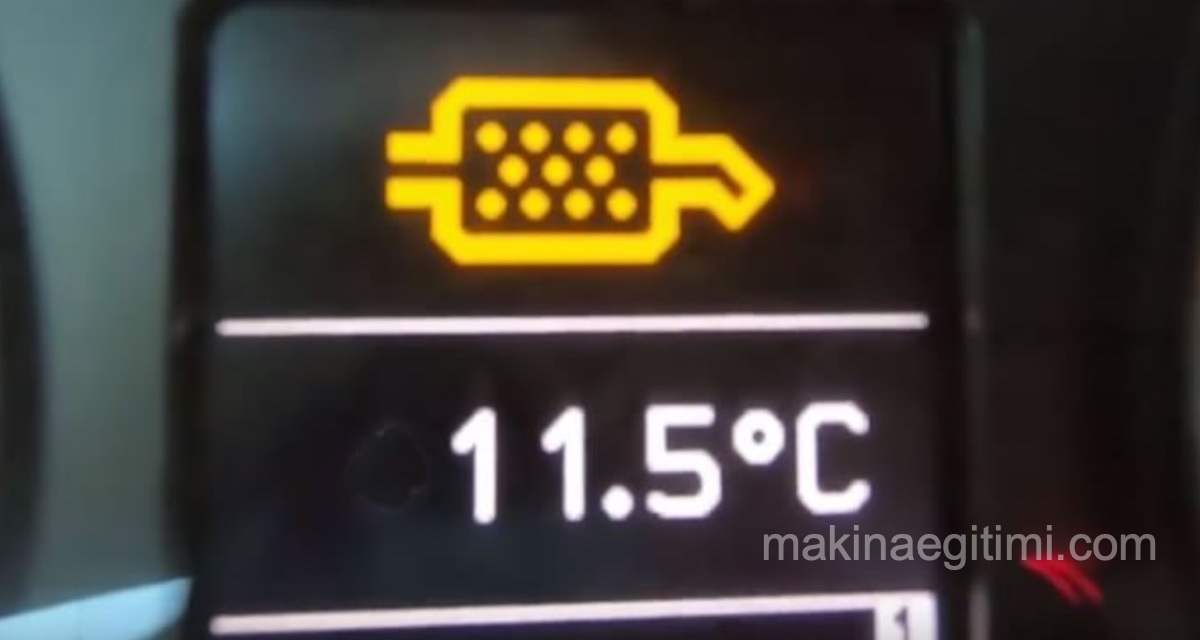
During a DPF fault, an orange particulate filter warning lamp usually lights up on the dashboard.
Power Loss Symptom
A clogged DPF can reduce engine performance, leading to noticeable power loss.
Excessive Fuel Consumption
A DPF fault can cause the engine control unit to change fuel settings, increasing fuel consumption.
How Is a Diesel Particulate Filter Fault Detected
The symptoms of a diesel particulate fault are as follows:
- When the diesel particulate filter clogs and fills up (if the accumulated soot amount exceeds about 40 grams in passenger vehicles), the engine fault lamp or exhaust fault lamp (particulate filter fault lamp) lights up on the dashboard.
- If the fill level exceeds the threshold value, for example over 45-50 grams, the STOP light comes on. The engine runs in fault (limp) mode, power drops, and it should be taken to a service center as soon as possible for a computer-assisted particulate filter cleaning process.
- If the particulate filter is full and clogged, the vehicle’s power drops, fuel consumption increases, and an exhaust smell may be noticeable.

In newer-generation vehicles, a warning message appears on the screen, which may say things like “particulate filter full” or “take to service.”
Sometimes the fault lamp can light up even though the particulate filter isn’t actually clogged/full — in that case, the exhaust gas pressure sensor connected to the particulate filter and this sensor’s pipe/hose connections should be checked for cracks or tears. If there’s a crack or tear, the engine control unit may report a particulate filter error due to incorrect pressure data.
Likewise, if the exhaust gas temperature sensor is faulty, it can also produce a particulate filter fault.
The most common diesel particulate filter fault is the particulate filter filling up with soot. In this case, a cleaning process should be performed.

Related Post How Is a Diesel Particulate Filter Cleaned
How is a diesel particulate filter cleaned in vehicles, trucks, and semi-trucks. Cleaning the diesel particulate filter without taking the vehicle to a service center.
Why Does a Diesel Particulate Filter Clog? What Should You Pay Attention To?
Constantly driving the vehicle at low speed and low engine RPM, or constantly driving short distances (home to work), causes the particulate filter to clog (fill up) faster. Periodically driving long distances at high RPM allows the particulate filter to clean itself.
To avoid a diesel particulate filter fault, low-sulfur, quality diesel fuel should be used, and you should avoid constantly driving the vehicle over short distances. Low-quality fuel causes the particulate filter to fill up more frequently.
Attention should be paid to using quality, suitable engine oil. The engine oil recommended by the manufacturer should be used. Additives found in some cheap engine oils cause the particulate filter to clog.
In this article, we gave information about diesel particulate filter faults. We tried to answer questions such as: what are the symptoms of a DPF fault, how is a diesel particulate filter fault detected, why does it clog, why does it fail, what should be done in case of a fault, and what should you watch for to prevent it from failing. See you in new articles. Have a great day, and safe, enjoyable drives.
Related Questions
Self-cleaning of the filter requires the exhaust gas to reach a certain temperature, which usually occurs during long-distance driving at high RPM. Since this temperature can’t be reached during constant short-distance and city driving, the filter can keep accumulating soot.
The engine control unit may try to artificially raise the exhaust temperature by injecting extra fuel to partially clean the clogged filter. This extra fuel use increases consumption compared to normal conditions.
Related Posts
How Is a Diesel Particulate Filter Cleaned  Inspection and Replacement Times for Vehicle Parts
  What Is a Vehicle Ignition System, How Does It Work? What Are Its Failures?
  Why Does an Engine Develop an Oil Leak?
  Spark Plug Faults and Their Causes
  Changing Spark Plugs. How Is a Spark Plug Change Done?
  How to Check Radiator Coolant
  Why Does an Engine Misfire? Engine Misfire Problem