

One of the most critical safety components in a car is a fluid you barely ever see, yet one that goes to work every single time you brake: brake fluid, also known as hydraulic brake fluid.
The moment you press the brake pedal, this fluid carries the force applied by your foot through the pipes and hoses to the calipers or drums at all four wheels. Without it, a modern braking system simply cannot work. In this article we look in detail at what brake fluid does, why it matters so much, and how you can check it easily at home.
What Is Brake Fluid and How Does It Work?
Brake fluid is a special hydraulic fluid with one key property: it cannot be compressed. When you press the brake pedal, the pressure built up in the master cylinder is transferred through this fluid to the brake mechanism at the wheels with no loss along the way. Because the fluid cannot be compressed, the force you apply at the pedal reaches the brakes directly and without delay.

The brake fluid types you will come across most often are labelled DOT 3, DOT 4 and DOT 5.1. These labels indicate the fluid’s boiling point and viscosity standards. Using a fluid other than the type specified in your owner’s manual can cause serious faults in the system.
Why Is Brake Fluid So Important?
The importance of brake fluid is directly tied to driving safety. If the fluid in the system is not at the right level or in good condition, you may run into the problems below.
Reduced braking performance: When the fluid level drops or the fluid loses its quality, the force applied at the pedal cannot be transferred fully to the wheels. This lengthens your stopping distance.
A soft pedal, or one that sinks to the floor: When air bubbles form in the system, or the fluid level falls below the critical mark, the brake pedal feels softer than normal and can travel all the way down.
The risk of vapour lock: Brake fluid absorbs moisture from the air over time. As the moisture content rises, the fluid’s boiling point falls. Under heavy use the fluid temperature can climb as high as 200 degrees Celsius, so a fluid with a low boiling point can vaporise and create air bubbles in the system. This is known as vapour lock, and it can go as far as a complete loss of braking response.
Corrosion in the brake system: Brake fluid protects the metal parts in the system against rust. As the fluid ages it loses this protective property, and the risk of corrosion in the brake lines and calipers increases.

How Do You Check the Brake Fluid Level?
Checking the brake fluid level is a simple job that takes a few minutes. Follow these steps to do it properly.
1. Park the car on level ground. The check should be made with the engine completely cold and the car standing on level ground. Sloping ground can cause you to read the level incorrectly.
2. Open the bonnet and find the reservoir. The brake fluid reservoir is usually a semi-transparent container near the driver’s side of the engine bay. It is marked “Brake Fluid”, or with the fluid type in use, such as “DOT4”.

3. Check the MAX and MIN lines. Because the reservoir is translucent, you can see the level without opening the cap. The fluid should sit between these two lines.
4. Look at the colour of the fluid. Clean brake fluid is clear or a light amber colour. If the fluid has darkened or turned cloudy, that is a sign it has lost its quality and needs changing.
5. Pay attention to how the brake pedal feels. If the pedal feels softer than usual when pressed, or travels down unusually far, there may be a problem with the fluid level or somewhere in the system.
6. Do not ignore the warning light on the dashboard. When the brake fluid drops below the critical level, the brake warning light comes on. If that light appears, have the car checked as soon as possible.
When Should Brake Fluid Be Changed?
The change interval varies with the make, model and how the car is used, but the general recommendation is roughly every two years or at a set mileage. That interval can be shorter for vehicles carrying heavy loads or used in city traffic with frequent braking. For the exact interval, the safest approach is to check the owner’s manual or ask an authorised service centre.
If the fluid level keeps dropping, that can point to a leak. Cracks in the brake lines, hoses or caliper seals can all cause fluid loss. In that case simply topping the level up is not enough — the source of the leak has to be found and repaired.
Related Videos
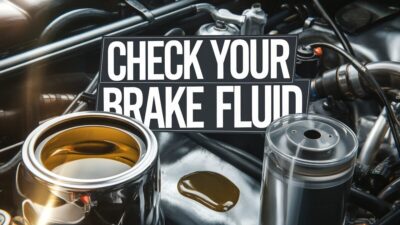
How to Check Brake Fluid (Quick & Simple Guide)

How to Check Your Brake Fluid Level
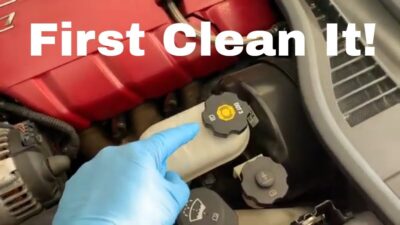
How To Check Brake Fluid – ALWAYS clean the cap first!

How to Check Brake Fluid | TrueCar
Conclusion
Brake fluid is a critical safety element you never see, yet one that comes into play every time you brake. Checking its level and condition regularly both protects braking performance and heads off potential risks to life and limb. Making this simple, few-minute check part of your routine maintenance delivers safer and more economical driving in the long run.
Frequently Asked Questions
As the brake pads wear, the caliper pistons travel further, and this naturally lowers the fluid level in the reservoir. A sudden or continuous drop, on the other hand, can point to a leak.
DOT 3 and DOT 4 fluids are generally compatible with each other, but mixing fluids with different bases — mineral-based LHM fluids, for example — with glycol-based DOT fluids is strongly discouraged.
Because brake fluid absorbs moisture and dirt over time, its colour turns from light amber to dark brown. A dark colour is a sign that the time has come to change it.
This usually points to a low fluid level or air bubbles in the system. The car should be taken to a service centre as soon as possible.
Checking the level and the colour is something any driver can do easily. Jobs such as changing the fluid and bleeding air out of the system need technical knowledge and the right equipment, so those are best left to an authorised service centre.
Related Posts
 Why Does the Engine Burn Too Much Oil? The Oil Consumption Problem
  5 Tips for Cleaning Pet Hair
  Black Smoke from the Exhaust and Its Causes
  How to Tell the Fuel Pump Has a Fault? Diagnosis
  Preventing and Removing Mold Inside a Vehicle
  How Is Spark Plug Cleaning Done. Ways to Clean Spark Plugs
  Diagnosing and Fixing Shock Absorber Faults
  What Happens If a Timing Belt Breaks? Breakage and Tooth-Skipping