

The topic of this article will be cleaning the diesel particulate filter. If you’re wondering how to clean a diesel particulate filter, keep reading.
Cleaning the Diesel Particulate Filter

If the particulates that accumulate in a diesel vehicle’s particulate filter exceed a certain threshold, the filter needs to be cleaned. If the particulate filter is full, a warning light or warning messages such as “particulate filter full, continue driving” will appear.
Particulate filter cleaning is done in 3 ways:
- Self-Cleaning of the Diesel Particulate Filter:
Done by driving the vehicle on the highway at high RPM. This way, exhaust gas temperature will rise and the particulates in the filter will burn off and clean themselves. You don’t need to do anything else special when driving the vehicle this way. - Diesel Particulate Filter Cleaning by the Engine Control Unit (ECU) While Driving:
When the filter is full, the ECU cleans the particulate filter by changing the injection method with a special operation. - Cleaning the Filter by Bringing the Vehicle to a Service Center:
This is a cleaning procedure done at an authorized service center using computerized equipment.
Self-Cleaning of the Diesel Particulate Filter
When diesel vehicles are driven at high engine RPM or on long highway drives, thanks to the temperature of the exhaust gases, the particulates in the particulate filter burn off on their own. This is how the diesel particulate filter gets cleaned.
When diesel vehicles are driven at high engine RPM or on long highway drives, thanks to the temperature of the exhaust gases, the particulates in the particulate filter burn off on their own. This is how the diesel particulate filter gets cleaned.
As the engine load increases and the exhaust gas temperature passes 350°C, a combustion reaction takes place between the particulates made of carbon particles and the nitrogen dioxide in the exhaust gas. This combustion cleans the particulate filter that had become clogged and full.
If the DPF (diesel particulate filter) warning light (check engine light) has come on, driving at high RPM on the highway (for about half an hour) will clean the filter and the warning light will turn off.
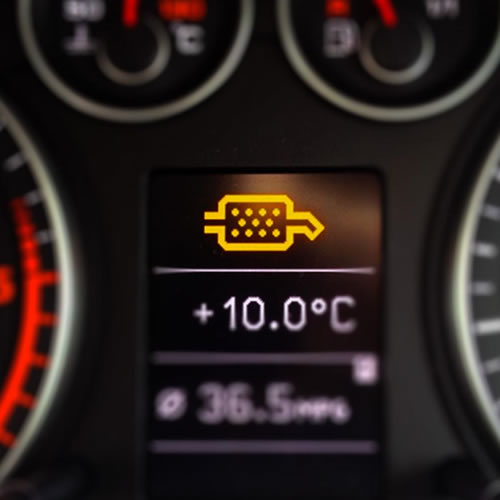
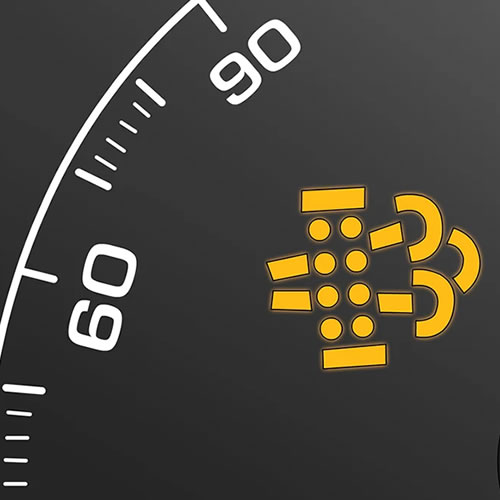
In some newer-generation diesel vehicles, while the particulate filter cleaning process is being performed on the road, a green particulate filter warning light comes on in the instrument cluster, and turns off once the process is complete.
If the vehicle is not driven on the highway at high RPM, meaning driving suitable for the particulate filter cleaning process doesn’t occur, the fill level in the filter increases, and warning messages and the warning light come on again in the instrument cluster — this time the diesel particulate filter warning light blinks continuously. Engine power is reduced by the engine control unit.
If driving suitable for cleaning the particulate filter continues to not happen, the particulate filter warning light on the instrument cluster turns red (in some vehicles the STOP light may also come on), engine power is reduced, and in this case the vehicle needs to be taken to the nearest service center. There, a computerized particulate filter cleaning procedure is applied.
How Is the Diesel Particulate Filter Cleaned on Trucks and Semi-Trucks
On diesel trucks, when the yellow particulate filter light comes on for the first time, the following is recommended:
1- You should go out on the highway and drive (at high engine RPM).
2- On some diesel trucks, there is a button for the particulate cleaning process; while the truck is STOPPED, pressing this button causes the system to automatically clean the particulate filter, and this process takes about 1 hour. When the process is finished, the warning light will turn off and the engine RPM will drop to idle on its own. Follow the manufacturer’s instructions here.

Diesel Particulate Filter Cleaning by the Engine Control Unit (ECU) While Driving
If you constantly drive your vehicle in the city, over short distances, at low engine RPM, the engine’s exhaust gas temperature doesn’t rise enough to reach a level that can burn off the particulates.
In this case, the engine control unit (ECU) runs an operation to clean the particulate filter, based on how many kilometers ago the particulate filter was last cleaned/renewed, the current fill level of the particulate filter, and the driving style (short city driving vs. long highway driving). The engine achieves this by taking data from a number of sensors (such as the exhaust gas temperature sensor) and making certain adjustments to its own injection system.
During this process, the ECU can increase engine load by automatically running electrical devices such as the rear window defroster and radiator fan, to raise exhaust temperature.
If the diesel vehicle is constantly used for short distances, this process isn’t given enough time, and the particulate filter continues to fill up.
In some newer-generation diesel vehicles, the particulate filter cleaning process is performed while driving, and a green particulate filter warning light (DPF) comes on in the instrument cluster. It turns off once the process is complete.

Cleaning the Filter by Bringing the Vehicle to a Service Center
When a vehicle is brought to a service center because the diesel particulate filter is full or clogged, a cleaning procedure is performed using computerized equipment. This process takes about half an hour. Under computer control, the engine RPM is raised and kept running at high speed.
Some companies recommend changing the engine oil after this process. At some service centers, a diesel particulate cleaning spray is also used for the cleaning process.
QUESTION: When is a diesel particulate filter replaced?
Answer: Depending on the make and model, a diesel particulate filter is typically replaced around every 150,000–200,000 kilometers. (See your vehicle’s manual).
High-RPM Cleaning (Forced Regeneration)
DPF cleaning can be done via forced regeneration, in which the engine is run at high RPM for an extended period to burn off the soot inside the filter.
Chemical Cleaning Method
For severely clogged filters, the filter can be removed and professionally cleaned using special chemical solutions.
Effect of Short City Driving
Constant short-distance city driving prevents the DPF from reaching the temperature needed to clean itself, increasing the risk of clogging.
Related Questions
High RPM and continuous load raise the exhaust gas temperature to a level that burns off the particulates accumulated in the filter. These particulates burn into ash, allowing the filter to open back up.
On short, low-speed drives, the exhaust gas never reaches the high temperature required for the filter to self-clean. The particulates therefore keep accumulating over time, and the filter fills up faster.
Related Posts
 What Is a Diesel Particulate Filter Fault. How Is It Detected
  Spark Plug Oil Fouling: Causes and Symptoms
  Why Does a Car Tire Crack? Why Does It Rot?
  What Happens If a Shock Absorber Fails. Consequences of Shock Absorber Failure
  Why Does the Battery Warning Light Come On? Signs of a Battery Fault
  13 Factors That Increase Fuel Consumption in Vehicles
  Why Does the Traction Control System Light (TCS Light) Come On?
  What Happens If a Timing Belt Breaks? Breakage and Tooth-Skipping