
Close Menu
  • MAKİNELER ve İMALAT
    • Tools & Equipment
    • Computer-Aided Drawing
    • CAD/CAM Education
    • CNC Machine Programming
    • Casting Technologies
    • Electrical & Electronics Technologies
    • Hydraulics & Pneumatics
    • Manufacturing Processes
    • Manufacturing Technologies
    • Occupational Safety
    • Mold & Die Design
    • Solid Modeling
    • Welding Technology
    • Machine Elements
    • Mechanical Trade Drawing
    • Materials Science
    • Automotive & Vehicle Technologies
    • Robotics Technologies
    • Health Technologies
    • Defense & Aerospace Technologies
    • Descriptive Geometry
    • Technical Drawing
    • Software & Hardware Technologies
    • Innovative Manufacturing Methods
  • TEKNOLOJİ ve YAŞAM
    • OTOMOBİLLER ve TAŞIT
      • Vehicle & Engine Knowledge
      • Safe Driving
      • Sürüş Destek Sistemleri
    • Genel Kültür
      • Movies & TV Shows
      • Görsel ve Grafik Sanat
      • Books & Literature
      • Music
      • Sports
      • History
      • History of Technology
    • GÜNDELİK YAŞAM TEKNOLOJİLERİ
    • Hobbies & Entertainment
    • Internet Technologies
    • Health
    • Mobile Technologies
Makine Eğitimi
  • Machines & Manufacturing
    Machine Elements
    Hydraulics & Pneumatics
    Technical Drawing
    Computer-Aided Design & Manufacturing
    Basic Manufacturing Processes
    Manufacturing Processes
    Industry Technologies
    Other Technical Courses
    Motion & Power Transmission
    Simple Machines
    Chains & Sprockets
    Shafts & Journals
    Gears
    Cams
    Couplings
    Belts & Pulleys
    Springs
    Bearings
    Keys
    Fastening Joining
    Retaining Rings
    Screws, Bolts & Nuts
    Cotter Pins
    Flanges
    Welding
    Rivets
    Pins & Bolts
    Washers
    Calculators
    Gear Ratio Calculator
    Spring Constant Calculator
    Belt Pulley Ratio Calculator
    Other Machine Elements
    Slides & Linear Guides
    Brakes
    Flywheels
    Clamps
    Shock Absorbers
    Gaskets & O-Rings
    Seals & Sealing Elements
    Hydraulics
    Introduction to Hydraulics & Principles
    Hydraulic Systems & Applications
    Accumulators
    Filters
    Motors
    Pumps
    Valves
    Pneumatics
    Introduction to Pneumatics & Principles
    Pneumatic Systems & Applications
    Pneumatic Circuit Components
    Valves
    Cylinders
    Silencers
    Motors
    Compressors
    Dryers
    Conditioning Units
    Common Topics & Maintenance
    Hydraulic & Pneumatic Maintenance
    Study Notes, Exams & Tests
    Technical Drawing
    Introduction to Technical Drawing
    Geometric Drawings
    Perspective & Projection
    Orthographic Views
    Dimensioning
    Sectioning
    Assembly & Detail Drawings
    Tolerances
    Surface Finish Symbols
    Mechanical Engineering Drawing
    Screws, Bolts & Nuts
    Pulley Drawings
    Gear Drawings
    Shafts & Journals
    Bearing Drawings
    Pins & Bolts
    Spring Drawings
    Welds in Technical Drawing
    Washers
    Cotter Pins
    Technical Drawing Exercises
    Mechanical Drawing Exercises
    Gear Exercises
    View Extraction Exercises
    Pulley Exercises
    Pin & Bolt Exercises
    Threaded Fastening Exercises
    Descriptive Geometry
    Computer-Aided Drawing
    AutoCAD Drawing Lessons
    Solid Modeling & Animation
    Solid Model Drawing Files
    Solid Model Assembly Examples
    Solid Model Drawing Lessons
    3D CAD Software Reviews
    Solid Modeling Exercises
    CNC Programming
    CAM
    Measurement & Inspection
    Dial Indicators
    Calipers
    Gauges
    Micrometers
    Materials Science
    Steels
    Cast Iron
    Aluminum
    Plastics
    Material Testing & Hardness Measurement
    Occupational Safety
    Workshop Safety
    Safety When Working With Electricity
    Machine Safety Rules
    Hand Operations
    Filing
    Marking
    Cutting Operations
    Reaming
    Tapping
    Threading With a Die
    Drill Bit Sharpening
    Working With Machines
    Basic Turning Operations
    Basic Milling Operations
    Shaper Machine
    Machining
    Turning
    Milling
    Grinding
    Innovative Manufacturing Methods
    EDM (Electrical Discharge Machining)
    Laser Machining
    Waterjet Machining
    3D Printing
    3D Scanners
    Welding
    Rolling
    Casting
    Mold & Die Design
    Mechanical & Hydraulic Presses
    Blanking & Piercing Dies
    Bending Dies
    Drawing Dies
    Plastic Injection Molds
    Extrusion Dies
    Compound Dies
    Progressive Dies
    Blow Molds
    Spinning Dies
    Spray Molds
    Manufacturing of Machine Parts
    Automotive & Vehicle Technologies
    Motor Vehicle Manufacturing
    Raw Material Production
    History of Technology
    Health & Medical Technologies
    Defense & Aerospace
    Robotics Technologies
    Software & Hardware Technologies
    Mechanics - Strength of Materials
    Physics Topics
  • Technology & Life
    Hobbies & Entertainment
    Sports
    Music
    Vehicle & Engine Knowledge
    Vehicle Maintenance & Repair
    Safe Driving
    Driver Assistance Systems
    History
    Movies & TV Shows
    Books & Literature
    Computers & Internet
    Computer Tips
    Software Reviews
    Hardware & Peripherals
    Practical & Safe Internet Use
    Visual & Graphic Art
    Mobile Technologies
    Travel
    Science
    Health
    First Aid Knowledge
    Everyday Technologies
Makine Eğitimi
Home»Vehicle Maintenance & Repair»What Is AdBlue, What Does It Do?
29 August 2026

What Is AdBlue, What Does It Do?

What Is AdBlue, What Does It Do?

What Is AdBlue

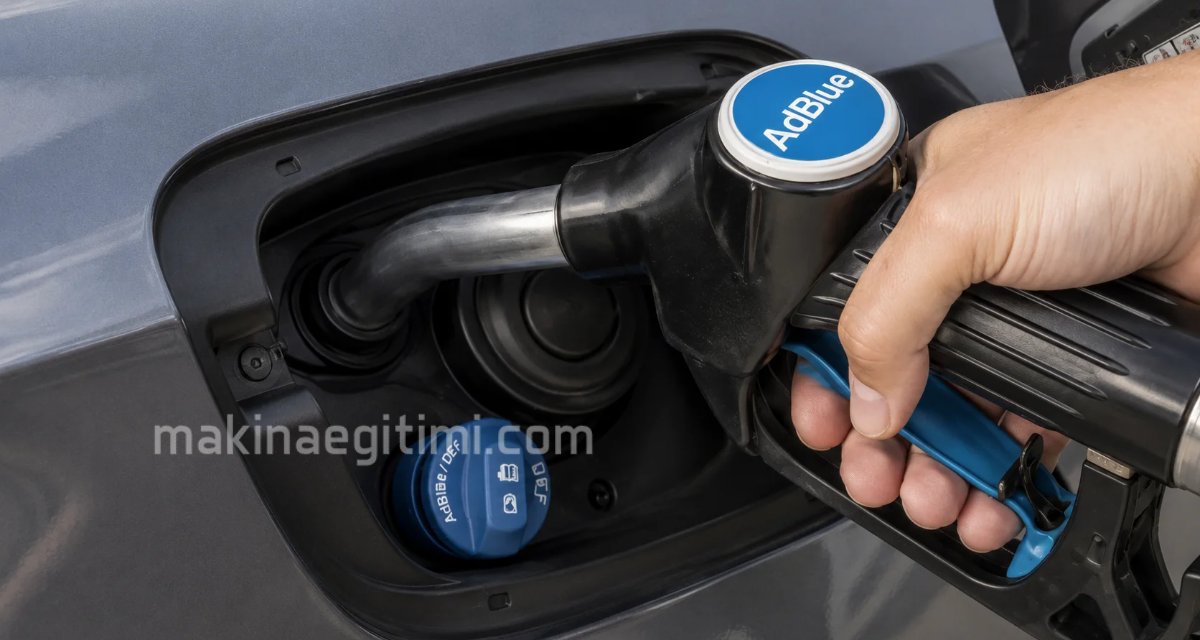
AdBlue is a urea solution used in selective catalytic reduction (SCR) systems to reduce nitrogen oxide emissions in diesel engines. It is injected into the exhaust stream, where it reacts with nitrogen oxides to form water and nitrogen.

  • What Is AdBlue
    • What Is the Composition of AdBlue Fluid?
  • What Does AdBlue Do?
  • What Happens If AdBlue Runs Out?
    • Why Does an AdBlue Warning Appear on the Vehicle’s Dashboard?
  • Why Should AdBlue Be Kept Clean?
  • Related Questions

AdBlue is the trademark name for the solution, but it’s also known as diesel exhaust fluid (DEF). It’s used in heavy-duty vehicles like trucks and buses, as well as some passenger vehicles equipped with SCR technology.

SCR (selective catalytic reduction system) is an emission control system (similar to EGR) developed to reduce nitrogen oxides (NOx) in exhaust gas. AdBlue is the name of the emission fluid used in this system.

ad blue

What Is the Composition of AdBlue Fluid?

AdBlue is a urea solution, meaning it essentially consists of urea (NH2CONH2) dissolved in demineralized water. Urea is synthesized from ammonia and carbon dioxide, and the solution is approximately 32.5% urea by weight. The solution must meet the ISO 22241 standard, which specifies AdBlue’s concentration, purity, and physical properties.

The solution generally contains 67.5% deionized water and 32.5% urea, a non-toxic, colorless, and non-flammable liquid, and is stored in a separate tank in the vehicle. Some AdBlue solutions may also contain small amounts of corrosion inhibitor, biocide, and anti-icing additives. To prevent the product from freezing and microbial growth, the solution must be stored and transported at temperatures between -11°C and +38°C.

Urea Concentration


AdBlue is a standardized fluid consisting of 32.5%-pure urea and deionized water (ISO 22241).

NOx Reduction Rate


With the help of AdBlue, the SCR system can reduce NOx emissions by 70-90%.

Freezing Point


AdBlue freezes at around -11°C, which is why most vehicles are designed with a heated tank.

What Does AdBlue Do?

AdBlue is a fluid used to neutralize environmentally harmful NOx gases found in exhaust gases. The SCR system used in heavy-duty diesel vehicles has also started to be used in diesel passenger cars with the introduction of the European Emission Standard Euro 6.

what does adblue do what happens if it runs out

The aqueous urea solution (AdBlue) is sprayed into the hot exhaust gas before it enters the SCR.

This way, the mixture of exhaust gas and AdBlue that enters the SCR is converted into nitrogen and water vapor within the system before being expelled through the exhaust.

AdBlue is a non-toxic solution used to chemically reduce the NOx emissions produced by diesel-fueled vehicles.

What Happens If AdBlue Runs Out?

If the AdBlue level in a vehicle’s SCR system drops below a certain level, the engine’s electronic control unit (ECU) will display a warning message and may switch to “limp home” mode, in which power is limited to protect the engine.

Why Does an AdBlue Warning Appear on the Vehicle’s Dashboard?

This is to prevent the SCR system from operating without enough AdBlue, which could damage the system and potentially cause higher emissions. If the AdBlue level is allowed to drop too low, the vehicle may not be able to start. For this reason, it’s important to regularly check the AdBlue level and refill it when needed, to make sure the SCR system is working properly.

In summary, if AdBlue drops to a critical level, your vehicle will first warn you on the dashboard that the AdBlue level is low. If this AdBlue warning is ignored, once it runs out completely after some time, the vehicle will stop and refuse to start, in order to avoid damaging the system.

Why Should AdBlue Be Kept Clean?

If AdBlue is not stored properly, it can become contaminated, which can lead to many problems. Contaminated AdBlue can damage the SCR system, reducing its effectiveness and potentially causing the engine to enter “limp home” mode, in which power is limited to protect the engine.

In addition, contaminated AdBlue can cause crystallization to form in the system, which can clog the injectors and potentially cause them to fail. To avoid these problems, it’s important to store AdBlue in a clean, dry place, away from direct sunlight and extreme temperatures, and to use it before its expiration date.

Related Questions

AdBlue’s job isn’t to burn fuel — it’s to neutralize the nitrogen oxides produced by combustion. Since this reaction can only occur inside the exhaust gas, within the SCR system, it’s added directly to the exhaust stream.

To comply with emissions regulations, manufacturers design the system to restrict the engine’s performance or prevent it from starting once AdBlue runs out. This is a measure to prevent the driver from neglecting emissions control.

Related Posts

Vehicle ignition system components diagram What Is a Vehicle Ignition System, How Does It Work? What Are Its Failures? Motor çalışmıyorsa Muhtemel Sebepler If the Engine Won’t Start, the Reason. Reasons the Engine Won’t Start Spoyler Nedir Ne işe Yarar? What Does a Vehicle Rear Spoiler Do? drive system and transaxle in front-wheel-drive vehicles Front-Wheel-Drive Vehicles: Advantages and Disadvantages what is a coilover What Is a Coilover (Coil Spring Shock Absorber)? What Is It For? Elektrikli Araçlarda Neden Tek Vites Kullanılır? Why Do Electric Cars Use a Single Gear? Engine Lubrication System and Its Parts Engine Lubrication System and Its Parts The intake manifold job and fault diagnosis What Is an Intake Manifold? Its Job, and Diagnosing a Fault

Share. Facebook Twitter WhatsApp Tumblr Email Telegram Copy Link

Leave A Reply Cancel Reply

Fuel Cell Electric Vehicles (FCEV)
State-of-the-Art High-Efficiency Agricultural Machinery
  • Contact
  • Terms of Service
  • Privacy & Cookie Policy

Type above and press Enter to search. Press Esc to cancel.