

Today we’re going to tell you the story of a battle. But this isn’t just any ordinary battle. If it had been lost, the Republic of Turkey might never have been founded. If it hadn’t been won, the name of a certain lieutenant colonel might never have been written into history: Mustafa Kemal.
It was early 1915. World War I had been going on for a year, and the fronts in Europe had ground to a stalemate. It was at exactly this moment that the Allies devised a bold plan to end the war quickly: force their way through the Dardanelles and seize Constantinople.

Why Gallipoli? Why Constantinople?
The architect of this plan was Winston Churchill, then the young First Lord of the Admiralty. The idea itself was simple: the Ottoman Empire was the weakest link in the war. If Constantinople fell, the Ottomans would be knocked out of the war, Germany would lose an ally, and most importantly, weapons and supplies could be shipped to Russia by sea. Russia was struggling on the front at the time, and this aid could have completely changed the course of the war.
The plan was flawless on paper. But it hadn’t accounted for the Ottoman army and its people.
Unexpected Resistance in the Strait

In March 1915, a powerful Allied fleet moved to force its way through the strait. But the sea mines the Ottomans had laid and their coastal batteries inflicted heavy losses on one of the strongest navies in the world. On March 18, within just a few hours, three major battleships sank and several others were badly damaged. The Allies realized they couldn’t get through by sea.
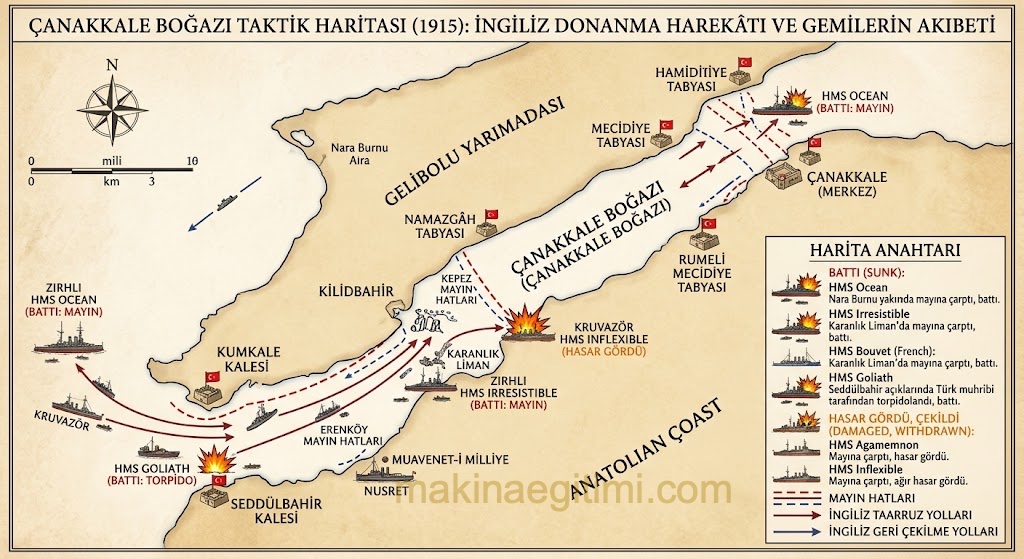
The plan then changed: a land campaign. In April 1915, Allied troops landed on the Gallipoli Peninsula. But even there, they didn’t find the easy victory they had expected.
A Lieutenant Colonel Steps Onto the Stage
It was at exactly this point that a name emerged who would change the course of history: Lieutenant Colonel Mustafa Kemal. At Chunuk Bair, in the most critical moment of the enemy landing, the words he said to the soldiers under his command are still remembered today: “I don’t order you to fight, I order you to die.” This order became one of the turning points that locked down the front and stopped the Allied advance.

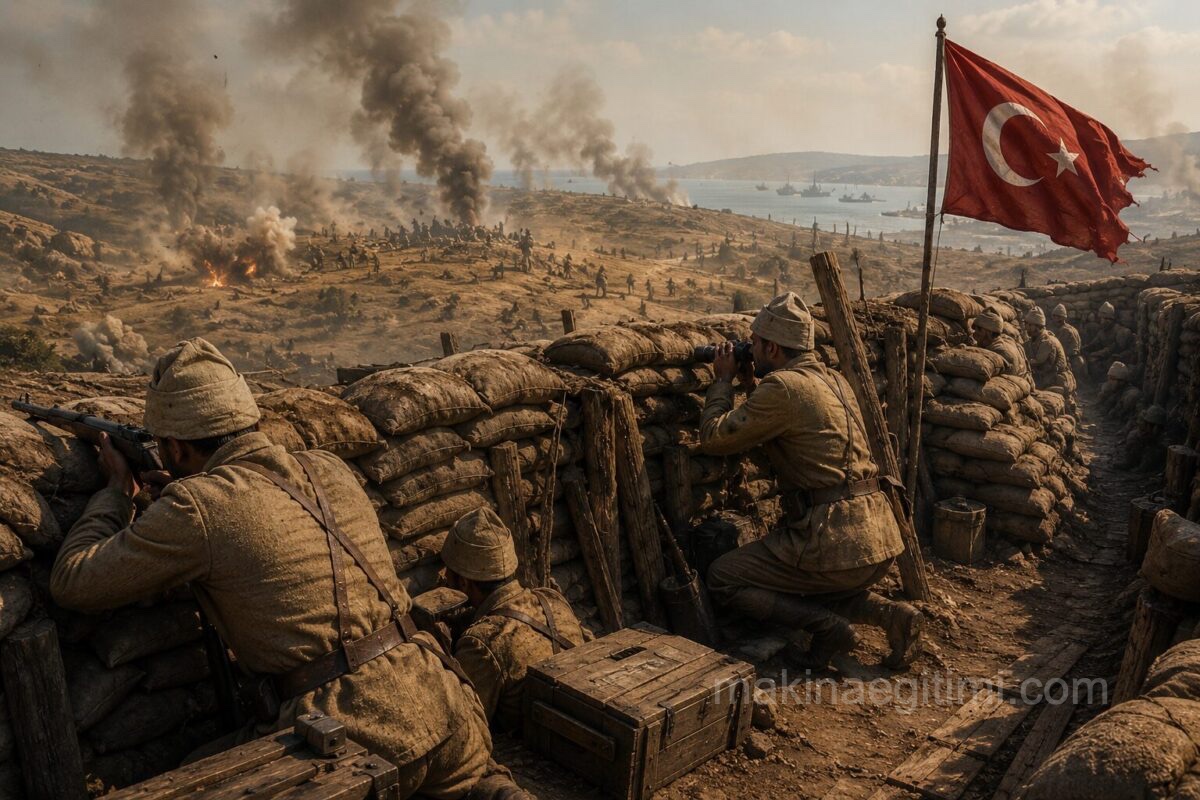
Months of trench warfare followed, along with disease, thirst, and extremely heavy losses. In the end, the Allies fully evacuated Gallipoli in January 1916 and withdrew. The Ottomans had won one of the most unexpected victories of the war.
But What If the Allies Had Made It Through the Strait?
Let’s imagine for a moment. What if the Allied fleet had succeeded in forcing its way through the strait in March 1915? Constantinople would very likely have been besieged, and the Ottoman Empire might have been forced to withdraw from the war early. A new supply line opening to Russia might have allowed the Russian army to hold out longer on the front. That, in turn, could have meant the October Revolution of 1917 unfolding under very different circumstances — or perhaps not happening at all.

Related Post The October Revolution: How a Tsardom Fell Overnight
How did World War I, bread shortages, and a sealed train carrying Lenin combine to bring down three centuries of Romanov rule in months?
Even more striking: if there hadn’t been a lieutenant colonel who distinguished himself at Gallipoli, or if he had died there, Mustafa Kemal’s name might never have carried through to the War of Independence. The founding story of the Republic of Turkey might have been written under a completely different name, in a completely different way. The outcome of a single front could have reshaped the entire map of the following decades.

Chain of Cause and Effect: The Ripple Effect of a Victory
The victory at Gallipoli pointed to far more than just winning a single battle:
- The Ottomans won an unexpected morale-boosting victory in the war and were able to keep fighting for several more years.
- Russia faced a supply crisis it hadn’t anticipated, which contributed to deepening internal unrest.
- Mustafa Kemal became a commander recognized both by the Ottoman public and by world opinion.
- That recognition laid the groundwork for his leadership a few years later in the War of Independence.
As you can see, success on one front became, years later, one of the cornerstones in the founding story of an entirely different country.
The ANZACs
ANZAC is short for Australian and New Zealand Army Corps.
In other words: the combined army units of Australia and New Zealand.
During the Battle of Gallipoli, it wasn’t just Ottoman and British-French forces who fought; ANZAC troops from Australia and New Zealand, both British colonies at the time, fought there too. For these two countries, Gallipoli became such a deep source of national trauma and pride that it’s still commemorated every April 25 as “ANZAC Day.” In other words, this battle also left its mark on the national identity of two countries on the other side of the world.
Frequently Asked Questions
The naval battles began in February-March 1915, and the land battles began in April 1915. The Allied forces withdrew completely in January 1916.
The architect of the plan was Winston Churchill, then the First Lord of the Admiralty.
Fighting with the rank of lieutenant colonel, he stopped the Allied advance, especially through his defense at Chunuk Bair, and became a recognized commander.
The Ottoman Empire won the battle when Allied forces completely withdrew from Gallipoli. This victory allowed the Ottomans to keep fighting in the war and also paved the way for Mustafa Kemal’s later leadership in the War of Independence.
Related Posts
The October Revolution: How a Tsardom Fell Overnight  The Trojan War: Legend or Reality? The Startling Traces Found by Archaeologists
  The Financial Origins of the French Revolution: How a Kingdom Collapsed Into Bankruptcy
  The Sarajevo Assassination: How One Bullet Dragged the World Into War
  The Boston Tea Party: How a Crate of Tea Gave Birth to a Nation
  Berlin Streets After World War II. July 1945
  Napoleon Bonaparte: How a Child of an Island Became the Master of Europe
  The French Revolution: The Fall of a Kingdom, the Birth of an Age