
Close Menu
  • MAKİNELER ve İMALAT
    • Tools & Equipment
    • Computer-Aided Drawing
    • CAD/CAM Education
    • CNC Machine Programming
    • Casting Technologies
    • Electrical & Electronics Technologies
    • Hydraulics & Pneumatics
    • Manufacturing Processes
    • Manufacturing Technologies
    • Occupational Safety
    • Mold & Die Design
    • Solid Modeling
    • Welding Technology
    • Machine Elements
    • Mechanical Trade Drawing
    • Materials Science
    • Automotive & Vehicle Technologies
    • Robotics Technologies
    • Health Technologies
    • Defense & Aerospace Technologies
    • Descriptive Geometry
    • Technical Drawing
    • Software & Hardware Technologies
    • Innovative Manufacturing Methods
  • TEKNOLOJİ ve YAŞAM
    • OTOMOBİLLER ve TAŞIT
      • Vehicle & Engine Knowledge
      • Safe Driving
      • Sürüş Destek Sistemleri
    • Genel Kültür
      • Movies & TV Shows
      • Görsel ve Grafik Sanat
      • Books & Literature
      • Music
      • Sports
      • History
      • History of Technology
    • GÜNDELİK YAŞAM TEKNOLOJİLERİ
    • Hobbies & Entertainment
    • Internet Technologies
    • Health
    • Mobile Technologies
Makine Eğitimi
  • Machines & Manufacturing
    Machine Elements
    Hydraulics & Pneumatics
    Technical Drawing
    Computer-Aided Design & Manufacturing
    Basic Manufacturing Processes
    Manufacturing Processes
    Industry Technologies
    Other Technical Courses
    Motion & Power Transmission
    Simple Machines
    Chains & Sprockets
    Shafts & Journals
    Gears
    Cams
    Couplings
    Belts & Pulleys
    Springs
    Bearings
    Keys
    Fastening Joining
    Retaining Rings
    Screws, Bolts & Nuts
    Cotter Pins
    Flanges
    Welding
    Rivets
    Pins & Bolts
    Washers
    Calculators
    Gear Ratio Calculator
    Spring Constant Calculator
    Belt Pulley Ratio Calculator
    Other Machine Elements
    Slides & Linear Guides
    Brakes
    Flywheels
    Clamps
    Shock Absorbers
    Gaskets & O-Rings
    Seals & Sealing Elements
    Hydraulics
    Introduction to Hydraulics & Principles
    Hydraulic Systems & Applications
    Accumulators
    Filters
    Motors
    Pumps
    Valves
    Pneumatics
    Introduction to Pneumatics & Principles
    Pneumatic Systems & Applications
    Pneumatic Circuit Components
    Valves
    Cylinders
    Silencers
    Motors
    Compressors
    Dryers
    Conditioning Units
    Common Topics & Maintenance
    Hydraulic & Pneumatic Maintenance
    Study Notes, Exams & Tests
    Technical Drawing
    Introduction to Technical Drawing
    Geometric Drawings
    Perspective & Projection
    Orthographic Views
    Dimensioning
    Sectioning
    Assembly & Detail Drawings
    Tolerances
    Surface Finish Symbols
    Mechanical Engineering Drawing
    Screws, Bolts & Nuts
    Pulley Drawings
    Gear Drawings
    Shafts & Journals
    Bearing Drawings
    Pins & Bolts
    Spring Drawings
    Welds in Technical Drawing
    Washers
    Cotter Pins
    Technical Drawing Exercises
    Mechanical Drawing Exercises
    Gear Exercises
    View Extraction Exercises
    Pulley Exercises
    Pin & Bolt Exercises
    Threaded Fastening Exercises
    Descriptive Geometry
    Computer-Aided Drawing
    AutoCAD Drawing Lessons
    Solid Modeling & Animation
    Solid Model Drawing Files
    Solid Model Assembly Examples
    Solid Model Drawing Lessons
    3D CAD Software Reviews
    Solid Modeling Exercises
    CNC Programming
    CAM
    Measurement & Inspection
    Dial Indicators
    Calipers
    Gauges
    Micrometers
    Materials Science
    Steels
    Cast Iron
    Aluminum
    Plastics
    Material Testing & Hardness Measurement
    Occupational Safety
    Workshop Safety
    Safety When Working With Electricity
    Machine Safety Rules
    Hand Operations
    Filing
    Marking
    Cutting Operations
    Reaming
    Tapping
    Threading With a Die
    Drill Bit Sharpening
    Working With Machines
    Basic Turning Operations
    Basic Milling Operations
    Shaper Machine
    Machining
    Turning
    Milling
    Grinding
    Innovative Manufacturing Methods
    EDM (Electrical Discharge Machining)
    Laser Machining
    Waterjet Machining
    3D Printing
    3D Scanners
    Welding
    Rolling
    Casting
    Mold & Die Design
    Mechanical & Hydraulic Presses
    Blanking & Piercing Dies
    Bending Dies
    Drawing Dies
    Plastic Injection Molds
    Extrusion Dies
    Compound Dies
    Progressive Dies
    Blow Molds
    Spinning Dies
    Spray Molds
    Manufacturing of Machine Parts
    Automotive & Vehicle Technologies
    Motor Vehicle Manufacturing
    Raw Material Production
    History of Technology
    Health & Medical Technologies
    Defense & Aerospace
    Robotics Technologies
    Software & Hardware Technologies
    Mechanics - Strength of Materials
    Physics Topics
  • Technology & Life
    Hobbies & Entertainment
    Sports
    Music
    Vehicle & Engine Knowledge
    Vehicle Maintenance & Repair
    Safe Driving
    Driver Assistance Systems
    History
    Movies & TV Shows
    Books & Literature
    Computers & Internet
    Computer Tips
    Software Reviews
    Hardware & Peripherals
    Practical & Safe Internet Use
    Visual & Graphic Art
    Mobile Technologies
    Travel
    Science
    Health
    First Aid Knowledge
    Everyday Technologies
Makine Eğitimi
Home»History»The Sarajevo Assassination: How One Bullet Dragged the World Into War
30 August 2026

The Sarajevo Assassination: How One Bullet Dragged the World Into War

1914 Sarajevo streets, celebrations and the motorcade

Today we’re going to tell you one of the most striking “butterfly effect” stories in world history — the story of how two bullets fired by a 19-year-old, who found his chance in front of a car that took a wrong turn, ended up starting a war that would kill more than 17 million people.

  • A Crown Prince’s Visit
  • A Small Wrong Turn, an Enormous Consequence
  • But What If the Driver Hadn’t Taken a Wrong Turn?
  • From a Bullet to a Continental War: The Chain of Cause and Effect
  • A Little-Known Fact
  • The War’s Echo Today
  • Frequently Asked Questions

June 28, 1914. A sunny summer day. The streets of Sarajevo had a festive mood. No one that day knew that Europe’s bloodiest century was about to begin.

A Crown Prince’s Visit

1914 Sarajevo streets, celebrations and the motorcade

Archduke Franz Ferdinand, heir to the throne of the Austro-Hungarian Empire, was visiting Sarajevo together with his wife Sophie. At the time, Bosnia-Herzegovina was under Austro-Hungarian administration, a situation that deeply angered Serb nationalists in the region.

A group of young men belonging to the secret organization “Young Bosnia” had been preparing for months to assassinate Franz Ferdinand.

In the morning, as the motorcade moved through the city, an assassin threw a bomb. The bomb missed its target but struck one of the vehicles, injuring several people. Franz Ferdinand wanted to go to the hospital to visit the wounded. It was this very act of humanity that would lead him to his death.

A Small Wrong Turn, an Enormous Consequence

As the motorcade headed to the hospital, the driver mistakenly turned onto the old route. The governor immediately warned, “we’re on the wrong road,” and the driver stopped the car to try to reverse. At that very moment, young Gavrilo Princip, who hadn’t left the area since the morning’s assassination attempt, suddenly found himself right next to the car.

He fired two shots. One bullet struck Franz Ferdinand, the other struck his wife Sophie. Both died shortly after.

illustration showing the moment of Gavrilo Princip's arrest
Illustration showing the moment of Gavrilo Princip’s arrest

But What If the Driver Hadn’t Taken a Wrong Turn?

Let’s pause and think for a moment. If the driver had taken the correct route that day, Princip probably wouldn’t have gotten the chance to strike. Historians still refer to this moment today as “history’s most expensive wrong turn.”

But we need to be careful here.
Europe was already like a powder keg. There had been years of secret alliances, arms races, and colonial rivalries among Germany, France, Russia, Britain, and Austria-Hungary.

Even if the assassination hadn’t happened that day, some other spark would most likely have lit the same fire, sooner or later. The assassination wasn’t the cause of the war — it was merely the pretext.

Birinci Dünya Savaşı Nasıl Başladı? - Franz Ferdinand Suikastı - Tarihe Damga Vuran Suikastlar #1 Birinci Dünya Savaşı Nasıl Başladı? – Franz Ferdinand Suikastı – Tarihe Damga Vuran Suikastlar #1

From a Bullet to a Continental War: The Chain of Cause and Effect

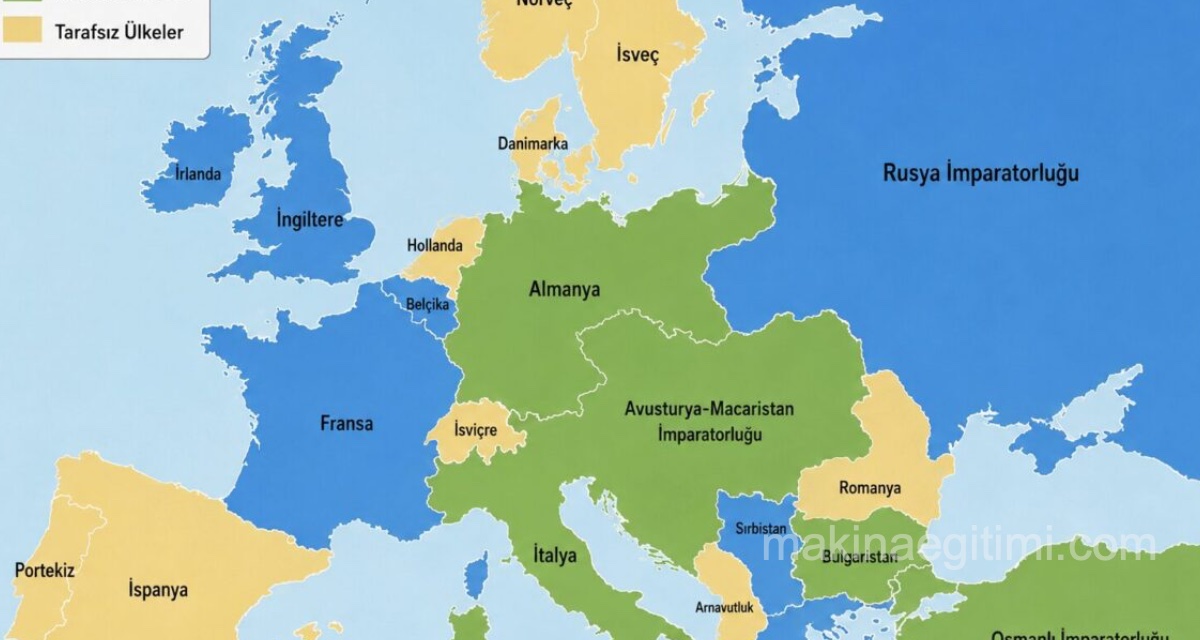
So how did a single assassination turn into a whole world war? Let’s trace the chain reaction step by step:

  1. Austria-Hungary believed Serbia was behind the assassination and issued Serbia an ultimatum with harsh terms.
  2. Serbia did not accept one clause of the ultimatum. Austria-Hungary deemed this sufficient and declared war on Serbia on July 28, 1914.
  3. Russia, an ally of Serbia, began mobilizing its army.
  4. Germany, an ally of Austria-Hungary, declared war on Russia, then on Russia’s ally France.
  5. Germany’s attack on France through Belgium also drew Britain, which had guaranteed Belgium’s neutrality, into the war.
map of Europe in World War I and the warring countries
Map of the alliance system in Europe

As you can see, a system of alliances chained to one another allowed a single spark to quickly turn into a continent-wide blaze. A few months later, the Ottoman Empire also entered the war alongside Germany, and the conflict truly took on a global scale.

A Little-Known Fact

Gavrilo Princip was only 19 years old at the time of the assassination, and under Austro-Hungarian law, criminals under 20 could not be sentenced to death. So Princip was not executed; instead he was sentenced to 20 years in prison. But he never lived to see the war end, dying in prison of bone tuberculosis. He never found out how the war he had started actually ended.
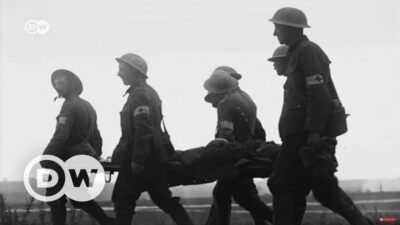

I. Dünya Savaşı: 20’inci yüzyılın ilk felaketi - DW Türkçe I. Dünya Savaşı: 20’inci yüzyılın ilk felaketi – DW Türkçe
I. Dünya Savaşı - Haritalı Hızlı Anlatım - Tek Part I. Dünya Savaşı – Haritalı Hızlı Anlatım – Tek Part

The War’s Echo Today

By the end of World War I, four great empires (the Ottoman, Austro-Hungarian, Russian, and German empires) had vanished from history. The current borders of the Middle East were drawn through secret agreements signed after the war. In other words, many of the borders we see on the map today can, in fact, be traced all the way back to those two bullets fired in Sarajevo that June morning.

Frequently Asked Questions

The assassination was carried out by Gavrilo Princip, a Bosnian Serb nationalist belonging to the “Young Bosnia” organization.

No. The assassination was the direct pretext for the war, but the underlying cause was the system of alliances, the arms race, and colonial rivalries in Europe. Even without the assassination, some other event would most likely have triggered the war.

The Ottoman Empire entered the war alongside Germany about four months after the assassination, in October 1914.

Because he was 19 years old, he was not executed and instead received a 20-year prison sentence. He died of tuberculosis in prison in 1918, before the war ended.

Related Posts

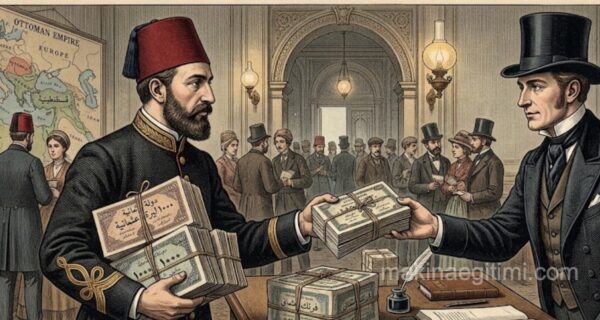
the walls of Constantinople, 1450s, illustration The Fall of Constantinople: A City’s Downfall, an Era’s Dawn battle map of waterloo showing army positions The Battle of Waterloo: The Afternoon That Decided Europe’s Fate Engraving of Napoleon's coronation ceremony Napoleon Bonaparte: How a Child of an Island Became the Master of Europe The Tulip Mania: The Story of History’s First Financial Bubble and Manipulative Scheme The Tulip Mania: The Story of History’s First Financial Bubble and Manipulative Scheme the Istanbul Public Debt Administration building The Public Debt Administration: How an Empire Became a Foreigner in Its Own Country Palace of Versailles The Financial Origins of the French Revolution: How a Kingdom Collapsed Into Bankruptcy The History of Hagia Sophia: One of the Most Durable and Controversial Structures in Human History The History of Hagia Sophia: One of the Most Enduring and Controversial Structures in Human History Illustration of protesters disguised as Native Americans boarding a ship during the Boston Tea Party The Boston Tea Party: How a Crate of Tea Gave Birth to a Nation



Share. Facebook Twitter WhatsApp Tumblr Email Telegram Copy Link

Leave A Reply Cancel Reply

Preventing and Removing Mold Inside a Vehicle
What Is a Vehicle Ignition System, How Does It Work? What Are Its Failures?
  • Contact
  • Terms of Service
  • Privacy & Cookie Policy

Type above and press Enter to search. Press Esc to cancel.