
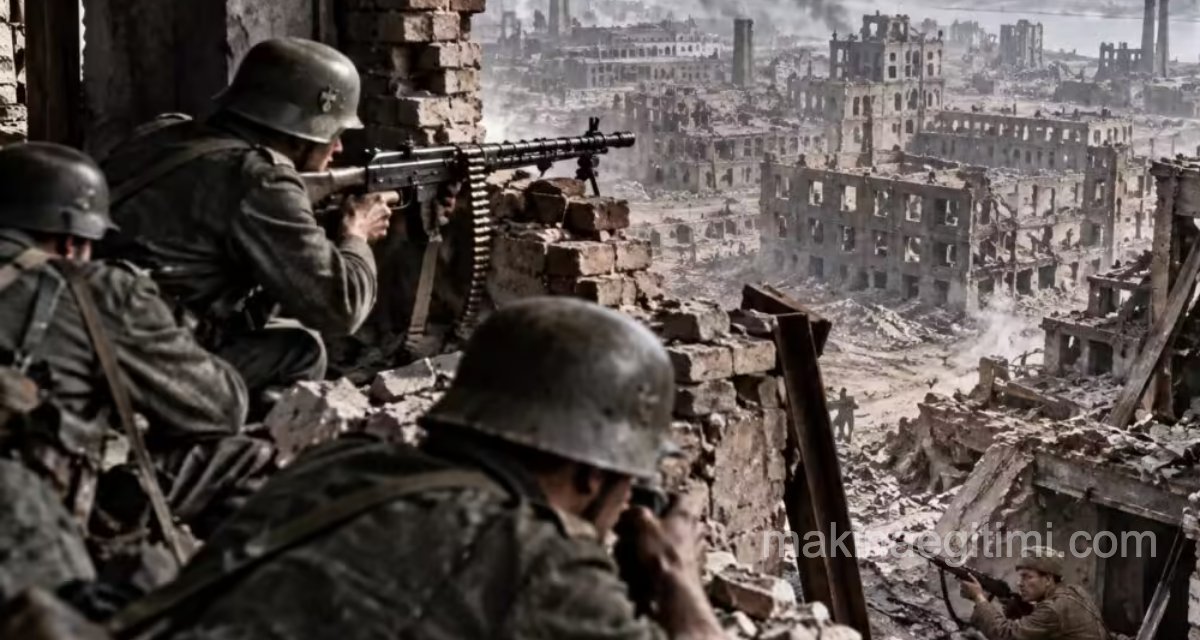
Today we are going to tell you the story of a battle that fundamentally changed the course of the Second World War. An army that had brought almost the whole of Europe to its knees was, for the first time, genuinely stopped in the streets of a single city, in fighting that went from house to house and even from room to room.
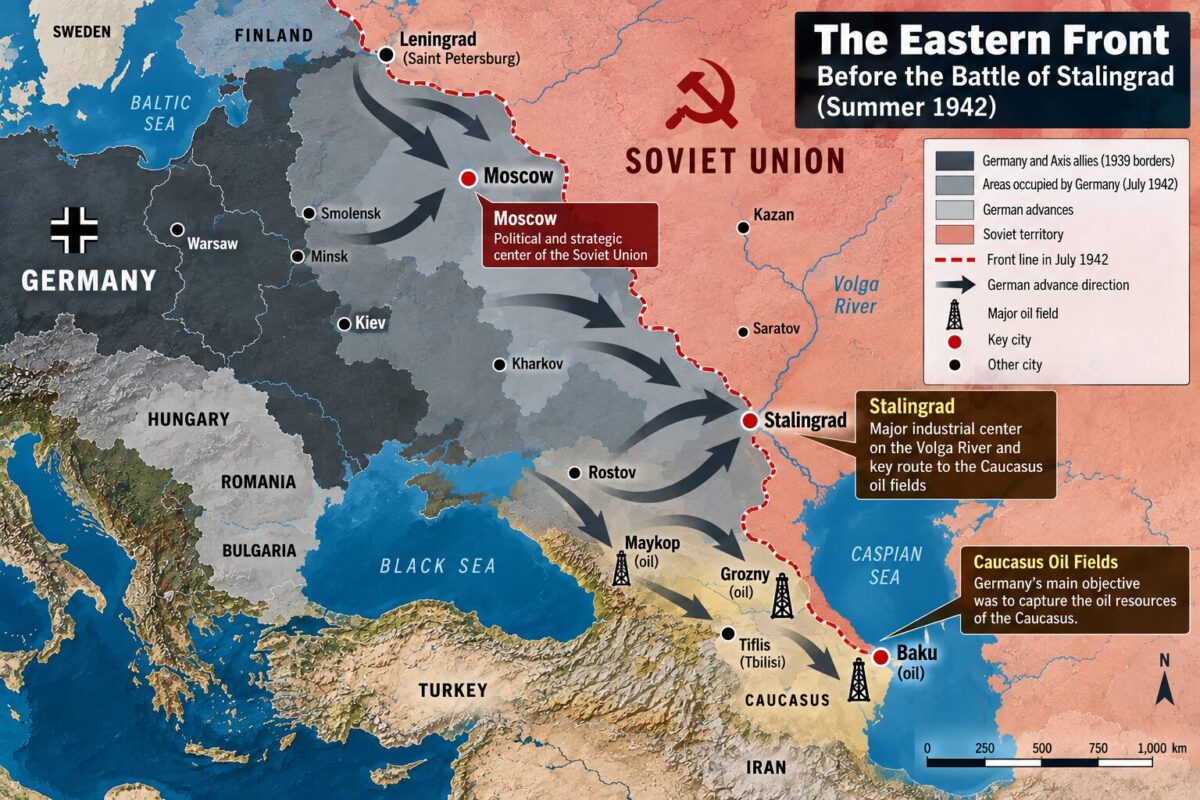
In the summer of 1942 the German army was advancing deep into the Soviet Union. One of its objectives was Stalingrad, an industrial city on the banks of the Volga. Nobody at the time imagined that the name of this city would be carved into history so bloodily.
Why Did Hitler Attack Stalingrad?
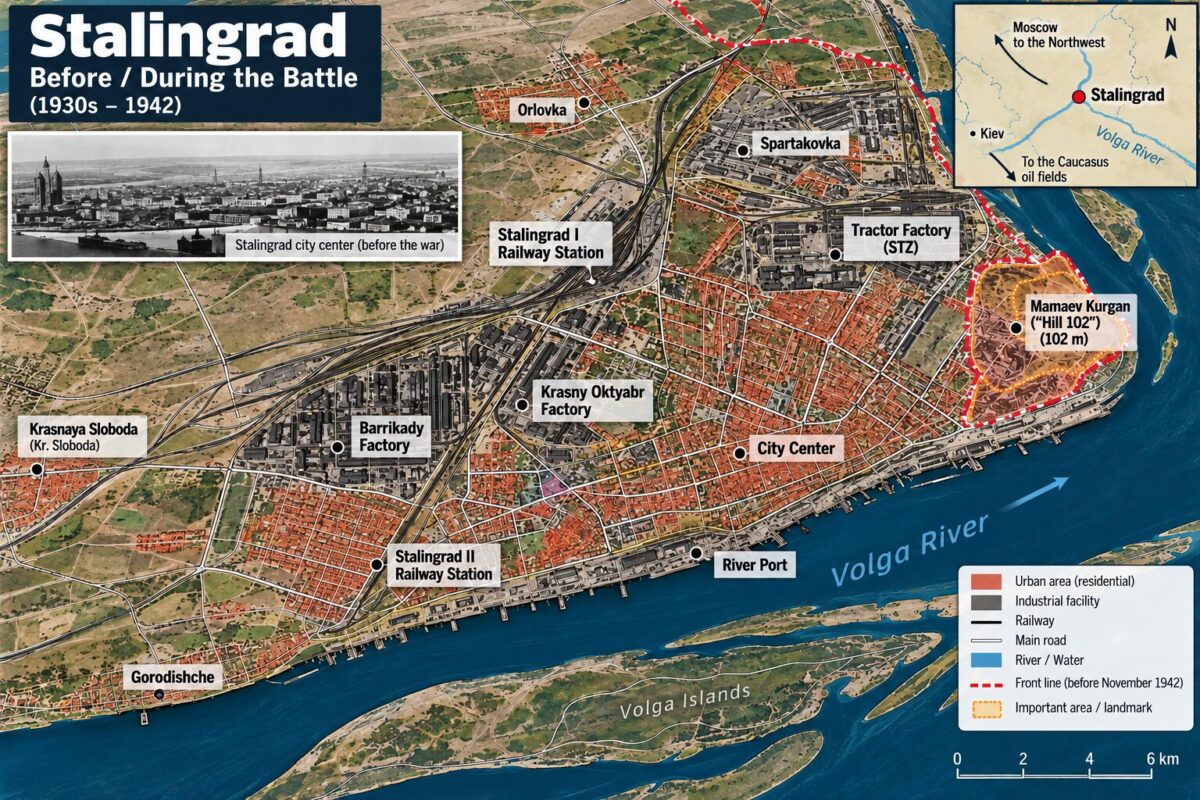
The military value of Stalingrad did not come from its geographical position alone. The city was an important centre of Soviet industry and, by way of the Volga, a critical transport route to the oil regions of the Caucasus in the south. Germany’s war machine could not advance without oil, and Hitler wanted to reach the oil resources of the Caucasus.
The name of the city also carried a significance that was not strategic but symbolic: “Stalingrad” means “Stalin’s City”. For both Hitler and Stalin, taking or defending this city turned into a matter of prestige that went beyond military calculation. In that sense Stalingrad became a front on which the personal pride of both dictators was held hostage.
Urban Warfare: the “Rat War”
In August 1942 the German 6th Army entered the city after heavy aerial bombardment. There, however, it met unexpected resistance. Soviet soldiers were not fighting in the open but inside ruined buildings, in the sewers and among the wreckage of factories. The Germans called this kind of fighting “Rattenkrieg“, the “Rat War“, because progress was no longer measured in kilometres but in which floor of a single building was in whose hands.
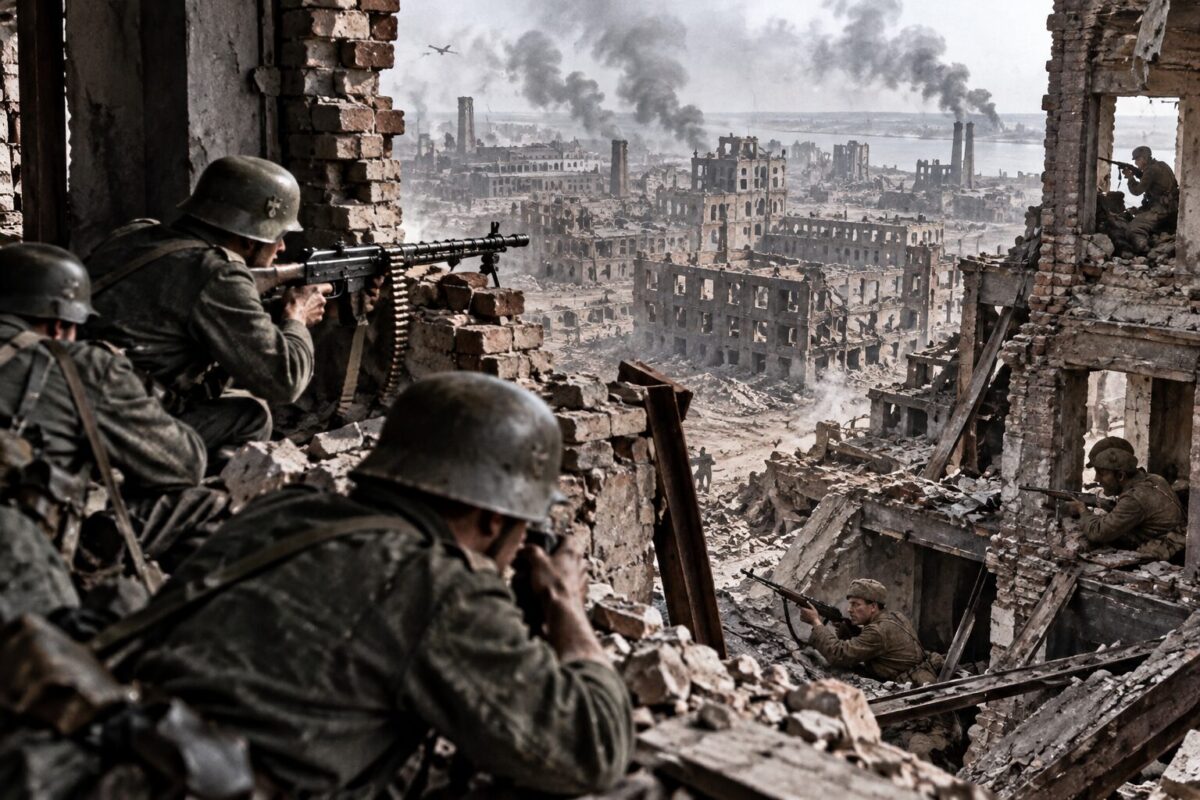
This kind of street fighting almost completely neutralised the element in which the Germans were strongest: fast tank manoeuvre. The army was forced to fight house by house and street by street, without being able to use its advantage.
What If Hitler Had Chosen to Destroy the City Outright?
Let us pause and think for a moment. The German army had reduced the city almost entirely to rubble with heavy bombardment from end to end. According to some historians this intense bombardment in fact worked against the Germans, because buildings turned into ruins became an ideal defensive terrain, not for tanks and artillery, but for infantry setting ambushes.
Had the Germans followed a faster, manoeuvre-based encirclement strategy instead of bombing the city so heavily, they might perhaps have taken it far earlier and with far fewer losses. But the rubble they created themselves became the greatest trap for their own army.
Operation Uranus: the Pincers Close
In November 1942, with the Germans holding most of the city but unable to achieve a complete victory, the Soviet army sprang its greatest surprise: Operation Uranus. Soviet forces broke through the weaker allied units on the flanks of the German 6th Army (Romanian and Italian formations) from the north and the south of the city, and within a few days had encircled the entire German army.
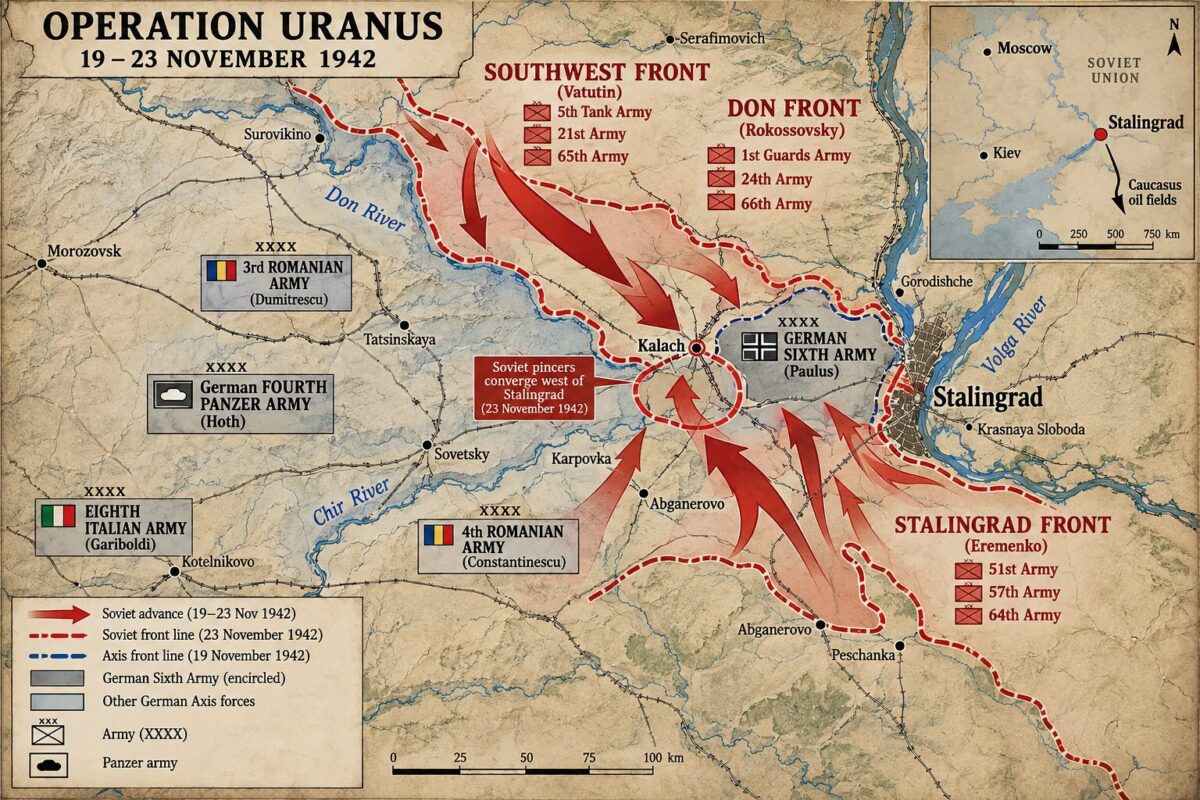
The German general Friedrich Paulus asked Hitler for permission to withdraw. Hitler refused the request, saying that “there would never be a step back”. That decision sealed the fate of more than 250,000 encircled German soldiers.
Last Letters from Stalingrad
In the first letters of the German soldiers advancing towards Stalingrad there was still a clear self-confidence and an expectation of victory. As the months passed, however, the fighting in the city, the encirclement, hunger and the winter conditions changed that atmosphere completely. In letters dated December 1942 and January 1943, what came to the fore was no longer winning the war but staying alive.
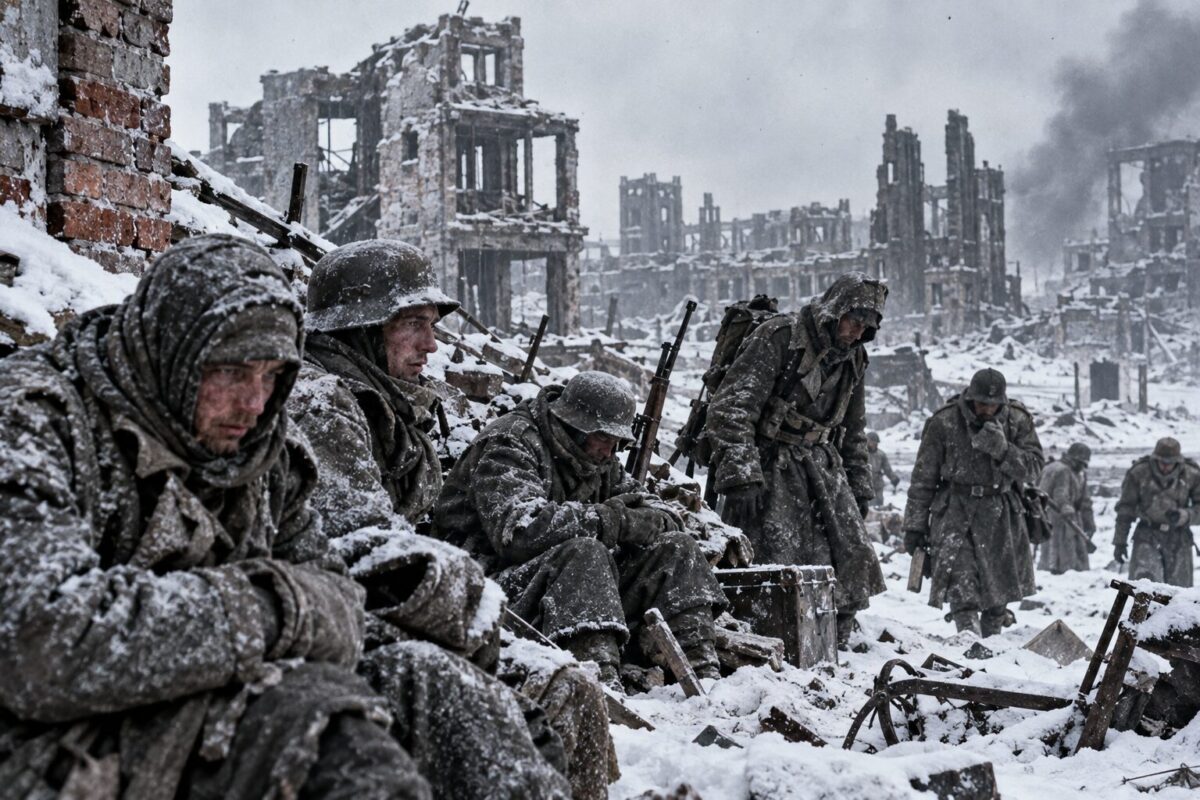
“From one hour to the next, winter has come down on us here. The cold is so great that it is as though we have frozen solid. It has fallen from +10 degrees to –15. Oh mother, all I do now is shiver. There is no house, nor any stove where a person could warm himself for even an hour. The coffee freezes as we drink it, and the bread is like stone.”
This passage shows directly that the situation at Stalingrad was not only a matter of the fighting at the front; it shows how the freezing cold, the lack of shelter and the shortage of basic food affected the soldiers’ daily lives. Across the letters generally, one sees the soldiers trying to give their families hope while at the same time writing about hunger, cold, wounds and the uncertainty created by being surrounded.
“We have been surrounded since 22 November. I have forgotten how to laugh. If you saw where I am writing this, you would understand why I write like this.” December 1942 — K. P.
By now hunger was one of the most basic realities of the war. Gefreiter Willi Wegge wrote to his wife Aleida:
“I am terribly hungry. We have to wait another three or four hours; then we will be given a litre of thin soup, 200 grams of bread and a little sausage or butter. That is all we will eat for the whole day.” January 1943 — Willi Wegge
“We set out with great pride, 380 of us; what is left now is about 100 heaps of bone who cannot walk from hunger and weakness.” January 1943 — from the letter of a German soldier
In the final stage of the encirclement, an Obergefreiter wrote to his father that the situation had reached a point of no return:
“We have nowhere left to go. Either Russian captivity or death. We want neither, but the situation is very serious.” 13 January 1943 — Obergefreiter H.
The Chain of Cause and Effect: from One City to the Turning of a War
- The aim of reaching the oil of the Caucasus drew Hitler towards Stalingrad.
- The symbolic importance of the city made stepping back impossible for either leader.
- The heavy bombardment turned the city into a labyrinth of rubble that worked against the German army.
- The prolonged street fighting led the Germans to rely on the weak allied units on their flanks.
- The Soviet Operation Uranus broke those weak links and encircled the German 6th Army.
- Hitler’s refusal to allow a withdrawal condemned the encircled army to starvation and surrender.
- The German surrender in February 1943 became the psychological and strategic turning point of the war on the Eastern Front; after that date the Germans never again advanced on this scale for the rest of the war.
A Little-Known Fact
One of the deadliest sniper duels of the war took place during the Battle of Stalingrad. The legendary successes of the Soviet sniper Vasily Zaitsev became a source of inspiration both for Soviet propaganda and, in later years, for cinema (particularly the film “Enemy at the Gates“). Historians note, however, that the story of the “duel” with a German master sniper as told in the film has been greatly exaggerated, and that some parts of it may never have happened at all.
Related Videos
The Battle of Stalingrad 1942–43 | Line of Fire | Full Documentary
WW2 | The Battle Of Stalingrad | Nazi Germany's Beginning Of The End | FULL DOCUMENTARY
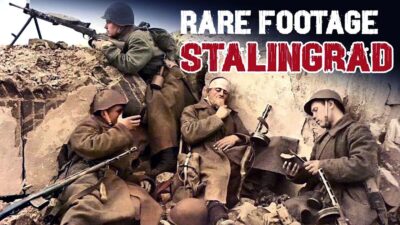
Rare Footage: The Battle of Stalingrad – Hitler’s Greatest Defeat | WW2 Documentary
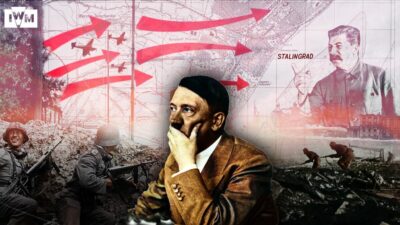
The Battle of Stalingrad was doomed from the start, and here's why
Frequently Asked Questions
It began in August 1942 and ended in February 1943 with the surrender of the German 6th Army.
It lay on a strategic route to the oil regions of the Caucasus, and because of its name it had also become a major matter of prestige for both Hitler and Stalin.
The German 6th Army was completely encircled and surrendered. This was one of the heaviest defeats Germany suffered on the Eastern Front in the Second World War, and it turned the course of the war in favour of the Soviets.
According to historians the total number of dead, including civilian losses, is close to two million. It is one of the bloodiest single battles in history.
Related Posts
 Berlin Streets After World War II. July 1945
  The Boston Tea Party: How a Crate of Tea Gave Birth to a Nation
  The Public Debt Administration: How an Empire Became a Foreigner in Its Own Country
  Genghis Khan: From an Abandoned Child to History’s Greatest Emperor
  The Black Death: How Did a Pandemic Bring About the End of the Middle Ages?
  The Tulip Mania: The Story of History’s First Financial Bubble and Manipulative Scheme
  The Fall of Constantinople: A City’s Downfall, an Era’s Dawn
  The Battle of Waterloo: The Afternoon That Decided Europe’s Fate