
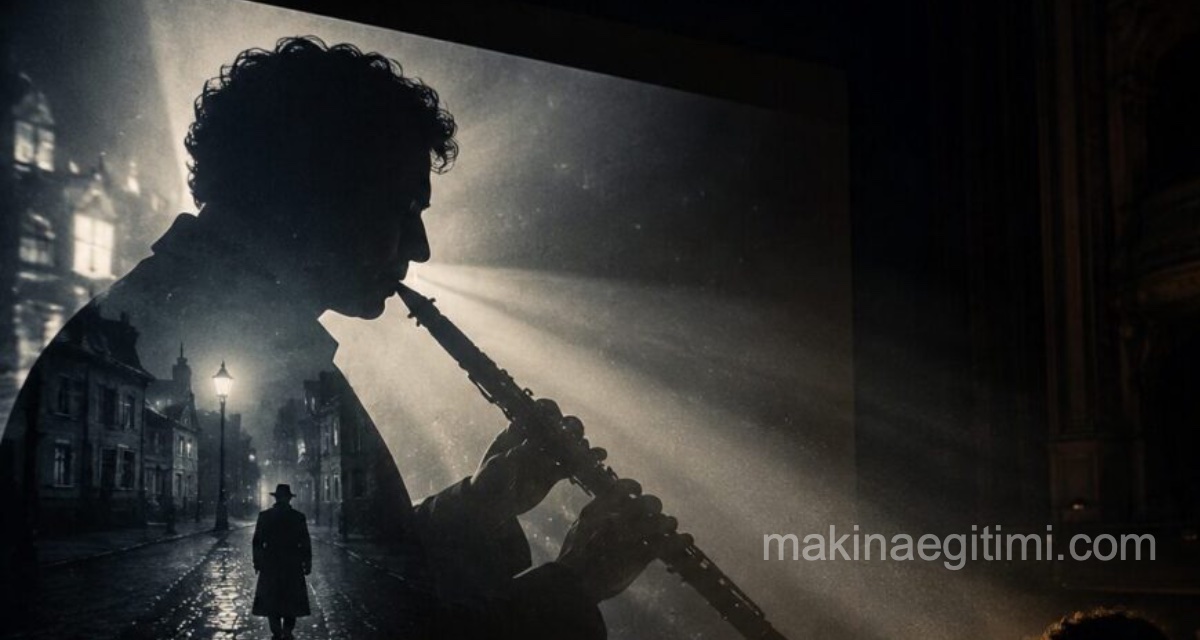
Have you ever wondered why a scene in a film affects you so deeply? The hero drawing their sword, a little ship setting out to sea, or a character taking their final breath… Often, what makes these moments so powerful is not just what you see on screen, but the music your ears take in without you even noticing. A good film score doesn’t tell the audience what to feel — it makes them feel it; sometimes, even if you haven’t seen a film, hearing just a few notes of its theme instantly teleports you into that film’s world.
In this article, we’ll explore the most famous film scores in cinema history together with the stories of the composers who created them.
What Is Film Music, and Why Does It Matter So Much?
Film music (the original score) is instrumental music composed specifically to accompany a film’s visuals. A good film score isn’t just a sound that plays “in the background”; it conveys the characters’ emotions, tension, humor, or tragedy to the audience in a wordless language. When you hear a hero’s theme, you immediately understand who they are; when a villain’s music plays, you sense the danger. This technique is called a “leitmotif” (a guiding theme) in the world of music, and its roots actually trace back to the 19th-century opera composer Richard Wagner.
Cinema’s Great Composers
John Williams: (Jaws, Star Wars, Harry Potter)
If there’s one name that comes to mind first when you think of film music, it’s certainly John Williams. The composer behind Star Wars, Jaws, Indiana Jones, and Harry Potter can arguably be credited with shaping the sound of modern cinema music almost single-handedly. An interesting detail: when director Steven Spielberg first heard the famous two-note tension theme from Jaws, he thought it was a joke; he didn’t believe such a simple melody could be so effective. The result became one of the most recognizable suspense themes in film history.


Ennio Morricone: (The Good, the Bad and the Ugly)
Italian composer Ennio Morricone is particularly associated with Sergio Leone’s “spaghetti western” films.
The main theme of the film The Good, the Bad and the Ugly, with its two-note melody beginning like the howl of a jackal, has become the first sound that comes to mind for the western genre.
Considering that Morricone wrote music for more than 500 films and television productions throughout his career, the extent of his contribution to cinematic music is better understood.
 The Good, The Bad And The Ugly (2004 Remaster)
Nino Rota: (The Godfather)
Italian composer Nino Rota went down in film music history with the melancholic waltz theme he wrote for Francis Ford Coppola’s The Godfather. nnAn interesting detail: nthis theme was nominated for an Academy Award but was later withdrawn from the nominee list, because it was noticed to closely resemble a melody Rota had previously used in an Italian film from 1958. Even so, the theme is still regarded today as one of the most recognizable pieces of music in film history.
 The Godfather • Main Theme • Nino Rota
Bernard Herrmann: (Psycho)
Bernard Herrmann became known for his collaborations with Alfred Hitchcock; his most famous work was the screeching violin stabs in Psycho. nnThis theme added such intense tension to the film’s famous shower scene that, even today, these few seconds of violin sound have become a universal symbol of horror cinema.
 Bernard Herrmann – Psycho (theme)
Hans Zimmer: (Pirates of the Caribbean)
German composer Hans Zimmer created one of the most recognizable sounds in modern cinema with films such as Inception, Interstellar, Gladiator, and Pirates of the Caribbean.
The iconic theme song from the Pirates of the Caribbean series, “He’s a Pirate,” while largely completed by his colleague Klaus Badelt, actually originated from a demo Zimmer created overnight.
 Pirates of the Caribbean Theme Song 'He’s a Pirate' – Hans Zimmer (Official soundtrack) HD
Howard Shore: (The Lord of the Rings)
With the massive-scale score he wrote for The Lord of the Rings trilogy, Howard Shore gave an entire fictional world its own musical language. nnBy writing a distinct theme for each race (Hobbits, Elves, Orcs), Shore allowed the audience to come to know the film not only through what they saw, but also through what they heard.
 Concerning Hobbits
James Horner: (Titanic)
Canadian composer James Horner created one of the most emotional scores in cinematic history with his score for the film Titanic.
Director James Cameron was initially hesitant about including a pop song in the film; however, Horner secretly created a demo of a melody he developed using the Icelandic instrument “uilleann pipes” (Irish bagpipes), had Celine Dion sing it, and played the demo for Cameron.
The result was an Oscar-winning masterpiece that became both the film’s soundtrack and the standalone single “My Heart Will Go On.” Horner’s orchestral theme was powerful enough to convey the emotion of the lost love story in the film without needing lyrics.
 James Horner & Celine Dion – My Heart Will Go On (From "Titanic")
A Curious Detail: How Is a Film Score Composed?
Film music is often composed after filming is complete and editing is well underway. The composer watches the final (or near-final) cut of the film and writes music according to each scene’s length, rhythm, and emotional tone; this process is called “spotting.” On some major productions, the composer is given an unbelievably short window, sometimes just a few weeks; for example, Hans Zimmer had to complete much of the score for Pirates of the Caribbean: Dead Man’s Chest under an extremely tight deadline.
The Legacy of Film Music: Sounds That Transcend Cinema
Today, many film scores have gone far beyond the film they belong to and become an independent art form in their own right. Orchestras hold “film music concerts” around the world, and people listen to these themes at weddings, at sporting events, and even as everyday work music. This shows that a good film score doesn’t just accompany a scene; it becomes an independent emotional language all on its own.
Frequently Asked Questions
A film score is instrumental music, usually wordless and orchestral, composed to accompany the film’s visuals; a film song, on the other hand, has lyrics and can also be listened to independently of the film.
A leitmotif is a short musical theme representing a character, place, or emotion, used repeatedly throughout a film; it allows the audience to associate that element with the music.
Film music is usually composed after filming is complete and the edit is well underway, in a process called “spotting,” based on the length and emotional tone of each scene.
A strong film score has such a strong melodic identity that it can evoke emotion independently of the scene’s visuals; this makes it a beloved piece at concerts, sporting events, and in everyday listening as well.
Related Posts
 The Birth and Golden Age of Jazz: From New Orleans to the World
 The History of the Piano: A 300-Year-Old Sound Born from a Hammer
 Music Terms: Tempo, Harmony, Chord, Syncopation and More
 What Is the Difference Between Classical Guitar and Acoustic Guitar?
 The Story of The Beatles: From Liverpool to a Worldwide Legend
 The Birth and Golden Age of the Blues: Where Pain Is Transformed into Music
 Beethoven’s Battle With Deafness: An Incredible Story of Perseverance
 The Life Story of Michael Jackson: The Legendary Journey of the King of Pop