

Dear readers, today we’ll tell you the story of how a three-hundred-year-old dynasty vanished into history within just a few months. What’s more, the most striking part of this revolution is that those who seized power were not a large army with broad popular support, but a relatively small yet extremely disciplined group.
By 1917, Russia was under the rule of the Romanov dynasty, which had governed the country for three centuries. But by the end of that year, one of the world’s greatest empires would give way to history’s first socialist state.

A Tsardom’s Slide Toward Collapse
Russia had entered World War I against Germany and Austria-Hungary. But the war turned into a complete disaster for Russia. The army was suffering heavy losses, and hunger and poverty were steadily rising behind the front lines. Tsar Nicholas II had gone to the front to personally command the war effort, which left the administration in the capital, Petrograd, largely in the hands of his wife and her controversial advisors.

You may also recall the defeat at Gallipoli: the Allies’ failure to force the Straits and deliver arms and supplies to Russia made the Russian army’s situation at the front even more difficult. A setback on one front was laying the groundwork for a collapse thousands of kilometers away.
The February Revolution: The First Blow
In March 1917 (February by the calendar in use in Russia at the time), demonstrations begun by women waiting in bread lines in Petrograd quickly turned into a general uprising. Army units, refusing orders to open fire on the people, joined the rebels. Seeing that he could no longer hold on to control, Tsar Nicholas II abdicated the throne. The three-century-old Romanov dynasty came to an end almost overnight.

But the revolution didn’t end there. The Provisional Government established in its place decided to continue the war. Rather than calming public anger, this decision only fanned the flames further. Because by now, the people wanted just one thing: “Bread, Land, Peace.”
But What If the Provisional Government Had Withdrawn From the War?
Let’s pause and think for a moment. What would have happened if the Provisional Government established after the February Revolution had immediately withdrawn from the war and listened to the people’s demands? Perhaps the “peace” the Bolsheviks promised would already have been achieved, and Lenin’s alternative, offered that October, might not have seemed so appealing.
But the Provisional Government wanted to keep its word to its allies and continue the war. This decision was the final straw that exhausted the people’s patience, and it handed the Bolsheviks a path to power practically on a silver platter.
The October Revolution: Power Changing Hands Overnight
To weaken Russia in the war, Germany sent the exiled Lenin back from Switzerland to Russia aboard a sealed train. Germany’s calculation was simple: if Lenin could persuade Russia to withdraw from the war, Germany would gain relief on the Eastern Front.
This move led to one of history’s greatest “boomerang” effects, because the revolution Lenin brought would go on to shape not just Russia, but half the world for the next seventy years.
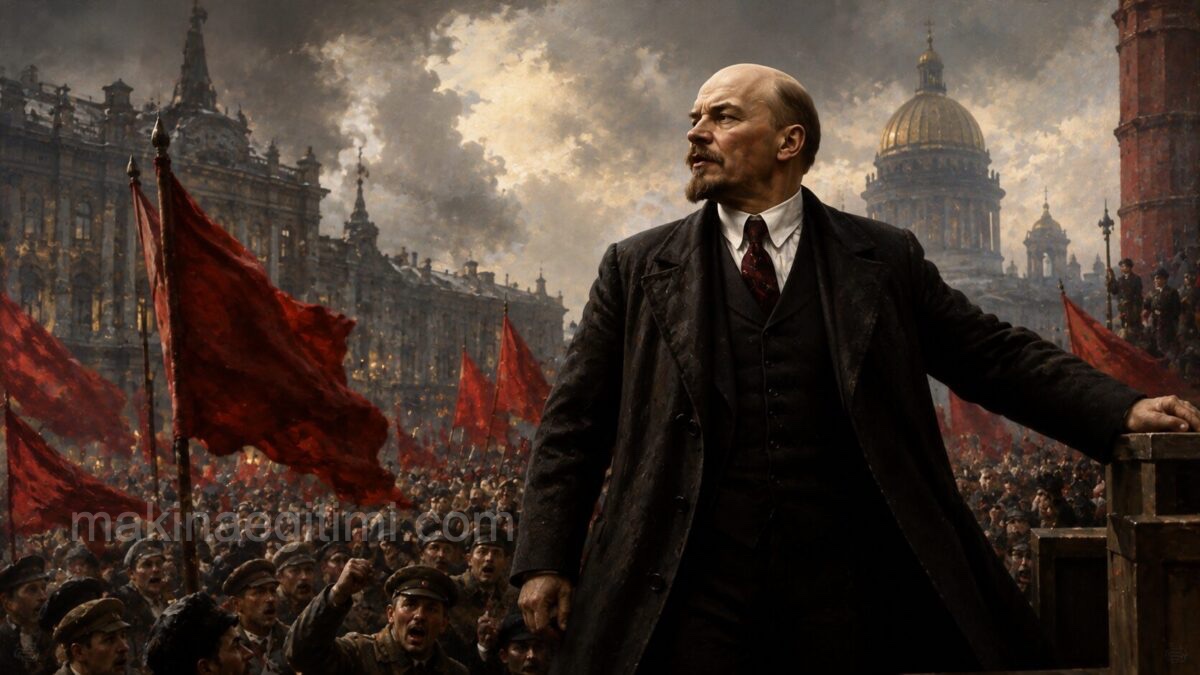
In November 1917 (October by the calendar of the time), the Bolsheviks, led by Lenin, seized key points in Petrograd with almost no resistance. The Winter Palace was stormed, and the Provisional Government was overthrown. The Bolsheviks had officially seized power.
Videos About the October Revolution

Nedir bu Ekim Devrimi? Sovyetler Birliği nasıl doğdu? Lenin ve Ekim Devrimi neden bu kadar önemli?

Ekim Devrimi ve Sovyetler Birliğinin Kuruluşu
ÇARLIK RUSYASINI YIKAN AYAKLANMA: BOLŞEVİK İHTİLALİ
The Cause-and-Effect Chain: From a War to a Revolution
- World War I pushed the Russian army and people to the point of exhaustion.
- The failure at Gallipoli blocked supplies meant to reach Russia and worsened the situation at the front.
- Bread shortages and war weariness brought down the Tsardom in February 1917.
- The Provisional Government’s decision to continue the war caused it to lose public support.
- Germany’s decision to send Lenin to Russia strengthened the revolutionary movement.
- In November 1917, the Bolsheviks seized power with almost no resistance.
- This change of power laid the groundwork for the founding of history’s first socialist state and for the Cold War balance that followed.
A Little-Known Fact
Germany’s dispatch of Lenin to Russia aboard the “sealed train” is often remembered through a biological-weapon analogy. German officials of the time thought of it almost as “sending a plague into enemy territory.” But this move set off a chain reaction that would profoundly affect not only Russia, but the future of Germany’s own empire as well.
Frequently Asked Questions
The February Revolution was the first uprising, which overthrew the Tsardom and established the Provisional Government. The October Revolution was the second stage, in which the Bolsheviks overthrew that Provisional Government and seized power.
He abdicated the throne in February 1917. In 1918, he was executed by the Bolsheviks along with his family.
Germany hoped for a revolution that would persuade Russia to withdraw from the war, and sent the exiled Lenin back to Russia aboard a sealed train.
It laid the groundwork for the founding of the Soviet Union, history’s first socialist state, and profoundly shaped world politics throughout the 20th century.
Related Posts
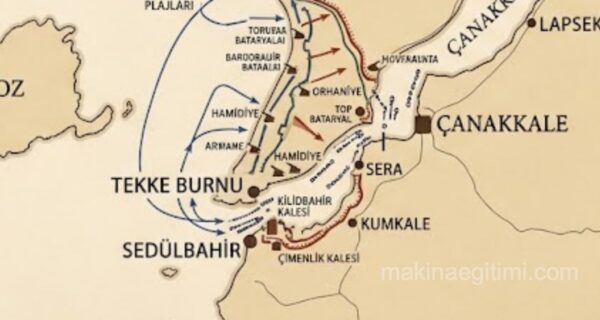 The Battle of Gallipoli: How One Front Changed a Nation’s Fate
  The Fall of Constantinople: A City’s Downfall, an Era’s Dawn
 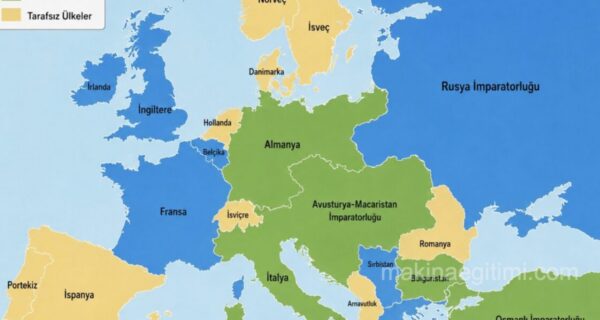 The Sarajevo Assassination: How One Bullet Dragged the World Into War
  The Battle of Waterloo: The Afternoon That Decided Europe’s Fate
  The Financial Origins of the French Revolution: How a Kingdom Collapsed Into Bankruptcy
  Napoleon Bonaparte: How a Child of an Island Became the Master of Europe
  Berlin Streets After World War II. July 1945
  The Public Debt Administration: How an Empire Became a Foreigner in Its Own Country