Close Menu
  • MAKİNELER ve İMALAT
    • Tools & Equipment
    • Computer-Aided Drawing
    • CAD/CAM Education
    • CNC Machine Programming
    • Casting Technologies
    • Electrical & Electronics Technologies
    • Hydraulics & Pneumatics
    • Manufacturing Processes
    • Manufacturing Technologies
    • Occupational Safety
    • Mold & Die Design
    • Solid Modeling
    • Welding Technology
    • Machine Elements
    • Mechanical Trade Drawing
    • Materials Science
    • Automotive & Vehicle Technologies
    • Robotics Technologies
    • Health Technologies
    • Defense & Aerospace Technologies
    • Descriptive Geometry
    • Technical Drawing
    • Software & Hardware Technologies
    • Innovative Manufacturing Methods
  • TEKNOLOJİ ve YAŞAM
    • OTOMOBİLLER ve TAŞIT
      • Vehicle & Engine Knowledge
      • Safe Driving
      • Sürüş Destek Sistemleri
    • Genel Kültür
      • Movies & TV Shows
      • Görsel ve Grafik Sanat
      • Books & Literature
      • Music
      • Sports
      • History
      • History of Technology
    • GÜNDELİK YAŞAM TEKNOLOJİLERİ
    • Hobbies & Entertainment
    • Internet Technologies
    • Health
    • Mobile Technologies
Makine Eğitimi
  • Machines & Manufacturing
    Machine Elements
    Hydraulics & Pneumatics
    Technical Drawing
    Computer-Aided Design & Manufacturing
    Basic Manufacturing Processes
    Manufacturing Processes
    Industry Technologies
    Other Technical Courses
    Motion & Power Transmission
    Simple Machines
    Chains & Sprockets
    Shafts & Journals
    Gears
    Cams
    Couplings
    Belts & Pulleys
    Springs
    Bearings
    Keys
    Fastening Joining
    Retaining Rings
    Screws, Bolts & Nuts
    Cotter Pins
    Flanges
    Welding
    Rivets
    Pins & Bolts
    Washers
    Calculators
    Gear Ratio Calculator
    Spring Constant Calculator
    Belt Pulley Ratio Calculator
    Other Machine Elements
    Slides & Linear Guides
    Brakes
    Flywheels
    Clamps
    Shock Absorbers
    Gaskets & O-Rings
    Seals & Sealing Elements
    Hydraulics
    Introduction to Hydraulics & Principles
    Hydraulic Systems & Applications
    Accumulators
    Filters
    Motors
    Pumps
    Valves
    Pneumatics
    Introduction to Pneumatics & Principles
    Pneumatic Systems & Applications
    Pneumatic Circuit Components
    Valves
    Cylinders
    Silencers
    Motors
    Compressors
    Dryers
    Conditioning Units
    Common Topics & Maintenance
    Hydraulic & Pneumatic Maintenance
    Study Notes, Exams & Tests
    Technical Drawing
    Introduction to Technical Drawing
    Geometric Drawings
    Perspective & Projection
    Orthographic Views
    Dimensioning
    Sectioning
    Assembly & Detail Drawings
    Tolerances
    Surface Finish Symbols
    Mechanical Engineering Drawing
    Screws, Bolts & Nuts
    Pulley Drawings
    Gear Drawings
    Shafts & Journals
    Bearing Drawings
    Pins & Bolts
    Spring Drawings
    Welds in Technical Drawing
    Washers
    Cotter Pins
    Technical Drawing Exercises
    Mechanical Drawing Exercises
    Gear Exercises
    View Extraction Exercises
    Pulley Exercises
    Pin & Bolt Exercises
    Threaded Fastening Exercises
    Descriptive Geometry
    Computer-Aided Drawing
    AutoCAD Drawing Lessons
    Computer-Aided Drawing Exams
    Solid Modeling & Animation
    Solid Model Drawing Files
    Solid Model Assembly Examples
    Solid Model Drawing Lessons
    3D CAD Software Reviews
    Solid Modeling Exercises
    CNC Programming
    CAM
    Measurement & Inspection
    Dial Indicators
    Calipers
    Gauges
    Micrometers
    Materials Science
    Steels
    Cast Iron
    Aluminum
    Plastics
    Material Testing & Hardness Measurement
    Occupational Safety
    Workshop Safety
    Safety When Working With Electricity
    Machine Safety Rules
    Hand Operations
    Filing
    Marking
    Cutting Operations
    Reaming
    Tapping
    Threading With a Die
    Drill Bit Sharpening
    Working With Machines
    Basic Turning Operations
    Basic Milling Operations
    Shaper Machine
    Machining
    Turning
    Milling
    Grinding
    Innovative Manufacturing Methods
    EDM (Electrical Discharge Machining)
    Laser Machining
    Waterjet Machining
    3D Printing
    3D Scanners
    Welding
    Rolling
    Casting
    Mold & Die Design
    Mechanical & Hydraulic Presses
    Blanking & Piercing Dies
    Bending Dies
    Drawing Dies
    Plastic Injection Molds
    Extrusion Dies
    Compound Dies
    Progressive Dies
    Blow Molds
    Spinning Dies
    Spray Molds
    Manufacturing of Machine Parts
    Automotive & Vehicle Technologies
    Motor Vehicle Manufacturing
    Raw Material Production
    History of Technology
    Health & Medical Technologies
    Defense & Aerospace
    Robotics Technologies
    Software & Hardware Technologies
    Mechanics - Strength of Materials
    Physics Topics
  • Technology & Life
    Hobbies & Entertainment
    Sports
    Music
    Vehicle & Engine Knowledge
    Vehicle Maintenance & Repair
    Safe Driving
    Driver Assistance Systems
    History
    Movies & TV Shows
    Books & Literature
    Computers & Internet
    Computer Tips
    Software Reviews
    Hardware & Peripherals
    Practical & Safe Internet Use
    Visual & Graphic Art
    Mobile Technologies
    Travel
    Science
    Health
    First Aid Knowledge
    Everyday Technologies
Makine Eğitimi
Home»Vehicle & Engine Knowledge»Properties and Advantages of Alloy Wheels
30 August 2026

Properties and Advantages of Alloy Wheels

blue alloy wheel

Manufacturers generally use the term ‘alloy wheel’ to refer to wheels made from aluminum and/or magnesium alloys. Some just call them “aluminum wheels.” Alloy wheels are commonly used on all of today’s cars, and their popularity is rapidly increasing.

  • What Metals Are Alloy Wheels Made From
  • Advantages of Alloy Wheels
  • Disadvantages of Alloy Wheels
  • Related Questions

What Metals Are Alloy Wheels Made From

Alloy wheels are generally made from a combination of metals such as aluminum and magnesium. Additionally, other metals such as zinc, cobalt, and nickel can also be used in manufacturing alloy wheels. The proportion of these metals can vary depending on the wheel’s desired properties. For example, alloy wheels containing magnesium tend to be lighter, while those containing zinc can be harder and more durable. Additionally, the composition of metals used in manufacturing alloy wheels can vary depending on the wheel type and its intended purpose.

Lightweight Advantage


Alloy wheels are lighter than steel wheels, which contributes positively to fuel consumption and driving performance.

Aluminum-Magnesium Blend


Alloy wheels are generally manufactured from a blend of aluminum and magnesium, providing both durability and lightness.

Heat Dissipation


Alloy wheels dissipate heat from the braking system more effectively than steel wheels, contributing to braking performance.

Advantages of Alloy Wheels

  1. Improved exterior design of the vehicle.
  2. They have more strength compared to steel wheels.
  3. Reduction in the vehicle’s total weight.
  4. Improves driving and handling.

Since alloy wheels are lighter, they provide better road grip at higher speeds, and also offer better braking performance.

Additionally, alloy wheels generally look better and significantly improve the car’s appearance.

blue alloy wheel

Since alloy wheels are lighter, they provide better road grip at higher speeds, and also offer better braking performance. Additionally, alloy wheels generally look better and significantly improve the car’s appearance.

Alloy wheels retain less water vapor, and therefore provide better traction on icy roads in winter. This may be a reason alloy wheels are preferred.

In addition to the excellent style these wheels offer, using alloy wheels also has various engineering advantages. First, they’re lighter than steel wheels of an equivalent size.

This lightness of the wheels not only reduces weight, but also improves the vehicle’s driving and handling. They also help steer the vehicle easily.
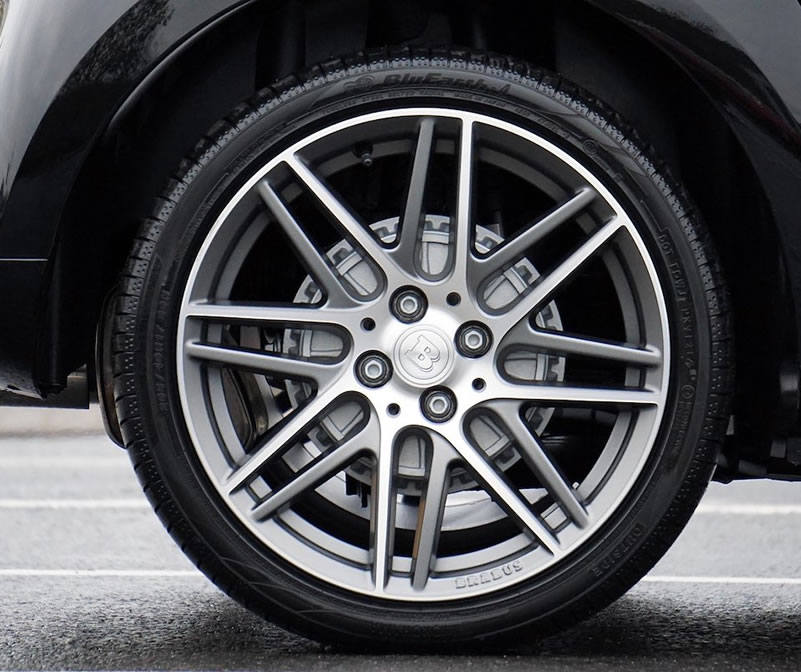
alloy wheel

The main reason for this is that a vehicle’s wheels belong to the part of the vehicle not supported by the suspension system. Greater unsprung weight causes passengers to experience more jolting, and therefore lowers ride quality. It also affects the vehicle’s road holding. For this reason, the lower the weight of such unsprung systems, the better the vehicle’s ride and handling. This is how alloys improve the vehicle’s ride quality.

Disadvantages of Alloy Wheels

The only significant disadvantage of using these wheels is that they’re more expensive than steel wheels.

Most vehicle manufacturers now offer alloy wheels as standard equipment on their vehicles. It’s also possible to install them as aftermarket equipment.

Related Questions

Metals like aluminum and magnesium have much lower density than steel. Since they provide the same strength with less weight, these metals are preferred in wheel manufacturing.

Wheels are part of what we call the vehicle’s “unsprung mass,” the weight that sits outside the suspension. The lower this weight, the faster and more precisely the suspension can respond to road irregularities.

Related Posts

nickel cast iron The Effect of Alloying Elements in Cast Iron What Is a Composite Material? Types and Applications Plastik Çeşitleri hakkında bilgiler Types of Plastics and Classification of Plastics Cast Irons and Types of Cast Iron, featured image Cast Irons and Types of Cast Iron Esmer dökme demirler Gray Cast Iron Paslanmaz çeliğin özellikleri ve kullanım alanları Properties and Applications of Stainless Steel Material types and their properties per DIN standard Material Types and Their Properties (per DIN Standard) Çelik nedir nasıl yapılır? Çeliğin yapılışı video anlatım What Is Steel, How Is It Made? Video Explanation of Steelmaking

Aluminum
Share. Facebook Twitter WhatsApp Tumblr Email Telegram Copy Link

Leave A Reply Cancel Reply


Why Is the Exhaust Emission Value High, How Can It Be Lowered?
Who Is Eric the Eel? The Funniest Moment in Olympic Swimming History
  • Contact
  • Terms of Service
  • Privacy & Cookie Policy

Type above and press Enter to search. Press Esc to cancel.