
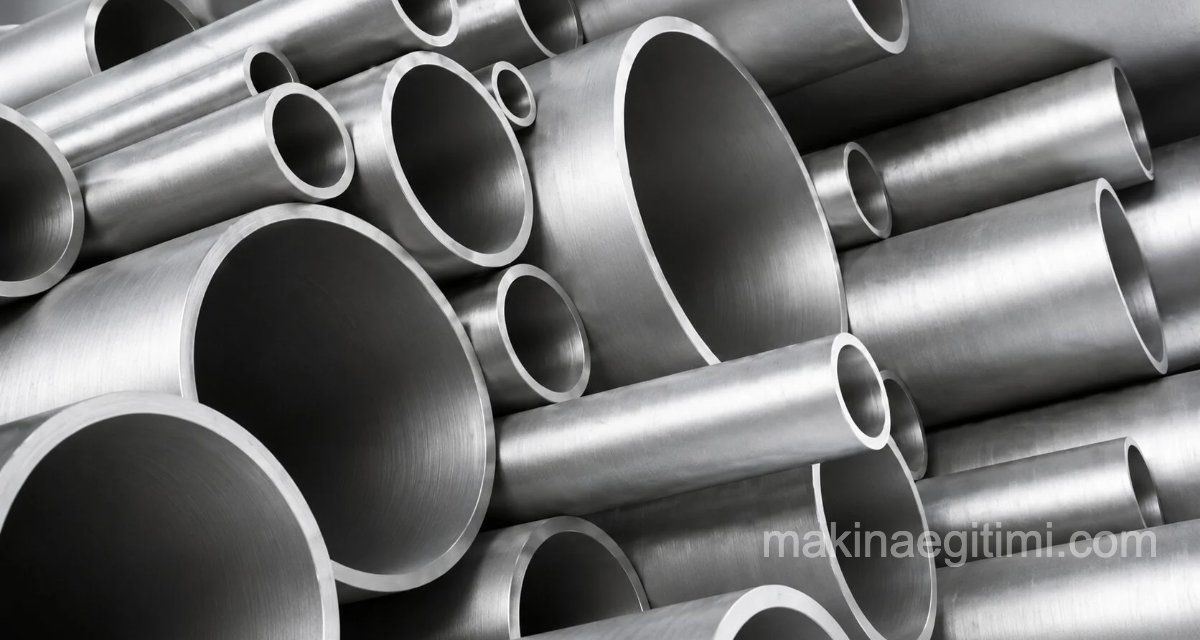
Stainless steels are steels resistant to environmental effects. Their other name is corrosion-resistant steel. This property comes from the chromium present in their structure. When other properties besides rust resistance are needed, other elements are also added to the alloy alongside chromium. These elements are nickel, molybdenum, and manganese.
Properties of Stainless Steel
In general, stainless steels contain between 10% and 25% Cr (chromium). In practice, the minimum chromium ratio is 10.5%. This chromium oxide layer forms as a very thin film and doesn’t create any adverse effect on the material’s mechanical properties. Ni (nickel) is also used as an alloying element. Nickel improves stainlessness and provides good corrosion resistance. Stainless steels are used in nearly every branch of industry.
What Is the Substance That Makes Stainless Steel Stainless?
The substance that makes stainless steel stainless is chromium. The reason chromium-alloyed steels are resistant to corrosion is that chromium forms a thin oxide layer (a chromium oxide layer) on the surface of the steel. This layer protects the iron from rust and is too thin to be seen with the naked eye. By completely blocking the effect of oxygen on the metal, it protects the metal it covers.
If this layer is torn, opened, or scratched for any reason, the layer renews itself and closes the gap. This is called passivation and is also seen in some other metals, such as titanium.
The nickel element also contributes to the passivation property, as do other elements used in smaller proportions, such as molybdenum and vanadium.
In the composition of stainless steels, the most important alloying element after chromium is nickel. Nickel forms the primary alloying element of heat-resistant steels, and it increases the steel’s resistance to oxidation.
Other elements added to enhance the qualities of stainless steels are as follows:
Molybdenum: Increases the hardenability and strength of steels. Increases their resistance to wear and creep.
Vanadium: This element also increases hardenability to a certain degree. Since it combines with nitrogen to form nitrides, it’s used as a grain refiner to produce a fine ferritic structure in steels.
Tungsten: Increases the strength of the steel. The carbides formed by tungsten greatly increase the wear resistance of steels. Titanium: Is a strong carbide former, similar to V, Mo, W, and Nb.
Selenium: Added to the composition of stainless steels in particular when easy machinability is desired. It reduces the steel’s corrosion resistance less than similar elements.
Nitrogen: Added specifically to the composition to increase hardness and yield strength at high temperatures.
Chromium Oxide Layer
Stainless steel’s corrosion resistance comes from the thin, self-renewing chromium oxide layer that forms on its surface.
Minimum Chromium Ratio
For a steel to be considered stainless, it generally needs to contain at least 10.5% chromium.
Prevalence of the Austenitic Type
Austenitic stainless steels such as 304 and 316 are the most widely used types thanks to their high corrosion resistance.
Applications of Stainless Steel
The applications of stainless steel are growing every day. Originally used mainly in kitchen equipment, stainless steel is now used today not only in industrial fields such as automotive, the food industry, appliances, and shipbuilding, but also in jewelry, works of art, and for decorative purposes in many everyday settings. Stainless steel consumption is now considered an indicator of a society’s standard of living.

Even in our normal daily life, we see these products used extensively, from cutlery to watches.
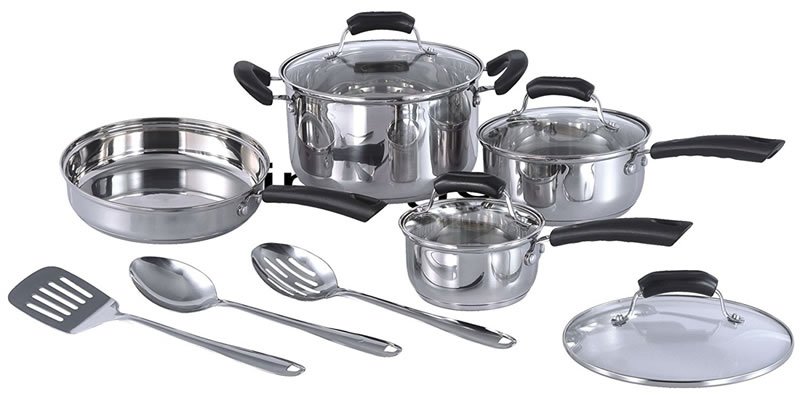
In the steel pots in our kitchens, for example.
Compared to other steels, the greatest advantages of stainless steels include their high corrosion resistance, the fact that some stainless alloys show high mechanical strength at low temperatures and others at high temperatures, the ease with which all types of manufacturing processes (cutting, welding, hot and cold forming, machining) can be performed on them, their availability in a wide variety of surface finishes, their ease of maintenance, their hygienic quality due to being easy to clean, and their long service life.
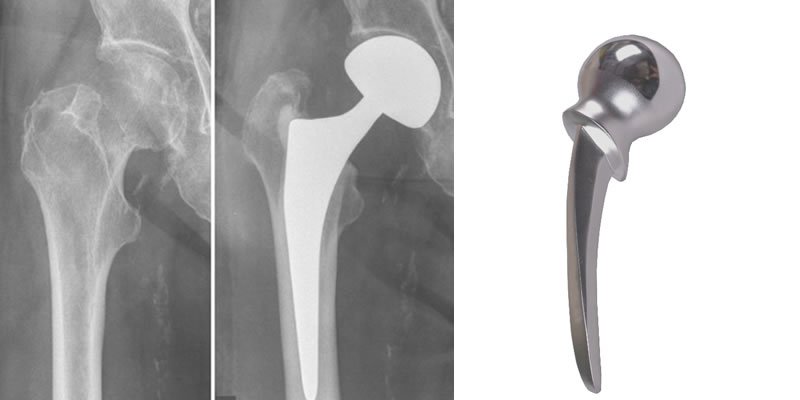
Stainless steel is also widely used in the aerospace industry, where preventing metal from rusting is critically important, as well as in the healthcare sector for making surgical equipment, prosthetics, and similar items.
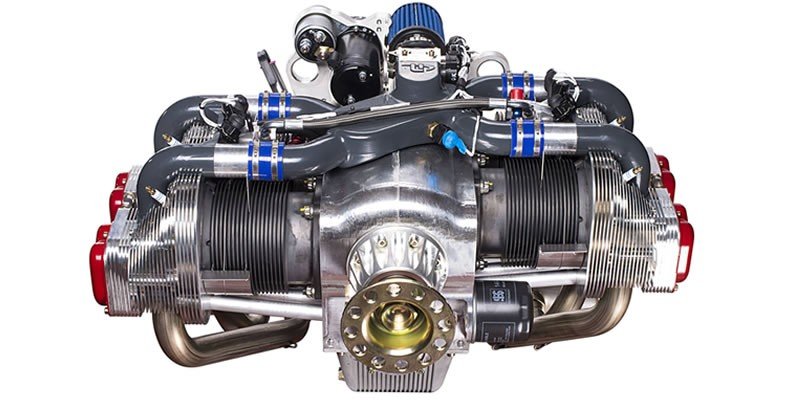
An example of stainless steel applications from the aviation sector. A 4-stroke aircraft engine designed for light aircraft (above)

We don’t want a machine that flies through the sky every day, carrying the lives of tens of thousands of people, to develop a mid-air malfunction because of a rusted part.
A large portion of the stainless steel produced worldwide is consumed as sheet/plate. Today, stainless sheets are frequently used in applications such as manufacturing all types of steel boilers, in the energy machinery manufacturing and transportation sectors, exterior cladding, natural gas flues, and more. The most commonly used grades are 430, 304, 316, and 310. For sheet material, cold production methods can be used for thicknesses up to about 8 mm, but hot processing is used for materials beyond this thickness.
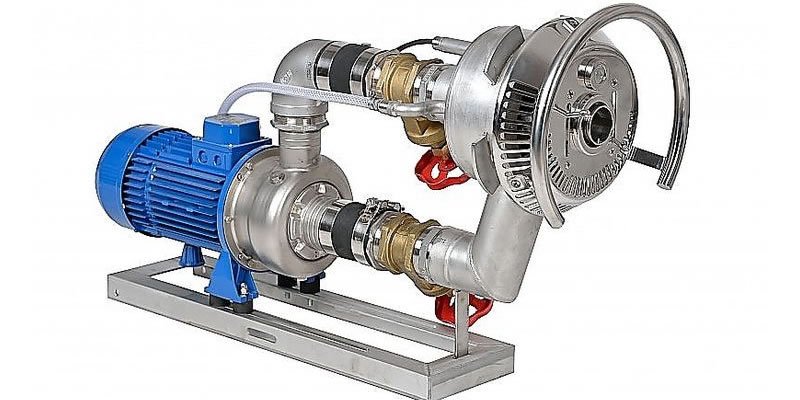
For steel to rust, contact with oxygen in the air is enough. However, machines and parts that operate in water in particular are especially prone to rusting. The picture shows a water jet used in swimming pools. (above)
These are products frequently used in the manufacturing industry. They’re preferred for making bolts, screws, and pins, for producing transmission shafts, and in humid environments with high corrosion or acidic conditions. The most widely used grades are 304, 316, 310, and 420.

Making load-bearing ropes from stainless steel in environments exposed to heavy moisture, such as ports and docks, will increase their cost, but in the long run it becomes clear that using stainless steel was the right choice.
Stainless steels up to about 12.0 mm thick are generally produced as coils and can be converted into sheets through post-production processes. Coils narrower than 600 mm are called narrow strip, and those wider than 600 mm are called wide strip.
Related Questions
The chromium on the steel’s surface reacts with oxygen to form a thin but strong chromium oxide layer. This layer protects the steel from external factors, but if this protective layer is damaged (scratched), the steel underneath can once again become vulnerable to rust.
Nickel further strengthens the corrosion resistance provided by chromium and increases the steel’s overall durability. This contribution allows stainless steel to keep protecting effectively even in more demanding environments.
Related Posts
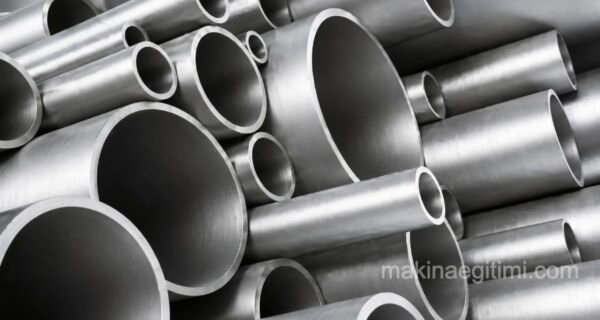 Classification of Steels According to the DIN Standard
  Material Types and Their Properties (per DIN Standard)
  The Relationship Between Laser Cutting Quality and Material Composition
 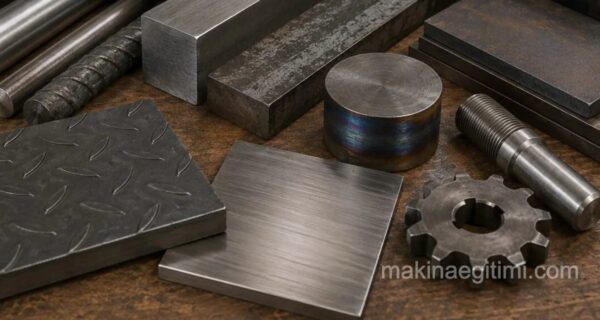 Steels by MKE Number and Their Applications
 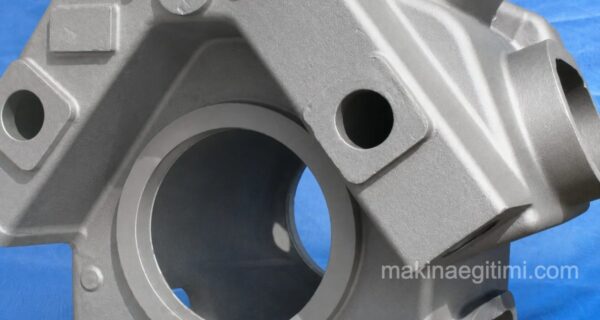 Ductile (Spheroidal Graphite) Cast Iron
  Rockwell Hardness Testing Method
 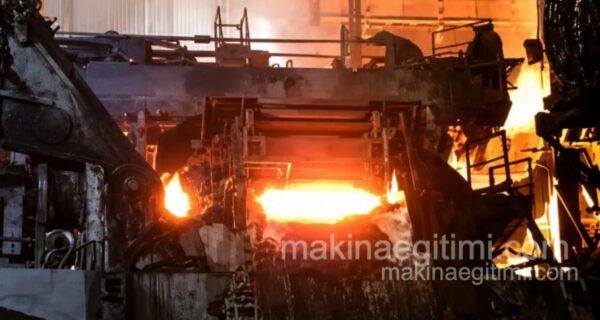 What Is Steel, How Is It Made? Video Explanation of Steelmaking
  High-Speed Steels. What Is HSS. Properties of HSS Steel