

Also called flake graphite cast iron. In acid pig iron with 2-4% silicon in its internal structure, the silicon causes the carbon to be present as graphite flakes instead of iron carbide. In this form, it is easily machinable, but brittle due to the graphite flakes. Graphite also gives the metal’s fracture surfaces a dull appearance. For this reason, this type of cast iron is called gray cast iron . The reason these cast irons are called “gray” is the gray appearance of their fracture surfaces.
Microstructure of Gray Cast Iron

Microstructure photographs of gray cast iron: a) ferritic structure, b) pearlitic structure (figure above).
Graphite Flake Structure
Gray cast iron gets its name from the gray color that graphite flakes give to the fracture surface.
Good Vibration Damping
Thanks to its graphite structure, gray cast iron effectively damps vibration, making it preferred for parts such as engine blocks.
Good Machinability
Thanks to its soft graphite phase, gray cast iron is relatively easy to machine.
Heat Treatments Applied to Gray Cast Iron
Gray cast iron can be quenched and tempered using methods similar to those applied to steel. For example, the wear resistance of cylinder liners can be increased by raising the hardness to 45-55 HRC through hardening and tempering. Heat treatment can impart superior properties such as better machinability, higher wear resistance and strength, and better dimensional stability.
Applications of Gray Cast Iron
Gray cast iron is one of the most widely used types of cast iron and can be welded provided the necessary precautions are taken (such as preheating and controlling the post-weld cooling rate). Gray cast irons are used in machine parts and the automotive industry. Examples of gray cast iron applications include automotive parts such as brake pads, clutch linings, and shaft keys, furnace parts operating at high temperature, glass molds, ingots, melting crucibles, and various types of pipe valves, flanges, and fittings for pressurized or non-pressurized environments. Engine cylinders, machine tool beds, casting molds, stove parts, and flywheels are some of its other applications.
Elements such as nickel, copper, and chromium are added to the composition of some gray cast irons to improve their corrosion resistance and tensile strength.
Related Questions
The graphite flakes within it absorb and damp the vibrations that occur during operation. This property reduces noise and allows the structure to run more quietly in continuously vibrating parts like engines.
Carbon being present as soft graphite flakes instead of hard iron carbide lowers the material’s overall hardness. This softer structure allows cutting tools to machine the material more easily.
Related Posts
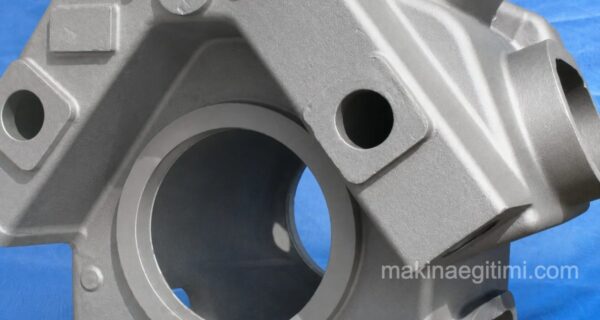 Ductile (Spheroidal Graphite) Cast Iron
 High-Speed Steels. What Is HSS. Properties of HSS Steel
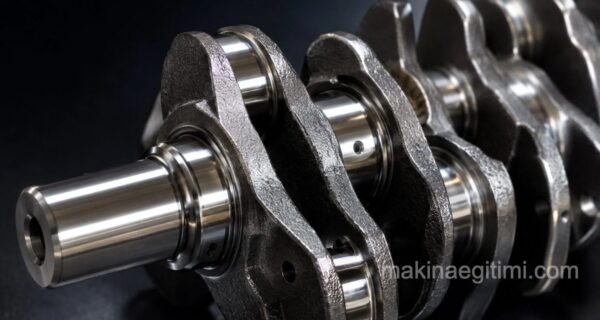 Forces Acting on the Crankshaft. Crankshaft Material
 Steel Standard Production Size Tables
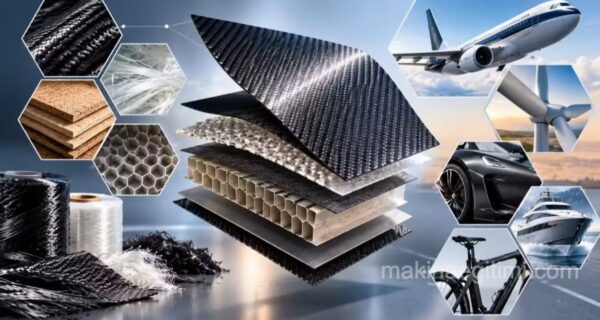 What Is a Composite Material? Types and Applications
 What Is an Alloy, How Is It Formed? Properties of Alloys
 The Siemens Martin Steel Production Method
 Brinell Hardness Testing Method