Close Menu
  • MAKİNELER ve İMALAT
    • Tools & Equipment
    • Computer-Aided Drawing
    • CAD/CAM Education
    • CNC Machine Programming
    • Casting Technologies
    • Electrical & Electronics Technologies
    • Hydraulics & Pneumatics
    • Manufacturing Processes
    • Manufacturing Technologies
    • Occupational Safety
    • Mold & Die Design
    • Solid Modeling
    • Welding Technology
    • Machine Elements
    • Mechanical Trade Drawing
    • Materials Science
    • Automotive & Vehicle Technologies
    • Robotics Technologies
    • Health Technologies
    • Defense & Aerospace Technologies
    • Descriptive Geometry
    • Technical Drawing
    • Software & Hardware Technologies
    • Innovative Manufacturing Methods
  • TEKNOLOJİ ve YAŞAM
    • OTOMOBİLLER ve TAŞIT
      • Vehicle & Engine Knowledge
      • Safe Driving
      • Sürüş Destek Sistemleri
    • Genel Kültür
      • Movies & TV Shows
      • Görsel ve Grafik Sanat
      • Books & Literature
      • Music
      • Sports
      • History
      • History of Technology
    • GÜNDELİK YAŞAM TEKNOLOJİLERİ
    • Hobbies & Entertainment
    • Internet Technologies
    • Health
    • Mobile Technologies
Makine Eğitimi
  • Machines & Manufacturing
    Machine Elements
    Hydraulics & Pneumatics
    Technical Drawing
    Computer-Aided Design & Manufacturing
    Basic Manufacturing Processes
    Manufacturing Processes
    Industry Technologies
    Other Technical Courses
    Motion & Power Transmission
    Simple Machines
    Chains & Sprockets
    Shafts & Journals
    Gears
    Cams
    Couplings
    Belts & Pulleys
    Springs
    Bearings
    Keys
    Fastening Joining
    Retaining Rings
    Screws, Bolts & Nuts
    Cotter Pins
    Flanges
    Welding
    Rivets
    Pins & Bolts
    Washers
    Calculators
    Gear Ratio Calculator
    Spring Constant Calculator
    Belt Pulley Ratio Calculator
    Other Machine Elements
    Slides & Linear Guides
    Brakes
    Flywheels
    Clamps
    Shock Absorbers
    Gaskets & O-Rings
    Seals & Sealing Elements
    Hydraulics
    Introduction to Hydraulics & Principles
    Hydraulic Systems & Applications
    Accumulators
    Filters
    Motors
    Pumps
    Valves
    Pneumatics
    Introduction to Pneumatics & Principles
    Pneumatic Systems & Applications
    Pneumatic Circuit Components
    Valves
    Cylinders
    Silencers
    Motors
    Compressors
    Dryers
    Conditioning Units
    Common Topics & Maintenance
    Hydraulic & Pneumatic Maintenance
    Study Notes, Exams & Tests
    Technical Drawing
    Introduction to Technical Drawing
    Geometric Drawings
    Perspective & Projection
    Orthographic Views
    Dimensioning
    Sectioning
    Assembly & Detail Drawings
    Tolerances
    Surface Finish Symbols
    Mechanical Engineering Drawing
    Screws, Bolts & Nuts
    Pulley Drawings
    Gear Drawings
    Shafts & Journals
    Bearing Drawings
    Pins & Bolts
    Spring Drawings
    Welds in Technical Drawing
    Washers
    Cotter Pins
    Technical Drawing Exercises
    Mechanical Drawing Exercises
    Gear Exercises
    View Extraction Exercises
    Pulley Exercises
    Pin & Bolt Exercises
    Threaded Fastening Exercises
    Descriptive Geometry
    Computer-Aided Drawing
    AutoCAD Drawing Lessons
    Solid Modeling & Animation
    Solid Model Drawing Files
    Solid Model Assembly Examples
    Solid Model Drawing Lessons
    3D CAD Software Reviews
    Solid Modeling Exercises
    CNC Programming
    CAM
    Measurement & Inspection
    Dial Indicators
    Calipers
    Gauges
    Micrometers
    Materials Science
    Steels
    Cast Iron
    Aluminum
    Plastics
    Material Testing & Hardness Measurement
    Occupational Safety
    Workshop Safety
    Safety When Working With Electricity
    Machine Safety Rules
    Hand Operations
    Filing
    Marking
    Cutting Operations
    Reaming
    Tapping
    Threading With a Die
    Drill Bit Sharpening
    Working With Machines
    Basic Turning Operations
    Basic Milling Operations
    Shaper Machine
    Machining
    Turning
    Milling
    Grinding
    Innovative Manufacturing Methods
    EDM (Electrical Discharge Machining)
    Laser Machining
    Waterjet Machining
    3D Printing
    3D Scanners
    Welding
    Rolling
    Casting
    Mold & Die Design
    Mechanical & Hydraulic Presses
    Blanking & Piercing Dies
    Bending Dies
    Drawing Dies
    Plastic Injection Molds
    Extrusion Dies
    Compound Dies
    Progressive Dies
    Blow Molds
    Spinning Dies
    Spray Molds
    Manufacturing of Machine Parts
    Automotive & Vehicle Technologies
    Motor Vehicle Manufacturing
    Raw Material Production
    History of Technology
    Health & Medical Technologies
    Defense & Aerospace
    Robotics Technologies
    Software & Hardware Technologies
    Mechanics - Strength of Materials
    Physics Topics
  • Technology & Life
    Hobbies & Entertainment
    Sports
    Music
    Vehicle & Engine Knowledge
    Vehicle Maintenance & Repair
    Safe Driving
    Driver Assistance Systems
    History
    Movies & TV Shows
    Books & Literature
    Computers & Internet
    Computer Tips
    Software Reviews
    Hardware & Peripherals
    Practical & Safe Internet Use
    Visual & Graphic Art
    Mobile Technologies
    Travel
    Science
    Health
    First Aid Knowledge
    Everyday Technologies
Makine Eğitimi
Home»Vehicle Maintenance & Repair»Changing Spark Plugs. How Is a Spark Plug Change Done?
29 August 2026

Changing Spark Plugs. How Is a Spark Plug Change Done?

Changing Spark Plugs. How Is a Spark Plug Change Done?

In this article, we’ll introduce the tools needed to change spark plugs on gasoline vehicles and explain how to do it. How is a spark plug change done. How is the correct spark plug chosen. What to watch out for when changing spark plugs? We’ve prepared this article, full of pictures and explanations, for drivers curious about these questions.

  • Changing Spark Plugs
    • Tools Needed to Change Spark Plugs
  • How Is a Spark Plug Change Done?
    • Choosing a Spark Plug for the Replacement
    • Installing the New Spark Plugs
    • What Should You Watch Out for When Changing Spark Plugs?
      • Should the Engine Be Hot or Cold When Changing Spark Plugs?
      • What Should the Spark Plug Gap Be?
      • Will a Double-Electrode Spark Plug Fit My Car?
      • What’s the Difference Between a Regular Spark Plug and an Iridium One?
      • Does Changing Spark Plugs Improve a Car’s Performance?
      • Is the Spark Plug Socket a Standard Size?
  • Related Questions

ARTICLE CONTENTS and SUBHEADINGS

Tools needed to change spark plugs
How Is a Spark Plug Change Done?
Choosing a spark plug for the replacement
Installing the new spark plugs
What should you watch out for when changing spark plugs?
Should the engine be cold when changing spark plugs?

What should the spark plug gap be?
Will a double-electrode spark plug fit my car?
What’s the difference between a regular spark plug and an iridium one?
Does changing spark plugs improve a car’s performance?

Changing Spark Plugs

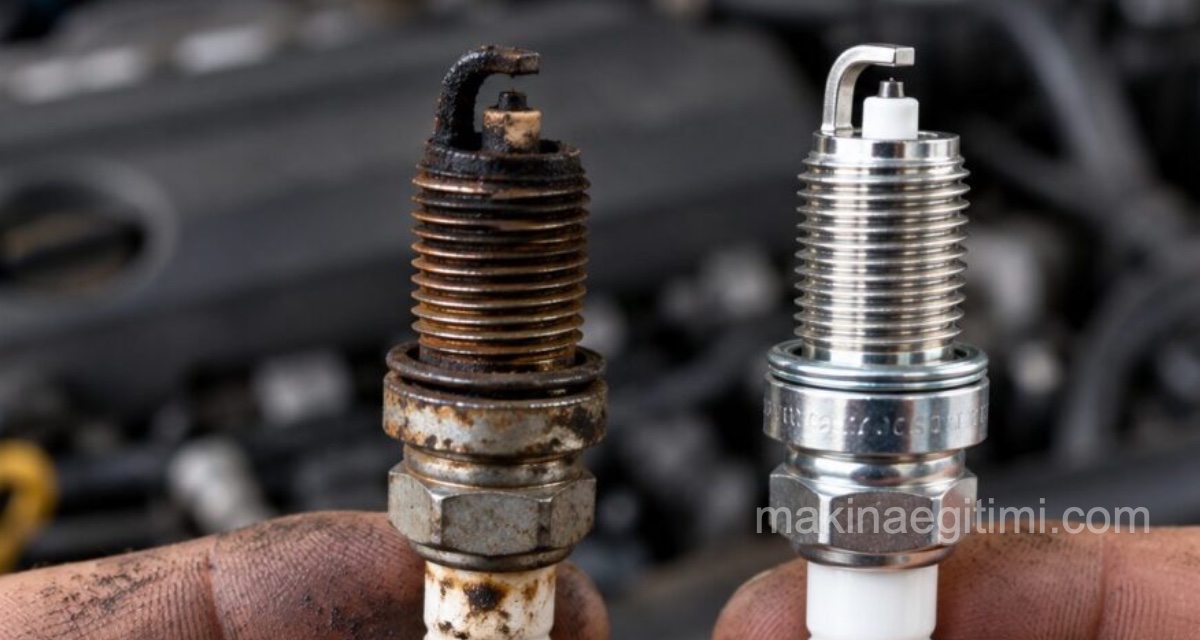
The most important thing to watch out for when changing spark plugs is using a plug with the correct specifications — the right replacement part must be chosen. Examining the spark plug tips can reveal many engine faults and tuning issues.

Tools Needed to Change Spark Plugs

what you need to change spark plugs

To change spark plugs you’ll need gloves, a spark plug socket, a ratchet — or a spark plug wrench, a flat-blade screwdriver, and a feeler gauge to check the spark plug gap. If possible, a torque wrench is preferred over a ratchet.

spark plug socket

What sets a spark plug socket apart from other sockets is that it has a rubber insert inside. This lets us grip the spark plug and pull it out of its bore.

Standard Spark Plug Life


Standard spark plugs generally need to be replaced every 20,000-30,000 km.

Iridium/Platinum Spark Plugs


Thanks to their durability, iridium- or platinum-tipped spark plugs can last up to 80,000-100,000 km.

Importance of Torquing Properly


Installing spark plugs too loose or too tight can both ruin the seal and damage the cylinder head.

How Is a Spark Plug Change Done?

We’ve covered the tools needed to change spark plugs. So how is a spark plug change actually done?

changing spark plugs, engine cover

First, we’ll remove the plastic engine cover on top. The air filter is inside this plastic cover. We find the mounting point and remove it.

changing spark plugs, ignition coil

We remove the connectors where the electrical wires plug into the ignition coils, from their sockets. If you don’t have a special tool for this, you can pop them out with a flat screwdriver as shown in the image. However, care is needed not to damage the connector housings.

removing the ignition coil connector

After removing the connector from its socket, it’s time for the ignition coils.

ignition coil and spark plug

The ignition coil steps up the electrical energy it gets from the battery to around 30,000 volts and delivers it to the spark plug. This high energy turns into a spark between the spark plug’s electrodes. (Image above)

steps for changing a spark plug

We grab the ignition coil and carefully pull it straight up.

how a spark plug change is done

Once we’ve removed the ignition coil too, we can now access the spark plugs.

how a spark plug change is carried out

We fit the spark plug socket onto the plug inside, using an extension bar and a ratchet, and turn it carefully. Don’t move the socket wrench around too much while changing spark plugs. Try to keep the socket steady both when removing and reinstalling it. If it accidentally skips a thread, and you force it, you can damage the threads in the spark plug bore.

spark plug wires

After removing the spark plugs, line them up on a tray, keeping their order straight, and examine the tips. It’s also worth checking the spark plug wires while you’re at it. Check the spark plug wires for cracks, burn marks, wear from rubbing, and make sure there’s no oil on them. If there’s cracking or wear on the spark plug wires, it’s a good idea to replace those too.

Choosing a Spark Plug for the Replacement

Since new spark plugs can vary by vehicle model, we’ll need the car’s catalog or manufacturing specs. Or we can remove the old plug and take it to an auto parts store to ask for the same part, new.

From what we’ve generally seen, Bosch or NGK brand spark plugs are preferred. You can find the right plug for your car on the manufacturer’s website. For example, you can use the link below to select the right spark plug for your car’s model.

Click here to choose the right NGK spark plug for your car model

Installing the New Spark Plugs

Install the spark plugs at the proper tightness. Spark plugs installed too loosely reduce cylinder compression pressure, which reduces engine power and increases fuel consumption.

digital torque wrench
digital and mechanical torque wrenches

The spark plug you buy will have the required tightening torque printed on it. If we’re using a torque wrench, we can set this force precisely. If we don’t have a torque wrench, let’s aim to tighten the plug with about the same force we used when removing it.

Spark plugs should be hand-tightened first, then tightened an additional 90 degrees with a wrench for new plugs, or 30 degrees for old plugs. For plugs with a tapered seat, the wrench-tightening angle is 15 degrees.

Once the spark plugs are replaced, we put the coils back in place. We reconnect the coil connectors and close the engine cover.

spark plug replacement air filter


Before closing the engine cover, we also fit the air filter connection hose that’s on the engine cover back into place.

What Should You Watch Out for When Changing Spark Plugs?

In this section, we’ll try to answer common questions about changing spark plugs.

Should the Engine Be Hot or Cold When Changing Spark Plugs?

First and foremost, the engine must be cold — if it’s hot, wait for it to cool down. Never remove a spark plug from a hot engine; trying to do so can break the plug. The spark plug bore or its threads can be damaged, and the rubber part of the plug socket can tear from the heat. Trying to change spark plugs on a hot engine can also burn your hands.

What Should the Spark Plug Gap Be?

Even though a new spark plug bought from a parts store is new, its gap should still be checked with a feeler gauge and set to the correct value; all 4 spark plugs should have an equal gap.

where the spark plug gap is printed on the hood

Every different make and model has a different ideal gap. For example, spark plug gaps like 0.9mm, 0.8mm, or 1 mm. These values are usually printed on a label stuck to the inside of the engine hood. (Spark plug – GAP values)

how to find the spark plug gap

The spark plug type and spark plug gap values shown on the label stuck to the engine hood (above)

spark plug check

The feeler gauge used to check the spark plug gap (above)

If this isn’t done, the engine will idle roughly, knock, lose power, and consume more fuel. The clearest sign of this fault is a rough idle and engine vibration.

Will a Double-Electrode Spark Plug Fit My Car?

What matters is fitting a spark plug that’s compatible with your car. You can select the right plug for your car on spark plug manufacturers’ websites.

What’s the Difference Between a Regular Spark Plug and an Iridium One?

Platinum or iridium spark plugs have a slightly larger gap than classic plugs (1 – 1.3 mm and similar), and their center electrodes are sharp-edged; if the center electrode has become rounded (taken on a circular shape), the plug should be replaced. Also, when setting the gap on platinum/iridium plugs, the gap should be adjusted without damaging the center electrode.

Does Changing Spark Plugs Improve a Car’s Performance?

My car’s power has dropped a lot. Will changing the spark plugs improve the power? For drivers asking this, here’s what we can say:

Since spark plugs are ignition components, their effects show up first in situations like initial startup and cranking. Depending on the problem with the plugs, they can also affect how the car responds when you press the gas. They can cause problems such as rough idling, knocking, reduced power, and increased fuel consumption. The clearest sign of a spark plug fault is a rough idle and engine vibration. After replacing your spark plugs, your car will use fuel a bit more efficiently. This will have a positive effect on power as well.

Is the Spark Plug Socket a Standard Size?

16 mm sockets are generally used. Some cars, however, use 14 mm sockets.

Related Questions

In a hot engine, the metal in the cylinder head has expanded, and removing a spark plug can damage the thread structure. There’s also a risk of injury from contact with hot surfaces, which is why this job should be done on a cold engine.

This gap determines the strength and reliability of the spark that forms between the electrodes. A gap that’s too narrow or too wide can cause weak or inconsistent ignition, reducing the engine’s performance.


Related Posts

How to Save Fuel in Vehicles How to Save Fuel in Vehicles How Is a Tire Changed? Changing a Vehicle Tire How Is a Tire Changed? Changing a Vehicle Tire How to Drive a Manual Transmission Car How to Drive a Manual Transmission Car How to Jump-Start a Battery, Illustrated How to Jump-Start a Battery, Illustrated How to repair a car rear window defroster - a fix for fogging How to Repair a Rear Window Defroster
Share. Facebook Twitter WhatsApp Tumblr Email Telegram Copy Link

Leave A Reply Cancel Reply

Beethoven’s Battle With Deafness: An Incredible Story of Perseverance
Differences Between Leaf Spring and Coil Spring Suspension
  • Contact
  • Terms of Service
  • Privacy & Cookie Policy

Type above and press Enter to search. Press Esc to cancel.