
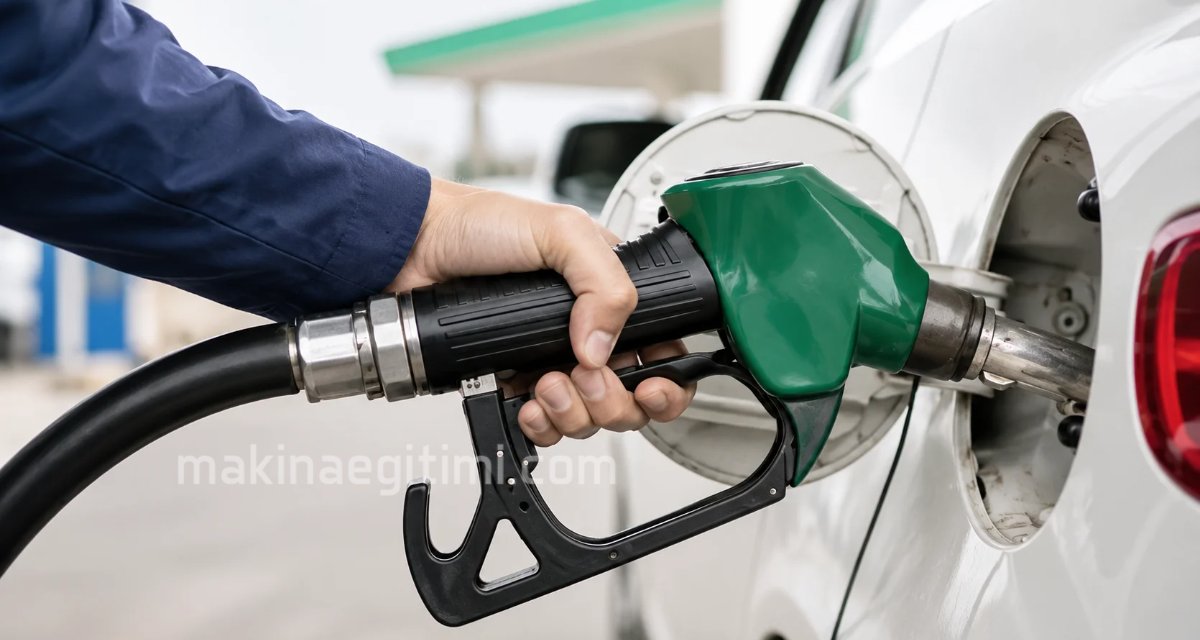
Causes That Increase Fuel Consumption
The causes that increase fuel consumption are as follows:
A Poorly Maintained Engine
A poorly maintained engine is one of the causes that increases fuel consumption, because a poorly maintained engine runs by expending more energy. For example, with a poorly maintained engine, clogged filters cause the engine to take in more air, which makes it consume more fuel. Also, a poorly maintained engine’s pistons and cylinders run with more friction and expend more power. This also causes higher fuel consumption.
The other parts of a poorly maintained engine likewise run by expending more power, and thus consume more fuel. You can especially observe that an unchecked engine’s fuel consumption increases.
Using the Wrong Engine Oil
Using the wrong engine oil can affect fuel consumption, because unsuitable oil can cause more friction, making the engine run by expending more power. This causes higher fuel consumption.
For the related topic, see: The importance of engine oil for a vehicle
In particular, oils with the wrong viscosity chosen can cause the engine to expend more energy. Also, if the engine oil isn’t suitable, oil leaks can occur, or the oil filter can clog, making the engine run harder and consume more fuel.
For the related topic, see: Choosing engine oil

Modifications That Can Affect Performance
Modifying the vehicle can affect fuel consumption, because modifications made to increase the vehicle’s performance can cause the engine to expend more power. For example, crash bars/protruding decals/visors/modified exhausts, fitting a turbo to increase the vehicle’s power, or installing a larger engine can cause higher fuel consumption. Also, modifications that disrupt the vehicle’s aerodynamics increase wind resistance and cause the vehicle to expend more energy.
Additionally, modifications that increase the vehicle’s weight (for example, larger tires or interior accessories) can also cause higher fuel consumption. It should be kept in mind that fuel consumption can increase especially when performance modifications are made.
Overloading the Vehicle
Overloading vehicles is one of the causes that increases fuel consumption. An overloaded vehicle causes the engine to expend more power, and thus consume more fuel.
Also, an overloaded vehicle can cause the tires to wear out faster, the brake system to be strained more, and other parts to wear out faster.
An overloaded vehicle’s driving characteristics can also deteriorate (for example, braking, cornering), which can make the vehicle less safe.

Low Tire Pressure
Low tire pressure is one of the factors that affects fuel consumption, because tires below the proper pressure cause more friction, making the vehicle’s engine run by expending more power. For this reason, it consumes more fuel.
Low tire pressure can also cause tires to wear out faster, deteriorate the vehicle’s driving characteristics (for example, braking, cornering), and strain the vehicle more.
Heavy Stop-and-Go Traffic
Heavy stop-and-go traffic is one of the causes that affects fuel consumption, because constantly stopping and starting causes the vehicle’s engine to expend more energy. For this reason, it consumes more fuel.
Also, braking frequently in heavy stop-and-go traffic causes the brake system to be strained more. For this reason, your vehicle’s brake system runs by expending more energy, and thus consumes more fuel.
Aggressive Driving and Sudden Stops and Starts
One of the causes that affects fuel consumption is aggressive driving and sudden stop-and-go actions. Aggressive driving causes the vehicle’s engine to expend more energy. For example, constantly accelerating quickly and braking causes the engine to expend more power, and thus consume more fuel. Likewise, sudden stop-and-go actions also cause the vehicle’s engine to expend more energy. For this reason, aggressive driving and sudden stop-and-go actions can increase the vehicle’s fuel consumption.
The Vehicle Lacking Advanced Fuel Technologies
Some advanced fuel technologies have fuel-saving effects — hybrid systems, start-stop systems, efficient engines, aerodynamic design, and route-tracking systems, among others. Vehicles that lack these technologies will consume relatively more fuel.
Not Driving in a Safe and Correct Gear
Never over-rev the engine, or you’ll simply burn more fuel. For example, trying to go fast in low gears and continuing this for a long time.
Gears should be shifted up progressively. Slowing down by braking instead of downshifting also increases fuel consumption.
For example, braking hard and suddenly can increase fuel consumption. Likewise, driving at high speeds or constantly changing speed can also increase fuel consumption.

Riding the Clutch/Brake Pedal While Driving
Don’t press or rest your foot on the clutch/brake pedal while driving, because the clutch slips and you lose power going to the wheels.
Using 4×4 Unnecessarily
Using 4×4 unnecessarily can increase fuel consumption. The 4×4 system lets the car drive from the front and rear at the same time, which requires more energy and thus consumes more fuel.
The 4×4 system also adds extra weight to the car, which causes it to use more fuel.

Running the Air Conditioning Unnecessarily
Running the air conditioning unnecessarily in the car can increase fuel consumption. The AC system draws energy from the car’s engine and uses this energy for cooling. Consequently, since the car’s engine has to work harder, it consumes more fuel. Running the AC unnecessarily can also cause the vehicle’s air filter to clog faster, which also causes the vehicle to expend more energy. For this reason, running the AC unnecessarily isn’t recommended, since it can increase fuel consumption.
Bad Road Conditions and Wind
Bad road conditions and wind can increase a car’s fuel consumption. For example, high wind speeds create additional aerodynamic drag for the car, which causes the car to expend more energy. Likewise, bad road conditions create more resistance for the car, which causes it to expend more energy.
For example, steep hills require more power from the car, which causes higher fuel consumption. The effect of wind and bad road conditions can vary depending on the type and model of the car.

Effect of Tire Pressure
Low tire pressure increases rolling resistance and can raise fuel consumption by 2-3%.
Cost of Sudden Acceleration
Hard, sudden accelerations significantly increase fuel consumption compared to traveling at a steady speed.
Carrying Unnecessary Weight
Every extra 45 kg carried in the vehicle can increase fuel consumption by an average of 1-2%.
Related Questions
When the filter is clogged, not enough air reaches the engine, and the air-fuel mixture becomes unbalanced. As the engine tries to compensate for this imbalance, it burns more fuel trying to achieve the same performance.
If an oil thicker than the engine actually needs is used, friction between moving parts increases. The engine has to expend more power, and therefore more fuel, to overcome this extra friction.
Related Posts
 The Importance of Using Original Parts on a Motorcycle
 Disc Brake & Drum Brake. Which Is Better?
 What Is a Clutch? How Does It Work? Failures and What Drivers Should Know
 The Importance of Engine Oil for a Vehicle
 What Is an Alternator? What Does It Do?
 What Does the Noise from the Valves Mean?
 What Is a Carburetor? What Does It Do? How Does It Work?
 What Is an Intake Manifold? Its Job, and Diagnosing a Fault