

Noise Coming from the Valves
Valve noise is a clicking sound coming from around the valves that usually decreases when you press the accelerator. The sound coming from the valves is sharper and clearer, and can easily be heard near the valve area.
If you’re hearing a knocking sound, it can indicate that your valves need maintenance. The valve clearance has changed.
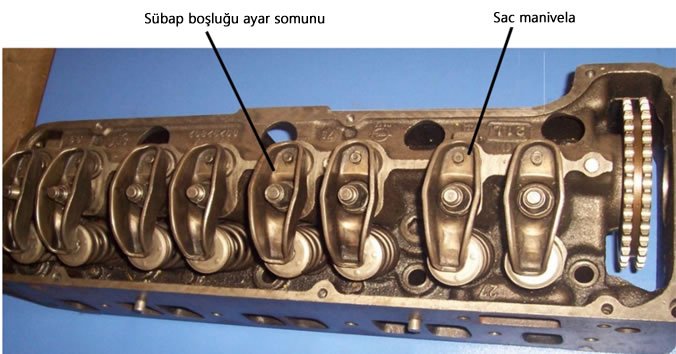
The Valves May Be Out of Adjustment
Since the valve clearance is too large, it makes a “clack clack” sound. The valves are out of adjustment. Each vehicle has a specified valve clearance value. When adjusting the valves, this data is used to bring the valves back to their proper setting.


In engines with hydraulic lifters, the lifters may be faulty. The valve pushrods or the valve rockers may be bent.
Especially in overhead-valve engines, lubrication of the valve assembly may be insufficient.
There may be wear somewhere in the valve assembly. In particular, the rocker arm tips may be gouged out. (The tips get ground down.)
If the noise from the valves especially increases as the engine warms up, the upper valve spring retainer may be damaged, and it can make noise due to expansion when it heats up.
The valve spring may be broken or weakened. It may have become coil-bound.
The clearance between the valve stem and the valve guide may be too large. The valve guide should be replaced with a new one.

The valve stems may have worn thin inside the valve guides. In this case, the valves should be replaced.
If the valve face axis isn’t aligned with the stem axis, this can also cause noise. In this case, the valve is ground.
The valve seat axis may not be aligned with the valve stem axis. In this case, the valve seat is milled.
In overhead-valve engines, if the valve cover has been overtightened, more noise than normal may occur.
Noises Coming from Hydraulic Valve Lifters

Hydraulic lifters normally make a bit of noise when started with a cold engine. The noise should stop once the engine reaches normal operating temperature. Clicking noises resembling valve noise coming from the hydraulic valve lifters is a sign that the lifters aren’t doing their job properly.

Check with the oil dipstick. If there are bubbles around the level mark on the dipstick, the oil has foamed. In this case, oil pressure will be insufficient. Why does engine oil foam? engine oil can foam if water gets mixed into it, or if too much or too little oil is put into the engine.
If the hydraulic lifters are of an adjustable type, they can also make noise if this adjustment gets out of spec. To eliminate the noise, the adjustment is set according to the catalog values.
If the ball valve inside the lifter is leaking, the lifter should be cleaned in an acetone-type cleaner. Hydraulic lifters are already in a system that requires frequent cleaning. Otherwise, they develop faults.
Varnish buildup and dirty oil are the main causes of hydraulic lifter faults. You should pay attention to the cleanliness of the engine oil, and once you’ve chosen the most suitable oil, you shouldn’t mix in a different type of oil. Mixing burnt oil with another oil causes varnish buildup, which sticks the lifters.

Using the oil for a long time without changing it, and not replacing the oil filter on schedule, causes the lifters to fail frequently.
Valve Clearance Adjustment
An incorrectly adjusted valve clearance can cause a characteristic clicking sound from a running engine.
Hydraulic Lifter Fault
Worn or dirty hydraulic valve lifters can make a noticeable clicking sound, especially on a cold start.
Loose Timing Belt
A timing belt with reduced tension can cause an irregular rattling noise while the engine is running.
Related Questions
As engine RPM increases, the character of the sound coming from the clearances in the valve mechanism can change due to the increased speed of motion and dynamic effects, becoming less noticeable. This is a typical characteristic of noise caused by valve clearance, changing with engine RPM.
If the clearance is too large, the valves strike harshly, making a clicking noise and potentially damaging the mechanism over time. If the clearance is too small, the valves may not close fully, which can lead to both power loss and the valves overheating and burning.
Related Posts
 What Is a Starter Motor, What Does It Do?
  What the Markings on a Car Tire Mean
  Vehicle Drivetrain: Components, How It Works, and Common Failures
  Properties of Ethanol (Ethyl Alcohol) Blended Gasoline
  What Is a Coilover (Coil Spring Shock Absorber)? What Is It For?
  What’s Under the Hood? A Guide to the Engine Bay
  Front-Wheel-Drive Vehicles: Advantages and Disadvantages
  What Is the ABS Braking System, What Does It Do, How Does It Work