Close Menu
  • MAKİNELER ve İMALAT
    • Tools & Equipment
    • Computer-Aided Drawing
    • CAD/CAM Education
    • CNC Machine Programming
    • Casting Technologies
    • Electrical & Electronics Technologies
    • Hydraulics & Pneumatics
    • Manufacturing Processes
    • Manufacturing Technologies
    • Occupational Safety
    • Mold & Die Design
    • Solid Modeling
    • Welding Technology
    • Machine Elements
    • Mechanical Trade Drawing
    • Materials Science
    • Automotive & Vehicle Technologies
    • Robotics Technologies
    • Health Technologies
    • Defense & Aerospace Technologies
    • Descriptive Geometry
    • Technical Drawing
    • Software & Hardware Technologies
    • Innovative Manufacturing Methods
  • TEKNOLOJİ ve YAŞAM
    • OTOMOBİLLER ve TAŞIT
      • Vehicle & Engine Knowledge
      • Safe Driving
      • Sürüş Destek Sistemleri
    • Genel Kültür
      • Movies & TV Shows
      • Görsel ve Grafik Sanat
      • Books & Literature
      • Music
      • Sports
      • History
      • History of Technology
    • GÜNDELİK YAŞAM TEKNOLOJİLERİ
    • Hobbies & Entertainment
    • Internet Technologies
    • Health
    • Mobile Technologies
Makine Eğitimi
  • Machines & Manufacturing
    Machine Elements
    Hydraulics & Pneumatics
    Technical Drawing
    Computer-Aided Design & Manufacturing
    Basic Manufacturing Processes
    Manufacturing Processes
    Industry Technologies
    Other Technical Courses
    Motion & Power Transmission
    Simple Machines
    Chains & Sprockets
    Shafts & Journals
    Gears
    Cams
    Couplings
    Belts & Pulleys
    Springs
    Bearings
    Keys
    Fastening Joining
    Retaining Rings
    Screws, Bolts & Nuts
    Cotter Pins
    Flanges
    Welding
    Rivets
    Pins & Bolts
    Washers
    Calculators
    Gear Ratio Calculator
    Spring Constant Calculator
    Belt Pulley Ratio Calculator
    Other Machine Elements
    Slides & Linear Guides
    Brakes
    Flywheels
    Clamps
    Shock Absorbers
    Gaskets & O-Rings
    Seals & Sealing Elements
    Hydraulics
    Introduction to Hydraulics & Principles
    Hydraulic Systems & Applications
    Accumulators
    Filters
    Motors
    Pumps
    Valves
    Pneumatics
    Introduction to Pneumatics & Principles
    Pneumatic Systems & Applications
    Pneumatic Circuit Components
    Valves
    Cylinders
    Silencers
    Motors
    Compressors
    Dryers
    Conditioning Units
    Common Topics & Maintenance
    Hydraulic & Pneumatic Maintenance
    Study Notes, Exams & Tests
    Technical Drawing
    Introduction to Technical Drawing
    Geometric Drawings
    Perspective & Projection
    Orthographic Views
    Dimensioning
    Sectioning
    Assembly & Detail Drawings
    Tolerances
    Surface Finish Symbols
    Mechanical Engineering Drawing
    Screws, Bolts & Nuts
    Pulley Drawings
    Gear Drawings
    Shafts & Journals
    Bearing Drawings
    Pins & Bolts
    Spring Drawings
    Welds in Technical Drawing
    Washers
    Cotter Pins
    Technical Drawing Exercises
    Mechanical Drawing Exercises
    Gear Exercises
    View Extraction Exercises
    Pulley Exercises
    Pin & Bolt Exercises
    Threaded Fastening Exercises
    Descriptive Geometry
    Computer-Aided Drawing
    AutoCAD Drawing Lessons
    Solid Modeling & Animation
    Solid Model Drawing Files
    Solid Model Assembly Examples
    Solid Model Drawing Lessons
    3D CAD Software Reviews
    Solid Modeling Exercises
    CNC Programming
    CAM
    Measurement & Inspection
    Dial Indicators
    Calipers
    Gauges
    Micrometers
    Materials Science
    Steels
    Cast Iron
    Aluminum
    Plastics
    Material Testing & Hardness Measurement
    Occupational Safety
    Workshop Safety
    Safety When Working With Electricity
    Machine Safety Rules
    Hand Operations
    Filing
    Marking
    Cutting Operations
    Reaming
    Tapping
    Threading With a Die
    Drill Bit Sharpening
    Working With Machines
    Basic Turning Operations
    Basic Milling Operations
    Shaper Machine
    Machining
    Turning
    Milling
    Grinding
    Innovative Manufacturing Methods
    EDM (Electrical Discharge Machining)
    Laser Machining
    Waterjet Machining
    3D Printing
    3D Scanners
    Welding
    Rolling
    Casting
    Mold & Die Design
    Mechanical & Hydraulic Presses
    Blanking & Piercing Dies
    Bending Dies
    Drawing Dies
    Plastic Injection Molds
    Extrusion Dies
    Compound Dies
    Progressive Dies
    Blow Molds
    Spinning Dies
    Spray Molds
    Manufacturing of Machine Parts
    Automotive & Vehicle Technologies
    Motor Vehicle Manufacturing
    Raw Material Production
    History of Technology
    Health & Medical Technologies
    Defense & Aerospace
    Robotics Technologies
    Software & Hardware Technologies
    Mechanics - Strength of Materials
    Physics Topics
  • Technology & Life
    Hobbies & Entertainment
    Sports
    Music
    Vehicle & Engine Knowledge
    Vehicle Maintenance & Repair
    Safe Driving
    Driver Assistance Systems
    History
    Movies & TV Shows
    Books & Literature
    Computers & Internet
    Computer Tips
    Software Reviews
    Hardware & Peripherals
    Practical & Safe Internet Use
    Visual & Graphic Art
    Mobile Technologies
    Travel
    Science
    Health
    First Aid Knowledge
    Everyday Technologies
Makine Eğitimi
Home»Vehicle & Engine Knowledge»The Importance of Using Original Parts on a Motorcycle
30 August 2026

The Importance of Using Original Parts on a Motorcycle

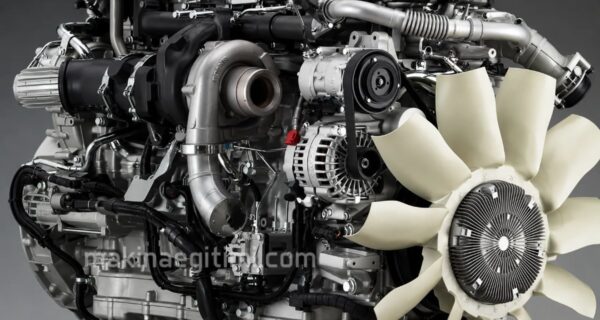
motorcycle engine

This article’s topic will be the importance of using original parts on a motorcycle. Why should we prefer original parts for maintenance, repairs, and part replacements? We’ll give examples of what not using original parts can lead to in some cases.

A motorcycle is a vehicle that balances on two wheels. Using original parts in its maintenance and repairs is vital. A tiny bolt you don’t take seriously could leave you stranded in the middle of the road, or worse, cause you to lose control and get into an accident. It’s always worth being cautious to avoid this kind of situation.

Sometimes, because we don’t have time, or don’t have the right part on hand, we resort to temporary fixes. Temporary fixes, like wire wrapped around in place of a small bolt, can only get you so far, but it should be remembered that this is a temporary solution. It should be replaced with the original at the first opportunity. In these kinds of improper uses, non-original parts can also damage other components.

For example, it’s a mistake to rivet on a car brake pad instead of the original. The original brake pad uses a special friction compound. For this reason, a car brake pad won’t give you the performance you want on a motorcycle, resulting in weakened braking.

The importance of using original parts on a motorcycle also applies to piston rings. Using an improvised piston ring isn’t correct. The piston ring material needs to match the cylinder material. Otherwise, one can wear down the other.

Spark plugs, meanwhile, are specifically calibrated for heat range, the engine’s compression chamber, and gap distance. For this reason, it’s best to use the spark plugs specified in the catalog as appropriate for your motorcycle.

motorcycle engine

One of the mistakes regarding original part usage is related to tires. Some people, thinking it looks better, oversize the motorcycle’s rear tire. You may not immediately notice the problem this can cause. However, when the rim is narrow and the tire is oversized, it bulges, reducing the contact surface with the ground.

If original fluid isn’t used in the brake hydraulics, it can cause the master cylinder seals to swell, and they can burst under pressure. It’s also worthwhile to use original gaskets when replacing gaskets, because gasket thickness matters.

When it comes to fuses, a blown fuse should be replaced with the same rating, not a close one. For example, don’t install a 15-amp fuse in place of a 10-amp one.

In this article, we discussed the importance of using original parts on a motorcycle. Hope to see you in new articles. Stay healthy, and enjoy your rides.

Compatibility Risk


Non-original replacement parts may not fully match the motorcycle’s design tolerances, leading to premature wear.

Loss of Warranty


Using non-original parts can void the motorcycle’s remaining warranty coverage with many manufacturers.

Safety Certification


Original parts are certified after passing the safety and performance tests specified by the manufacturer.

Related Questions

Original brake pads are made with a special friction material designed to work with that motorcycle’s brake disc. A pad designed for a different vehicle, like a car, can’t achieve this match, so it can’t deliver the expected braking power.

Since a motorcycle balances on two wheels, even a single small part (like a bolt) failing can throw off the vehicle’s balance or control. This means even a much smaller failure than on a four-wheeled vehicle can have serious consequences.

Related Posts

coilover suspension advantages and disadvantages Coilover (Coil Spring Shock Absorber) Advantages and Disadvantages Elektrikli Araçlarda Neden Tek Vites Kullanılır? Why Do Electric Cars Use a Single Gear? drive system and transaxle in front-wheel-drive vehicles Front-Wheel-Drive Vehicles: Advantages and Disadvantages Motor Yağ Pompası Çeşitleri Types of Engine Oil Pumps biggest engines of all time The Biggest and Craziest Engines of All Time Vehicle clutch components diagram What Is a Clutch? How Does It Work? Failures and What Drivers Should Know Diesel engine versus gasoline engine performance comparison Diesel Engine vs. Gasoline Engine: Which Is More Powerful? What Is a Starter Motor, What Does It Do? What Is a Starter Motor, What Does It Do?
Share. Facebook Twitter WhatsApp Tumblr Email Telegram Copy Link

Leave A Reply Cancel Reply

What Is an Intake Manifold? Its Job, and Diagnosing a Fault
Parts of the Engine, Illustrated Explanation
  • Contact
  • Terms of Service
  • Privacy & Cookie Policy

Type above and press Enter to search. Press Esc to cancel.