
Close Menu
  • MAKİNELER ve İMALAT
    • Tools & Equipment
    • Computer-Aided Drawing
    • CAD/CAM Education
    • CNC Machine Programming
    • Casting Technologies
    • Electrical & Electronics Technologies
    • Hydraulics & Pneumatics
    • Manufacturing Processes
    • Manufacturing Technologies
    • Occupational Safety
    • Mold & Die Design
    • Solid Modeling
    • Welding Technology
    • Machine Elements
    • Mechanical Trade Drawing
    • Materials Science
    • Automotive & Vehicle Technologies
    • Robotics Technologies
    • Health Technologies
    • Defense & Aerospace Technologies
    • Descriptive Geometry
    • Technical Drawing
    • Software & Hardware Technologies
    • Innovative Manufacturing Methods
  • TEKNOLOJİ ve YAŞAM
    • OTOMOBİLLER ve TAŞIT
      • Vehicle & Engine Knowledge
      • Safe Driving
      • Sürüş Destek Sistemleri
    • Genel Kültür
      • Movies & TV Shows
      • Görsel ve Grafik Sanat
      • Books & Literature
      • Music
      • Sports
      • History
      • History of Technology
    • GÜNDELİK YAŞAM TEKNOLOJİLERİ
    • Hobbies & Entertainment
    • Internet Technologies
    • Health
    • Mobile Technologies
Makine Eğitimi
  • Machines & Manufacturing
    Machine Elements
    Hydraulics & Pneumatics
    Technical Drawing
    Computer-Aided Design & Manufacturing
    Basic Manufacturing Processes
    Manufacturing Processes
    Industry Technologies
    Other Technical Courses
    Motion & Power Transmission
    Simple Machines
    Chains & Sprockets
    Shafts & Journals
    Gears
    Cams
    Couplings
    Belts & Pulleys
    Springs
    Bearings
    Keys
    Fastening Joining
    Retaining Rings
    Screws, Bolts & Nuts
    Cotter Pins
    Flanges
    Welding
    Rivets
    Pins & Bolts
    Washers
    Calculators
    Gear Ratio Calculator
    Spring Constant Calculator
    Belt Pulley Ratio Calculator
    Other Machine Elements
    Slides & Linear Guides
    Brakes
    Flywheels
    Clamps
    Shock Absorbers
    Gaskets & O-Rings
    Seals & Sealing Elements
    Hydraulics
    Introduction to Hydraulics & Principles
    Hydraulic Systems & Applications
    Accumulators
    Filters
    Motors
    Pumps
    Valves
    Pneumatics
    Introduction to Pneumatics & Principles
    Pneumatic Systems & Applications
    Pneumatic Circuit Components
    Valves
    Cylinders
    Silencers
    Motors
    Compressors
    Dryers
    Conditioning Units
    Common Topics & Maintenance
    Hydraulic & Pneumatic Maintenance
    Study Notes, Exams & Tests
    Technical Drawing
    Introduction to Technical Drawing
    Geometric Drawings
    Perspective & Projection
    Orthographic Views
    Dimensioning
    Sectioning
    Assembly & Detail Drawings
    Tolerances
    Surface Finish Symbols
    Mechanical Engineering Drawing
    Screws, Bolts & Nuts
    Pulley Drawings
    Gear Drawings
    Shafts & Journals
    Bearing Drawings
    Pins & Bolts
    Spring Drawings
    Welds in Technical Drawing
    Washers
    Cotter Pins
    Technical Drawing Exercises
    Mechanical Drawing Exercises
    Gear Exercises
    View Extraction Exercises
    Pulley Exercises
    Pin & Bolt Exercises
    Threaded Fastening Exercises
    Descriptive Geometry
    Computer-Aided Drawing
    AutoCAD Drawing Lessons
    Solid Modeling & Animation
    Solid Model Drawing Files
    Solid Model Assembly Examples
    Solid Model Drawing Lessons
    3D CAD Software Reviews
    Solid Modeling Exercises
    CNC Programming
    CAM
    Measurement & Inspection
    Dial Indicators
    Calipers
    Gauges
    Micrometers
    Materials Science
    Steels
    Cast Iron
    Aluminum
    Plastics
    Material Testing & Hardness Measurement
    Occupational Safety
    Workshop Safety
    Safety When Working With Electricity
    Machine Safety Rules
    Hand Operations
    Filing
    Marking
    Cutting Operations
    Reaming
    Tapping
    Threading With a Die
    Drill Bit Sharpening
    Working With Machines
    Basic Turning Operations
    Basic Milling Operations
    Shaper Machine
    Machining
    Turning
    Milling
    Grinding
    Innovative Manufacturing Methods
    EDM (Electrical Discharge Machining)
    Laser Machining
    Waterjet Machining
    3D Printing
    3D Scanners
    Welding
    Rolling
    Casting
    Mold & Die Design
    Mechanical & Hydraulic Presses
    Blanking & Piercing Dies
    Bending Dies
    Drawing Dies
    Plastic Injection Molds
    Extrusion Dies
    Compound Dies
    Progressive Dies
    Blow Molds
    Spinning Dies
    Spray Molds
    Manufacturing of Machine Parts
    Automotive & Vehicle Technologies
    Motor Vehicle Manufacturing
    Raw Material Production
    History of Technology
    Health & Medical Technologies
    Defense & Aerospace
    Robotics Technologies
    Software & Hardware Technologies
    Mechanics - Strength of Materials
    Physics Topics
  • Technology & Life
    Hobbies & Entertainment
    Sports
    Music
    Vehicle & Engine Knowledge
    Vehicle Maintenance & Repair
    Safe Driving
    Driver Assistance Systems
    History
    Movies & TV Shows
    Books & Literature
    Computers & Internet
    Computer Tips
    Software Reviews
    Hardware & Peripherals
    Practical & Safe Internet Use
    Visual & Graphic Art
    Mobile Technologies
    Travel
    Science
    Health
    First Aid Knowledge
    Everyday Technologies
Makine Eğitimi
Home»Vehicle Maintenance & Repair»13 Factors That Increase Fuel Consumption in Vehicles
30 August 2026

13 Factors That Increase Fuel Consumption in Vehicles

causes that increase fuel consumption, using the wrong engine oil

Causes That Increase Fuel Consumption

The causes that increase fuel consumption are as follows:

  • Causes That Increase Fuel Consumption
    • A Poorly Maintained Engine
    • Using the Wrong Engine Oil
    • Modifications That Can Affect Performance
    • Overloading the Vehicle
    • Low Tire Pressure
    • Heavy Stop-and-Go Traffic
    • Aggressive Driving and Sudden Stops and Starts
    • The Vehicle Lacking Advanced Fuel Technologies
    • Not Driving in a Safe and Correct Gear
    • Riding the Clutch/Brake Pedal While Driving
    • Using 4×4 Unnecessarily
    • Running the Air Conditioning Unnecessarily
    • Bad Road Conditions and Wind
  • Related Questions

A Poorly Maintained Engine

A poorly maintained engine is one of the causes that increases fuel consumption, because a poorly maintained engine runs by expending more energy. For example, with a poorly maintained engine, clogged filters cause the engine to take in more air, which makes it consume more fuel. Also, a poorly maintained engine’s pistons and cylinders run with more friction and expend more power. This also causes higher fuel consumption.

The other parts of a poorly maintained engine likewise run by expending more power, and thus consume more fuel. You can especially observe that an unchecked engine’s fuel consumption increases.

Using the Wrong Engine Oil

Using the wrong engine oil can affect fuel consumption, because unsuitable oil can cause more friction, making the engine run by expending more power. This causes higher fuel consumption.
For the related topic, see: The importance of engine oil for a vehicle

In particular, oils with the wrong viscosity chosen can cause the engine to expend more energy. Also, if the engine oil isn’t suitable, oil leaks can occur, or the oil filter can clog, making the engine run harder and consume more fuel.
For the related topic, see: Choosing engine oil

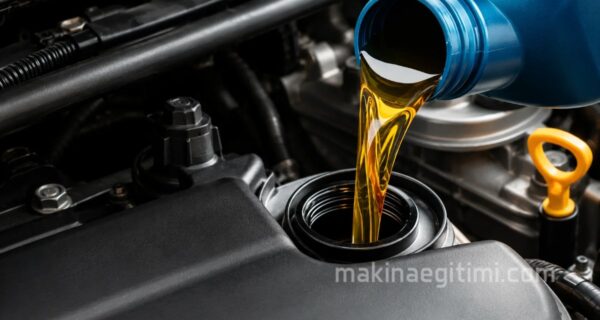
causes that increase fuel consumption, using the wrong engine oil
Choosing the wrong engine oil can increase fuel consumption

Modifications That Can Affect Performance

Modifying the vehicle can affect fuel consumption, because modifications made to increase the vehicle’s performance can cause the engine to expend more power. For example, crash bars/protruding decals/visors/modified exhausts, fitting a turbo to increase the vehicle’s power, or installing a larger engine can cause higher fuel consumption. Also, modifications that disrupt the vehicle’s aerodynamics increase wind resistance and cause the vehicle to expend more energy.

Additionally, modifications that increase the vehicle’s weight (for example, larger tires or interior accessories) can also cause higher fuel consumption. It should be kept in mind that fuel consumption can increase especially when performance modifications are made.

Overloading the Vehicle

Overloading vehicles is one of the causes that increases fuel consumption. An overloaded vehicle causes the engine to expend more power, and thus consume more fuel.

Also, an overloaded vehicle can cause the tires to wear out faster, the brake system to be strained more, and other parts to wear out faster.

An overloaded vehicle’s driving characteristics can also deteriorate (for example, braking, cornering), which can make the vehicle less safe.

overloaded vehicle
Overloading the vehicle is one of the causes that increases fuel consumption.

Low Tire Pressure

Low tire pressure is one of the factors that affects fuel consumption, because tires below the proper pressure cause more friction, making the vehicle’s engine run by expending more power. For this reason, it consumes more fuel.

Low tire pressure can also cause tires to wear out faster, deteriorate the vehicle’s driving characteristics (for example, braking, cornering), and strain the vehicle more.

Heavy Stop-and-Go Traffic

Heavy stop-and-go traffic is one of the causes that affects fuel consumption, because constantly stopping and starting causes the vehicle’s engine to expend more energy. For this reason, it consumes more fuel.

Also, braking frequently in heavy stop-and-go traffic causes the brake system to be strained more. For this reason, your vehicle’s brake system runs by expending more energy, and thus consumes more fuel.

Aggressive Driving and Sudden Stops and Starts

One of the causes that affects fuel consumption is aggressive driving and sudden stop-and-go actions. Aggressive driving causes the vehicle’s engine to expend more energy. For example, constantly accelerating quickly and braking causes the engine to expend more power, and thus consume more fuel. Likewise, sudden stop-and-go actions also cause the vehicle’s engine to expend more energy. For this reason, aggressive driving and sudden stop-and-go actions can increase the vehicle’s fuel consumption.

The Vehicle Lacking Advanced Fuel Technologies

Some advanced fuel technologies have fuel-saving effects — hybrid systems, start-stop systems, efficient engines, aerodynamic design, and route-tracking systems, among others. Vehicles that lack these technologies will consume relatively more fuel.

Not Driving in a Safe and Correct Gear

Never over-rev the engine, or you’ll simply burn more fuel. For example, trying to go fast in low gears and continuing this for a long time.

Gears should be shifted up progressively. Slowing down by braking instead of downshifting also increases fuel consumption.

For example, braking hard and suddenly can increase fuel consumption. Likewise, driving at high speeds or constantly changing speed can also increase fuel consumption.

manual gear shifter
Incorrect gear use is one of the causes that increases fuel consumption

Riding the Clutch/Brake Pedal While Driving

Don’t press or rest your foot on the clutch/brake pedal while driving, because the clutch slips and you lose power going to the wheels.

Using 4×4 Unnecessarily

Using 4×4 unnecessarily can increase fuel consumption. The 4×4 system lets the car drive from the front and rear at the same time, which requires more energy and thus consumes more fuel.

The 4×4 system also adds extra weight to the car, which causes it to use more fuel.

causes that increase fuel consumption, unnecessary 4x4 use
Shifting into 4-wheel drive unnecessarily can increase fuel consumption.

Running the Air Conditioning Unnecessarily

Running the air conditioning unnecessarily in the car can increase fuel consumption. The AC system draws energy from the car’s engine and uses this energy for cooling. Consequently, since the car’s engine has to work harder, it consumes more fuel. Running the AC unnecessarily can also cause the vehicle’s air filter to clog faster, which also causes the vehicle to expend more energy. For this reason, running the AC unnecessarily isn’t recommended, since it can increase fuel consumption.

Bad Road Conditions and Wind

Bad road conditions and wind can increase a car’s fuel consumption. For example, high wind speeds create additional aerodynamic drag for the car, which causes the car to expend more energy. Likewise, bad road conditions create more resistance for the car, which causes it to expend more energy.

For example, steep hills require more power from the car, which causes higher fuel consumption. The effect of wind and bad road conditions can vary depending on the type and model of the car.

causes that increase fuel consumption, hills and bad road conditions
Rough and challenging road conditions are one of the causes that increases fuel consumption

Effect of Tire Pressure


Low tire pressure increases rolling resistance and can raise fuel consumption by 2-3%.

Cost of Sudden Acceleration


Hard, sudden accelerations significantly increase fuel consumption compared to traveling at a steady speed.

Carrying Unnecessary Weight


Every extra 45 kg carried in the vehicle can increase fuel consumption by an average of 1-2%.

Related Questions

When the filter is clogged, not enough air reaches the engine, and the air-fuel mixture becomes unbalanced. As the engine tries to compensate for this imbalance, it burns more fuel trying to achieve the same performance.

If an oil thicker than the engine actually needs is used, friction between moving parts increases. The engine has to expend more power, and therefore more fuel, to overcome this extra friction.

Related Posts

motorcycle engine The Importance of Using Original Parts on a Motorcycle Disc Brake Drum Brake comparison Disc Brake & Drum Brake. Which Is Better? Vehicle clutch components diagram What Is a Clutch? How Does It Work? Failures and What Drivers Should Know the functions of engine oil The Importance of Engine Oil for a Vehicle What Is an Alternator? What Does It Do? What Is an Alternator? What Does It Do? What Does the Noise from the Valves Mean? What Does the Noise from the Valves Mean? Carburetor components and how it works What Is a Carburetor? What Does It Do? How Does It Work? The intake manifold job and fault diagnosis What Is an Intake Manifold? Its Job, and Diagnosing a Fault
Share. Facebook Twitter WhatsApp Tumblr Email Telegram Copy Link

Leave A Reply Cancel Reply

The History of the Guitar: The Journey from Its Origins to the Electric Guitar
Leonardo da Vinci’s Machines: The Flying, Fighting and Walking Inventions of a Renaissance Genius
  • Contact
  • Terms of Service
  • Privacy & Cookie Policy

Type above and press Enter to search. Press Esc to cancel.