Close Menu
  • MAKİNELER ve İMALAT
    • Tools & Equipment
    • Computer-Aided Drawing
    • CAD/CAM Education
    • CNC Machine Programming
    • Casting Technologies
    • Electrical & Electronics Technologies
    • Hydraulics & Pneumatics
    • Manufacturing Processes
    • Manufacturing Technologies
    • Occupational Safety
    • Mold & Die Design
    • Solid Modeling
    • Welding Technology
    • Machine Elements
    • Mechanical Trade Drawing
    • Materials Science
    • Automotive & Vehicle Technologies
    • Robotics Technologies
    • Health Technologies
    • Defense & Aerospace Technologies
    • Descriptive Geometry
    • Technical Drawing
    • Software & Hardware Technologies
    • Innovative Manufacturing Methods
  • TEKNOLOJİ ve YAŞAM
    • OTOMOBİLLER ve TAŞIT
      • Vehicle & Engine Knowledge
      • Safe Driving
      • Sürüş Destek Sistemleri
    • Genel Kültür
      • Movies & TV Shows
      • Görsel ve Grafik Sanat
      • Books & Literature
      • Music
      • Sports
      • History
      • History of Technology
    • GÜNDELİK YAŞAM TEKNOLOJİLERİ
    • Hobbies & Entertainment
    • Internet Technologies
    • Health
    • Mobile Technologies
Makine Eğitimi
  • Machines & Manufacturing
    Machine Elements
    Hydraulics & Pneumatics
    Technical Drawing
    Computer-Aided Design & Manufacturing
    Basic Manufacturing Processes
    Manufacturing Processes
    Industry Technologies
    Other Technical Courses
    Motion & Power Transmission
    Simple Machines
    Chains & Sprockets
    Shafts & Journals
    Gears
    Cams
    Couplings
    Belts & Pulleys
    Springs
    Bearings
    Keys
    Fastening Joining
    Retaining Rings
    Screws, Bolts & Nuts
    Cotter Pins
    Flanges
    Welding
    Rivets
    Pins & Bolts
    Washers
    Calculators
    Gear Ratio Calculator
    Spring Constant Calculator
    Belt Pulley Ratio Calculator
    Other Machine Elements
    Slides & Linear Guides
    Brakes
    Flywheels
    Clamps
    Shock Absorbers
    Gaskets & O-Rings
    Seals & Sealing Elements
    Hydraulics
    Introduction to Hydraulics & Principles
    Hydraulic Systems & Applications
    Accumulators
    Filters
    Motors
    Pumps
    Valves
    Pneumatics
    Introduction to Pneumatics & Principles
    Pneumatic Systems & Applications
    Pneumatic Circuit Components
    Valves
    Cylinders
    Silencers
    Motors
    Compressors
    Dryers
    Conditioning Units
    Common Topics & Maintenance
    Hydraulic & Pneumatic Maintenance
    Study Notes, Exams & Tests
    Technical Drawing
    Introduction to Technical Drawing
    Geometric Drawings
    Perspective & Projection
    Orthographic Views
    Dimensioning
    Sectioning
    Assembly & Detail Drawings
    Tolerances
    Surface Finish Symbols
    Mechanical Engineering Drawing
    Screws, Bolts & Nuts
    Pulley Drawings
    Gear Drawings
    Shafts & Journals
    Bearing Drawings
    Pins & Bolts
    Spring Drawings
    Welds in Technical Drawing
    Washers
    Cotter Pins
    Technical Drawing Exercises
    Mechanical Drawing Exercises
    Gear Exercises
    View Extraction Exercises
    Pulley Exercises
    Pin & Bolt Exercises
    Threaded Fastening Exercises
    Descriptive Geometry
    Computer-Aided Drawing
    AutoCAD Drawing Lessons
    Solid Modeling & Animation
    Solid Model Drawing Files
    Solid Model Assembly Examples
    Solid Model Drawing Lessons
    3D CAD Software Reviews
    Solid Modeling Exercises
    CNC Programming
    CAM
    Measurement & Inspection
    Dial Indicators
    Calipers
    Gauges
    Micrometers
    Materials Science
    Steels
    Cast Iron
    Aluminum
    Plastics
    Material Testing & Hardness Measurement
    Occupational Safety
    Workshop Safety
    Safety When Working With Electricity
    Machine Safety Rules
    Hand Operations
    Filing
    Marking
    Cutting Operations
    Reaming
    Tapping
    Threading With a Die
    Drill Bit Sharpening
    Working With Machines
    Basic Turning Operations
    Basic Milling Operations
    Shaper Machine
    Machining
    Turning
    Milling
    Grinding
    Innovative Manufacturing Methods
    EDM (Electrical Discharge Machining)
    Laser Machining
    Waterjet Machining
    3D Printing
    3D Scanners
    Welding
    Rolling
    Casting
    Mold & Die Design
    Mechanical & Hydraulic Presses
    Blanking & Piercing Dies
    Bending Dies
    Drawing Dies
    Plastic Injection Molds
    Extrusion Dies
    Compound Dies
    Progressive Dies
    Blow Molds
    Spinning Dies
    Spray Molds
    Manufacturing of Machine Parts
    Automotive & Vehicle Technologies
    Motor Vehicle Manufacturing
    Raw Material Production
    History of Technology
    Health & Medical Technologies
    Defense & Aerospace
    Robotics Technologies
    Software & Hardware Technologies
    Mechanics - Strength of Materials
    Physics Topics
  • Technology & Life
    Hobbies & Entertainment
    Sports
    Music
    Vehicle & Engine Knowledge
    Vehicle Maintenance & Repair
    Safe Driving
    Driver Assistance Systems
    History
    Movies & TV Shows
    Books & Literature
    Computers & Internet
    Computer Tips
    Software Reviews
    Hardware & Peripherals
    Practical & Safe Internet Use
    Visual & Graphic Art
    Mobile Technologies
    Travel
    Science
    Health
    First Aid Knowledge
    Everyday Technologies
Makine Eğitimi
Home»Manufacturing Technologies»What Is Submerged Arc Welding, How Is It Done
29 August 2026

What Is Submerged Arc Welding, How Is It Done

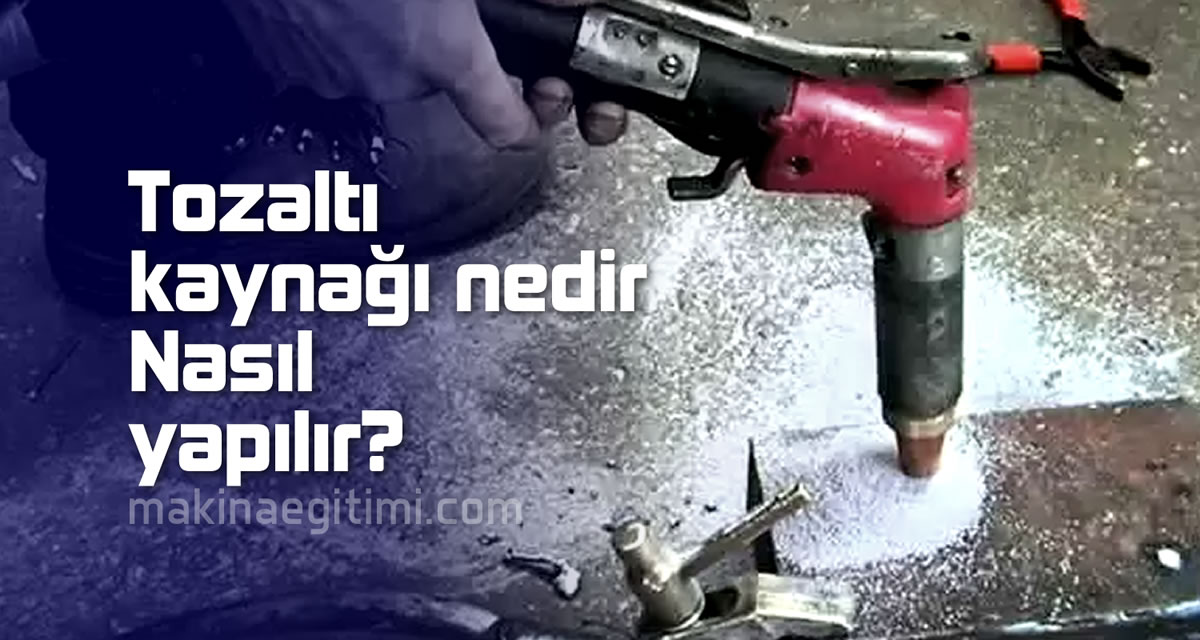
What is submerged arc welding, title image

In this article on welding technology, we’ll explain what submerged arc welding is, and how submerged arc welding is done. What are the characteristics of submerged arc welding. What are its advantages and disadvantages. In which fields is it used. We’ll try to answer questions such as which materials can be welded with submerged arc welding.
You can reach our topic headings through the links below:

  • What Is Submerged Arc Welding
  • How is submerged arc welding done?
  • Characteristics of submerged arc welding
    • Which materials can be welded with submerged arc welding?
    • Advantages of submerged arc welding
      • High welding speed:
      • Deep Penetration:
      • Very good cleanliness:
      • High-quality seams:
    • Disadvantages of submerged arc welding
    • Where is submerged arc welding used
    • Submerged arc welding equipment
  • Related Questions
  • What is submerged arc welding?
  • How is submerged arc welding done?
  • Characteristics of submerged arc welding
    • Which materials can be welded with submerged arc welding?
    • Advantages of submerged arc welding
    • Disadvantages of submerged arc welding
    • Where is submerged arc welding used
    • Submerged arc welding equipment

What Is Submerged Arc Welding

Submerged arc welding is a welding method in which the welding arc forms beneath a granular flux blanket made of elements such as silicate, lime, magnesite, and oxide. The flux is poured ahead of the electrode by its own weight. The electrode is a copper-coated wire wound onto a spool, continuously fed toward the weld zone.

what is submerged arc welding
how submerged arc welding is performed

Flux Blanket Protection


In submerged arc welding, the arc forms beneath a layer of granular flux and is protected from outside effects.

High Welding Speed


Thanks to its continuous wire feed system, submerged arc welding can reach a much higher welding speed than other methods.

Thick Plate Application


Thanks to its deep penetration, submerged arc welding is especially preferred for joining thick steel plates.

How is submerged arc welding done?
how submerged arc welding is performed
How submerged arc welding is performed

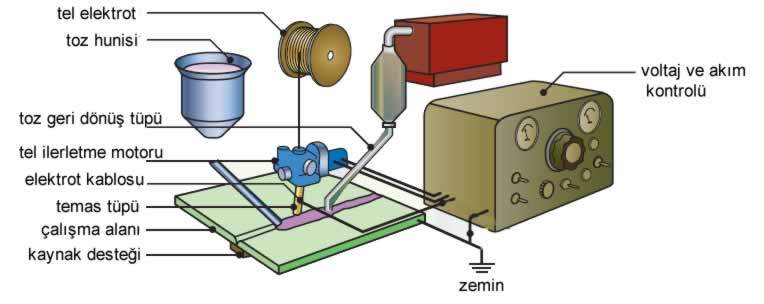
In submerged arc welding, a wire electrode is fed from above at a set rate into the weld zone, along with flux released from a flux hopper by free fall. This flux forms a protective layer over the weld zone, and the resulting slag is cleaned away at the same time by a flux-recovery tube.

Characteristics of submerged arc welding

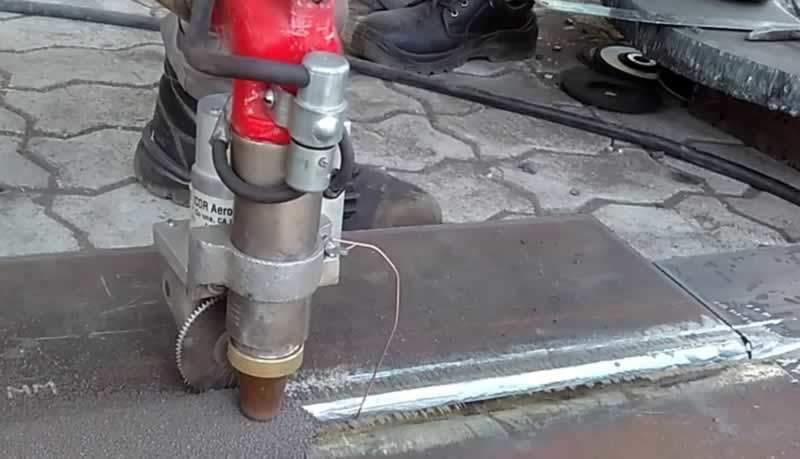
The welding speed is 760 mm/min for 25 mm thick plates, or 300 mm/min for 40 mm thick plates. Welds up to 40 mm deep can be made in a single pass. Since welding requires fewer passes than other welding methods, there is less slag and cavity inclusion in the seam. The weld quality is higher.
characteristics of submerged arc welding

Which materials can be welded with submerged arc welding?

Fillet or butt welds of low-carbon (<0.3% C) steels are commonly done with submerged arc welding. With preheating and post-weld heating, medium-carbon and alloy steels in sheet or plate form, as well as some copper alloys, can also be welded. However, it's not suitable for high-carbon tool steels, cast irons, or aluminum.

which materials can be welded with submerged arc welding

Advantages of submerged arc welding

High welding speed:

4-10 times more metal can be melted per hour compared to conventional arc welding, and its efficiency is high.

Deep Penetration:

The flux also allows the arc’s heat to act deeply. This results in a ductile and soft weld seam.

Very good cleanliness:

Thanks to the flux, the weld zone stays clean. Since the arc zone is covered by a thick layer of flux, spark generation and metal spatter are prevented.

High-quality seams:

Since the flux layer protects the molten metal very well, impurities in the liquid metal are removed. Part of the flux melts and solidifies as a covering over the weld. As a result, a very high-quality seam is produced. In addition, the solidified flux cracks and can be easily removed from the seam.

These are the advantages of submerged arc welding.

Disadvantages of submerged arc welding

The need for a large flux storage capacity, the possibility of the flux absorbing moisture (moisture in the flux causes porosity and cavities), the large amount of slag that needs to be removed, the high heat input that causes grain coarsening, and the slow cooling rate that increases the risk of segregation and hot cracking can be considered the negative sides of this method. We can also add that it’s not a suitable welding method for high-carbon tool steels, cast irons, and aluminum, as another weak point of submerged arc welding.

How submerged arc welding is performed

Unmelted flux that has resolidified can be sucked back with a vacuum system and reused. AC or DC current can be used as the power source. Currents of 600–2,000 A supplied by the power sources are used.

Where is submerged arc welding used

It’s used on straight-line horizontal seams, and especially on thick materials (at least 2 mm). It’s widely used for welding large-volume parts such as boilers, steel structures, ships, and vehicle and machine manufacturing. By taking various precautions, it’s also possible to weld in different positions.

where is submerged arc welding used

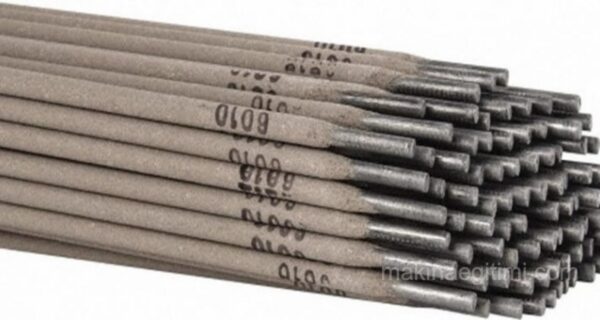
Since the electrode material makes up 70% of the molten weld zone, the chemical control of the electrode is important. Consumable electrodes are classified by composition, and come as a round wire 1.0-9.5 mm in diameter, automatically fed through a tube called a welding gun.

Submerged arc welding is especially preferred for large-diameter pipes and tanks.

Large-diameter electrodes carry high current and have high melting power, but they result in lower penetration (less deep reach). Electrode wires can be medium-carbon steel, solid alloy materials, or flux-cored electrodes containing alloying elements in their core.

submerged arc welding
A view of submerged arc welding being performed

Submerged arc welding equipment

There are semi-automatic and fully automatic machines built for submerged arc welding

Submerged arc welding equipment can be semi-automatic (speed controlled by the operator) or fully automatic machines. It can be either a handheld welding gun, or a fixed gun with the workpiece passed underneath it.

submerged arc welding gun

Related Questions

The flux blanket protects the welding arc from the harmful effects of atmospheric oxygen and moisture. This protection both provides a cleaner weld seam and prevents the blinding light and spatter that would otherwise affect the welder.

Because the electrode is continuously fed from a spool, an uninterrupted and automatic welding process is achieved. This continuous feed offers a much faster production capability compared to methods that require pausing to change electrodes.

Related Posts

Workplace Safety in Welding Work Occupational Health and Safety in Welding Work Welding of Stainless Steels Welding of Stainless Steels Welding Electrode Types Welding Electrode Types The History of Electric Arc Welding The History of Electric Arc Welding Lazer Kaynağının Avantaj ve Dezavantajları Advantages and Disadvantages of Laser Welding Lazer Kaynağı, Özellikleri ve Çalışma Prensibi Laser Welding, Its Properties and Working Principle Plasma Arc Welding Plasma Arc Welding Roles and Benefits of the Electrode Coating Roles and Benefits of the Electrode Coating
Manufacturing of Machine Parts
Share. Facebook Twitter WhatsApp Tumblr Email Telegram Copy Link

Leave A Reply Cancel Reply

How to Save Fuel in Vehicles
The ‘Mosts’ of Olympic History
  • Contact
  • Terms of Service
  • Privacy & Cookie Policy

Type above and press Enter to search. Press Esc to cancel.