Article Contents:
What You Need to Know for Fuel Economy
Anyone asking how to save fuel in a vehicle will probably first think they need to know about the engine, the gearbox/transmission system, and how they work. Of course, it’s not just about the engine. There are also many internal and external factors that increase fuel consumption in vehicles. For those saying “I’m just the driver, I don’t know much about the technical side, but I’m curious how to save fuel”, we wanted to research and present this topic in detail.
We found that the factors that increase fuel consumption in vehicles depend on variables like ideal driving speed, driving habits, road conditions, ambient temperature, air conditioning use, gear-shifting technique, the vehicle’s weight, its aerodynamics, vehicle maintenance, and the condition of certain interior equipment and the tires. Now, to understand how to save fuel, let’s look at these variables.
Effect of Tire Pressure
Low tire pressure increases rolling resistance and can raise fuel consumption by 2-3%.
Steady-Speed Driving
Traveling at a steady speed significantly reduces fuel consumption compared to constant acceleration and deceleration.
Carrying Unnecessary Weight
Every extra 45 kg carried in the vehicle can increase fuel consumption by an average of 1-2%.
What Should Be Done for Fuel Economy
What needs to be done for fuel economy in vehicles can be examined under headings such as: reviewing your driving habits, not driving the vehicle aggressively (constant brake-gas cycles or wheel spin), knowing the ideal speed and engine RPM, avoiding accessories and unnecessary weight that disrupt the vehicle’s aerodynamics, understanding the importance of shifting into the right gear at the right time, not letting the engine idle excessively, knowing that air conditioning increases fuel consumption, and keeping the vehicle well maintained.
Ideal speed for fuel economy
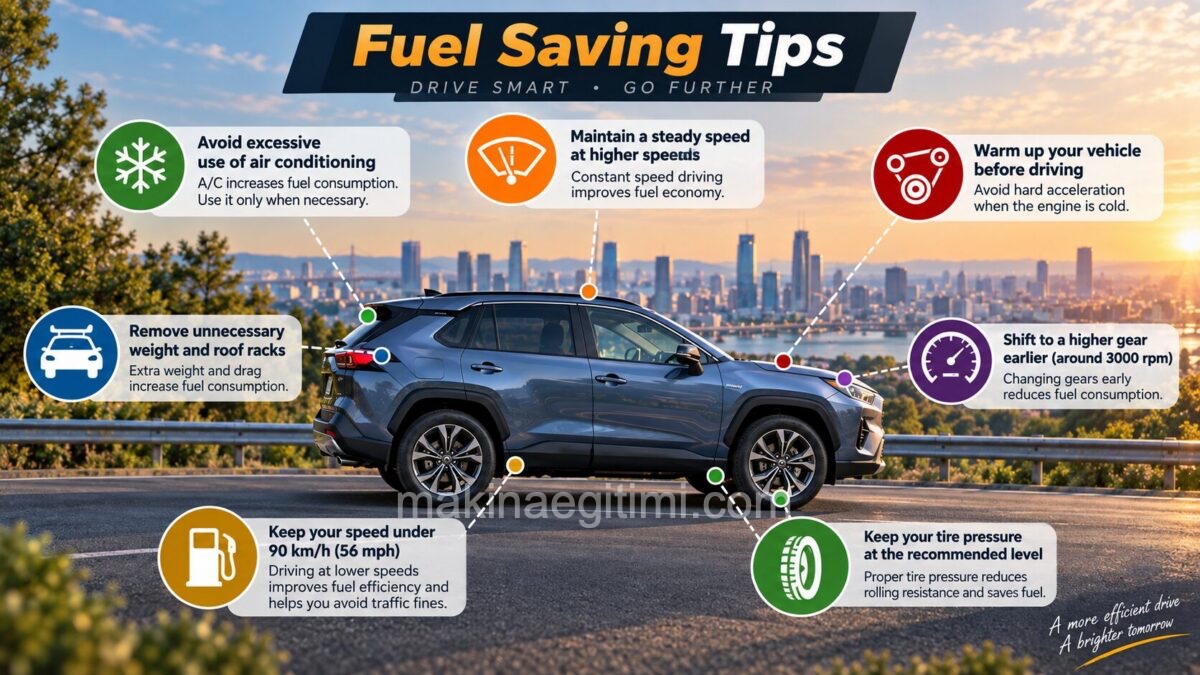
First on our list of what needs to be done for fuel economy is the ideal speed for fuel economy. Not exceeding 70-80 percent of your car’s top speed is the best rule of thumb for fuel-efficient speed. That’s where the expression “drive as if there’s an egg under the gas pedal” comes from. Don’t think you need to floor the gas pedal to build up speed. To reach your ideal speed, it’s enough to accelerate your vehicle without forcing it too hard and then try to maintain that speed. In other words, the more slack you leave under the gas pedal, the more fuel you save. For this, it’s enough to shift gears on time and pay attention to engine RPM.
If your vehicle’s engine is at the right RPM, you won’t need to press the gas. Try not to exceed 3000 RPM. Some people, trying to save fuel, try to constantly drive at very low RPMs, which is also a mistake. An engine driven constantly at very low RPMs wears out faster. In trying to save on fuel, you may end up spending more on spare parts and repair costs than the fuel you saved.
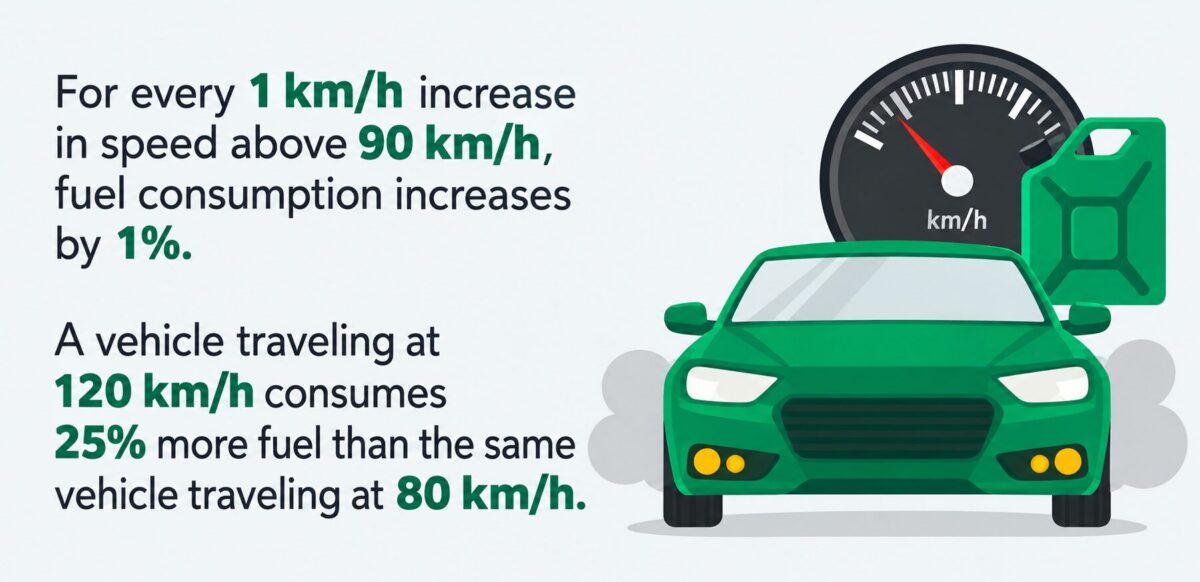
Instead of the ideal speed, driving faster than necessary is also one of the causes that increase fuel consumption. Every 1 km/h increase past 90 km/h increases fuel consumption by 1%. A vehicle traveling at 120 km/h consumes 25 percent more fuel than one traveling at 80 km/h.
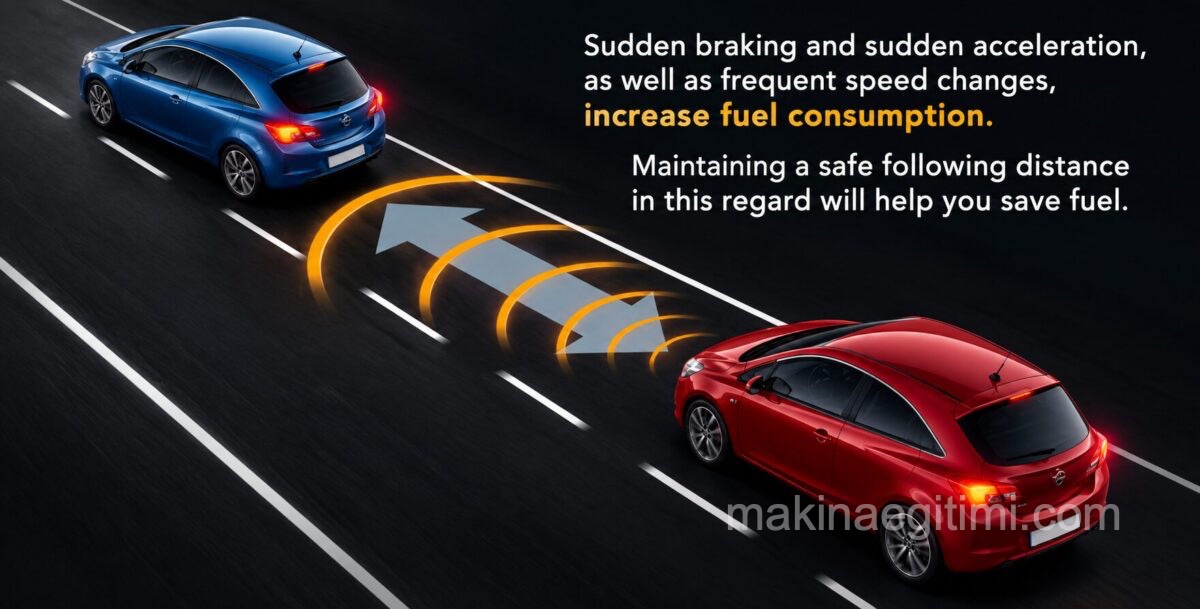
Frequently changing speed also increases fuel consumption. Stable, steady driving is ideal for saving fuel. If you leave enough following distance from the vehicle ahead of you, when you need to slow down, instead of braking suddenly, you can ease off the gas and coast to a gentle stop with light braking — this avoids unnecessary fuel consumption and also extends the life of your brake pads. Experts say drivers who adopt this driving habit save 15-20 percent on fuel.

If your vehicle has a cruise control system, use it only on straight roads for fuel economy.
How should you shift gears for fuel economy?
The second topic on our list of what to do for fuel economy in vehicles is gear shifting. Shift gears at the right time for fuel economy. Use first gear only to get the car moving; if you stay in first gear for a long time, fuel consumption rises to an abnormal amount. Move promptly into second, third, and fourth gear. Engine RPM changes as gears change.

Avoid running the engine up to high RPMs when shifting gears. Every engine has a maximum RPM and an RPM range where it runs most efficiently. Since this varies from vehicle to vehicle, it can be found by checking technical data or consulting a service center. The value listed as “maximum torque” in technical data is generally the RPM at which the engine runs most efficiently and burns the least fuel. Although it varies from car to car, if gears are shifted so as to stay within the maximum-torque RPM range, which is generally 2000-4500 RPM, fuel consumption will drop significantly.
The trick is to shift gears the moment you sense the engine has reached the right RPM. Using too high a gear puts excessive load on the engine; if the engine can’t reach the necessary RPM, it both burns more fuel and works harder.
What to do about driving habits
Our third topic on how to achieve fuel economy is driving habits. Your driving style can lower fuel consumption by a considerable amount. Stay away from unnecessary driving habits like sudden takeoffs or blipping the gas.
Driving on short trips is not ideal for fuel economy. From the moment the engine starts, your vehicle uses fuel equivalent to 40 liters per 100 km. But after about 4 kilometers, the engine reaches its normal operating temperature and consumption normalizes. Walk short distances if you can.

Besides the damage it does to the engine, warming up the engine at idle is also one of the reasons that increases fuel consumption. By the end of the first kilometer after starting the engine and driving off, the car has burned as much gasoline as three minutes of idling would. In other words, with the gasoline spent warming up the car for three minutes, you could drive 1 km. For this reason, it’s beneficial to turn off the engine during long stops.
Unnecessary steering movements increase fuel consumption
Since every lateral movement of the tire causes friction that consumes fuel, avoid unnecessary steering movements or turns.
Driving style on dirt and slippery roads
Avoid sudden acceleration on dirt and slippery roads. Accelerate gradually. This driving style will work in your favor when it comes to fuel economy.
What should be done for fuel economy on hills
On long downhill slopes, 5th gear burns almost no fuel once the crankshaft reaches its rotation speed while going downhill. However, if you shift into neutral, the car runs at idle. Since fuel supply to the engine isn’t cut when shifted into neutral, consumption continues. In this case, it burns fuel as if it were waiting at the same red light. It also makes it harder to stop the vehicle.
Instead of heavy braking to slow down, take advantage of friction force. Let friction force slow you down. (Except in emergencies, of course.) This deceleration technique is one of the best for fuel economy.
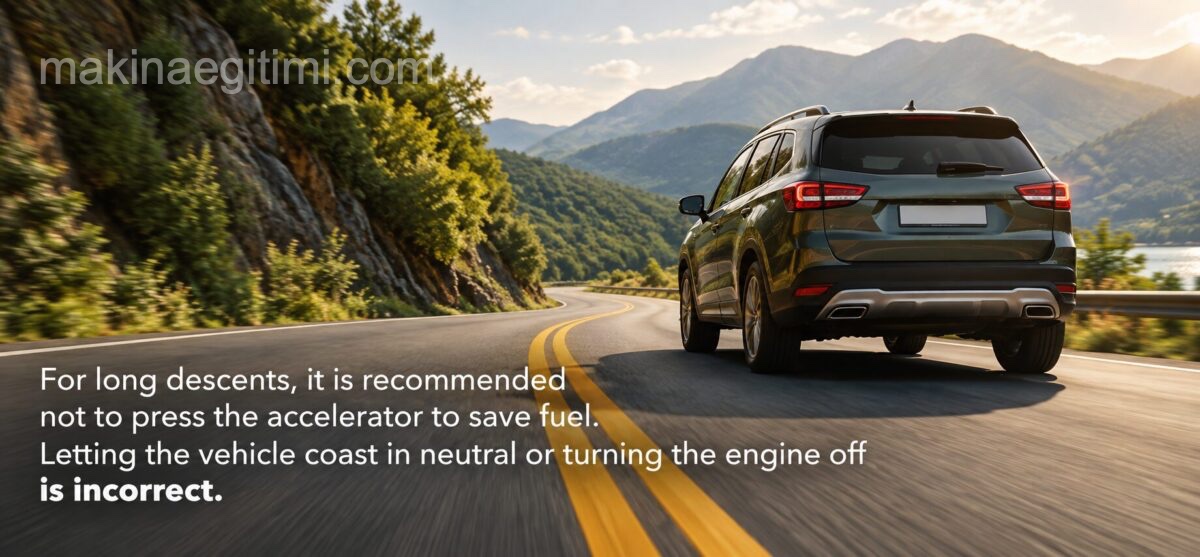
To burn less fuel while climbing a hill, it’s more correct to use half or even quarter throttle in a lower gear rather than full throttle in a higher gear.
For fuel economy in fuel-injected vehicles, it’s enough not to press the gas while going downhill. Fuel-injected vehicles don’t consume fuel while going downhill if you don’t press the gas.
Tire pressure, vehicle maintenance, and the effect of air conditioning on fuel economy
Use winter tires in winter and summer tires in summer. Don’t use all-season tires or larger-than-recommended tire sizes. Tire pressure also matters for fuel economy. If tire pressure is low, friction will increase and fuel consumption will rise accordingly. Tires should be kept at the ideal pressure recommended by the manufacturer.

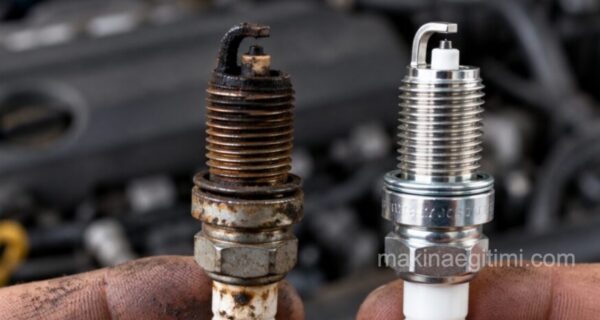
Vehicle maintenance is also effective for saving fuel. Replace spark plugs and air filters regularly. Buy your fuel from reliable sources as much as possible.
For fuel economy in very hot weather, start your car and leave the windows open while it warms up a bit. Then turn on the air conditioning, and don’t overuse it.
The importance of weight and aerodynamics for fuel economy

A roof rack loaded with cargo mounted on your car increases consumption by 2 liters per 100 km, while an empty roof rack, since it negatively affects the car’s aerodynamics, increases fuel consumption by an average of 0.5 liters. Since air resistance increases with speed, fuel consumption also increases.

Driving with the windows open increases fuel consumption. The air flowing in causes the car’s interior to act like a parachute (especially at speeds of 90 km/h and above). With the windows open, fuel consumption will increase by at least 0.3 liters per 100 km. However, closing the windows and turning on the air conditioning instead isn’t a solution either; depending on air temperature and the capacity used, air conditioning causes fuel consumption to rise by 0.5-1 liters.
Don’t carry unnecessary loads in the car. Every extra bit of weight in the car negatively affects fuel consumption (especially in vehicles with low engine power). In a standard car, every 100 kg of extra weight means 1 extra liter of fuel consumed per 100 km.
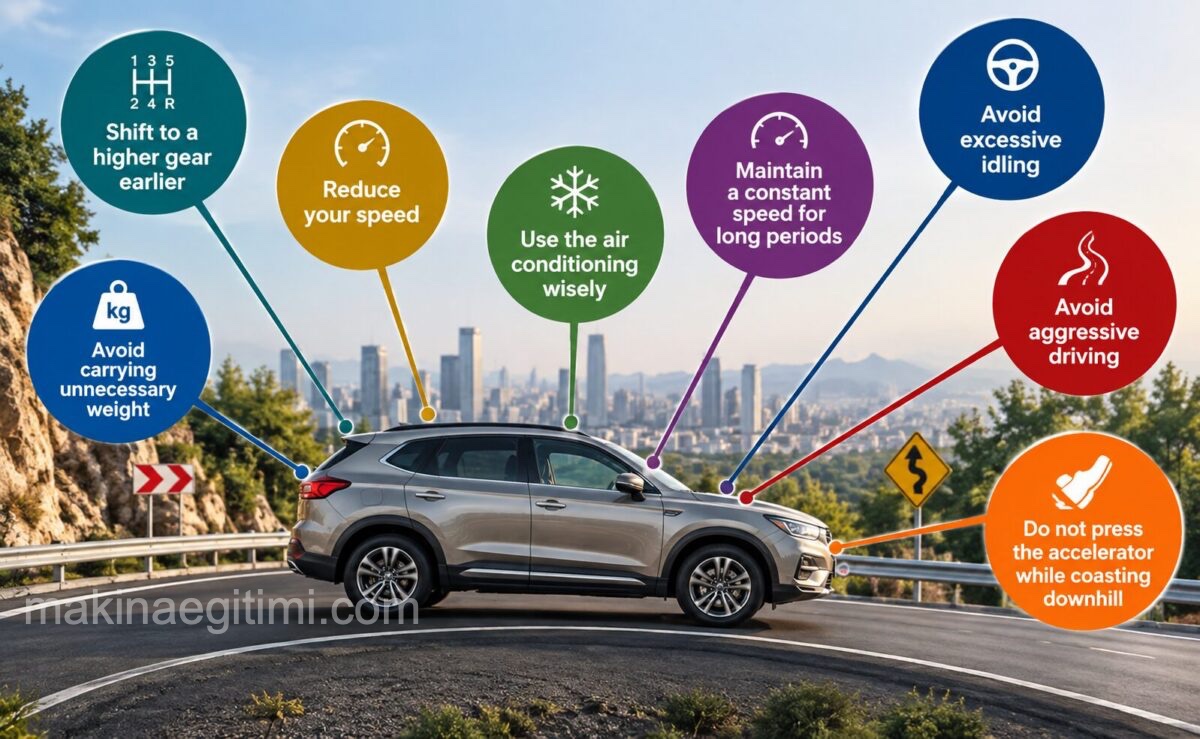
Finally, as a summary of our article, we’ve gathered all the fuel economy tips in the image above.
Related Questions
A tire with low pressure makes a wider contact area with the road surface, which increases rolling resistance. To overcome this increased resistance, the engine has to expend more power and thus more fuel.
The engine has to spend extra energy to move the vehicle and every extra kilogram inside it. This is why removing unnecessary loads from the vehicle reduces the total mass the engine has to carry, saving fuel.
Related Posts