
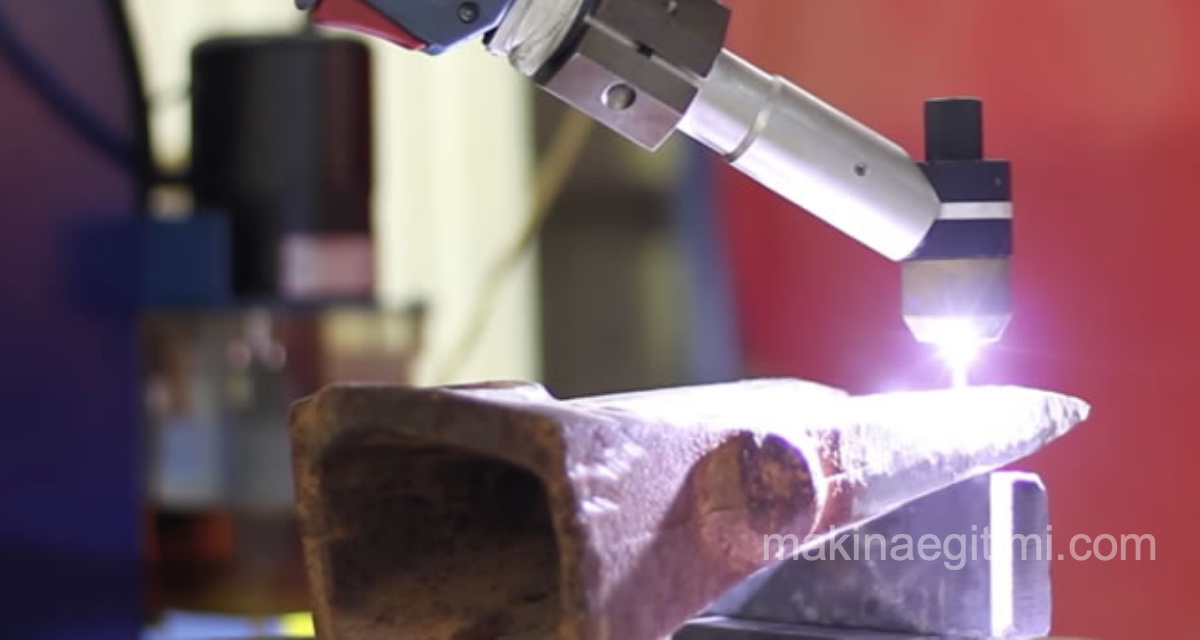
What is plasma welding, how is it done, what equipment does it require, where is it used, and other such topics are covered in this article. Topics covered:
What Is Plasma Arc Welding?
Plasma arc welding is a welding process that joins two metals by forming an arc between a tungsten electrode and the workpiece. The arc is essentially produced from plasma gas.
Plasma arc welding is similar to the tungsten inert gas (TIG) welding process because it uses a tungsten electrode and argon as the inert shielding gas; the only difference from TIG welding lies in the structure of the welding torch. The torch used in manual welding is more precise and more complex than TIG torches. It is water-cooled.
Working Principle of Plasma Welding
If an electric arc between a tungsten electrode and the work is constricted into a narrower cross-sectional area, its temperature increases because it carries the same amount of current. This constricted arc is called plasma, or the fourth state of matter.
The process works by ionizing argon gas at high temperatures within the constricted section. The ionized gas becomes capable of conducting electricity, and this gas is then used to transfer an electric arc to the part being welded. The extreme heat of the arc will weld, or fuse, the two metal parts together.
Formation of the Plasma Weld
First let’s understand the structure of plasma arc welding: the welding setup consists of a DC generator with its positive end connected to the clamp and its negative end connected to the welding torch, surrounded by a consumable tungsten electrode, a constricting inner nozzle, and an outer nozzle from which the shielding gas is released. The plasma gas passes through the gap between the tungsten electrode and the constricting inner nozzle.
Let’s bring the two metals close together and turn on the power supply, then open the valve on the argon gas cylinder. We see argon gas flowing from the welding torch and becoming ionized when it contacts the current-carrying electrode. This ionized gas is called plasma.
Then, as we bring the welding torch close to the interface of the metal plate, we see an arc form from the welding torch. This arc remains concentrated and straight due to the constricting structure of the inner nozzle. This constriction generates a great deal of heat at the interface.
Shielding Gas: An inert gas consisting of argon, helium, or a mixture of these is used to protect the arc area from the atmosphere.

Argon is more common as a shielding gas because it’s heavier and provides better shielding at lower flow rates. For flat and vertical welding, a shielding gas flow of 15 to 30 cu ft per hour (7 to 14 liters per minute) is sufficient.
Plasma Temperature
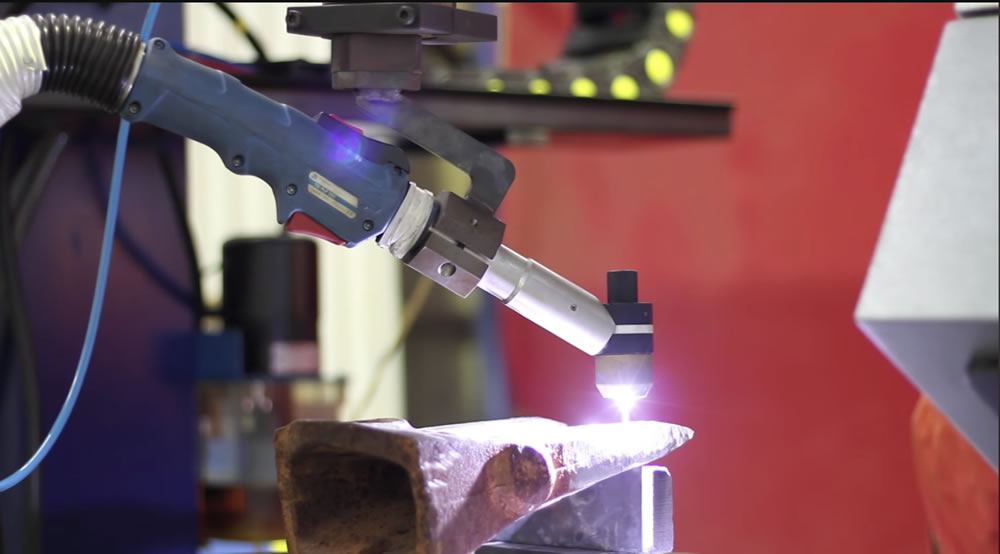
In plasma arc welding, the temperature of the plasma jet can reach up to 20,000°C.
Arc Constriction
The narrow nozzle in the plasma torch constricts the arc, creating a much more intense and focused heat source than normal TIG welding.
Shielding Gas
Argon or an argon-hydrogen mixture is generally used as the shielding gas in plasma welding.
Plasma Welding Equipment
1- Power Supply
It’s recommended to use a power supply that supports both AC and DC welding current. The voltage should be an 80-volt open circuit with a 60% duty cycle. It’s preferable for the power supply to have a built-in contactor and remote current control.
The power supply must have a minimum of 2 amps and a maximum of 300 amps.
Welding Torch
The plasma torch contains an electrode made of tungsten, placed inside a nozzle made of copper. The tip of the nozzle has a small opening. The arc is started between the electrode and the tip of the nozzle. The arc is then transferred to the material being welded.
The plasma welding torch is similar to the TIG welding torch, but more complex. All plasma torches, even those with the lowest current range, must be water-cooled. This is because the arc is contained within a chamber in the torch where it generates significant heat. If water flow is interrupted even briefly, the nozzle can melt.
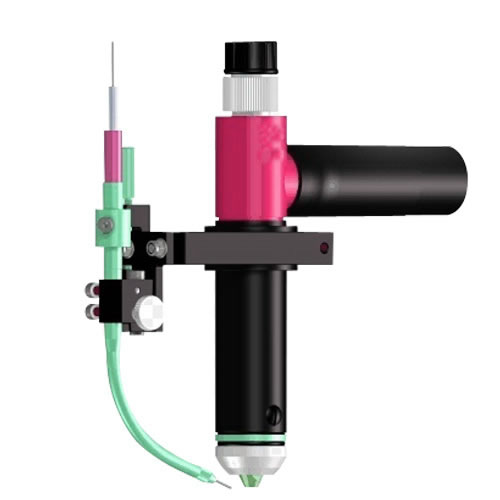
Manual plasma arc torches are made in various sizes from 100 amps to 300 amps. Automatic torches are also available for machine operation.
Control Console
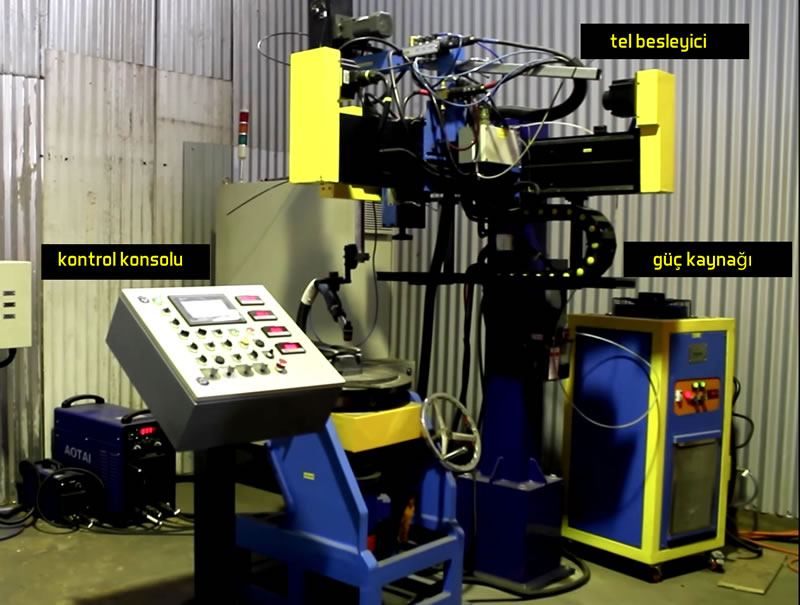
A control console is required for plasma arc welding. Plasma arc torches are designed to connect to the control console instead of the power supply directly. The console includes:
- A power supply for the pilot arc
- A delay timing system for transferring the arc from the pilot arc
- Water and gas valves
- Separate flow meters for the plasma gas and the shielding gas.
The console is generally connected to the power supply and can operate the contactor. It will also include a high-frequency arc-starting unit, a non-transferred pilot arc power supply, a torch protection circuit, and an ammeter.
A high-frequency generator is used to start the pilot arc. Torch protection devices include water and plasma gas pressure switches interlocked with the contactor.
Wire Feeder
A wire feeder can be used for machine or automatic welding and should be of the constant-speed type. The wire feeder should have a speed setting covering a feed rate range of 254 mm per minute to 3.18 m per minute.
Advantages of Plasma Welding
The advantages of plasma arc welding compared to TIG welding stem from plasma welding’s higher energy concentration. The constricted cross-sectional area and the speed of the plasma jet create a higher heat content.

Another advantage is that it relies on a rigid, columnar arc, or plasma form, that does not flare out the way a TIG arc does.
The advantages of plasma arc welding compared to TIG welding stem from plasma welding’s higher energy concentration. The constricted cross-sectional area and the speed of the plasma jet create a higher heat content. Another advantage is that it relies on a rigid, columnar arc, or plasma form, that does not flare out the way a TIG arc does.
These two factors provide the following advantages:
- Greater Freedom During Manual Welding: In a plasma arc, the torch-to-work distance is less critical than in TIG welding. This is important for manual operation because it gives the welder more freedom to observe and control the weld.
- Keyhole Effect (full penetration in a single pass): The high temperature and high heat concentration of the plasma allow for a keyhole effect, which enables many joints to achieve full penetration in a single pass. In this operation, the heat-affected zone and the shape of the weld are more desirable. The heat-affected zone is smaller than with a Tungsten Inert Gas (TIG) arc, and the weld tends to have more parallel sides, which reduces angular distortion.
- Higher heat concentration and the plasma jet allow for higher travel speeds.
- The plasma arc is more stable and has deeper penetration characteristics. It produces a narrower weld. This means a more advantageous depth-to-width ratio.
Applications of Plasma Arc Welding
Some of the main uses of the plasma arc are applications in pipe manufacturing (stainless steel, titanium alloy). It can be applied to pipes made of stainless steel, titanium, and other metals at higher production rates than TIG welding.
Most applications of plasma welding are in the low-current range of 100 amps or below. Plasma can be operated at extremely low currents to allow welding of foil-thickness material.
Plasma welding is also used for tool manufacturing and to make small welds on welds for other small components made of thin metal. It’s used to make butt joints in wall tubing.
Which Metals Can Be Welded with Plasma Welding?
The plasma welding process can join almost all metals available on the market. It may not be the best choice or the most economical method for welding some metals. The plasma arc welding process will be able to weld all metals that can be welded with TIG welding.
Related Questions
Both use a tungsten electrode and argon gas, but in plasma welding the arc is constricted into a narrower area by a special torch structure. This constriction raises the temperature of the arc, providing a more precise and deeper weld.
Argon normally doesn’t conduct electricity, but it becomes ionized, meaning electrically charged, at the very high temperature created by the constricted arc. This allows the ionized gas to carry the electric arc to the workpiece.
Related Posts
 Electrodes Used for Welding Stainless Steels
 Welding Electrode Types
 What Is Soldering? Soft Soldering and Brazing Methods
 Factors That Make Welding Stainless Steel Difficult
 Roles and Benefits of the Electrode Coating
 General Information About MIG Welding
 Welding of Stainless Steels
 What Is Submerged Arc Welding, How Is It Done