
Topics covered in this informative article about the properties and working principle of laser welding:
What Is Laser Welding?
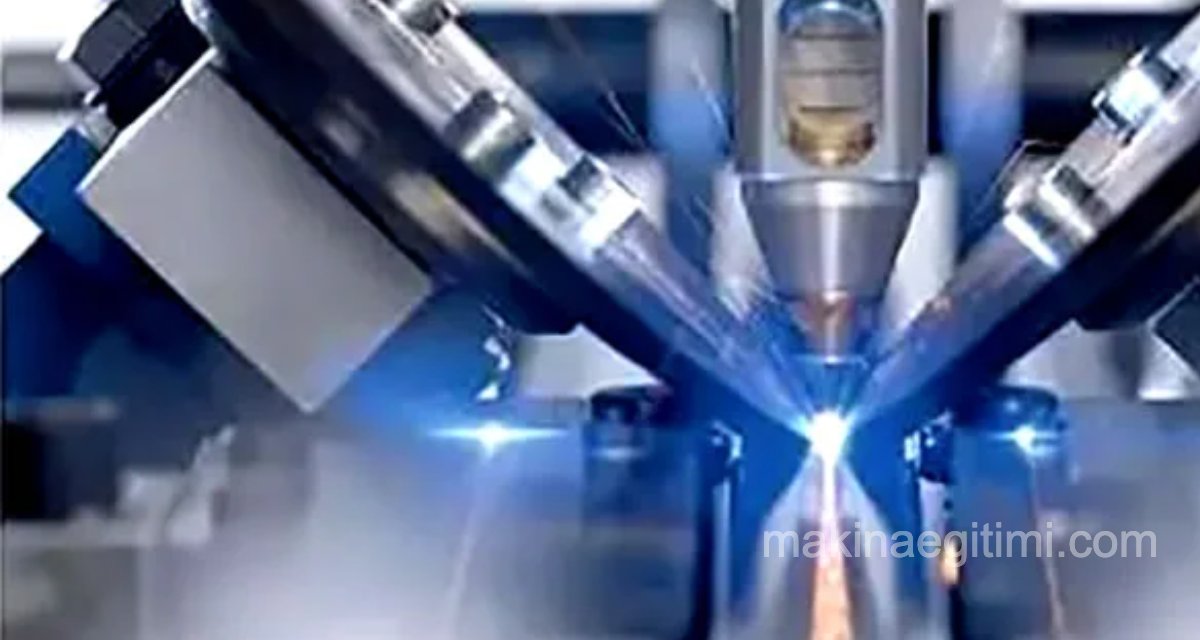
Laser welding is a process used to join metals or thermoplastics using a laser beam to create a weld.
The laser beam heats the material to its melting point, causing the two materials to fuse together. This process is typically used to join metals, but it can also be used on other materials such as plastics and composites.
Laser welding offers several advantages over other welding methods, including precision, the ability to weld hard-to-reach areas, and a high-quality weld free of porosity and other defects.

It is frequently used in sectors such as aerospace, automotive, and medical devices, where precision and quality are critical.
Focused High Energy
Laser welding achieves high energy density by focusing light onto a very small spot.
Narrow Heat-Affected Zone
Laser welding produces a much narrower heat-affected zone (HAZ) than traditional welding methods.
High Welding Speed
Thanks to its focused energy, laser welding allows welding at speeds of several meters per minute.
Properties of Laser Welding
With the research and development of high-power lasers, laser welding technology is widely used in many fields, mainly due to the following properties:
1- Depth, high speed, and low deformation.
2- Simple and flexible welding equipment: There are bench-type laser and handheld laser welding machines. Welding can be done at room temperature or under special conditions, and it doesn’t have high requirements for the welding environment. Long-distance welding of hard-to-reach parts is possible using optical fiber. It’s easy to mount on robotic equipment.
3- High power density: it has a significant melt depth and high power density that can weld refractory materials such as titanium alloys.

4- Suitable for high-speed welding due to its high energy density.
5- No wear-and-tear consumption of electrodes, tools, etc.
6- Does not cause environmental pollution.
7- Easy to change the laser output focal length and the weld point position.
The Working Principle of Laser Welding
Conduction Mode Laser Welding
Conduction mode welding is achieved using lower power and a relatively low energy density. (less than 105W/cm2) The laser beam is absorbed only at the surface of the material and does not penetrate into the material. Conduction-limited welds then typically exhibit a high width-to-depth ratio.
In conduction mode, welding simply heats the parts until the materials melt, flow together, and solidify.
Since the results are a kind of continuous spot weld, this is good for joints that don’t require high strength. Conduction welds are smooth and aesthetically pleasing and are typically wider than they are deep. This makes the process very suitable for joining thin-walled materials and for spot welding

Laser Deep Penetration (Keyhole) Welding Principle
This mode creates deep, narrow welds. Some call this penetration mode. The welds produced are normally deeper than wide welds and stronger than conduction mode welds.
When the laser beam is focused onto a spot small enough to produce a power density typically greater than 106-107 W/cm2, the material in the beam path not only melts but also vaporizes before a significant amount of heat can be carried away by conduction.
The focused laser beam then penetrates the workpiece, forming a cavity filled with metal vapor called a “keyhole.” This vapor-filled hole acts like a black body that absorbs nearly all of the incoming beam energy, and the equilibrium temperature inside the hole reaches approximately 2500℃.

Heat is transferred from the outer wall of this high-temperature hole, causing the metal surrounding the hole cavity to melt.
The small hole is filled with high-temperature vapor produced by the continuous vaporization of the wall material under irradiation from the light beam.
The four walls of the small hole are surrounded by molten metal, and the liquid metal is surrounded by solid material (whereas in most traditional welding processes and in laser conduction welding, energy is first deposited on the surface of the workpiece and then transferred inward).

The liquid flow outside the hole walls and the wall’s surface tension are kept in dynamic equilibrium with the vapor pressure continuously generated inside the hole cavity.
The beam continuously enters the small hole, and the material outside the hole continuously flows. As the beam moves, the small hole is always in a stable flow state. That is, the hole and the molten metal surrounding the hole wall move forward at the same forward speed as the leading beam, and the molten metal fills the void left behind by the moving hole, solidifying together with it to form the weld seam.
All of this happens so quickly that welding speed can easily reach several meters per minute.

Keyhole mode welds are incredibly strong and are suitable for deep-penetration and structural welds.
Related Questions
Because the laser beam can be focused onto a very small spot, it produces an extremely precise, narrow weld zone. This precision provides a level of quality that traditional methods can’t achieve, especially on hard-to-reach or small parts.
A narrow heat-affected zone means the areas around the welded material heat up less. This reduces the risk of the part deforming and helps the material retain its original properties.
Related Posts
 How Is Underwater Welding Done? Underwater Welding
 The History of Electric Arc Welding
 Welding Electrode Types
 Welding of Stainless Steels
 Advantages and Disadvantages of Laser Welding
 Factors That Make Welding Stainless Steel Difficult
 Occupational Health and Safety in Welding Work
 What Is Soldering? Soft Soldering and Brazing Methods