Close Menu
  • MAKİNELER ve İMALAT
    • Tools & Equipment
    • Computer-Aided Drawing
    • CAD/CAM Education
    • CNC Machine Programming
    • Casting Technologies
    • Electrical & Electronics Technologies
    • Hydraulics & Pneumatics
    • Manufacturing Processes
    • Manufacturing Technologies
    • Occupational Safety
    • Mold & Die Design
    • Solid Modeling
    • Welding Technology
    • Machine Elements
    • Mechanical Trade Drawing
    • Materials Science
    • Automotive & Vehicle Technologies
    • Robotics Technologies
    • Health Technologies
    • Defense & Aerospace Technologies
    • Descriptive Geometry
    • Technical Drawing
    • Software & Hardware Technologies
    • Innovative Manufacturing Methods
  • TEKNOLOJİ ve YAŞAM
    • OTOMOBİLLER ve TAŞIT
      • Vehicle & Engine Knowledge
      • Safe Driving
      • Sürüş Destek Sistemleri
    • Genel Kültür
      • Movies & TV Shows
      • Görsel ve Grafik Sanat
      • Books & Literature
      • Music
      • Sports
      • History
      • History of Technology
    • GÜNDELİK YAŞAM TEKNOLOJİLERİ
    • Hobbies & Entertainment
    • Internet Technologies
    • Health
    • Mobile Technologies
Makine Eğitimi
  • Machines & Manufacturing
    Machine Elements
    Hydraulics & Pneumatics
    Technical Drawing
    Computer-Aided Design & Manufacturing
    Basic Manufacturing Processes
    Manufacturing Processes
    Industry Technologies
    Other Technical Courses
    Motion & Power Transmission
    Simple Machines
    Chains & Sprockets
    Shafts & Journals
    Gears
    Cams
    Couplings
    Belts & Pulleys
    Springs
    Bearings
    Keys
    Fastening Joining
    Retaining Rings
    Screws, Bolts & Nuts
    Cotter Pins
    Flanges
    Welding
    Rivets
    Pins & Bolts
    Washers
    Calculators
    Gear Ratio Calculator
    Spring Constant Calculator
    Belt Pulley Ratio Calculator
    Other Machine Elements
    Slides & Linear Guides
    Brakes
    Flywheels
    Clamps
    Shock Absorbers
    Gaskets & O-Rings
    Seals & Sealing Elements
    Hydraulics
    Introduction to Hydraulics & Principles
    Hydraulic Systems & Applications
    Accumulators
    Filters
    Motors
    Pumps
    Valves
    Pneumatics
    Introduction to Pneumatics & Principles
    Pneumatic Systems & Applications
    Pneumatic Circuit Components
    Valves
    Cylinders
    Silencers
    Motors
    Compressors
    Dryers
    Conditioning Units
    Common Topics & Maintenance
    Hydraulic & Pneumatic Maintenance
    Study Notes, Exams & Tests
    Technical Drawing
    Introduction to Technical Drawing
    Geometric Drawings
    Perspective & Projection
    Orthographic Views
    Dimensioning
    Sectioning
    Assembly & Detail Drawings
    Tolerances
    Surface Finish Symbols
    Mechanical Engineering Drawing
    Screws, Bolts & Nuts
    Pulley Drawings
    Gear Drawings
    Shafts & Journals
    Bearing Drawings
    Pins & Bolts
    Spring Drawings
    Welds in Technical Drawing
    Washers
    Cotter Pins
    Technical Drawing Exercises
    Mechanical Drawing Exercises
    Gear Exercises
    View Extraction Exercises
    Pulley Exercises
    Pin & Bolt Exercises
    Threaded Fastening Exercises
    Descriptive Geometry
    Computer-Aided Drawing
    AutoCAD Drawing Lessons
    Solid Modeling & Animation
    Solid Model Drawing Files
    Solid Model Assembly Examples
    Solid Model Drawing Lessons
    3D CAD Software Reviews
    Solid Modeling Exercises
    CNC Programming
    CAM
    Measurement & Inspection
    Dial Indicators
    Calipers
    Gauges
    Micrometers
    Materials Science
    Steels
    Cast Iron
    Aluminum
    Plastics
    Material Testing & Hardness Measurement
    Occupational Safety
    Workshop Safety
    Safety When Working With Electricity
    Machine Safety Rules
    Hand Operations
    Filing
    Marking
    Cutting Operations
    Reaming
    Tapping
    Threading With a Die
    Drill Bit Sharpening
    Working With Machines
    Basic Turning Operations
    Basic Milling Operations
    Shaper Machine
    Machining
    Turning
    Milling
    Grinding
    Innovative Manufacturing Methods
    EDM (Electrical Discharge Machining)
    Laser Machining
    Waterjet Machining
    3D Printing
    3D Scanners
    Welding
    Rolling
    Casting
    Mold & Die Design
    Mechanical & Hydraulic Presses
    Blanking & Piercing Dies
    Bending Dies
    Drawing Dies
    Plastic Injection Molds
    Extrusion Dies
    Compound Dies
    Progressive Dies
    Blow Molds
    Spinning Dies
    Spray Molds
    Manufacturing of Machine Parts
    Automotive & Vehicle Technologies
    Motor Vehicle Manufacturing
    Raw Material Production
    History of Technology
    Health & Medical Technologies
    Defense & Aerospace
    Robotics Technologies
    Software & Hardware Technologies
    Mechanics - Strength of Materials
    Physics Topics
  • Technology & Life
    Hobbies & Entertainment
    Sports
    Music
    Vehicle & Engine Knowledge
    Vehicle Maintenance & Repair
    Safe Driving
    Driver Assistance Systems
    History
    Movies & TV Shows
    Books & Literature
    Computers & Internet
    Computer Tips
    Software Reviews
    Hardware & Peripherals
    Practical & Safe Internet Use
    Visual & Graphic Art
    Mobile Technologies
    Travel
    Science
    Health
    First Aid Knowledge
    Everyday Technologies
Makine Eğitimi
Home»Machine Elements»What Is a Piston Ring, What Does It Do? Its Job and Installation.
29 August 2026

What Is a Piston Ring, What Does It Do? Its Job and Installation.

What Is a Piston Ring, What Does It Do?

What Is a Piston Ring? What Does It Do?

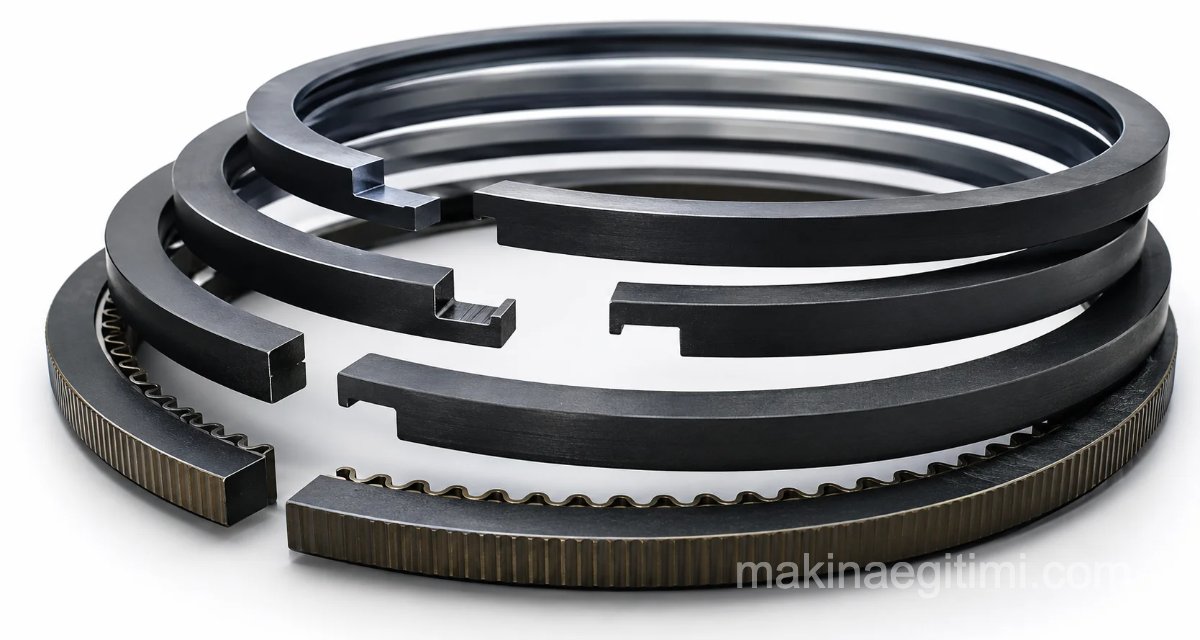
In machine elements and engines, the flexible ring-shaped parts that seal between the piston and the cylinder are called piston rings.

  • What Is a Piston Ring? What Does It Do?
  • The Job of Piston Rings
    • Where Are Piston Rings Used?
  • Types of Piston Rings
  • How Are Piston Rings Fitted?
    • Video: How to Install and Remove a Piston Ring
    • The Importance of Piston Rings
  • Related Questions

Because piston rings provide good gas sealing, they prevent burned gases in the combustion chamber from leaking into the crankcase. They also prevent leakage while the air-fuel mixture is being compressed. In this way, they ensure good compression.

The Job of Piston Rings

Scraping the oil off the cylinder wall to prevent it from burning, and transferring heat from the piston to the cylinder to help cool the piston, are also among the jobs of piston rings.

Where Are Piston Rings Used?

In reciprocating (piston) machines, it’s quite difficult to fit a piston to a cylinder with a perfect match. Besides not being able to achieve good sealing this way, the friction force would also become very large. For this reason, in reciprocating machines (for example, in reciprocating steam engines as well as internal combustion engines), piston rings fitted into suitable grooves cut into the piston are used.

Compression Ring


Compression rings preserve engine power by preventing pressure in the combustion chamber from leaking to the crankcase side.

Oil Scraper Ring


Oil rings scrape excess oil off the cylinder wall, preventing it from entering the combustion chamber.

Sign of Worn Piston Rings


Worn piston rings cause bluish smoke from the exhaust and increased engine oil consumption.

Types of Piston Rings

where piston rings are used, pistons, oil ring

Piston rings are divided into two groups based on the job they do.
1 — Compression rings
2 — Oil rings

Compression rings prevent gases between the top of the piston and the cylinder head from leaking into the crankcase, and transfer heat from the piston to the cylinder to help it cool.

Oil rings reduce friction between the piston and the cylinder and prevent oil from being burned and wasted.

types of piston rings
a) Butt-joint (straight-cut) ring b) Ring with a 45° angled joint. c) Overlap-joint ring.
overlap-joint piston ring
Overlap-joint piston ring (above)
sealing-joint piston ring
Another type of piston ring designed for sealing

How Are Piston Rings Fitted?

piston ring
Fitting a piston ring

Pliers-like hand tools have been made for fitting and removing piston rings. With these tools, called piston ring pliers, removing and installing piston rings becomes quite easy.

piston ring pliers
Piston ring pliers
curved-tip piston ring pliers

There are different types of piston ring pliers used for installing and removing rings, depending on the need. The figure above shows piston ring pliers with a curved tip. These tools are preferred for internal rings (rings inside a bore).

piston ring installation/removal tool

A type of piston ring pliers used mainly for removing and installing rings on engine piston beds. (Above)

Video: How to Install and Remove a Piston Ring

In the video above, you can see how a piston ring on a motorcycle engine’s pistons can be removed and installed by hand. If you don’t have piston ring pliers on hand, what’s shown in the video may be helpful.
See also: How Is a Piston Ring Ejected?

The Importance of Piston Rings

Piston rings actually take on vital roles in the machine part they’re used in (this can sometimes be a piston, sometimes a piece of hydraulic equipment).

We see that after piston ring damage, a gasoline engine starts making unpleasant noises. If you’re curious what happens when an engine runs low on oil, listen to the audio clip below

ENGINE SOUND WITH WORN PISTON RINGS

Click the Play icon to listen.

damaged piston ring

A lack of engine oil led to a chain of failures, and the pistons, cylinder liners, and piston rings were damaged.(Above)
See also: Piston Ring Wear in an Engine

If your car makes a sound like this, don’t start the engine. Check the engine oil. It could be low on oil. If the engine oil level is fine, then the piston rings or cylinder liner could be damaged, in which case the engine burns oil and emits blue smoke from the exhaust. If repairs aren’t started right away, it can cause very serious damage to the engine.


In this article in the machine elements category, we tried to answer questions like: what is a piston ring, what is its job, what does a piston ring do, why are piston rings important, what are the types of piston rings, and how are piston rings removed and installed. Looking forward to meeting you in future articles.

Related Questions

Achieving a mechanically perfect, gap-free fit between a piston and cylinder is very difficult in practice and would lead to excessive friction. Piston rings flexibly close this gap, providing sealing while keeping friction under control.

A compression ring focuses on preventing pressure in the combustion chamber from leaking into the crankcase. An oil scraper ring, on the other hand, scrapes excess oil off the cylinder wall, preventing that oil from entering the combustion chamber and being burned.

Related Posts

Engine Knocking Noise Engine Knocking Noise Dişli Oranı - Devir ve Tork Hesaplayıcı Gear Ratio Calculator Kamlı Oyuncak yapımı Kedi & fare Making a Wooden Toy with a Cam System – Cat & Mouse How Are Piston Rings Made How Are Piston Rings Made? How Are Piston Rings Manufactured? Yaprak Yaylı ve Helezon Yaylı Süspansiyonun Farkları Differences Between Leaf Spring and Coil Spring Suspension Chain Sprocket Drawings in Technical Drawing Chain Sprocket Drawings in Technical Drawing Formulas for Gear Drawing and Manufacturing Formulas for Gear Drawing and Manufacturing Screw and Bolt Types Screw and Bolt Types
Retaining Rings
Share. Facebook Twitter WhatsApp Tumblr Email Telegram Copy Link

Leave A Reply Cancel Reply

What Is a Turbocharger? How Does It Work? Advantages and Disadvantages
What Is ESP in Vehicles? What Does It Do? How Does It Work?
  • Contact
  • Terms of Service
  • Privacy & Cookie Policy

Type above and press Enter to search. Press Esc to cancel.