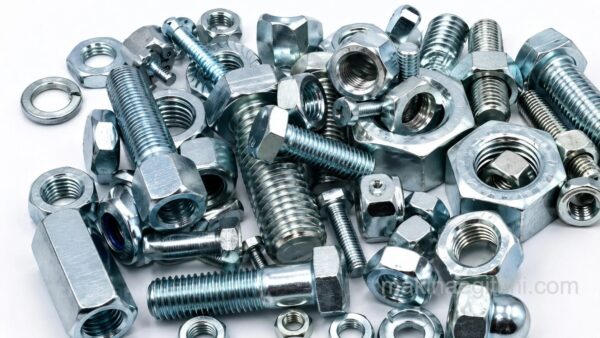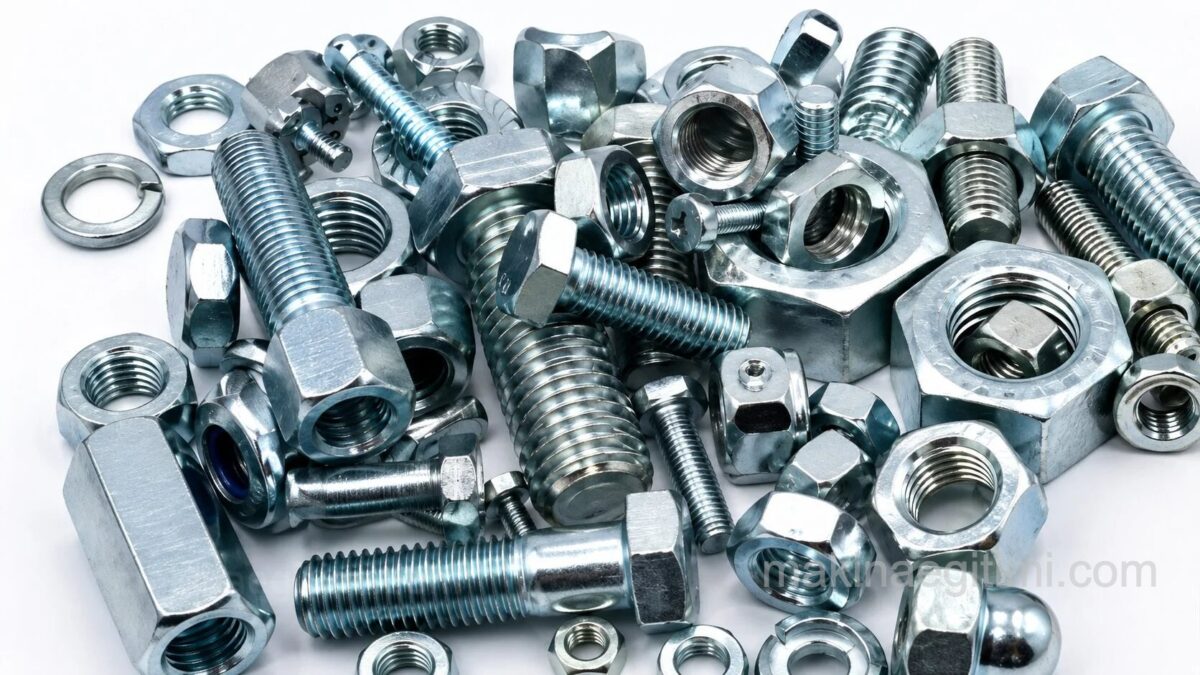
First, to avoid confusion between the terms “screw” and “bolt,” let’s clarify the following:
- A screw makes a connection without using a nut. Having a head doesn’t make it a bolt.
- A bolt makes a connection using a nut.
- Fasteners with external threads are called bolts (or screws), and fasteners with internal threads are called nuts.
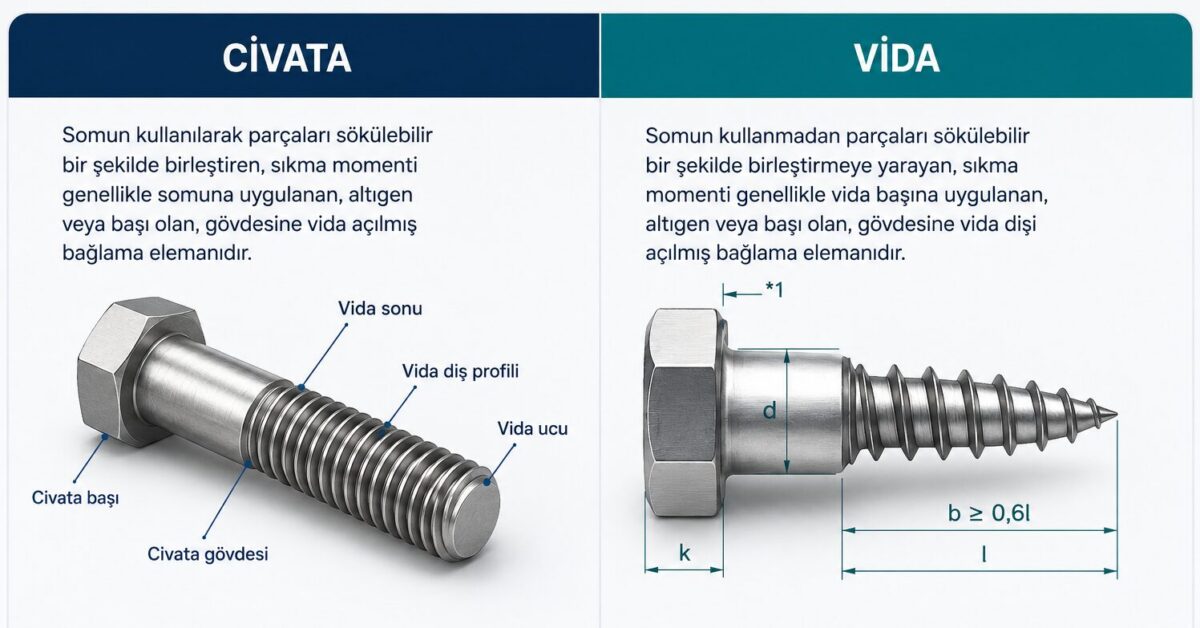
While it’s possible to classify screws by many characteristics (thread profile, number of starts, helix direction, thread system, etc.), the clearest way to avoid confusion is to classify them by their use — their function. By function, we can divide screws into two groups:
a) Fastening screws
b) Motion and power screws
Fastening Screws
These are used to join machine parts in a way that can be disassembled. They may be designed to the Metric or Whitworth thread systems.
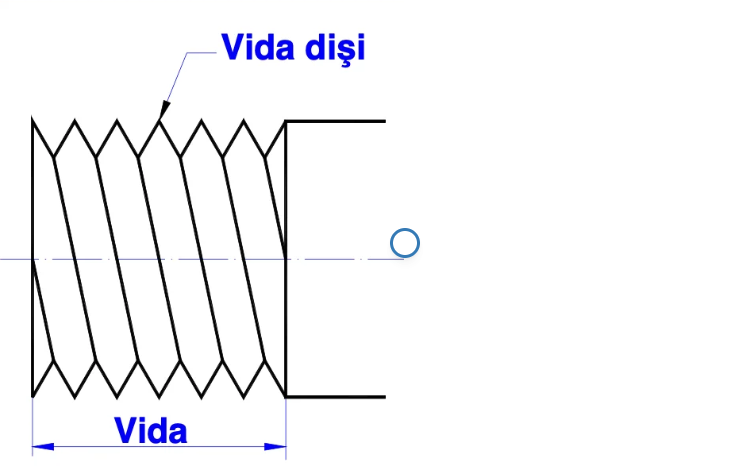
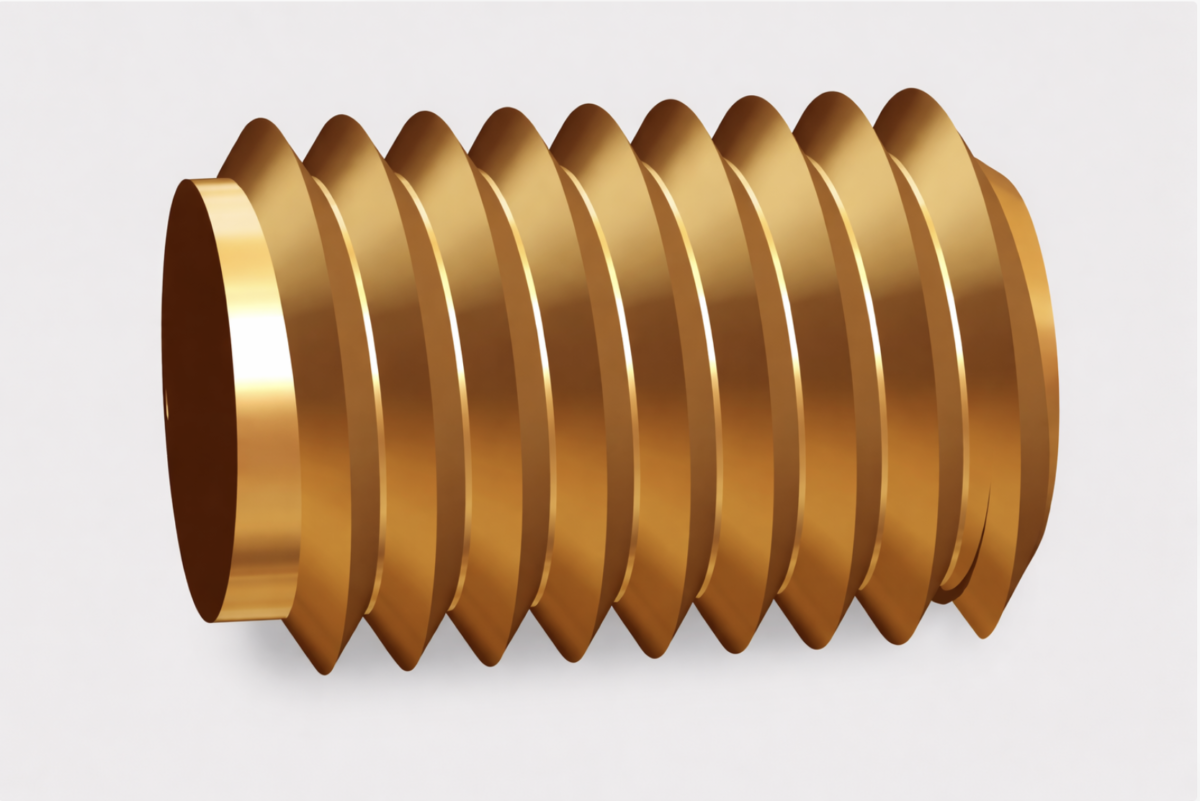
By thread profile, they can be V-threads. A V-thread has a large thread angle and a small helix pitch. These properties let it do a good job of clamping. For this reason, V-threads are used as fastening screws.

A flange connection is an example of a fastening screw application. (above)

A flange joined using a nut and bolt (above)

Set Screws

These are headless bolts, threaded along their entire body.
They’re used mainly to secure the position of parts like gears, pulleys, and flywheels on shafts and axles. Their tips are generally hardened and shaped differently depending on the type of locating method used on the shaft.
Sheet Metal Screws
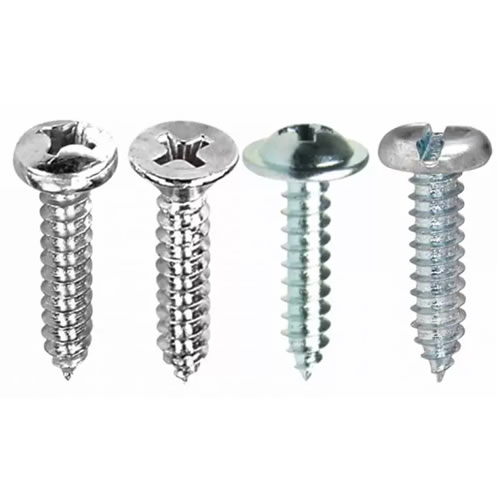
Sheet metal screws have a large pitch, sharp-edged thread, and are generally hardened, detachable fasteners used to join sheet metal up to about 2.5 mm thick. As they’re driven in, they form their own mating thread in the material.
The most important features of sheet metal screws are their large pitch, sharp-edged threads, and pointed tips.
Self-Drilling Screws

Similar in structure to sheet metal screws, but with an additional drill-bit-style tip that drills the pilot hole itself. These screws can join materials up to 10 mm thick without needing to pre-drill.
Wood Screws
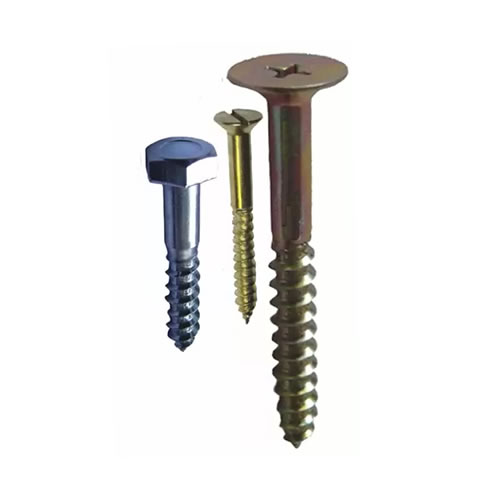
A wood screw has a threaded body that tapers all the way to a pointed tip. Its threads are sharp-edged with a large pitch. Countersunk Phillips heads are especially well suited for machine-assembled bolts.
Motion Screws
These are used to transmit motion and force in machine elements. They’re made with different thread profiles depending on the load they carry, its direction, and the physical conditions of the application.
Square Threads
The thread profile is square-shaped. They’re made to metric or imperial measurement systems. Square threads have no fixed standard. A square thread can be cut at any pitch on any diameter, to suit the application. That said, the thread’s pitch should still be proportional to its major diameter.

Square threads are used as motion screws, for power transmission, in places like machine tool lead screws, presses, and jacks.

The thread width is half the pitch. They can be made as single-start or multi-start.
See: Number of Starts in Threads
The reason square threads are used as motion screws is that the side faces of a square thread are perpendicular to the screw axis, so they can’t provide sufficient clamping force. Also, since the thread surfaces in a square thread are shorter, friction between the mating thread surfaces is lower.
Trapezoidal (ACME) Threads
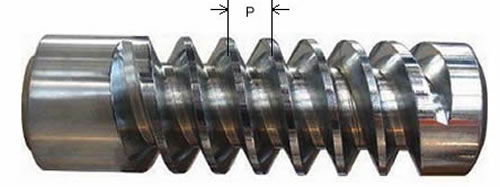

(TS 61/23): The thread profile is a 30° isosceles trapezoid. Trapezoidal threads are used as motion screws in places like machine tool lead screws and worm gears. They can also be used for power transmission.
Buttress Threads

(TS 61/30): The thread profile has a 30° angle and is angled in one direction only. Buttress threads are used as motion screws to carry one-directional forces, in places like cranes and jacks.

Round Threads
These are among the motion-transmitting threads. (TS 61/32): The thread profile has a 30° angle and is rounded. The rounded profile lets it be used in dusty, sandy, or damp environments. It’s also preferred for components subject to impact loads. It’s the thread profile with the highest load-carrying capacity.

Abbreviated Notation for Thread Types

Related Questions
These threads’ large thread angle and small helix pitch create strong friction between the threads, providing a tight, lasting connection. This makes them ideal for joints that need to be removable but still stay secure.
Wood is a much softer material than metal and needs a different gripping mechanism. A wood screw’s pointed tip and large-pitch sharp threads are designed to bite easily into the wood fibers and provide a tight grip.
Job of a Fastening Screw
Fastening screws are used to hold two or more parts together with clamping force.
Job of a Motion Screw
Motion screws convert rotary motion into linear motion, used in precision positioning systems like CNC machines.
Ball Screw Precision
Ball screws reduce friction using ball bearings, providing very high precision and efficiency.
Related Posts