Close Menu
  • MAKİNELER ve İMALAT
    • Tools & Equipment
    • Computer-Aided Drawing
    • CAD/CAM Education
    • CNC Machine Programming
    • Casting Technologies
    • Electrical & Electronics Technologies
    • Hydraulics & Pneumatics
    • Manufacturing Processes
    • Manufacturing Technologies
    • Occupational Safety
    • Mold & Die Design
    • Solid Modeling
    • Welding Technology
    • Machine Elements
    • Mechanical Trade Drawing
    • Materials Science
    • Automotive & Vehicle Technologies
    • Robotics Technologies
    • Health Technologies
    • Defense & Aerospace Technologies
    • Descriptive Geometry
    • Technical Drawing
    • Software & Hardware Technologies
    • Innovative Manufacturing Methods
  • TEKNOLOJİ ve YAŞAM
    • OTOMOBİLLER ve TAŞIT
      • Vehicle & Engine Knowledge
      • Safe Driving
      • Sürüş Destek Sistemleri
    • Genel Kültür
      • Movies & TV Shows
      • Görsel ve Grafik Sanat
      • Books & Literature
      • Music
      • Sports
      • History
      • History of Technology
    • GÜNDELİK YAŞAM TEKNOLOJİLERİ
    • Hobbies & Entertainment
    • Internet Technologies
    • Health
    • Mobile Technologies
Makine Eğitimi
  • Machines & Manufacturing
    Machine Elements
    Hydraulics & Pneumatics
    Technical Drawing
    Computer-Aided Design & Manufacturing
    Basic Manufacturing Processes
    Manufacturing Processes
    Industry Technologies
    Other Technical Courses
    Motion & Power Transmission
    Simple Machines
    Chains & Sprockets
    Shafts & Journals
    Gears
    Cams
    Couplings
    Belts & Pulleys
    Springs
    Bearings
    Keys
    Fastening Joining
    Retaining Rings
    Screws, Bolts & Nuts
    Cotter Pins
    Flanges
    Welding
    Rivets
    Pins & Bolts
    Washers
    Calculators
    Gear Ratio Calculator
    Spring Constant Calculator
    Belt Pulley Ratio Calculator
    Other Machine Elements
    Slides & Linear Guides
    Brakes
    Flywheels
    Clamps
    Shock Absorbers
    Gaskets & O-Rings
    Seals & Sealing Elements
    Hydraulics
    Introduction to Hydraulics & Principles
    Hydraulic Systems & Applications
    Accumulators
    Filters
    Motors
    Pumps
    Valves
    Pneumatics
    Introduction to Pneumatics & Principles
    Pneumatic Systems & Applications
    Pneumatic Circuit Components
    Valves
    Cylinders
    Silencers
    Motors
    Compressors
    Dryers
    Conditioning Units
    Common Topics & Maintenance
    Hydraulic & Pneumatic Maintenance
    Study Notes, Exams & Tests
    Technical Drawing
    Introduction to Technical Drawing
    Geometric Drawings
    Perspective & Projection
    Orthographic Views
    Dimensioning
    Sectioning
    Assembly & Detail Drawings
    Tolerances
    Surface Finish Symbols
    Mechanical Engineering Drawing
    Screws, Bolts & Nuts
    Pulley Drawings
    Gear Drawings
    Shafts & Journals
    Bearing Drawings
    Pins & Bolts
    Spring Drawings
    Welds in Technical Drawing
    Washers
    Cotter Pins
    Technical Drawing Exercises
    Mechanical Drawing Exercises
    Gear Exercises
    View Extraction Exercises
    Pulley Exercises
    Pin & Bolt Exercises
    Threaded Fastening Exercises
    Descriptive Geometry
    Computer-Aided Drawing
    AutoCAD Drawing Lessons
    Solid Modeling & Animation
    Solid Model Drawing Files
    Solid Model Assembly Examples
    Solid Model Drawing Lessons
    3D CAD Software Reviews
    Solid Modeling Exercises
    CNC Programming
    CAM
    Measurement & Inspection
    Dial Indicators
    Calipers
    Gauges
    Micrometers
    Materials Science
    Steels
    Cast Iron
    Aluminum
    Plastics
    Material Testing & Hardness Measurement
    Occupational Safety
    Workshop Safety
    Safety When Working With Electricity
    Machine Safety Rules
    Hand Operations
    Filing
    Marking
    Cutting Operations
    Reaming
    Tapping
    Threading With a Die
    Drill Bit Sharpening
    Working With Machines
    Basic Turning Operations
    Basic Milling Operations
    Shaper Machine
    Machining
    Turning
    Milling
    Grinding
    Innovative Manufacturing Methods
    EDM (Electrical Discharge Machining)
    Laser Machining
    Waterjet Machining
    3D Printing
    3D Scanners
    Welding
    Rolling
    Casting
    Mold & Die Design
    Mechanical & Hydraulic Presses
    Blanking & Piercing Dies
    Bending Dies
    Drawing Dies
    Plastic Injection Molds
    Extrusion Dies
    Compound Dies
    Progressive Dies
    Blow Molds
    Spinning Dies
    Spray Molds
    Manufacturing of Machine Parts
    Automotive & Vehicle Technologies
    Motor Vehicle Manufacturing
    Raw Material Production
    History of Technology
    Health & Medical Technologies
    Defense & Aerospace
    Robotics Technologies
    Software & Hardware Technologies
    Mechanics - Strength of Materials
    Physics Topics
  • Technology & Life
    Hobbies & Entertainment
    Sports
    Music
    Vehicle & Engine Knowledge
    Vehicle Maintenance & Repair
    Safe Driving
    Driver Assistance Systems
    History
    Movies & TV Shows
    Books & Literature
    Computers & Internet
    Computer Tips
    Software Reviews
    Hardware & Peripherals
    Practical & Safe Internet Use
    Visual & Graphic Art
    Mobile Technologies
    Travel
    Science
    Health
    First Aid Knowledge
    Everyday Technologies
Makine Eğitimi
Home»Vehicle & Engine Knowledge»What Is a Drum Brake System, How Does It Work
30 August 2026

What Is a Drum Brake System, How Does It Work

How does a drum brake work?

A drum brake is a braking system used in cars and motorcycles. In this system, when you press the brake pedal, braking is performed by a drum-shaped part located between the brake calipers. This part moves toward the brake shoes, bringing the brake linings into contact with the vehicle’s tire to apply braking. Drum brakes are an older technology than disc brakes, but they are still used in many vehicles. In particular, they are still used on motorcycles, older-model vehicles, and vehicles with cost constraints.

  • Structure of Hydraulic Drum Brakes
  • How Does a Drum Brake Work
  • Advantages of the Drum Brake System
  • Disadvantages of the Drum Brake System
  • Related Videos
  • Related Questions

Structure of Hydraulic Drum Brakes

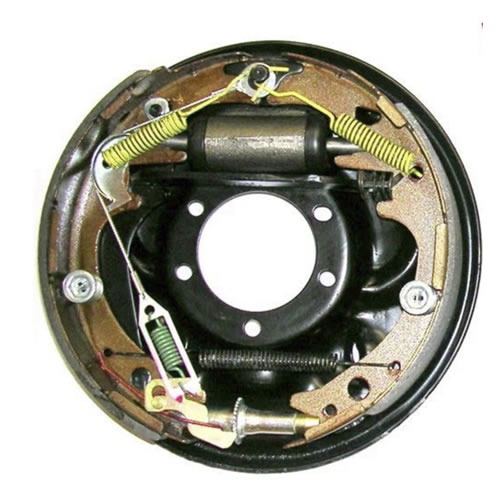
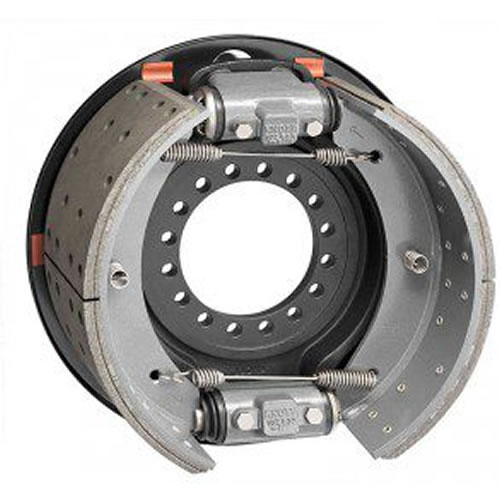
The brake drums rotate together with the wheels, and inside each drum are brake shoes fitted with brake linings. When the pistons press against the drums, they generate braking force from the inside, which slows the wheel’s motion. Friction converts kinetic energy into thermal energy. It’s also important for a drum brake to have adequate ventilation for heat dissipation.

hydraulic drum brakes
how a drum brake's system works

How Does a Drum Brake Work

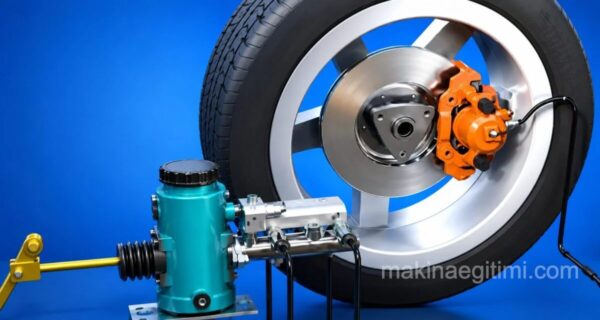
1- When the driver presses the brake pedal, the piston of the master cylinder moves like a medical syringe, driven through the pushrod. The brake fluid in the master cylinder is then compressed, converting mechanical energy into hydraulic energy.

hydraulic drum brake operating system

2- This high-pressure brake fluid is transferred from the master cylinder to the wheel cylinder through the brake lines.

3- When the high-pressure brake fluid enters the wheel cylinder, it moves the cylinder piston, which expands the fixed shoes.

4- Friction then occurs between the brake shoe and the drum lining, converting the vehicle’s kinetic energy into heat energy. The vehicle’s speed then decreases and it stops.

5- When the force is removed from the brake pedal, the return springs pull the brake shoe back inward, and there is no more contact between the friction lining and the drum. The brake is then back in its original position.
how does a drum brake work
how does a hydraulic brake work

An animation showing the structure and operation of a drum brake system in detail. (Above) In this animation you can also see the placement of the parking brake (shown in red).

Self-Energizing Effect


Drum brakes can create a self-energizing effect as the linings drag against the drum.

Parking Brake Integration


Drum brake systems can be easily integrated with a mechanical parking brake mechanism.

Low Cost


Drum brakes are still commonly used on rear axles because their manufacturing cost is lower than disc brakes.

Advantages of the Drum Brake System

The drum brake system has many advantages:

  1. Cost: The drum brake system is cheaper than the disc brake system, making it a less expensive option.
  2. Durability: The drum brake system is more durable than the disc brake system and requires less maintenance.
  3. Simplicity: The drum brake system has a simpler design than the disc brake system and therefore contains fewer parts. This makes it easier to repair in case of a fault.
  4. Reduced air gaps: The drum brake system has less air gap than the disc brake system. This means less energy is needed and it provides a faster response during braking.
  5. Suitability: The drum brake system is a more suitable option than the disc brake system, especially for older-model cars and motorcycles.
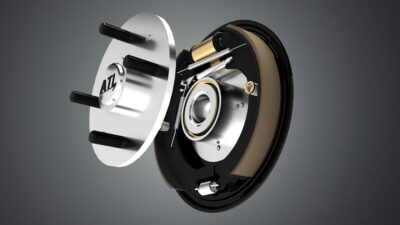
Drum Brake System | Autotechlabs Drum Brake System | Autotechlabs

Another animation showing the structure and operation of the drum brake system in detail. (above) In this video you can also see the internal structure and operation of the hydraulic wheel cylinder.

Disadvantages of the Drum Brake System

The drum brake system has a few disadvantages compared to the disc brake system. The system can be less safe during braking, because the inner surface of the linings can wear down easily during braking, which can make it less safe.

  • It has lower braking force compared to disc brakes.
  • The brakes weaken when applied for a long period.
  • If the brake gets wet, it takes a long time for the water to drain from the drum, so it won’t work properly.

Related Videos

Brake Shoe Animation

Brake Shoe Animation

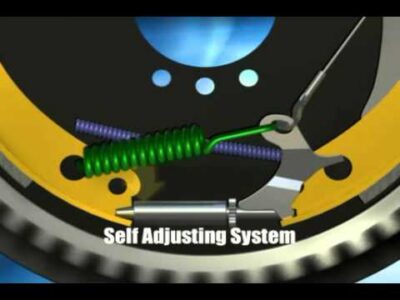
How Drum Brake Work ? It is Very Easy Bro,,
How Drum Brake Work ? It is Very Easy Bro,,

Drum Brakes

Drum Brakes

Related Questions

This system can be manufactured more cheaply than disc brakes, and thanks to its simple structure, maintenance cost is also low. For this reason, it continues to be preferred especially in vehicles and motorcycles where cost is a priority.

The heat generated by friction cannot easily dissipate within the enclosed drum structure and can build up. Insufficient ventilation can cause this heat to accumulate in the linings and drum, which can lead to reduced brake performance.


Related Posts
How Hydraulic Brakes Work How Hydraulic Brakes Work coilover suspension advantages and disadvantages Coilover (Coil Spring Shock Absorber) Advantages and Disadvantages causes that increase fuel consumption, using the wrong engine oil 13 Factors That Increase Fuel Consumption in Vehicles scooter Properties and Advantages of Scooters Is It Harmful to Drive Off Without Warming Up the Engine? Is It Harmful to Drive Off Without Warming Up the Engine? drive system and transaxle in front-wheel-drive vehicles Front-Wheel-Drive Vehicles: Advantages and Disadvantages What is the TCS light? Why does it come on? Why Does the Traction Control System Light (TCS Light) Come On? What Is a Camshaft, How Does It Work What Is a Camshaft? What Does It Do? How Does It Work?
Share. Facebook Twitter WhatsApp Tumblr Email Telegram Copy Link

Leave A Reply Cancel Reply

What Is an Alternator? What Does It Do?
Front-Wheel-Drive Vehicles: Advantages and Disadvantages
  • Contact
  • Terms of Service
  • Privacy & Cookie Policy

Type above and press Enter to search. Press Esc to cancel.