
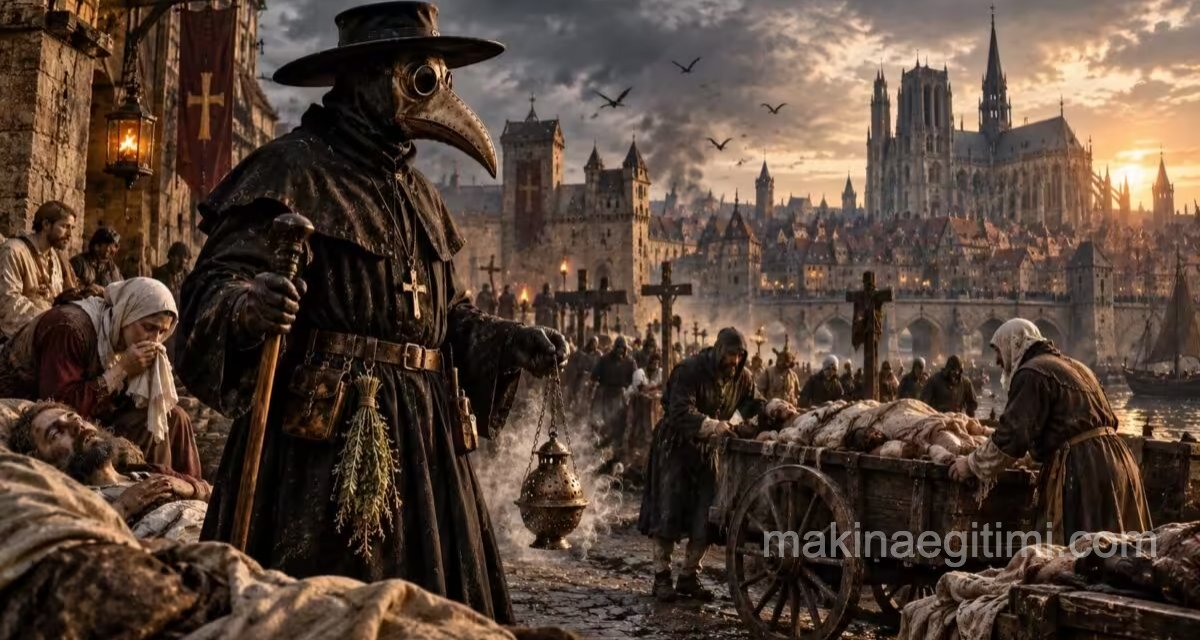
Dear readers, today we shall tell you the story of the most devastating pandemic in human history—one that not only claimed millions of lives but also radically transformed an entire social order. It was such a catastrophe that some historians argue the true end of the Middle Ages came not from any war, but from this invisible enemy.
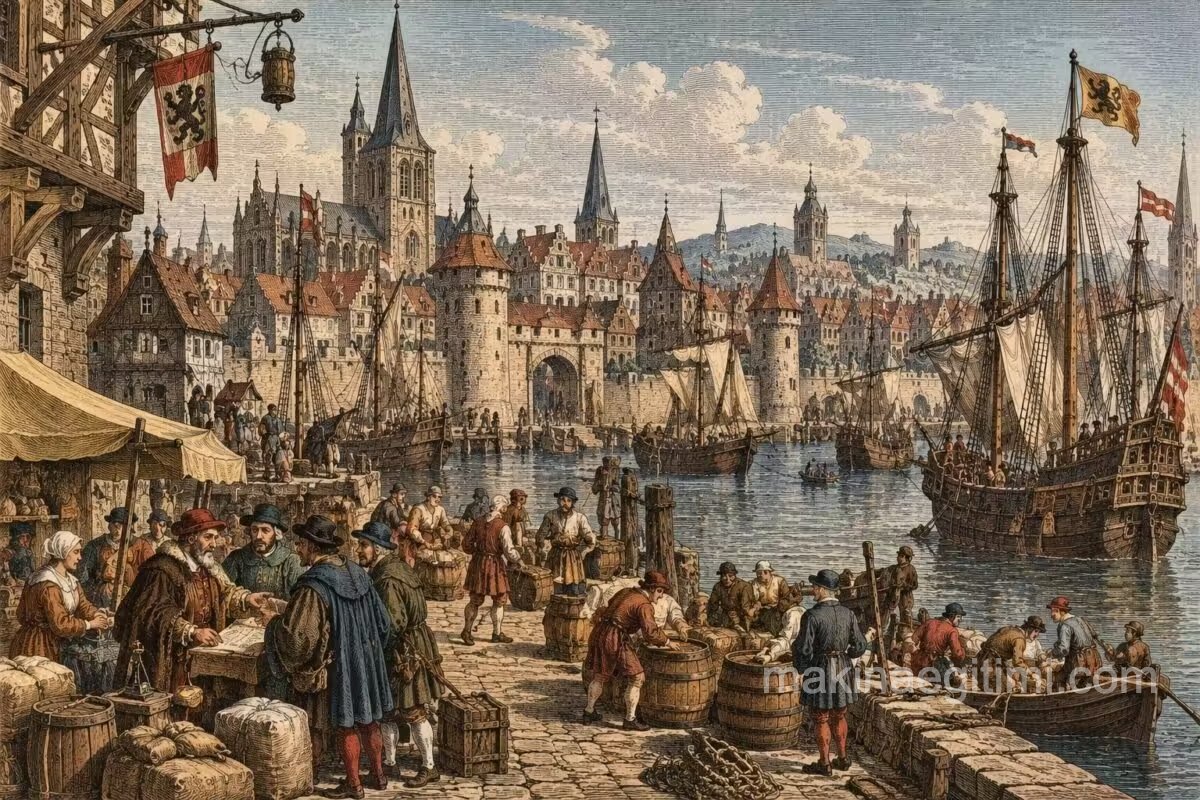
In 1347, several merchant ships setting sail from a port on the Black Sea coast carried not only goods to Europe, but also one of the deadliest pandemics in history.
How Did a Pandemic Reach Europe?
The spread of the Black Death across Europe is, in fact, a striking example of how trade networks can bring both benefits and disasters. The disease likely originated from rodent populations in Central Asia and spread westwards via trade caravans travelling along the Silk Road.
In 1347, the Mongol army besieging the port of Kefe (now Feodosiya in Crimea) hurled the bodies of soldiers who had succumbed to an epidemic during the siege over the city walls using catapults; this is regarded as one of the earliest known examples of biological warfare in history. Italian merchant ships fleeing from Kefe unwittingly carried the disease to Sicily, and from there to the rest of Europe.
The Extent of the Destruction
Over the four years from 1347 to 1351, the Black Death wiped out an estimated thirty to fifty per cent of Europe’s population. In some cities, this figure was much higher; some towns were completely abandoned after losing almost their entire population.
People at the time could not understand the cause of the disease. Some attributed it to the alignment of the planets, some to divine punishment, and others to poisoned wells. This lack of knowledge gave rise to deep fear and a sense of helplessness within society.
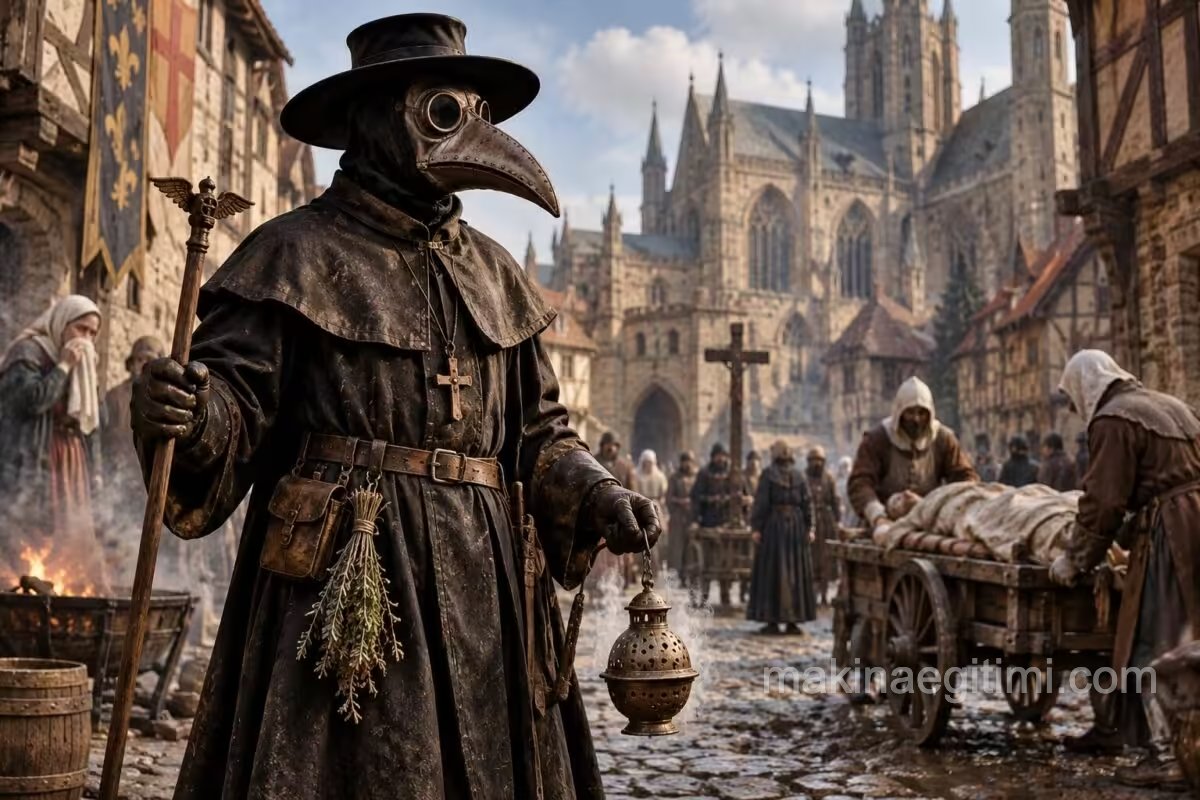
Note regarding the image above: This beak-shaped mask stemmed from the belief of the time known as the ‘miasma theory’; it was believed that disease spread through foul-smelling, poisonous air. Physicians attempted to filter out this ‘bad air’ by filling the tip of the beak with dried flowers and spices. The long beak also served to keep the physician’s face physically at a slight distance from the patient’s body. The rest of the outfit (leather apron, gloves, goggles) was also designed to prevent transmission through contact, but of course it was ineffective against the actual mechanism of transmission via lice and fleas. This costume became widespread not so much during the first plague outbreak in 1347 as during the subsequent waves of the plague in the 17th century.
But what if trade routes hadn’t been so well-developed?
Let’s pause for a moment and reflect. In the 14th century, trade networks between Europe and Asia were far more extensive and rapid than in previous centuries. The ‘Pax Mongolica’ order established by the Mongol Empire (which we referred to in our previous article as the legacy of Genghis Khan) had made the Silk Road much safer and busier.
If these trade networks had not been so well-developed, the disease would most likely have remained confined to Central Asia and would not have reached Europe so quickly or with such devastating effect. Here we encounter an interesting irony of history: the very trade routes that connected the world and brought prosperity also served as the vehicle for one of history’s greatest catastrophes.
The Collapse and Rebirth of Social Order
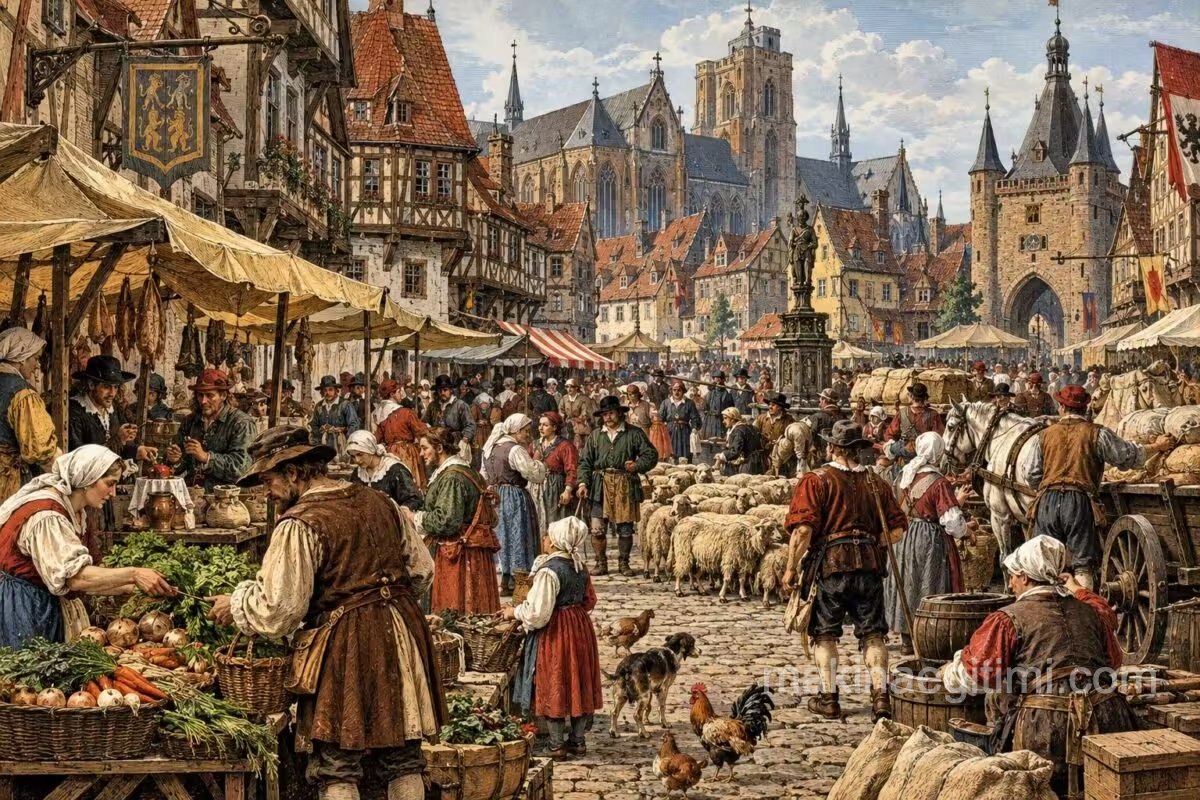
One of the most striking consequences of the Black Death was that it shook the rigid feudal order in Europe. The death of such a large proportion of the population led to a severe labour shortage. The surviving peasants and labourers now realised the value of their own labour and began to demand better wages and greater freedom.
According to some historians, this change was one of the first signs of the dissolution of the feudal system, which had persisted for centuries. Landowners were forced to grant peasants greater rights in order to secure a labour force. In the long term, this process proved to be a significant step on the path leading to the emergence of the Renaissance and modern European society.
A Profound Upheaval in Religion and Society
The pandemic also shook people’s trust in religious authority. The Church had been unable to stop the pandemic, and this led some people to question their commitment to religious institutions. In some regions, the blame for the pandemic was unjustly placed on minority groups, leading to some of the darkest episodes of mass violence in history.
At the same time, the pandemic left a deep mark on the arts. Artistic themes such as the ‘Danse Macabre’ (Dance of Death) became popular during this period, as death was no longer a distant concept but had become part of everyone’s daily life.
The Chain of Cause and Effect: From a Pandemic to the Transformation of an Era
- The secure trade networks established by the Mongol Empire facilitated the rapid spread of the disease.
- The early use of biological warfare tactics during the siege of Kefe accelerated the spread of the epidemic to Europe.
- The pandemic wiped out a large proportion of Europe’s population, leading to a severe labour shortage.
- This shortage increased the bargaining power of peasants and workers.
- Increased bargaining power contributed to the dissolution of the feudal system, which had persisted for centuries.
- The erosion of trust in religious authority paved the way for new ways of thinking within society.
- These social and economic transformations laid the groundwork, in the long term, for the Renaissance and the birth of modern Europe.
A Little-Known Fact
According to some scientists, the devastation wrought by the Black Death on the European population may have inadvertently contributed to the spread of certain genetic resistance traits. For example, some researchers suggest that certain immune genes present in the genetic makeup of those who survived the pandemic became more widespread in subsequent generations, and that this may be linked to certain immune traits found in modern populations. In other words, this catastrophe may even have left its mark on humanity’s biological heritage.
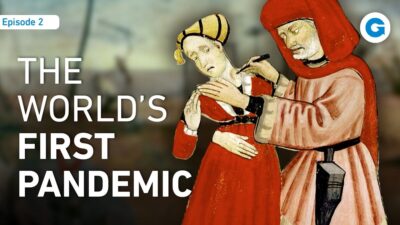
The Black Death: How The Silk Road Infected The World | Full Documentary
The Black Death: How the Plague Transformed Europe Forever | History Documentary

Black Death: The Disease That Wiped Out Half Of Europe | Secrets in the Bones | Absolute History
Frequently Asked Questions
It first appeared in 1347, probably originating in Central Asia, and reached Europe via the trade routes through the port of Kaffa in Crimea.
According to estimates, between 30 and 50 per cent of Europe’s population perished within four years.
The significant decline in population led to a labour shortage, which in turn prompted peasants and workers to demand greater rights and higher wages, thereby contributing to the weakening of the feudal system.
The social and economic upheaval caused by the pandemic contributed to the questioning of the traditional order and paved the way for new ways of thinking; this is regarded as one of the factors that fuelled the development of the Renaissance in the long term.
Related Posts
 Genghis Khan: From an Abandoned Child to History’s Greatest Emperor
  The French Revolution: The Fall of a Kingdom, the Birth of an Age
  The Battle of Waterloo: The Afternoon That Decided Europe’s Fate
  Berlin Streets After World War II. July 1945
  The Boston Tea Party: How a Crate of Tea Gave Birth to a Nation
  The Financial Origins of the French Revolution: How a Kingdom Collapsed Into Bankruptcy
  Napoleon Bonaparte: How a Child of an Island Became the Master of Europe
  The Public Debt Administration: How an Empire Became a Foreigner in Its Own Country