
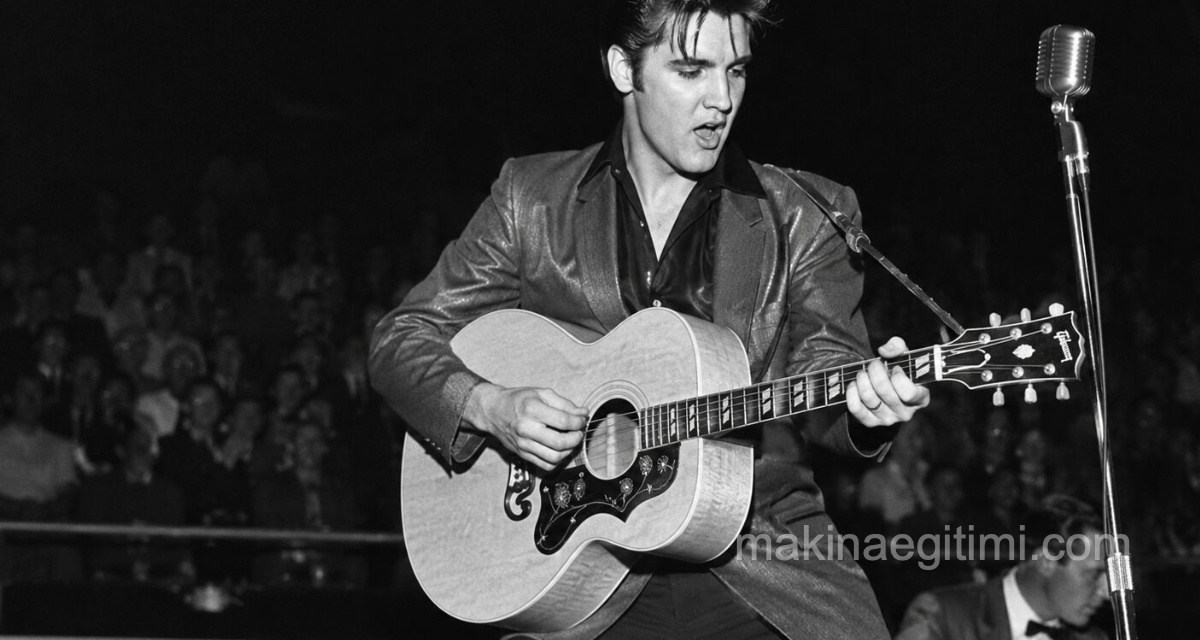
Picture America in the 1950s: World War II has ended, the economy is recovering, the first televisions are appearing in homes, and a group of young people are getting bored with the calm swing music their parents listen to. Right around this time, something happens in a small studio in Memphis: the raw energy of blues, the guitar twang of country, and the fervor of gospel all blend together. What comes out is so different, so energetic, that no one quite knows what to call it. Eventually they find a name: rock ‘n’ roll.

In this article, we’re taking you on a journey: from the studio where this rebellious music was born, to the concert halls filled with youthful exuberance, all the way to the legendary tracks still played on the radio today.
How Was Rock ‘n’ Roll Born? The Story of a Studio
The roots of rock ‘n’ roll actually lie at the intersection of several different musical traditions: the blues and rhythm & blues of African Americans, the country and hillbilly music of the white working class, and the fervent rhythms of gospel from the churches. These three worlds came together in an America where racial segregation still ran deep, creating one of the most significant transformations in music history.
One name sits at the center of this transformation: Sam Phillips. Phillips, who ran a small studio in Memphis, had long been looking for someone who could “carry the sound of Black musicians through a white voice” — a bitter reflection of the racial prejudices of the era. In 1954, a 19-year-old truck driver walked into his studio, and he turned out to be exactly what Phillips was looking for: Elvis Presley. The moment the recording “That’s All Right” was played on the radio, the phones didn’t stop ringing — listeners couldn’t even tell whether it was sung by a white or a Black artist. That very ambiguity was the power of rock ‘n’ roll itself.
The Golden Age: The 1950s and the Youth Revolution

The 1950s were a true explosion for rock ‘n’ roll in America. Once radio DJ Alan Freed gave the genre the name “rock and roll,” it quickly turned into a national phenomenon. Television entering homes, and young people now being able to buy records with their own allowance, multiplied the speed at which this music spread.
A few cities stood out during this era:
- Memphis: Home of Sun Records, the birthplace of rock ‘n’ roll.
- Chicago: The stage for Chess Records and names like Chuck Berry.
- Los Angeles and New Orleans: The center of energetic performances from artists like Little Richard and Fats Domino.
While parents found this music “indecent” and “dangerous,” for young people rock ‘n’ roll was a declaration of freedom. Even Elvis’s hip-swiveling on stage was censored on television at the time, shown only from the waist up — a detail that seems unbelievable when you think about it today!
Legends of the Era: Who Became Famous, and For What?

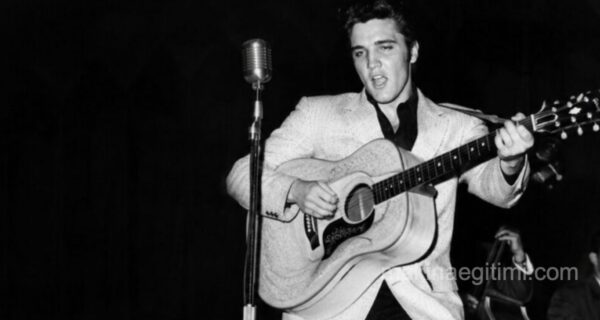
Elvis Presley Nicknamed the “King of Rock ‘n’ Roll,” Presley brought the genre into the mainstream with his stage charisma and unmistakable voice. The journey that began with “That’s All Right” continued with tracks like “Jailhouse Rock” and “Hound Dog.”
Chuck Berry With his guitar solos and energetic stage moves (that famous “duck walk”), he created the visual language of rock ‘n’ roll. “Johnny B. Goode” became such a cultural landmark that it was even included aboard NASA’s Voyager spacecraft.
Little Richard With that wild refrain in “Tutti Frutti,” he injected rock ‘n’ roll with a raw, untamed energy. His flamboyant stage style went on to inspire later generations, from David Bowie to Prince.
Buddy Holly With his glasses and his band The Crickets, he built a short but influential career. His death in a plane crash in 1959 went down in music history as “The Day the Music Died.”
Fats Domino He represented New Orleans’ piano-driven style of rock ‘n’ roll. With “Ain’t That a Shame,” he became one of the first Black rock ‘n’ roll artists to reach a white audience.
A Curious Detail: Where Does the Name “Rock ‘n’ Roll” Come From?
This phrase actually existed long before the music itself — in blues songs, “rocking and rolling” carried a kind of sexual innuendo. Radio DJ Alan Freed began using the term in 1951 for the rhythm & blues songs he played on the radio, aiming both to “clean up” the term and to make this music more acceptable to white teenagers. Over time, the term turned into an independent genre name in its own right.
8 Golden-Age Tracks You Should Listen to Today
The best way to really feel rock ‘n’ roll is to listen to it. Here are eight recommendations to get started, with links you can listen to directly:
- Elvis Presley – That’s All Right (1954)
- Bill Haley & His Comets – (We’re Gonna) Rock Around the Clock (1954)
- Fats Domino – Ain’t That a Shame (1955)
- Little Richard – Tutti Frutti (1955)
Elvis Presley – That's All Right (Official Audio)
![[We're Gonna] Rock Around The Clock](https://www.makinaegitimi.com/wp-content/uploads/2026/08/yt-hzYBEJgKjv0.jpg)
[We're Gonna] Rock Around The Clock

Ain't That A Shame

Little Richard – Tutti Frutti (Official Audio)
Johnny B. Goode
Buddy Holly & The Crickets – That'll be the Day

I Want To Hold Your Hand (Remastered 2009)
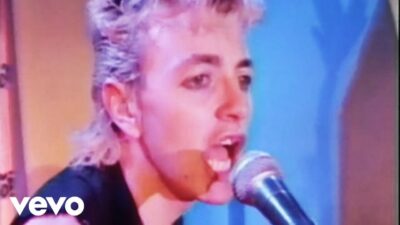
Stray Cats – Rock This Town (Official Music Video)
- Chuck Berry – Johnny B. Goode (1958)
- Buddy Holly & The Crickets – That’ll Be the Day (1957)
- The Beatles – I Want to Hold Your Hand (1963, the start of the British Invasion)
- Stray Cats – Rock This Town (1981, the rockabilly revival)
As you listen to these tracks, pay attention to the fact that especially the first five all came out one after another within just four or five years. This shows just how explosively fast rock ‘n’ roll spread.
The Legacy of Rock ‘n’ Roll: How Did It Reach Us Today?
Even after the golden age of the 1950s ended, rock ‘n’ roll never really quieted down. In the 1960s, the “British Invasion” began with The Beatles and the Rolling Stones.
In the 1970s it evolved into hard rock and punk, in the 1980s rockabilly experienced a revival once more, and today you can still hear that simple but powerful “backbeat” rhythm of rock ‘n’ roll inside pop, country, and even hip-hop productions.
All of this makes rock ‘n’ roll not just the sound of one era, but a revolution that laid the foundational language of modern popular music.
Frequently Asked Questions
Rock ‘n’ roll was born in the early 1950s in Memphis, Tennessee, in the U.S., through the blending of blues, country, and gospel traditions.
The period between 1954 and 1959 is generally considered rock ‘n’ roll’s golden age; this era begins with Elvis Presley’s first recordings at Sun Records.
Elvis Presley, Chuck Berry, Little Richard, Buddy Holly, and Fats Domino are counted among the most important names of rock ‘n’ roll’s golden age.
Elvis Presley’s “That’s All Right” and Chuck Berry’s “Johnny B. Goode” are ideal starting points for rock ‘n’ roll newcomers.
The term derives from a phrase radio DJ Alan Freed used in the early 1950s to describe rhythm & blues songs, and over time it became the name of an independent musical genre.
Related Posts
 Music Terms: Tempo, Harmony, Chord, Syncopation and More
  The Birth and Golden Age of Reggae: From Jamaica to the World
  The Most Famous Film Scores and Their Composers: Themes That Shaped Cinema History
  The Birth and Golden Age of Jazz: From New Orleans to the World
  What Is the Difference Between Classical Guitar and Acoustic Guitar?
  The Life Story of Elvis Presley: The Journey of the King of Rock’n Roll
  The Life Story of Michael Jackson: The Legendary Journey of the King of Pop
  The History of the Guitar: The Journey from Its Origins to the Electric Guitar