
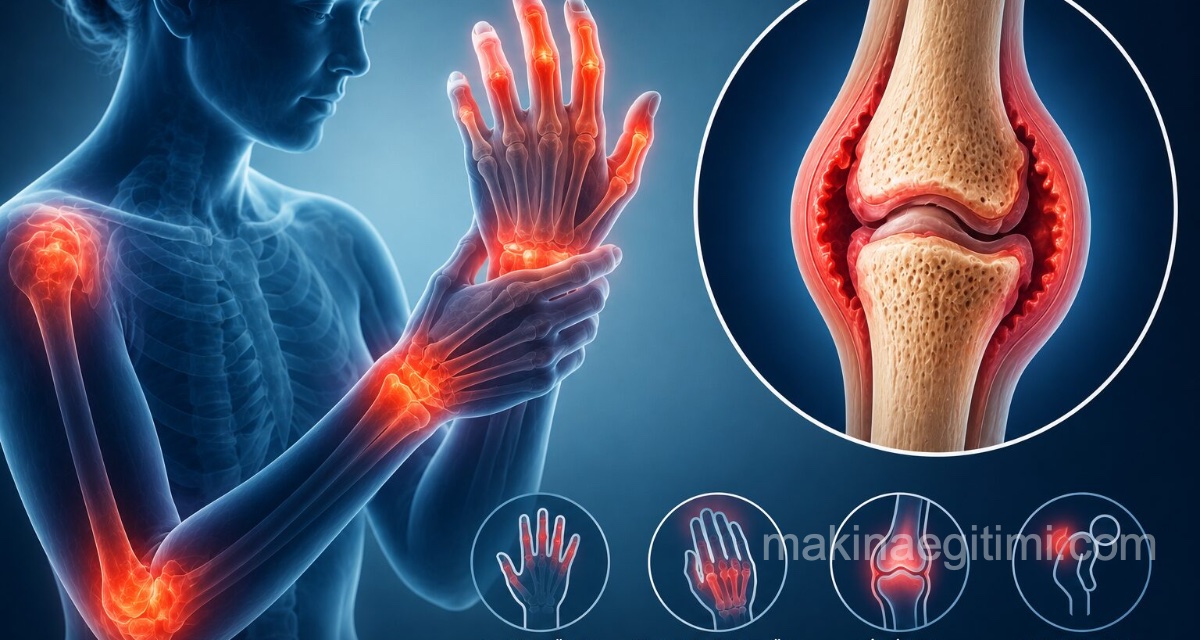
Rheumatoid arthritis is a chronic disease in which the immune system mistakenly attacks its own joint lining. Its most typical sign is joint swelling that appears in both hands at once, along with morning stiffness lasting longer than an hour. Unlike osteoarthritis, it progresses through inflammation rather than wear and tear. With early diagnosis and consistent treatment, joint damage can largely be prevented.
You wake up in the morning and your fingers are too stiff to make a fist. The stiffness doesn’t go away until breakfast is over. Your hands are swollen, warm, and tender — and it’s happening in both hands at once.
This picture is the classic onset of what people commonly call inflammatory rheumatism and what medicine calls rheumatoid arthritis. The word “rheumatism” is used very broadly in everyday speech; but rheumatoid arthritis is not an ordinary joint ache — it is a serious disease in which the immune system attacks the body itself.
The good news is this: advances in treatment over the last twenty years have fundamentally changed the course of this disease. Most patients who are diagnosed early and receive consistent treatment can go on with their lives without developing joint damage.

What is rheumatoid arthritis?
The inside of our joints is lined with a thin layer called the synovium (joint lining). This lining produces the fluid that lubricates the joint and is normally only a few cells thick.
In rheumatoid arthritis, the immune system makes a mistake: instead of targeting invading germs, it mistakes its own joint lining for a foreign threat and attacks it. As a result, the joint lining thickens, becomes inflamed, swells, and over time begins to erode the cartilage and bone beneath it.
Diseases of this kind are called autoimmune diseases — meaning “immunity against oneself.”
How is it different from osteoarthritis?
This distinction matters a great deal, because the treatments are completely different:
| Rheumatoid arthritis | Osteoarthritis | |
|---|---|---|
| Cause | Inflammation driven by the immune system | Cartilage wearing down over the years |
| Pattern | Symmetrical — both hands, both knees at once | Usually one-sided or asymmetrical |
| Morning stiffness | Longer than 1 hour | Less than 30 minutes |
| Pain pattern | Worsens with rest, eases with movement | Worsens with movement, eases with rest |
| Age | Any age, most often 30–50 | Usually older age |
| General symptoms | May include fatigue, mild fever, weight loss | Usually none |
Not just a disease of the joints
Rheumatoid arthritis is a disease that can spread throughout the body. Besides the joints, it can affect the eyes (dryness), cause inflammation of the lung lining, produce firm lumps under the skin, and affect the cardiovascular system. For this reason, treatment is not just about relieving pain.
What causes rheumatoid arthritis?
The exact cause is unknown. The current understanding is that in a person with a genetic predisposition, an environmental trigger sets off the disease.
Risk factors:
1. Smoking. The environmental factor with the strongest consensus behind it. It raises the risk of the disease developing, worsens its course, and reduces the response to treatment. In rheumatoid arthritis, quitting smoking is a direct part of the treatment itself.
2. Sex. Noticeably more common in women than in men.
3. Age. It can appear at any age, but most often begins between 30 and 50. The form seen in children is called “juvenile idiopathic arthritis.”
4. Family history. Risk increases if there is rheumatic disease in the family.
5. Gum disease. A link with chronic gum inflammation is a subject of ongoing interest.
6. Excess weight. It both raises the risk and makes the response to treatment harder.
7. Infections. Certain viruses and bacteria are thought to be able to trigger the disease in predisposed people.
The most common misconception: “I worked in the cold, so I got rheumatism.” Cold weather or dampness does not cause rheumatoid arthritis. However, patients often report that symptoms of an existing disease worsen with changes in weather. Causing a disease and worsening its symptoms are two different things.
What are the symptoms of rheumatoid arthritis?
In the joints:
- Morning stiffness — the most distinguishing symptom. It lasts longer than an hour and eases with movement.
- Swelling, warmth, and tenderness in the joints
- Symmetrical involvement — if the right hand swells, the left hand swells too
- Most often affects the knuckles and middle joints of the fingers, and the wrists. The joints closest to the fingertips are usually spared — an important clue that distinguishes it from osteoarthritis.
- Toes, ankles, knees, elbows, shoulders, and the neck may also be affected
- Reduced grip strength — trouble opening a jar or turning a tap
General symptoms (the part most people don’t expect):
- Noticeable fatigue and tiredness — one of the symptoms patients complain about most
- Mild fever
- Loss of appetite and weight loss
- A general feeling of being unwell
In advanced stages:
- Deformities of the fingers
- Firm, painless lumps under the skin (rheumatoid nodules)
- Dry eyes and dry mouth

Is rheumatoid arthritis contagious?
No. Rheumatoid arthritis is not a contagious disease. It is not caused by a germ; it arises from a malfunction of the person’s own immune system. It cannot be passed to anyone through contact, living in the same house, sharing a glass, or kissing.
The reason it sometimes appears in more than one person in the same family is not transmission, but inherited predisposition and shared environmental factors (for example, smoking at home).
Nor is it a disease that is “passed on” hereditarily in a fixed way — a parent having it does not mean a child will necessarily develop it; it only raises the risk somewhat.
How is rheumatoid arthritis diagnosed? Which specialist should you see?
The department you should apply to: Rheumatology. If you can’t reach one, Internal Medicine or Physical Medicine and Rehabilitation can refer you onward.
Why does it matter not to delay? In rheumatoid arthritis, joint damage can progress rapidly within the first two years. Treatment started during this window largely prevents permanent damage. Waiting and hoping “it will pass on its own” means losing time that can never be recovered.
What happens during the exam? The physician assesses each joint individually for swelling and tenderness, asks about the duration of your morning stiffness, and measures your grip strength.
What tests might be requested?
- Blood tests: tests that show the level of inflammation (ESR, CRP), as well as antibodies called rheumatoid factor and anti-CCP.
- X-ray: shows narrowing of the joint space and bone erosion.
- Ultrasound and MRI: can detect early-stage inflammation not yet visible on X-ray.
An important point: A single blood test is not enough to diagnose rheumatoid arthritis. Rheumatoid factor can also be elevated in healthy people; conversely, it is negative in some rheumatoid arthritis patients. Diagnosis is made by evaluating symptoms, examination findings, and test results together.
How is rheumatoid arthritis treated?
There is currently no treatment that eliminates the disease entirely. However, with modern treatment, reaching what is called remission — a state in which the disease quiets down and symptoms nearly disappear — is possible for many patients.
The goals of treatment:
- Suppress the inflammation
- Reduce pain
- Prevent joint damage (the most critical goal)
- Keep daily life sustainable
1. Medication
At the center of rheumatoid arthritis treatment are drug classes that change the course of the disease. These are not painkillers; they aim to suppress the immune system’s faulty attack and thereby prevent joint damage. Biologic drugs developed in recent years have become an important option for patients who don’t respond to standard treatment.
This article does not give drug names or doses. Which medication is right for you is a decision for your rheumatologist, who knows the activity of your disease and your other health conditions.
But there are three critical points worth emphasizing:
- Medications should not be stopped just because you feel well. Feeling well is precisely because of the medication. Stopping on your own can lead to a flare-up and the loss of joint tissue that had been protected.
- Their effects don’t show up immediately. Some of these drugs take weeks to months to work. Patience is required.
- Because they suppress the immune system, watch out for infections. Report fever, cough, or urinary symptoms to your doctor. Ask your doctor about your vaccinations.
2. Physical therapy and exercise
Indispensable alongside medication. The goal is to preserve joint mobility and strengthen the muscles surrounding the joint.
- Range-of-motion exercises — especially for the hands and fingers
- Muscle strengthening — to protect the muscles that support the joint
- Low-impact aerobic activity — swimming, water exercise, cycling, brisk walking
- Balance and posture work
⚠️ Behave differently during flare-ups. If a joint is hot, red, and very swollen, avoid strenuous exercise; only gentle range-of-motion exercises are appropriate during this period. During calm periods, regular exercise is essential. Get your program from your physiotherapist.

3. Heat and cold application
- Cold: soothing when a joint is hot, red, and swollen (flare-up period).
- Heat: helpful for morning stiffness and muscle tension. A warm shower is the most practical way to loosen morning stiffness.
Don’t exceed 15–20 minutes, and don’t apply directly to the skin.
4. Joint protection techniques and assistive tools
The techniques occupational therapists teach make a noticeable difference in daily life: thick-handled kitchen utensils, jar openers, long-handled shoehorns, door handle adapters. Learning to shift load from small joints to large joints is also a joint protection technique — for example, carrying a bag with your arm instead of your fingers.
5. Surgery
Considered when advanced joint damage and deformity have developed: procedures such as removal of the joint lining, tendon repair, or knee/hip replacement. Thanks to modern drug treatments, the need for surgery has decreased significantly compared to the past.
⚠️ See a doctor without delay for these symptoms
- Fever, chills, and sudden, severe swelling in a single joint — could be a joint infection, requires urgent evaluation
- Shortness of breath, a persistent dry cough — should be evaluated for lung involvement
- Chest pain — rheumatoid arthritis increases cardiovascular risk
- Sudden eye pain, redness, or vision changes
- Neck pain along with weakness in the hands/arms or unsteadiness while walking — important for involvement of the neck vertebrae
- Fever while on immunosuppressive treatment — may be a sign of infection, do not delay
What should you pay attention to during treatment?
Take your medications regularly and don’t stop them on your own. This point matters as much as all the others combined.
Don’t skip your check-ups and blood tests. Some of the medications used require regular monitoring of liver and blood values.
Quit smoking. In rheumatoid arthritis, smoking directly reduces the effectiveness of treatment.
Be careful about infections. Pay attention to hand hygiene, avoid close contact with sick people, and plan your vaccinations in consultation with your doctor.
Keep your weight in check. Excess weight both burdens the joints and reduces the response to treatment.
Balance rest and movement. Fatigue is a real part of this disease; don’t blame yourself for it. But staying completely inactive also leads to muscle loss and joint stiffness.
Keep track of your flare-ups. Writing down when symptoms increase and what seems to trigger them gives your doctor valuable information.
Don’t neglect your mental health. Living with chronic pain and fatigue is hard. Depression and anxiety are common in this disease and can be treated. If you’re struggling, talk to your doctor about it.
A note on thermal spas: Thermal spa and hot water treatments are not recommended while the disease is active or flaring up.During calm periods, you can consider them in consultation with your doctor.
Diet, herbs, and lifestyle: what can help as a supportive measure?
Let’s start with a clear framework: No diet treats rheumatoid arthritis. Claims circulating online like “I cured my rheumatism with this diet” cause serious harm when they lead people to stop their medication. The suggestions below are added alongside treatment, not in place of it.
Foods that may be beneficial
In general, a Mediterranean-style diet is the approach most emphasized for rheumatoid arthritis.
- Oily fish (salmon, mackerel, anchovy, sardine) — the omega-3 they contain is reported to have a positive effect on joint tenderness and morning stiffness. Two servings a week is a good target.
- Olive oil — the foundation of the Mediterranean diet.
- Dark leafy green vegetables (spinach, broccoli, arugula, cabbage)
- Colorful fruits and vegetables — for a variety of antioxidants.
- Turmeric and ginger — regular use in cooking is recommended.
- Walnuts, almonds, flaxseed — plant-based omega-3 sources.
- Calcium and vitamin D sources — bone loss risk is higher in this disease; long-term corticosteroid treatment raises that risk further still. Make sure to have your vitamin D level checked.
- Whole grains and legumes
Things worth limiting
Highly processed foods, sugary drinks, fried foods, processed meat products, and excess salt. Keep in mind that alcohol, combined with some of the medications used, can add extra strain on the liver — be sure to ask your doctor about this.
An honest note about herbal supplements
Rheumatism is one of the areas where the herbal-product market is most active. Products like stinging nettle, turmeric capsules, fish oil, boswellia, and cat’s claw are frequently recommended. Be especially careful here:
- None of them stop the disease from progressing. Only appropriate drug treatment prevents joint damage.
- Some of these products are sold with claims that they stimulate the immune system — but the goal of treatment in rheumatoid arthritis is to suppress the immune system’s excess activity. So some supplements could, in theory, work against you.
- The risk of interaction through the liver is high. Most rheumatoid arthritis medications are processed in the liver; herbal products can interfere with that process.
- So: tell your rheumatologist about every supplement you’re considering taking, without exception.
What helps most in the long run
A smoke-free life and regular, moderate movement. These two lifestyle factors do the most to change both the response to treatment and long-term outcomes in rheumatoid arthritis. Water-based exercises are especially suitable because they don’t load the joints.
Frequently asked questions about rheumatoid arthritis
There is currently no treatment that eliminates the disease entirely. However, with consistent treatment, many patients can reach what is called “remission,” a state in which symptoms nearly disappear. Even then, medications should not be stopped without a doctor’s decision.
Rheumatoid arthritis is an inflammatory disease caused by the immune system attacking the joint lining; it is usually symmetrical and morning stiffness lasts longer than an hour. Osteoarthritis, on the other hand, is cartilage wearing down over the years; pain increases with movement and morning stiffness is short.
No. Cold weather or dampness does not cause rheumatoid arthritis; the disease originates in the immune system. However, patients with an existing condition often report that symptoms worsen with changes in weather.
You should apply to Rheumatology. If you can’t reach one, Internal Medicine or Physical Medicine and Rehabilitation can refer you onward. Since joint damage can progress rapidly in the first two years, don’t delay seeking care.
During calm periods, exercise is a necessary part of treatment; it preserves joint mobility and strengthens the muscles. However, if a joint is hot, red, and very swollen (a flare-up), strenuous exercise should be avoided, and only gentle range-of-motion work should be done.
Videos you can watch on this topic

Romatoid Artrit (Eklem Romatizması) Nedir? Belirtileri ve Tedavi Yöntemleri Nelerdir?

Romatoid artrit (iltihaplı romatizma) nedir? – Doç. Dr. Sait Burak Erer (Romatoloji Uz.)

İLTİHAPLI ROMATİZMA (ROMATOİD ARTRİT) Belirtileri ve Tedavisi

İltihaplı romatizma için öneriler ve tedavi yöntemleri
Medical disclaimer: This article is for general informational purposes only and is not a substitute for examination, diagnosis, or treatment. Please consult a physician about your symptoms. Do not stop or change your medications without consulting your doctor.
Related Posts
 What Is Sinusitis? Symptoms, Causes, and Treatment
 What Is Type 2 Diabetes? Symptoms and Treatment
 What Is a Herniated Cervical Disc? Symptoms, Causes and Treatment
 What Is Sciatica? Symptoms, Causes and Treatment Options
 What Is Reflux? Symptoms, Causes, and Treatment Methods
 What Is Myopia? Symptoms, Causes and Treatment Options
 Femur Fracture: Symptoms, Treatment, and Recovery Process
 Cataract: Symptoms, Causes and Surgery