

Migraine isn’t just a headache; it’s a neurological disease that stems from a difference in how the brain processes pain. A typical attack is one-sided and throbbing, accompanied by sensitivity to light and sound and nausea, and it worsens with movement. Treatment has two sides: stopping the pain during an attack, and preventive treatment that makes attacks less frequent.
When your headache starts, light hurts your eyes, sounds become unbearable, and your stomach turns. You want to retreat to a dark room and lie still. The pain gets worse with movement. This isn’t an ordinary headache — it’s likely to be a migraine.
Migraine is a very common disease in Turkey and around the world, and one of the leading causes of lost workforce productivity. Despite this, it is often dismissed with phrases like “everyone gets headaches,” “just rest a bit and it’ll pass,” or “it’s probably stress.”
In fact, migraine is a neurological disease rooted in a structural and functional feature of the brain and it is treatable. In this article, we explain in plain language how migraine is recognized, what triggers it, what to do during an attack, and the treatment options.
What is migraine?
Migraine is a neurological disease associated with nerve cells and blood vessels in the brain being more sensitive to stimuli than normal. The brain of a person with migraine responds differently than other people’s to stimuli such as light, sound, smell, changes in sleep, or hunger.
For this reason, migraine:
- Is not a state of “over-sensitivity” or a “psychological” condition
- Is not caused by stress alone
- Is not an ordinary headache that should simply be brushed off with a painkiller
The difference between migraine and tension-type headache
This distinction matters because it directly changes treatment:
| Migraine | Tension-type headache | |
|---|---|---|
| Location of pain | Usually one-sided | Both sides, band-like |
| Character | Throbbing, pulsating | Pressure, tightening sensation |
| Severity | Moderate–severe | Mild–moderate |
| With movement | Worsens | Unchanged or decreases |
| Accompanying symptoms | Nausea, sensitivity to light and sound | Usually none |
| Daily life | Stops | Can continue |
| Duration | 4–72 hours | 30 minutes – several days |
The four phases of an attack
Not everyone experiences all of them, but it helps to know them:
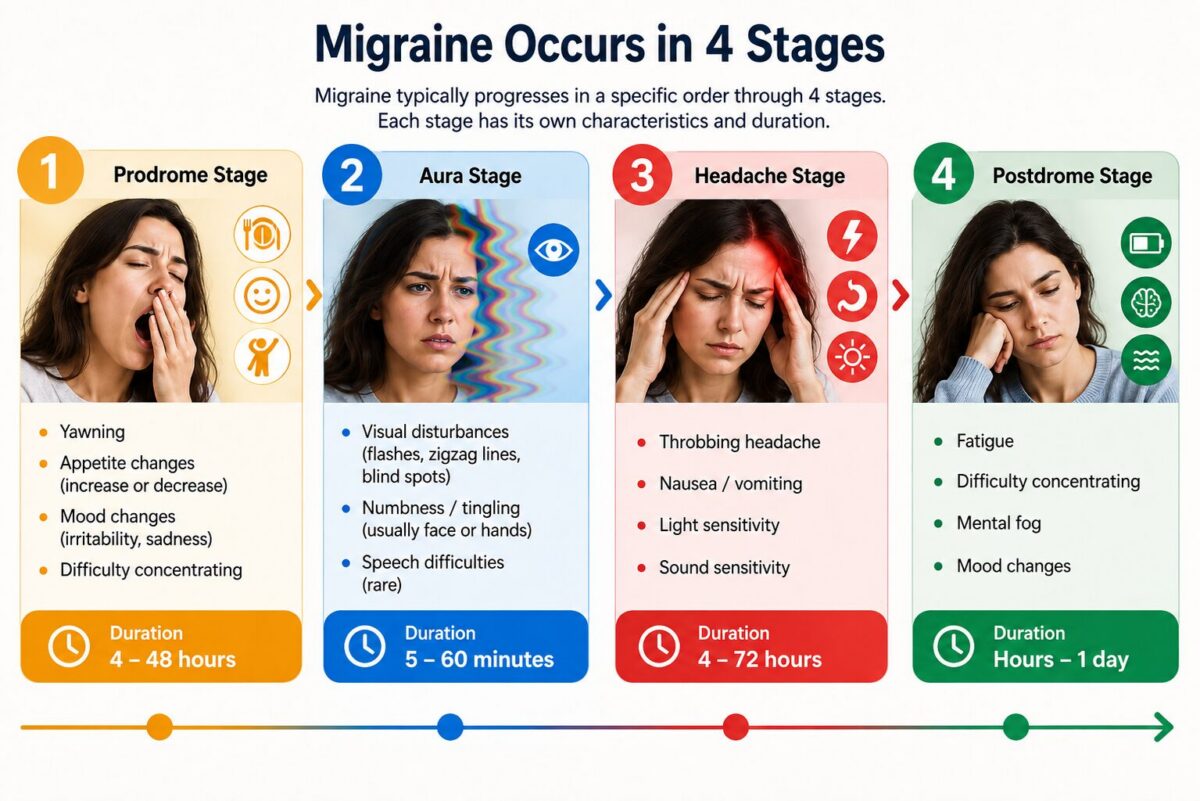
1. Prodrome (hours to days before the attack): Frequent yawning, mood changes, cravings for certain foods, neck stiffness, frequent urination, difficulty concentrating. Recognizing this phase lets you take precautions before the attack — a very valuable skill.
2. Aura (in about a third of attacks): Usually lasts 5–60 minutes. Visual symptoms are the most common: bright zigzag lines, flickering lights, blind spots in the visual field. It can sometimes also appear as numbness in the hand or face, or difficulty speaking.
3. Pain phase: Lasts 4–72 hours. Throbbing pain, nausea, vomiting, sensitivity to light, sound and smell.
4. Postdrome (recovery) phase: Fatigue, mental fog (“migraine hangover”), and weakness lasting 1–2 days after the pain subsides.
What causes migraine?
Heredity is the strongest factor. A large proportion of people with migraine also have a family history of migraine.
Hormonal effects. Migraine is markedly more common in women than in men, and the main reason for this is hormonal fluctuations. In many women, attacks are linked to the menstrual cycle. Attacks generally decrease during pregnancy, while their course can change during menopause.
Triggers
A trigger is not the cause of migraine — it’s what sets off an already-primed system. Everyone’s triggers are different:
Lifestyle
- Irregular sleep — both too little and too much sleep. Attacks triggered by sleeping in late on weekends are very typical.
- Skipping meals and hunger
- Inadequate water intake
- Stress — and the end of stress. Attacks that start on the weekend after an intense week are common.
- Excessive fatigue
Environmental
- Bright or flickering light, prolonged screen time
- Loud noise
- Strong smells (perfume, cleaning products, cigarette smoke, etc.)
- Weather changes — pressure changes, warm humid winds
- Hot and stuffy environments
Diet (not a trigger for everyone)
- Excessive or abruptly stopped caffeine
- Alcohol, especially red wine
- Aged cheeses
- Processed meat products
- Chocolate (note: chocolate cravings may actually be a prodrome symptom before the attack — meaning it may be a result, not a cause)
- Sweeteners and food additives
Other
- Menstrual period
- Certain medications
- Overuse of painkillers (explained in detail below)
What are the symptoms of migraine?
Characteristics of the pain:
- One-sided (sometimes switches sides or can be on both sides)
- Throbbing, pulsating
- Moderate or severe
- Worsens with physical activity — climbing stairs, bending over, coughing
- Lasts 4–72 hours
Accompanying symptoms:
- Nausea and vomiting
- Sensitivity to light (photophobia) — seeking out a dark room
- Sensitivity to sound (phonophobia)
- Sensitivity to smell
- Dizziness
- Neck pain and stiffness — very common, and patients may mistake it for a “herniated neck disc”
- Nasal congestion and watery eyes — because of these symptoms, migraine is often confused with sinusitis
- Paleness, feeling cold
- Difficulty concentrating
Chronic migraine
When headaches occur on 15 or more days a month and at least 8 of them have migraine features, this is called chronic migraine. This picture requires a different treatment approach and definitely calls for a neurology evaluation.

How is migraine diagnosed? Which department should I go to?
The department you should visit: Neurology.
How is it diagnosed? The diagnosis of migraine is made based on what the patient describes. There is no specific blood test or imaging method that shows migraine. The physician evaluates based on the location, character, duration and frequency of the pain, accompanying symptoms, and triggers.
Is an MRI or CT scan needed? Usually not, if the picture is a typical migraine and the neurological exam is normal. Imaging is requested in the “red flag” situations listed below.
Keep a headache diary
This is the most valuable and least-used tool in migraine management. Note down:
- The day and time the pain started
- Duration and severity (on a scale of 1–10)
- Accompanying symptoms
- What you ate that day, how many hours you slept
- Whether you were on your period
- The medication you took and its effect
A few months of records will both reveal your triggers and help your physician build the right treatment plan.
How is migraine treated?
Treatment has two legs, and the two are not alternatives to each other.
1. Acute (attack) treatment (stopping the pain)
The goal is to stop the pain quickly once an attack begins.
The most critical rule: act early. Migraine medications are far more effective when taken at the first sign of pain. The “let me wait a bit, maybe it’ll pass” approach lets the attack take hold and makes the medication harder to work.
The physician may prescribe different drug classes depending on the severity of the attack. If nausea is pronounced, oral medication absorption will be impaired, so different forms may be preferred.
This article does not give drug names or doses. The appropriate treatment should be decided by your neurologist, who knows your attack frequency and other health conditions.
⚠️ Medication-overuse headache — essential to know
This is the most common trap migraine patients fall into, and it must be understood:
Using painkillers too frequently creates a new type of headache. In people who use painkillers more than about 10 days a month, the brain becomes even more sensitive to pain, and headaches become both more frequent and less responsive to painkillers.
The result is a vicious cycle: more pain → more medication → more pain.
Getting out of this situation is possible, but it must be done under a physician’s guidance. If you’re using painkillers more than 10 days a month, be sure to tell your doctor.
2. Preventive treatment (reducing the frequency of attacks)
These are treatments taken regularly even on days without pain. The goal is not to prevent attacks entirely, but to reduce their frequency and severity.
When does it come into play?
- If you have 4 or more attacks a month
- If attacks are very severe and stop daily life
- If acute treatment isn’t sufficient
- If there is a risk of painkiller overuse
Things to know:
- The effect isn’t immediate; it usually takes several weeks to months. That’s why stopping too early is the most common mistake.
- The measure of success is not that the pain disappears entirely, but that the number of attacks decreases significantly.
- Some of the treatments used are also medications used for other conditions; this doesn’t mean “the wrong medication was given.”
There are also botulinum toxin injections used for chronic migraine, and newer treatment classes developed in recent years that directly target the migraine mechanism. Your neurologist will decide whether these options are suitable for you.
3. Non-drug approaches
- Regular sleep and meal times
- Regular aerobic exercise
- Relaxation techniques, breathing exercises
- Biofeedback and cognitive behavioral therapy
- Physical therapy targeting the neck and shoulder muscles (if neck stiffness is present)
What should you do during an attack?
- Take your medication early
- Retreat to a dark, quiet, cool room
- Apply a cold compress to your forehead or the back of your neck
- Stay away from screens
- If possible, sleep — sleep is one of the most effective natural ways to end a migraine attack
- If there’s no nausea, drink water
- Move away from environments with strong smells
- Relax your neck and shoulders
Don’t: Wait for the pain to pass and delay medication, load up on caffeine, or let the attack settle in by telling yourself “I’ll deal with it once work is done.”
⚠️ EMERGENCY: Go to the hospital immediately with these symptoms
The following may be a sign of something serious, different from migraine:
- “The worst headache of my life” — pain that peaks within seconds
- Headache accompanied by fever and neck stiffness
- Confusion, speech difficulty, seizure
- Weakness in an arm or leg, facial drooping
- Sudden and permanent vision loss
- Headache starting after a head injury
- Headache starting for the first time after age 50
- A new type of headache that noticeably worsens with coughing or straining
- A marked change in the character of the headache — a feeling of “different from usual”
- A new-onset headache in someone with a history of cancer or an immune system disease
- Aura lasting longer than 60 minutes or always occurring on the same side
What should you pay attention to during treatment?
Maintain your sleep schedule — including on weekends. In migraine, regularity matters more than duration itself. Sleeping 6 hours on weekdays and 11 hours on weekends is an open invitation for an attack.
Don’t skip meals. Especially breakfast.
Keep your caffeine habit steady. Both increasing caffeine and abruptly stopping it can trigger an attack. If you want to cut back, do it gradually.
Don’t neglect your water intake.
Track your painkiller use. If it exceeds 10 days a month, tell your doctor.
Take screen breaks. Prolonged screen time causes both eye strain and neck tension.
Exercise regularly — but not during an attack, only during pain-free periods.
If you’re a woman, also record your menstrual cycle in your diary. Menstrual-related migraine may require a different treatment strategy.
If you’re planning a pregnancy, tell your doctor. Some migraine medications cannot be used during pregnancy.
Inform the people around you. Explaining that migraine is a disease, and that it doesn’t just go away “with a little rest,” makes a big difference at work and at home.
Diet, herbal supplements and lifestyle: what can help?
Foods that may be helpful
- Magnesium-rich foods — almonds, pumpkin seeds, spinach, dried legumes, avocado. Magnesium is known to be the mineral most studied in relation to migraine; supplementation should be used on a doctor’s advice.
- Vitamin B2 (riboflavin) sources — eggs, dairy products, almonds, mushrooms
- Omega-3 sources — salmon, mackerel, anchovy, walnuts, flaxseed
- Ginger — may help soothe nausea
- Regular and adequate water intake
- Complex carbohydrates — keep blood sugar stable, reducing hunger-related attacks
Things best avoided
The foods you identify as triggers in your own diary. There is no universal “migraine forbidden-foods list” that applies to everyone — you need to build your own list.
⚠️ Important warning: Don’t cut out many foods at once just because you’re hunting for a trigger. This both disrupts your diet and makes it harder to find the culprit. Test suspect foods one at a time by removing and reintroducing them.
An honest note about herbal supplements
- There are some herbs that are frequently recommended for migraine, but quality and dose standardization are a serious problem; two products with the same name can have very different contents.
- Herbal products can be especially risky during pregnancy — some may trigger uterine contractions.
- Herbal products can interact with blood thinners and blood pressure medications.
- Tell your doctor about any supplement you want to use.
Peppermint oil and lavender oil applied to the temples can be soothing for some people; however, strong scents can have the opposite effect and trigger an attack in some migraine patients. Observe your own reaction.
What works best in the long run
Routine. Migraine is one of the diseases most affected by irregularity. Sleeping at the same time, eating at the same time, moving regularly and drinking water — habits that sound ordinary are more effective for migraine than most supplements.
Videos you can watch on this topic
Migraine Explained Clearly (Including Treatment)

Are Your Migraines a Warning Sign? Migraine Aura, Triggers, and Treatments Explained
Migraine Headache (Overview) | Pathophysiology, Triggers, Phases, Symptoms, Diagnosis, Treatment

More than a headache: Migraine types, symptoms and treatments
Migraines: Causes, Triggers, and Solutions
Migraine | Signs, symptoms and management
Mayo Clinic Explains Migraine

What Is a Migraine? Causes, Symptoms & When to See a Doctor | Healthify
Frequently asked questions about migraine
Migraine is usually one-sided and throbbing, worsens with movement, and is accompanied by nausea and sensitivity to light and sound; it keeps a person from going about daily life. Tension-type headache, on the other hand, is felt on both sides, like a tightening band, doesn’t worsen with movement, and accompanying symptoms are usually absent.
Migraine is a chronic disease, and there is currently no treatment that eliminates it entirely. However, with the right treatment and lifestyle routine, the frequency and severity of attacks can be significantly reduced. In some people, attacks become less frequent on their own with age.
Aura consists of temporary neurological symptoms that appear before the pain begins and usually last 5–60 minutes. It is most often visual: bright zigzag lines, flickering lights, blind spots in the visual field. It occurs in about a third of attacks.
Yes, when overused. Using painkillers more than about 10 days a month can lead to a new condition called “medication-overuse headache”; headaches become more frequent and stop responding to medication. Getting out of this situation should be done under a doctor’s guidance.
You should visit the Neurology department. The diagnosis is based on the characteristics of the pain and a physical exam; imaging is usually not needed in typical cases. However, if the character of the headache has suddenly changed or red-flag symptoms are present, don’t delay seeking care.
Medical disclaimer: This article is for general informational purposes only and is not a substitute for medical examination, diagnosis, or treatment. Please consult a physician for your concerns. Do not stop or change any medications without consulting your doctor.
Related Posts
 What Is Arteriosclerosis? Symptoms, Causes, and Treatment
  What Is Reflux? Symptoms, Causes, and Treatment Methods
  What Is Sinusitis? Symptoms, Causes, and Treatment
  Rheumatoid Arthritis: What Is It? Symptoms and Treatment
  What Is Myopia? Symptoms, Causes and Treatment Options
  What Is a Herniated Cervical Disc? Symptoms, Causes and Treatment
  What Is a Herniated Lumbar Disc? Symptoms, Causes and Treatment
  Femur Fracture: Symptoms, Treatment, and Recovery Process