
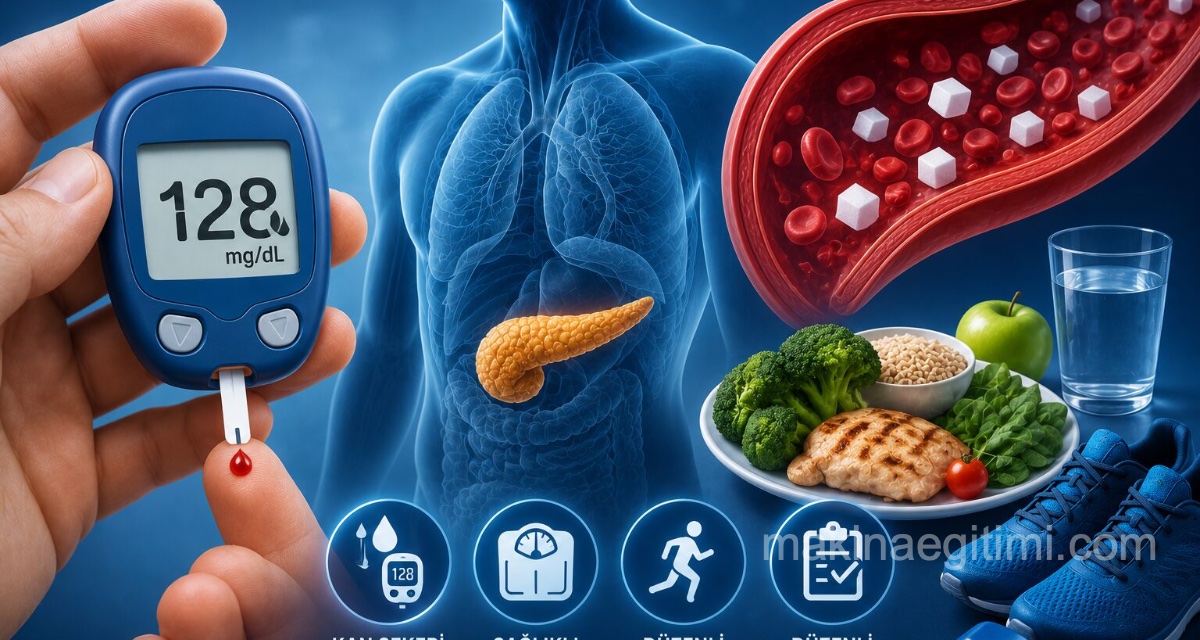
Type 2 diabetes is a chronic disease in which blood sugar stays persistently high because the body cannot use the insulin it produces effectively and, in time, cannot produce enough of it. It can progress for years without symptoms. A fasting blood glucose of 126 mg/dL or above on two separate measurements establishes the diagnosis. The basis of treatment is a proper diet, regular activity and the medication your doctor plans.
A significant proportion of adults have type 2 diabetes. About half of them do not know they have it.
The reason is simple: diabetes can progress for years without causing any complaint. While blood sugar rises quietly, blood vessels and nerves go on being damaged in the background. Many people receive the diagnosis when a problem appears in their eyes, or when a wound on their foot will not heal.
The good news is this: type 2 diabetes is a disease that can be prevented, and whose complications can largely be avoided when it is well managed. Indeed, when it is caught early, it may be possible to reach a period in which blood sugar stays normal for a long time (remission).
In this article we explain, in plain language, how the disease develops, which symptoms serve as warnings, the diagnostic values, and what you need to change in daily life.

What is type 2 diabetes?
After the food we eat is digested, it enters the blood as glucose (blood sugar). Glucose is the fuel of every cell in the body — and the brain uses almost nothing else.
However, glucose needs a “key” in order to pass from the blood into the cell. That key is the hormone insulin, secreted by the pancreas.
In type 2 diabetes two problems occur together:
- Insulin resistance: The cells become less sensitive to insulin. The key is there, but the door opens only with difficulty.
- Insulin deficiency: The pancreas produces extra insulin for years to overcome this resistance, and eventually it tires and production falls.
The result: glucose cannot enter the cell and builds up in the blood. The cells are left without fuel while blood sugar rises.
How does it differ from type 1 diabetes?
| Type 1 diabetes | Type 2 diabetes | |
|---|---|---|
| Cause | The immune system destroys the insulin-producing cells | Insulin resistance + falling production over time |
| Onset | Usually childhood/adolescence, sudden | Usually adulthood, slow and insidious |
| Insulin | Required for life | Usually not required at first |
| Relation to weight | The person may be slim | Excess weight often accompanies it |
| Preventable? | No | Largely yes |
Prediabetes: an opportunity not to be missed
When blood sugar is above normal but not yet at the diabetes threshold, this is called prediabetes. This period has a particular importance:
Prediabetes is the last stop at which type 2 diabetes can be reversed. Weight loss and regular activity at this stage can largely prevent the progression to diabetes. Unfortunately this period is usually symptomless and is only noticed through a routine blood test.
What causes type 2 diabetes?
The disease emerges from the combination of genetic predisposition and lifestyle.
Factors you cannot change:
- Family history — the risk rises noticeably if a first-degree relative has diabetes
- Age — the risk rises after 40 (although in recent years it is also seen at much younger ages)
- A history of gestational diabetes — the risk is high in women who have had raised blood sugar during pregnancy
- Polycystic ovary syndrome (PCOS)
Factors you can change:
- Excess weight — abdominal fat in particular. Waist circumference is an even more important indicator than body mass index
- A sedentary life
- A diet dominated by processed food and sugary drinks
- High blood pressure
- High cholesterol and triglycerides
- Smoking
- Irregular sleep and sleep apnoea
- Chronic stress
A common misconception: “I got diabetes because I ate too much sugar.” Sugar consumption on its own is not the direct cause of diabetes. However, sugary drinks and processed foods lead to weight gain and so raise the risk indirectly but powerfully. In other words the connection is real, but the mechanism is different.
What are the symptoms of type 2 diabetes?
The most important thing to know: in the early period there are usually no symptoms at all. That is why people with risk factors need to have their blood sugar checked without waiting for symptoms.
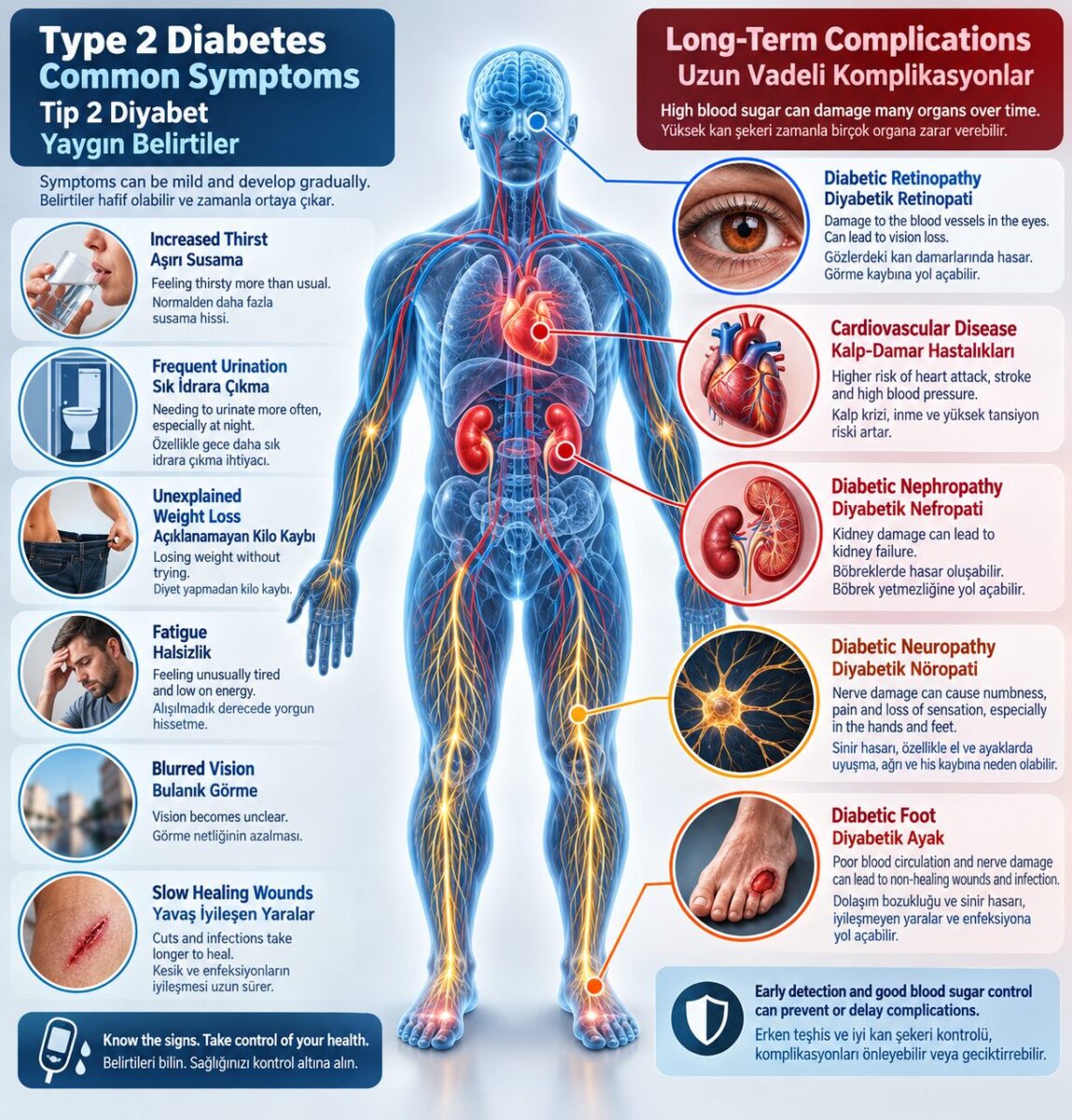
Classic symptoms (when blood sugar has risen markedly):
- Drinking a lot of water and a constantly dry mouth
- Frequent urination — getting up at night in particular
- Constant hunger and an inability to tolerate being hungry
- Weakness and fatigue
- Unintended weight loss — losing weight despite eating well
Other symptoms:
- Blurred vision
- Numbness, tingling or burning in the hands and feet — a sign of nerve involvement
- Wounds healing slowly
- Frequently recurring infections — urinary tract infections, fungal infections, gum inflammation
- Dry, itchy skin
- Darkened, velvety skin on the neck, armpits and groin (a skin sign of insulin resistance)
- Sexual dysfunction
How is type 2 diabetes diagnosed? Which department should you go to?
The department to apply to: Endocrinology and Metabolic Diseases. Internal Medicine or your family doctor are also suitable for the first assessment and for follow-up.
Diagnostic values
| Test | Normal | Prediabetes | Diabetes |
|---|---|---|---|
| Fasting blood glucose | 70–99 mg/dL | 100–125 mg/dL | 126 mg/dL and above |
| HbA1c | below 5.7% | 5.7–6.4% | 6.5% and above |
| Oral glucose tolerance test (2nd hour) | below 140 mg/dL | 140–199 mg/dL | 200 mg/dL and above |
A high value on two separate measurements is generally required for diagnosis.
What is HbA1c? It is a test showing your average blood sugar over the last 2–3 months. While fasting glucose shows the situation at that moment, HbA1c reflects your long-term control. That is why it is the most important value in follow-up — it cannot be altered by “being careful the day before the test”.
Who should be tested?
Without waiting for symptoms, if any of the following applies:
- Being over 40
- Excess weight, a large waist circumference in particular
- A family history of diabetes
- High blood pressure or high cholesterol
- A history of gestational diabetes
- A sedentary life
- Polycystic ovary syndrome
Screening required after diagnosis
What someone diagnosed with diabetes needs to have checked regularly:
- Eye examination — at least once a year, with assessment of the retina
- Kidney function tests and urinary protein
- Foot examination
- Cholesterol and blood pressure monitoring
- Dental check-ups
How is type 2 diabetes treated?
The aim of treatment is not only to lower blood sugar; it is to prevent damage to the blood vessels, nerves, eyes, kidneys and heart.
Diet and activity — the basis of treatment
In type 2 diabetes these two headings are not an alternative that replaces medication; they are the first step of treatment. In the early period they may be enough on their own for some patients.
- Weight loss: In someone carrying excess weight, the effect of the weight lost on blood sugar is very marked. You do not have to lose all of it; even a measured and lasting reduction makes a difference.
- Regular activity: The target is at least 150 minutes of moderate activity a week (roughly a 30-minute brisk walk a day). Exercise directly increases insulin sensitivity.
- Eating plan: This should be personal to you. Getting support from a dietitian is far more effective than the general lists found on the internet.
Medication
When lifestyle changes are not enough, the doctor plans medication. The medicines used work through different mechanisms: reducing insulin resistance, increasing insulin release, causing sugar to be excreted in the urine, or regulating appetite. Where necessary, insulin treatment also comes onto the agenda.
We do not give drug names or doses in this article. Your doctor decides which treatment suits you, after assessing your blood sugar level, kidney function, weight, heart health and other conditions.
Points that need emphasising:
- Medicines are not stopped on your own decision. Values having improved shows that the medicine is working — not that it is no longer needed.
- Starting insulin does not mean “the disease has progressed too far”. In type 2 diabetes, insulin is a normal treatment option that becomes necessary at a certain stage of the disease. Many people mistake it for an “end point”, fear it unnecessarily and delay treatment.
- Low blood sugar (hypoglycaemia) can be a side effect of some medicines; its symptoms and what to do about it should always be learned from your doctor.
Monitoring blood sugar
Measure as often as your doctor specifies and write the results down. Seeing the number alone is not enough; the really valuable information is seeing how it changes after which meal and after which activity.
⚠️ URGENT: seek help immediately with these symptoms
Symptoms of low blood sugar (hypoglycaemia):
- Sudden sweating, trembling, palpitations
- An extreme feeling of hunger
- Blurred vision, dizziness
- Mental confusion, slurred speech, irritability
- Loss of consciousness
What should you do? If the person is conscious and able to swallow, give a fast source of sugar (sugar, fruit juice). If they are unconscious, give nothing by mouth — there is a risk of choking — and call the emergency services at once (112 in Türkiye).
When blood sugar goes very high (requires urgent assessment):
- Confusion, excessive drowsiness
- Deep and rapid breathing
- A smell of acetone on the breath
- Severe nausea, vomiting, abdominal pain
- Marked weakness together with extreme thirst and urination
Foot-related emergencies:
- A newly formed wound on the foot
- Redness, swelling, increased warmth, discharge, bad smell
- The foot darkening or turning purple
Foot wounds in diabetes can progress rapidly; the “let’s wait a few days and see” approach does not apply here.
Eye-related emergencies:
- Sudden loss or blurring of vision
- Floaters, a shadow or a curtain across the field of vision
What should you pay attention to during treatment?
Do not skip your check-ups. HbA1c monitoring and annual eye, kidney and foot checks are as important as the disease itself.
Make foot care a daily routine. This is the subject most often skipped in diabetes, and the one that makes the most difference:
- Check your feet every day — including between the toes, the sole and the heel. If you cannot see them, use a mirror or ask someone close to you for help.
- Wash your feet with lukewarm water. Check the temperature of the water with your hand or elbow, not with your foot — if there is nerve involvement you may not feel the heat.
- Do not soak them for a long time; it dries the skin.
- After washing, always dry thoroughly between the toes.
- If your skin is dry, apply a thin layer of moisturiser, but not between the toes.
- Cut your nails straight across; do not round the corners.
- Do not cut calluses or warts yourself, and do not use corn plasters.
- Do not walk barefoot — not even indoors.
- Feel inside your shoes with your hand before putting them on.
- Wear new shoes for only a short time on the first day.
- Choose seamless, non-constricting, light-coloured socks (a light colour lets you notice any bleeding).
- Do not put your feet near a stove, a radiator or a hot water bottle.
Stop smoking. When the vascular damage of diabetes combines with the effect of smoking, the risk multiplies.
Do not neglect your dental health. Diabetes increases the risk of gum disease, and gum inflammation in turn makes blood sugar control harder. It is a two-way relationship.
Be careful on days when you are ill. Blood sugar can rise unexpectedly during febrile illnesses. Increase the frequency of measurement during such periods and consult your doctor.
Ask your doctor about vaccinations. Some infections can run a more severe course in people with diabetes.
Take your mental health seriously. Managing a chronic illness is tiring. A sense of burnout and depression are common in diabetes and can be treated; if you are struggling, share it with your doctor.
Diet and lifestyle: what can help?
First a clear warning: this section is general information, not a personal diet plan. In diabetes the eating plan varies with the medicines you take, the course of your blood sugar, your weight and the state of your kidneys. Getting a personal plan from a dietitian is far more effective.
General principles
- The plate method: Filling half the plate with non-starchy vegetables, a quarter with protein and a quarter with wholegrain carbohydrate is a practical and effective approach.
- The quality of the carbohydrate matters as much as the quantity. Wholegrains, bulgur and pulses instead of white flour and sugar.
- Increase your fibre intake. Fibre slows the passage of sugar into the blood.
- Do not skip meals. Skipping meals can cause low blood sugar, particularly in people taking medication.
- The order of eating makes a difference. Eating vegetables and protein first and carbohydrate afterwards is reported to soften the rise in sugar after a meal.
- Give up sugary drinks completely. Fruit juice included. Liquid sugar passes into the blood very quickly.
Foods that may be helpful
- Non-starchy vegetables — broccoli, spinach, courgette, peppers, cucumber, cauliflower
- Pulses — chickpeas, lentils, beans
- Wholegrains — oats, bulgur, whole wheat, brown rice
- Oily fish — 2 portions a week
- Unprocessed nuts — unsalted, in measured amounts
- Olive oil
- Yoghurt and kefir
- Cinnamon and turmeric — used in cooking
- Fruit — whole, with the skin, in measured portions (not as juice)
What should be limited
Sugary drinks, white flour products, desserts, fried food, processed meat products, excessive salt and alcohol.
An honest and important note about herbal supplements
This is one of the most critical warnings in the article:
- No plant replaces insulin or diabetes medication. The approach of “my sugar got better with this remedy, so I stopped my medicine” carries a risk to life and leads to preventable complications every year.
- Plants such as cinnamon, fenugreek, nettle, mulberry leaf and bay leaf are often recommended among the public. Some of them may have a mild effect on blood sugar — but that is exactly why they are dangerous. Adding these products while taking medication can make blood sugar fall unpredictably.
- It has been reported for years that some “herbal” mixtures claimed to lower blood sugar have had unlicensed pharmaceutical ingredients mixed into them.
- The rule is therefore clear: tell your doctor about every supplement you want to take, without exception.
What helps most in the long run
Regular activity. No single habit in diabetes brings benefits as wide-ranging as regular walking: it increases insulin sensitivity, controls weight, lowers blood pressure, improves cholesterol and has a positive effect on mood. Even short walks of 10–15 minutes after a meal are reported to soften the rise in blood sugar that follows it.
Frequently asked questions about type 2 diabetes
Diabetes is a chronic disease and cannot be said to have “gone”. However, in some patients caught in the early period, marked weight loss and lifestyle changes can lead to a period in which blood sugar stays normal without medication (remission). Even then regular follow-up is needed, because the disease can return.
Prediabetes is the period in which blood sugar is above normal but not yet at the diabetes threshold (fasting glucose 100–125 mg/dL). Weight loss and regular activity at this stage can largely prevent the progression to type 2 diabetes. Prediabetes is the most valuable opportunity for intervention.
HbA1c is a test showing average blood sugar over the last 2–3 months. While fasting glucose reflects the situation at that moment, HbA1c shows your long-term control. It therefore cannot be corrected by being careful for a few days before the test, and it is the most reliable value in follow-up.
You should apply to the Endocrinology and Metabolic Diseases department. Internal Medicine or your family doctor are also suitable for the first assessment and routine follow-up. An annual eye examination and regular foot checks should also not be neglected.
Yes. Fruit can have a place in the diet as a source of fibre and vitamins; but portion control matters, and fruit should be eaten whole. Fruit juice, having been separated from its fibre, raises blood sugar rapidly and is not recommended. Ask your dietitian about the right portion size.
Medical disclaimer: This article is for general information only; it does not replace examination, diagnosis or treatment. Always consult a doctor about your symptoms. Do not stop or change your medication without consulting your doctor.
Related Posts
 Rheumatoid Arthritis: What Is It? Symptoms and Treatment
 What Is Reflux? Symptoms, Causes, and Treatment Methods
 What Is Arteriosclerosis? Symptoms, Causes, and Treatment
 What Is a Herniated Lumbar Disc? Symptoms, Causes and Treatment
 What Is Myopia? Symptoms, Causes and Treatment Options
 What Is Sinusitis? Symptoms, Causes, and Treatment
 High Blood Pressure (Hypertension): Causes, Symptoms and Treatment
 What Is a Herniated Cervical Disc? Symptoms, Causes and Treatment