

Article contents:
Shock absorbers can wear out quickly, especially due to poor road conditions. However, as this wear progresses, the driver may not notice it right away. A driver who doesn’t notice the wear keeps driving the car in whatever condition the worn shock absorber is in. Even so, it’s possible to tell whether the shock absorbers are worn from certain symptoms.
If the front of your car dips forward more than usual when you brake suddenly, and it’s affected by crosswinds, that means your shock absorbers are worn. Besides these, there are other ways to tell whether the shock absorbers are faulty. Here are the problems related to shock absorbers and their solutions:

If the Suspension Is Too Stiff
A shock absorber that has lost its properties, or a wrongly chosen shock absorber or coil spring, can cause this problem. To avoid this problem, always have the shock absorbers fitted by someone who knows what they’re doing. Have the shock absorbers and coil springs checked and renewed if necessary. Drive a few kilometers with the new shock absorbers so the vehicle’s suspension system can settle into place.
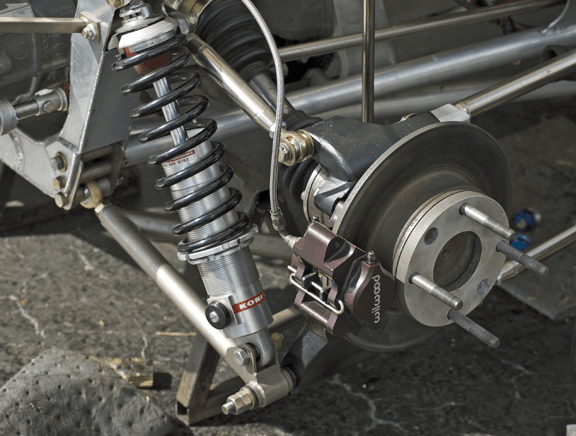
The symptoms of shock absorber failure are a set of issues that even drivers without professional training can notice.
If the Suspension Is Too Soft
A faulty or wrongly chosen shock absorber can cause this problem. Shock absorber failure can be caused by worn internal parts or a weakened coil spring. The coil spring may also have been chosen incorrectly during a suspension replacement. If you think the suspension is excessively soft, the shock absorbers or springs may need to be checked and renewed if there’s a problem.

If the Vehicle’s Road Handling Is Poor
If the vehicle’s road handling is poor, this may point to a shock absorber failure. This problem can occur if the wheel alignment isn’t done after the shock absorber is replaced. Or, shock absorbers that aren’t compatible with your vehicle may have been used. This can cause instability.
To avoid this problem, shock absorbers should always be replaced in pairs. Ideally, all four should be replaced at once. Also, wheel alignment must always be performed after replacing the front shock absorbers.

If the Vehicle Is Sagging
If the vehicle is sagging downward, this can be caused by broken or fatigued coil springs. Wrongly chosen shock absorbers can also cause this problem. The shock absorber may have seized. If the problem is with the springs, the springs are replaced. If the shock absorber has seized, it must be replaced entirely.

If the Tires Are Wearing Unevenly
If the vehicle’s tires are wearing unevenly, the causes may be as follows:
Tire pressure may be incorrect. The vehicle’s wheel alignment may have been done incorrectly. The brakes may not be working evenly, or may be working asymmetrically.
Overly soft suspension or worn shock absorbers can also cause this.
An aggressive and overly sporty driving style can also be the cause of this problem.
What can be done if the tires are wearing unevenly?
First, check the tire pressure. Have the front wheel alignment done, and to prevent this issue, have the shock absorbers checked every 20,000 kilometers.
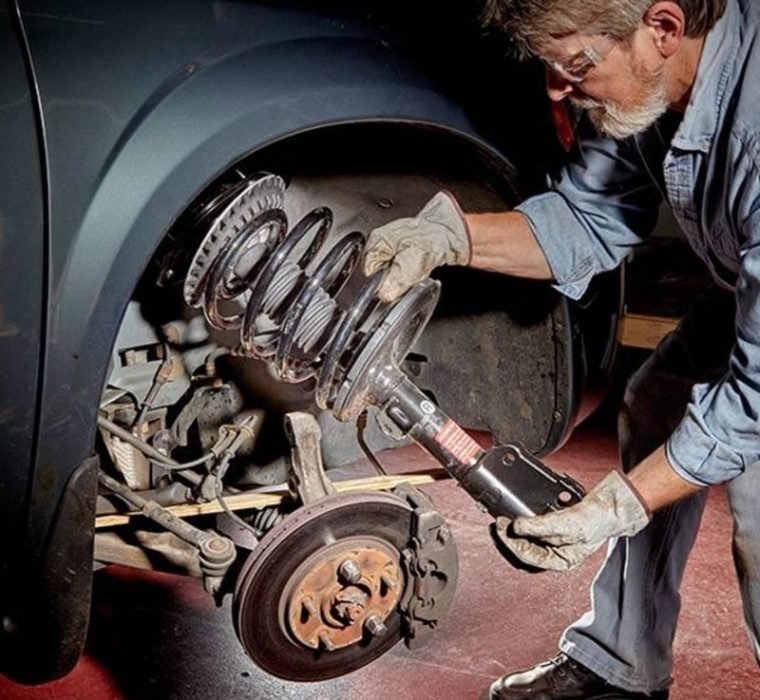
Diagnosing and fixing shock absorber faults can sometimes be done without even going to a mechanic or service center.
Steering Wheel Vibration
This problem can be caused by poor wheel balance and incorrect wheel alignment. Unevenly worn brakes or brake discs can also cause the steering wheel to vibrate.
A shock absorber fault can also cause this problem. You can suspect a worn steering damper or a poorly mounted shock absorber.
Solution to steering wheel vibration: Replace worn parts (brakes or brake discs, etc.)
and check whether the shock absorber is mounted correctly.

Some events can give us clues when it comes to diagnosing shock absorber failure.
If There’s an Oil Leak
Shock absorber faults can cause an oil leak. A shock absorber shaft damaged during installation, or a damaged dust boot, can cause this problem. The shock absorbers may also have been installed without a dust boot.
Using the vehicle in a very dusty environment, and seals damaged due to wear or a rusty piston rod, can also cause an oil leak.
Sometimes the shock absorber’s weld may have been done poorly, which should also be checked.
The shock absorber tube may have been damaged. Check it.

If There’s a Gas Leak in the Shock Absorber
Damaged seals are the first thing to suspect. Low gas pressure resulting from an oil leak in a gas shock absorber is also possible. Or, gas may not have been put in at all during manufacturing. In this case, the shock absorber must be replaced.

Bounce Test
A simple bounce test, done by pushing down on the corner of the vehicle and releasing it, can give an initial idea of the shock absorber’s condition.
Replacement Interval
Depending on usage conditions, shock absorbers are generally recommended to be replaced within the 80,000–100,000 km range.
Pair Replacement Rule
Shock absorbers are generally replaced in pairs on the same axle (front or rear) for balanced driving performance.
Related Questions
This indicates that the shock absorbers can no longer sufficiently control the vehicle’s weight transfer. Healthy shock absorbers limit this forward dip, while worn ones lose that control.
New shock absorbers and coil springs need some time and movement to settle fully into place within the suspension system. This short break-in period allows the system to reach its expected performance.
Related Posts
 What Is an Intake Manifold? Its Job, and Diagnosing a Fault
  Blue Smoke from the Exhaust and Its Causes
  Information About Vehicle AC Maintenance
  Let’s Get to Know the Fluids Used in Vehicles
  How Is Spark Plug Cleaning Done. Ways to Clean Spark Plugs
  How to Jump-Start a Battery, Illustrated
  How Is Engine Oil and Oil Filter Change Done?
  Why Does an Engine Misfire? Engine Misfire Problem