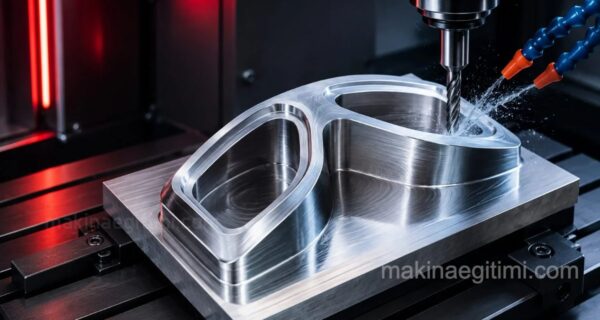
CAM (Computer Aided Manufacturing) means computer-aided manufacturing. In a broader sense, it refers to the use of computers in inventory control, project management, material requirements planning, data collection, testing, and quality control — all activities in a manufacturing environment.

The integration of CAD and CAM systems is referred to as Computer Integrated Manufacturing. The computer’s role in manufacturing can be grouped into two main categories: monitoring and control of the manufacturing process by computer, and manufacturing support applications that mainly deal with preparation for the manufacturing act and post-manufacturing processes. Computers are used to control machine tools and other material-handling equipment.
Advantages of Using CAM
- Efficiency: CAM can machine parts faster and more accurately, reducing production time and increasing efficiency. Given that the entire production activity is organized entirely via computer, it becomes possible to increase the facility’s efficiency. Lead times in manufacturing will be greatly reduced.
- Precision: CAM can control the measurements and tolerances of workpieces more accurately and precisely.
- Cost savings: CAM reduces the production costs of workpieces and reduces the cost of errors.
Since most components of a CAM system will include integrated diagnostics and monitoring capabilities, it will require less maintenance compared to traditional manufacturing methods. - Learning and analytics: CAM can be used to improve and optimize production processes by collecting analytical data on manufacturing operations.
- Flexibility: CAM can be used in the production of a wide range of workpieces and can be programmed for a variety of manufacturing operations. CAM increases flexibility in production methods and in changing product lines. In an integrated CAM environment, any change needed in the design can be incorporated at any design stage without any concern about delay.
Since all information and control functions are handled with the help of a computer, better management control over the production activity is possible. All of the advantages above, when properly translated, mean lower total cost and thus higher final profit. For this reason, any production activity in a manufacturing unit (job-shop production or mass-scale production) can benefit from Computer Aided Manufacturing.
Toolpath Automation
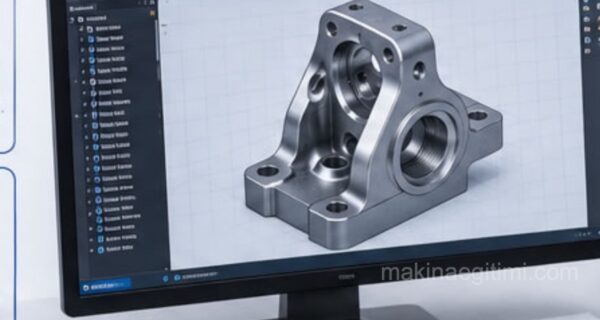
CAM software automatically generates G-code toolpaths from the CAD model, greatly reducing manual programming time.
Simulation and Collision Checking
CAM software can catch collision and error risks in advance through virtual simulation before actual machining.
Material Savings
Thanks to optimized toolpaths, using CAM can reduce both machining time and material waste.
Related Questions
Since operations are programmed in advance and transferred to the computer, the small errors that can occur in an operator’s manual work are eliminated. The machine repeats the same program with identical precision every time.
The data of a part designed in CAD can be transferred directly to CAM, so the machine can automatically calculate how to machine that design. This reduces the need for manual reprogramming in the transition from design to production.
Related Posts