
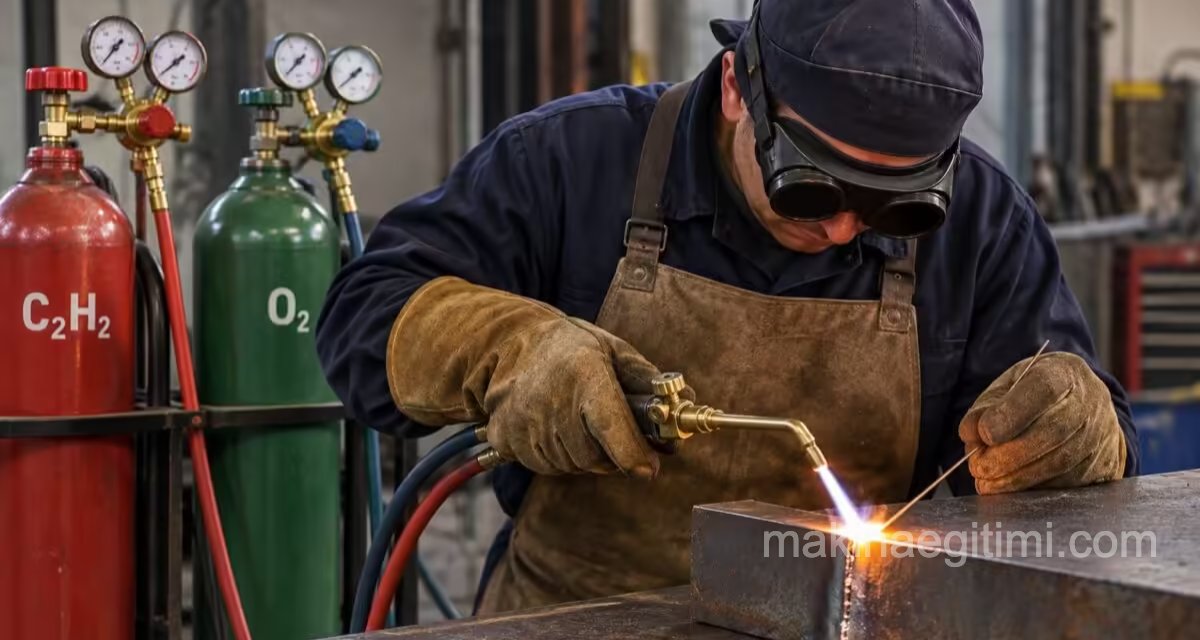
One of the methods used to join metal parts is oxy-fuel gas welding. It is also referred to by terms such as oxy-acetylene welding or oxygen welding. The basis of this method is the high heat released when a fuel gas reacts with oxygen. This heat brings the joint faces of the parts to be welded up to melting temperature, and the metals fuse together as a result.
The Gases Used in Oxy-Fuel Gas Welding
Two kinds of gas are needed in an oxy-fuel welding system: a fuel gas and an oxidising gas.
The most common choice of fuel gas is acetylene (C2H2). Alongside it, gases such as hydrogen (H2), butane (C4H10) and methane (CH4) can also be used for this purpose. The role of the oxidising gas is always taken by oxygen.
Acetylene is colourless and has a sharp smell resembling rotten garlic. It is obtained from calcium carbide (CaC2) as a raw material. The production process is simple: when carbide is brought into contact with water, acetylene gas is released. The carbide itself is produced by reacting coke and limestone in electric arc furnaces. During storage, acetylene can be held in steel cylinders at pressures of up to 15 atmospheres.
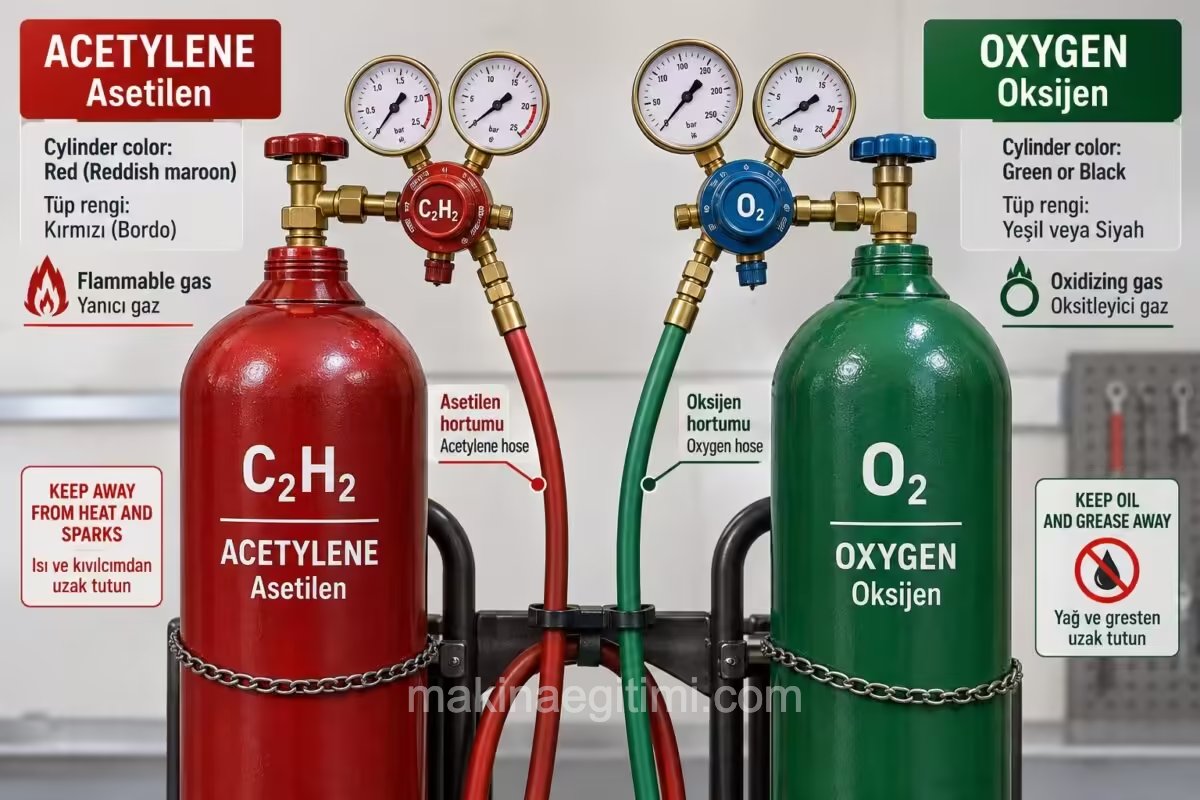
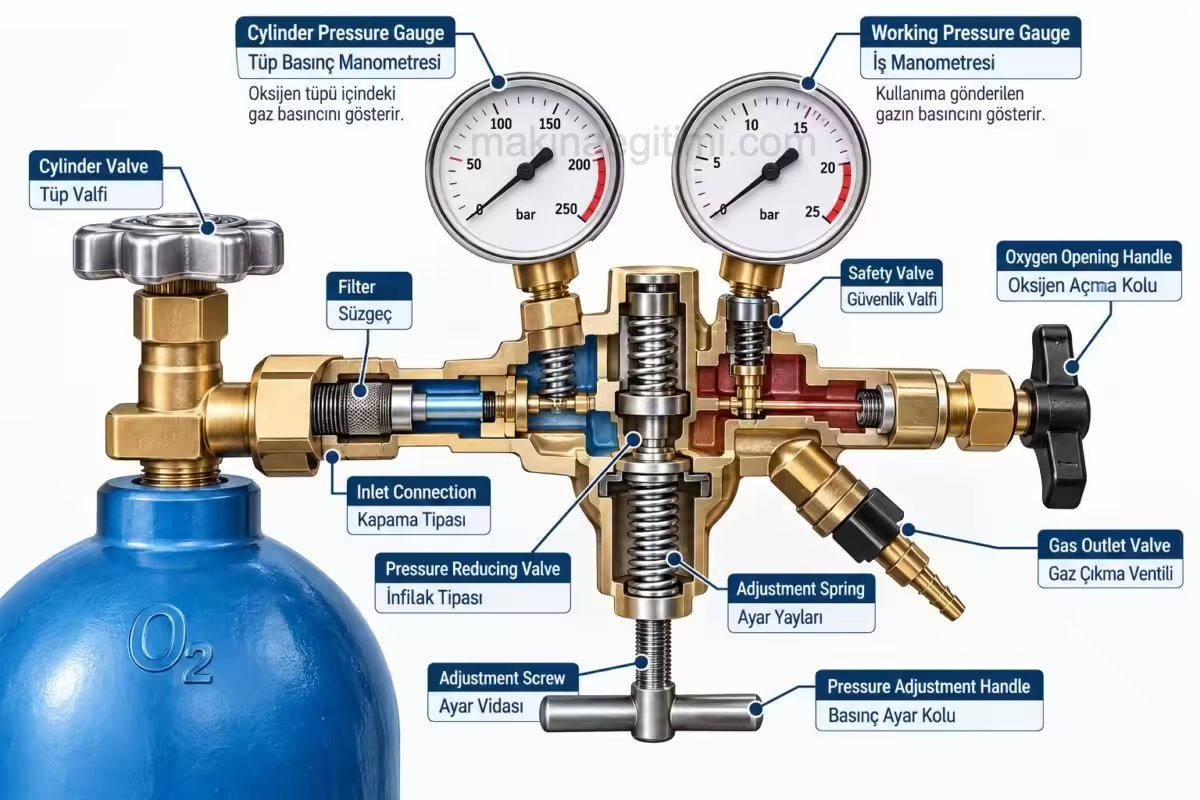
As for oxygen, this gas is obtained from liquid air or from the electrolysis of water. Oxygen cylinders can withstand a far higher pressure than acetylene ones, up to 150 atmospheres.
The Torch: Where the Gases Meet
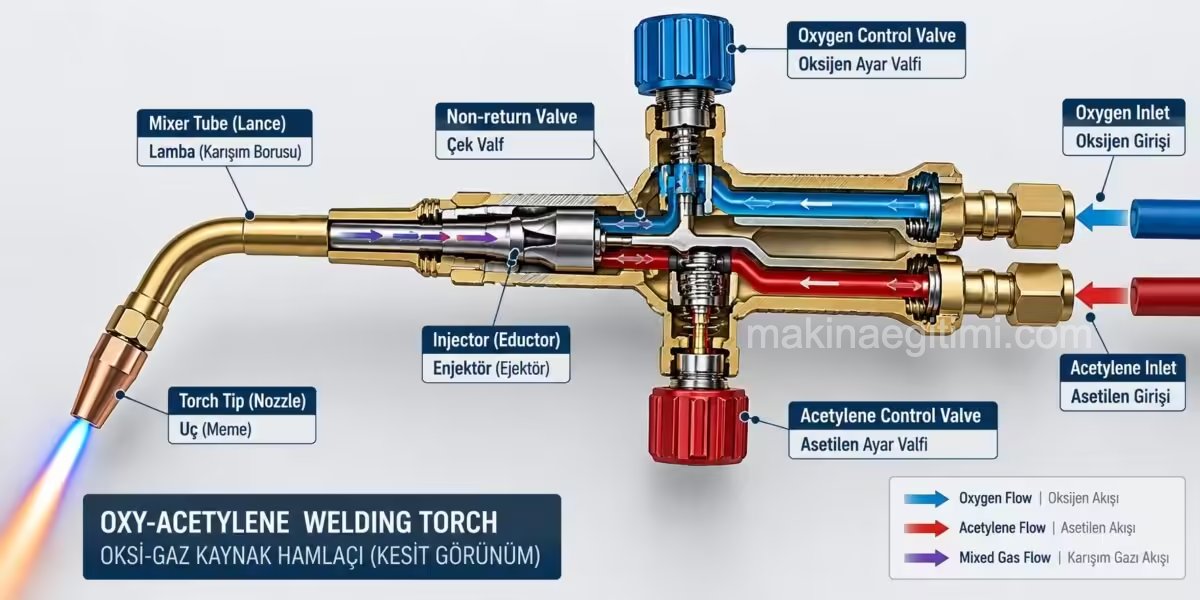
The part that mixes the two gases in the required proportion and burns them is called the torch. Oxygen and acetylene reach the torch through special hoses and enter at their inlets. When the control valve is opened, the two gases mix at the torch tip, burn, and form a flame at a temperature of about 3100°C.
The character of the flame changes with the ratio in which oxygen and acetylene are mixed. By adjusting this ratio, the welder can obtain a flame suited to the type of work.
The gas hoses are also distinguished from each other by colour: the acetylene hose is red, and the oxygen hose is green or black. This distinction is standard, in order to prevent confusion.
Equipment Needed for Oxy-Acetylene Welding
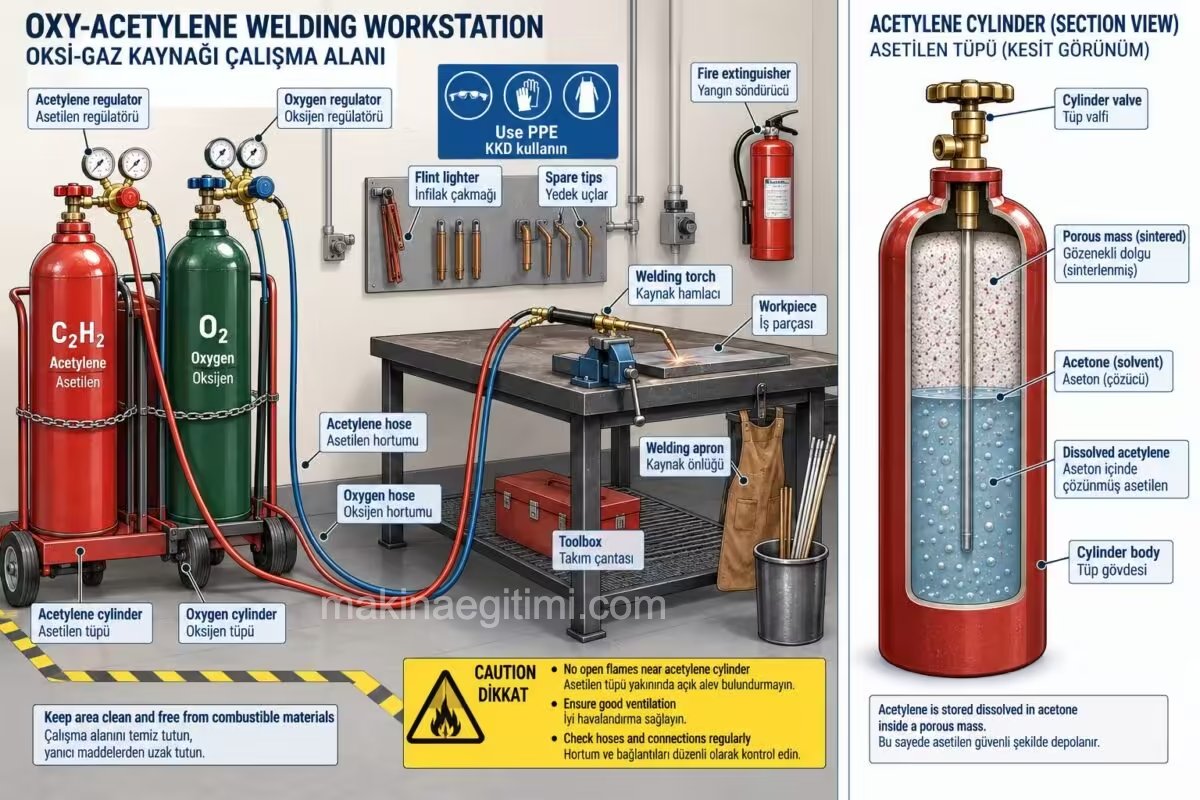
A few basic pieces of equipment are needed in order to carry out oxy-fuel gas welding:
The acetylene generator is the vessel in which carbide and water are brought together and acetylene gas is produced.
The oxygen cylinder is the vessel in which pure oxygen is stored, able to withstand pressures of up to 150 atmospheres.
The gas hoses consist of two separate hoses carrying oxygen and acetylene to the torch.
The torch is the main element in which the two gases are combined and burned, and from which the flame is directed at the weld point.
What Work Is Oxy-Acetylene Welding Used For?
This method is generally preferred for joining parts that are not exposed to heavy mechanical loads and are not excessively thick. Welding thin sheet parts with the help of a filler rod is a good example of work suited to this method.
The oxy-fuel flame can be used not only for joining but also for cutting. Thick plates can be cut with this method. When cutting, the flame is first set so that it melts the material. The oxygen pressure is then increased. The high pressure oxygen burns the carbon in the iron and so cuts the material.
Points to Watch When Using Acetylene
Acetylene gas carries its own particular risks, and knowing them matters for the welder’s safety.
The mixture acetylene forms with air is considered dangerous at proportions between 3 and 65 per cent. The dangerous mixture range for oxygen with air is between 3 and 97 per cent.
Acetylene heats up when compressed and can decompose into carbon and hydrogen. This decomposition has to be taken seriously, because it can lead to a spontaneous explosion.
Acetylene cannot be stored in vessels containing copper. Alloy vessels containing 65 per cent copper also fall within this scope, because acetylene reacts dangerously with copper.
Acetylene must not be heated above 100°C, otherwise it breaks down.
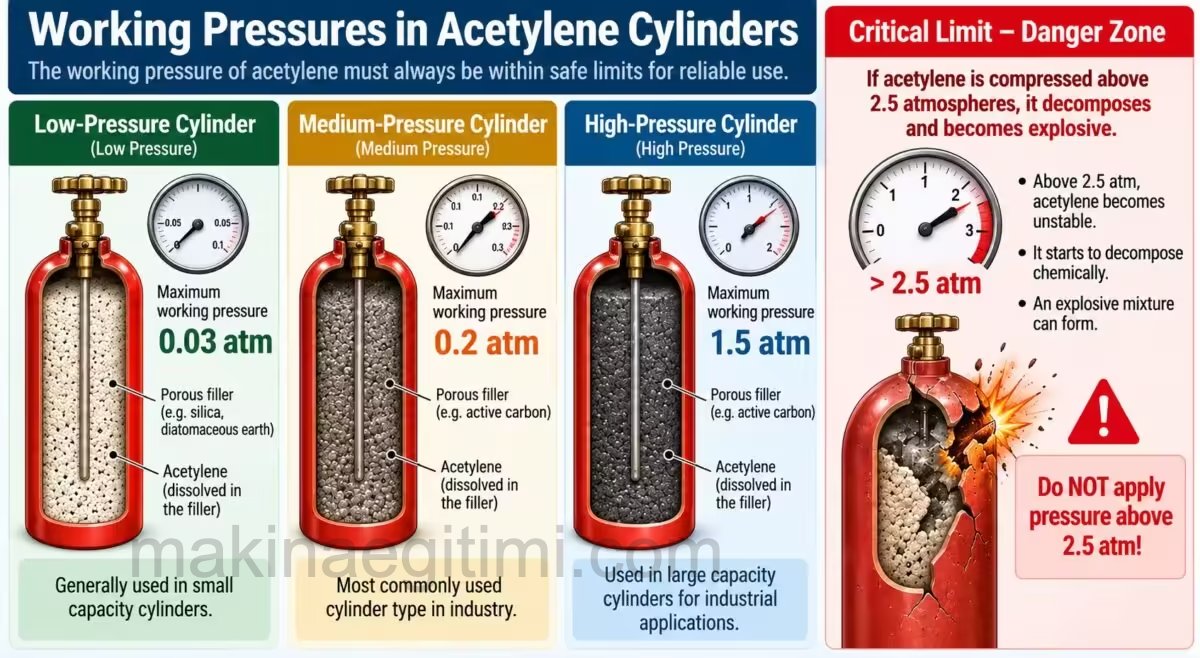
Pressure limits also vary with the type of generator. Low pressure generators can work up to 0.03 atmospheres, medium pressure generators up to 0.2 atmospheres, and high pressure generators up to 1.5 atmospheres. If acetylene is compressed beyond 2.5 atmospheres it decomposes and becomes explosive.
Safety Rules in Oxy-Acetylene Welding
The following points should be observed for a safe working environment:
The acetylene generator should be kept in a separate compartment, away from the other parts of the workshop.
There must always be a fire extinguisher in the workshop.
Cylinders should be kept clean and well protected.
There should be no cutting tools or burred material on the floor of the working area, because these can cut the hoses.
If there are flammable substances such as petrol or oil on the parts to be welded, they must be cleaned off before welding begins.
The oxy-fuel set-up should be checked continuously, and the acetylene pressure should be kept between 0.5 and 1.5 atmospheres.
A distance of at least 3 metres should be left between the torch and the acetylene generator.
Frequently Asked Questions
The most widely used fuel gas is acetylene. Oxygen is always used as the oxidising gas.
The flame formed at the torch tip can reach a temperature of about 3100°C.
Acetylene undergoes a dangerous chemical reaction with copper, or with alloys containing a high proportion of copper, so storing it in vessels of this kind is not safe.
It is generally preferred for welding parts that are not very thick and will not be exposed to heavy mechanical loads, thin sheet material in particular.
Yes. When the flame is set so that it melts the material and the oxygen pressure is then increased, thick plates can be cut with this method.
Related Posts
 Factors That Make Welding Stainless Steel Difficult
  Welding Electrode Types
  What Is Soldering? Soft Soldering and Brazing Methods
  Electrodes Used for Welding Stainless Steels
  Advantages and Disadvantages of Laser Welding
  General Information About TIG Welding
  What Is Submerged Arc Welding, How Is It Done
  Welding Methods – Techniques – Types