
“Tempo,” “harmony,” “syncopation”… Have you ever come across these words while reading a music magazine or chatting with a musician friend and thought to yourself, “I wish someone would just explain these simply”? Actually, these terms aren’t as intimidating as they seem — most of the time you already experience these concepts every day, without realizing it, in the songs you listen to. In this article, we explain eight fundamental music terms through songs we all know, with no technical knowledge required.
Tempo: The Pulse of a Song
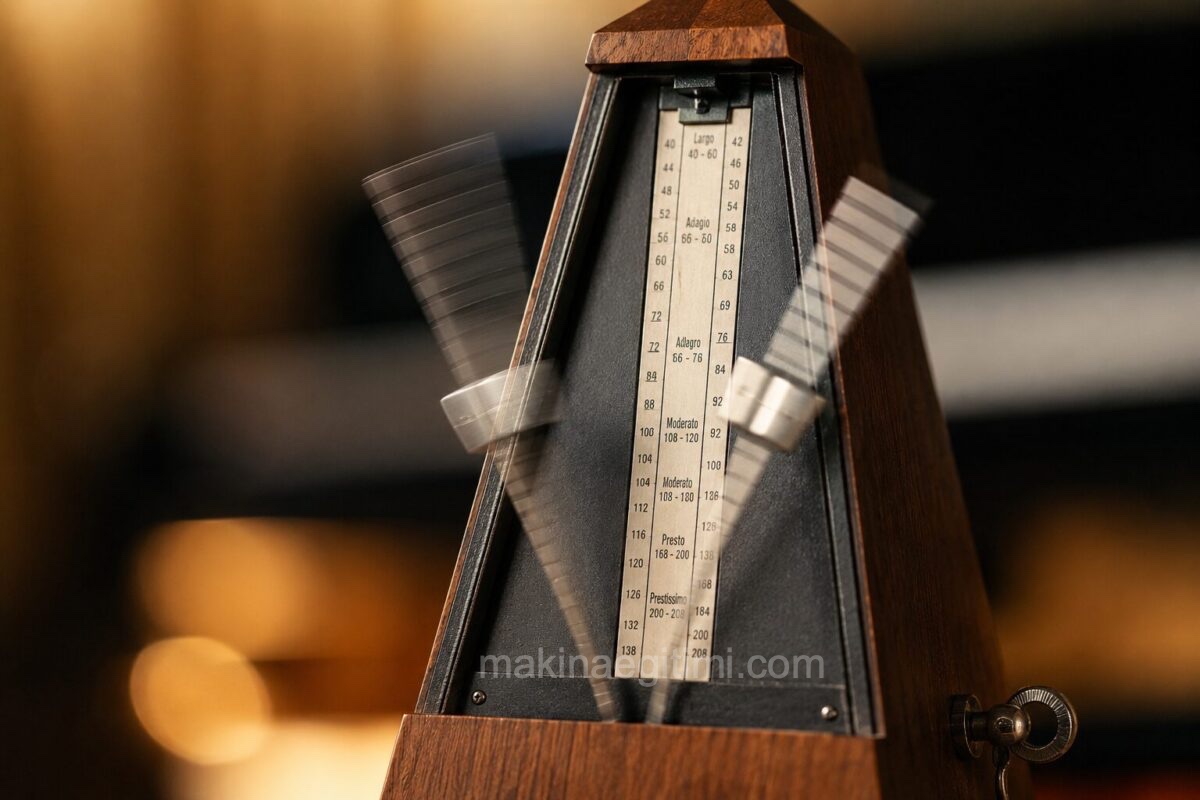
Tempo refers to how fast or slow a piece is played. Think of the moments when your heartbeat speeds up or slows down. Musicians usually measure this in “beats per minute” (BPM).
If you want to hear a tempo change in its most striking form, listen to Queen’s “Bohemian Rhapsody.”
The song opens with a slow ballad, shifts into an operatic section, then erupts into a fast rock finale before slowing down again at the end.
You experience four completely different tempo feels within a single song.
 Queen – Bohemian Rhapsody (Official Video Remastered)
A tempo change isn’t required, of course. Some pieces are just as striking by staying at one extreme tempo from start to finish. Rimsky-Korsakov’s “Flight of the Bumblebee” is known as one of the fastest-tempo pieces in classical music.
This dizzying speed, which mimics a bee’s frantic wingbeats, barely gives the listener room to breathe. It’s one of the clearest examples of tempo’s “speed” dimension.
 Flight of the Bumblebee – Rimsky-Korsakov (arr. Rachmaninoff)
Rhythm: The Skeleton of Music
Rhythm refers to how sounds repeat over time and which beats are emphasized. When you tap your foot to a song or drum your fingers on the table, you’re actually following the rhythm.
Queen’s “We Will Rock You” is one of the simplest and most powerful examples of this: that iconic “stomp-stomp-clap” rhythm is still repeated in stadiums around the world.
Without needing any complex instrument at all, this one simple rhythmic pattern can get millions of people moving.
 Queen – We Will Rock You (Official Video)
Melody: The Tune That Sticks in Your Head
Melody is the memorable line formed by a sequence of notes played one after another. The part of a song that keeps playing in your head after you’ve heard it is usually the melody.
Frank Sinatra’s “Fly Me to the Moon” is a classic example with a simple yet unforgettable melody.
It shows just how striking even the simplest melodic line can be. After hearing it a few times, you might catch yourself humming along.
 Frank Sinatra – Fly Me To The Moon (Audio) ft. Count Basie And His Orchestra
Harmony: The Blending of Sounds
Harmony refers to the harmonious (or deliberately dissonant) texture created when multiple notes or voices sound at the same time. When a choir sings and different voices come together to form a single richness, that’s exactly what harmony is about.
The Beach Boys’ “Good Vibrations” is famous for its richly layered vocal harmonies.
The band members sing at different pitch intervals simultaneously, creating a wall of voices that plays almost like a single instrument.
 The Beach Boys – Good Vibrations (Official Music Video)
Chord: Notes Sounded Together

A chord is a group of sounds formed when three or more notes are played at the same time. You could call it the basic building block of harmony. When a guitarist presses down on the strings with several fingers at once, the rich sound that results is a chord.
The single chord that opens The Beatles’ “A Hard Day’s Night” is one of the most debated sounds in music history.
For years, musicians and musicologists argued over exactly which notes made up that chord.
Eventually, an academic solved the mystery by mathematically analyzing the notes. It’s a great example of how even a simple chord can become legendary.
Related Videos


Timbre: The Fingerprint of Sound
Timbre is the concept that explains why two different instruments playing the exact same note (say, a violin and a flute) sound different from each other. Every instrument, even every human voice, has its own distinctive “color” or “character.” That’s what timbre means.
Prokofiev’s Peter and the Wolf is a classic composed specifically to teach this: each character (the bird, the duck, the cat, the wolf, the grandfather) is represented by a different instrument.
The flute plays the bird, the oboe the duck, and the clarinet the cat. As you listen, you can easily tell which instrument represents which character.
 Peter and the Wolf by Sergei Prokofiev – Academy of London Orchestra – Narrated by John Gielgud
Dynamics: The Rise and Fall of Sound
Dynamics refers to how loud or soft a piece is played. Think of that emotional journey from a whisper to a scream. In music, the terms “piano” (soft) and “forte” (loud) describe exactly this.
Ravel’s Bolero is one of the most striking uses of dynamics in music. The piece begins at a volume barely audible, and over fifteen minutes, repeating the same melody, it builds gradually like a gathering storm into a magnificent orchestral climax.
 Ravel: Boléro (Full Performance) | Rotterdam Philharmonic Orchestra | Han-Na Chang
Syncopation and Meter: Unexpected Accents
Syncopation is a rhythmic effect that sounds “surprising” to the ear, created when a beat that’s normally unaccented is unexpectedly emphasized. Meter, on the other hand, refers to how many beats a piece repeats in groups of. Most pop songs move in groups of 4 beats, but some pieces break that pattern.
The Dave Brubeck Quartet’s “Take Five” is written in an unusual 5-beat meter (5/4). The first time you hear it, you might feel something is slightly off. That feeling is your brain noticing the departure from the 4-beat pattern it’s used to.
 Dave Brubeck, The Dave Brubeck Quartet – Take Five (Audio)
Why Is It Useful to Know These Terms?
If you’ve also listened to the examples given above, you’ll now recognize these terms not just by their definitions, but with your own ears. The next time you’re listening to a song, you’ll be able to say, “Ah, that’s syncopation!” or “That harmony is beautiful!”
Knowing these concepts won’t make you a professional musician, but it will definitely enrich your listening experience. You’ll start noticing why a song feels so striking. Maybe that “goosebump moment” is actually a masterfully used dynamic swell. Or that “stumbling” rhythmic feel is actually a deliberate syncopation. Understanding music is also a way of feeling it more deeply.
Frequently Asked Questions
Tempo describes the speed of a piece (whether it’s played slow or fast), while rhythm describes how sounds are organized over time and which beats are emphasized.
Melody is a single sequence of notes played one after another (the horizontal dimension); harmony is the blend created by multiple notes played at the same time (the vertical dimension).
Syncopation is when a beat that would normally go unemphasized is unexpectedly accented; it sounds surprising and engaging because our brains notice this departure from the rhythmic pattern we’re used to.
No, you don’t need any knowledge of musical notation to understand the basic concepts covered in this article (like tempo, rhythm, melody, and harmony); careful listening is enough.
Timbre lets you distinguish between different instruments or voices playing the same note; this is what allows you to tell, just by ear, which instrument is playing in an orchestra.
Related Posts
 The Birth and Golden Age of Jazz: From New Orleans to the World
 The History of the Piano: A 300-Year-Old Sound Born from a Hammer
 The Birth and Golden Age of Rock ‘n’ Roll: From Memphis to the World
 The Most Famous Film Scores and Their Composers: Themes That Shaped Cinema History
 Beethoven’s Battle With Deafness: An Incredible Story of Perseverance
 The Life Story of Elvis Presley: The Journey of the King of Rock’n Roll
 What Is Classical Music? Periods, Great Composers and History
 The History of the Guitar: The Journey from Its Origins to the Electric Guitar