

In the field of materials science, the subject of this article will be material types and their properties. Below, you can review the types of steel used in hot and cold working, and in both machining and non-machining manufacturing, along with their properties and areas of use.
Material Types
Unalloyed Forged or Rolled Steel, Machine Construction Steel
DIN NO: 1611 / Grade Symbol: St 37.11
Tensile strength is 37-45 kg/mm². Elongation at break is 20%.
Characteristics: Thomas or Siemens-Martin steel; cannot be welded well or safely.
Where is it used? In steel structures, in unmachined parts, and in cold blacksmithing (as profile stock)
DIN NO: 1611 / Grade Symbol: St 34.11
Tensile strength is 34-42 kg/mm². Elongation at break is 25%. Carbon content is 0.12%.
Characteristics: Can be case-hardened. Forge welding can be performed.
Where is it used? Used in bolts, shrink-fit collars, bushings and sleeves, and all kinds of drive arms and levers.
DIN NO: 1611 / Grade Symbol: St 42.11
Tensile strength is 42-50 kg/mm². Elongation at break is 20%. Carbon content is 0.25%.
Characteristics: Suitable for case hardening. Forge welding is difficult.
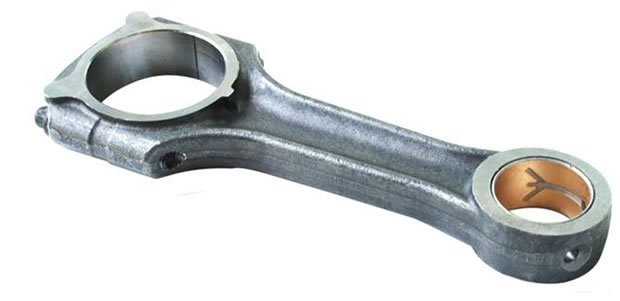
Where is it used? Used in connecting rods, shafts, crank arms, axles, and press punches.
DIN NO: 1611 / Grade Symbol: St 50.11
Tensile strength is 50-60 kg/mm². Elongation at break is 18%. Carbon content is 0.35%.
Characteristics: Almost cannot be forge-welded. Only slightly hardened.
Where is it used? Used in high-stress applications, as with St 42.11.
DIN NO: 1611 / Grade Symbol: St 60.11
Tensile strength is 60-70 kg/mm². Elongation at break is 14%. Carbon content is 0.45%.
Characteristics: Can be quenched and tempered, can be hardened
Where is it used? Used in high-stress applications, keys, dowel pins, gears, worm gear assemblies, and press punches.
DIN NO: 1611 / Grade Symbol: St 70.11
Tensile strength is 70-85 kg/mm². Elongation at break is 10%. Carbon content is 0.60%.
Characteristics: Can be quenched and tempered, can be hardened.
Where is it used? Used in punches and dies, control components, hard rollers, and male and female press dies and stamps.
Structural Steel, Steel Rolled into Bar and Flat Stock
DIN NO: 1612 / Grade Symbol: St 00.12
Tensile strength cannot be guaranteed.
Characteristics: Commercial-grade steel
Areas where rolled steel is used: Used in shaped steel, bar steel, and flat stock.
DIN NO: 1612 / Grade Symbol: St 37.12
Tensile strength is 37-45 kg/mm². Elongation at break is 20%.
Characteristics: Standard steel
Areas of use: Used in shaped steel, bar steel, and flat stock.
DIN NO: 1612 / Grade Symbol: St 42.12
Tensile strength is 42-50 kg/mm².
Characteristics: Special-grade steel
Areas of use: Used in shaped steel, bar steel, and flat stock.
Bolt and Rivet Steel
DIN NO: 1613 / Grade Symbol: St 38.13
Tensile strength is 38-45 kg/mm². Elongation at break is 20%.
Characteristics: Proven, similar to St 37.12.
Where is it used? In bolts
DIN NO: 1613 / Grade Symbol: St 34.13
Tensile strength is 34-42 kg/mm². Elongation at break is 25%.
Characteristics: Its test specimen shows no cracking when bent 180°.
Where is it used? Used in rivets and soft bolts.

Boiler Plate
Characteristics: Heavy-gauge plate
Where is it used? In boilers and tanks with wall thicknesses greater than 4.75 mm.
DIN NO: 1621 / Grade Symbol: St 37.21
Tensile strength is 37-45 kg/mm². Elongation at break is 20%.
DIN NO: 1621 / Grade Symbol: St 42.21
Tensile strength is 42-50 kg/mm². Elongation at break is 20%.

Black Sheet
DIN NO: 1623 / Grade Symbol: St 1.23
Characteristics: Thin sheet
Where is it used? In black sheet components with a thickness of less than 3 mm
Steel Pipes
DIN NO: 1629 / Grade Symbol: St 55.29
Tensile strength is 55-65 kg/mm². Elongation at break is 17%.
Where is it used? In transmission pipelines above 25 atm pressure and in high-stress steel structures
Unalloyed Case-Hardening Steel
DIN NO: 1666 / Grade Symbol: C 15
Tensile strength is 50-65 kg/mm². Elongation at break is 14%. Carbon content is 0.11-0.18%.
Characteristics: Low carbon, quenches well, easily machinable.
Where is it used? In components with a soft core and case-hardened outer surface, steel stamps, chisels, studs, bolts, and wheels.
Alloyed Case-Hardening Steel
DIN NO: 1666 / Grade Symbol: 15 Cr3
Tensile strength is 60-85 kg/mm². Elongation at break is 12%. Carbon content is 0.12-0.18%.
Characteristics: Can be water-hardened. Can achieve a glass-hard outer surface.
Where is it used? In medium- and high-stress components.
Chromium Case-Hardening Steel
Characteristics: Can be oil-hardened.
Where is it used? In leaf spring pins, gears and clutch wheels, camshafts and crankshafts, and control components
DIN NO: 1666 / Grade Symbol: 16 Mn Cr5
Tensile strength is 80-110 kg/mm². Elongation at break is 10%. Carbon content is 0.14-0.19%.
DIN NO: 1666 / Grade Symbol: 20 Mn Cr5
Tensile strength is 100-130 kg/mm². Elongation at break is 8%. Carbon content is 0.17-0.22%.
DIN NO: 1666 / Grade Symbol: 22 Mn Cr6
Tensile strength is 115-150 kg/mm². Elongation at break is 6%. Carbon content is 0.20-0.25%.
Unalloyed Steels
Characteristics of unalloyed steel: Hardened by high-temperature annealing, and quenched and tempered.
Where is it used? In high-stress components up to 40 mm thick, requiring high strength and normal-condition softness
DIN NO: 1667 / Grade Symbol: C22
Tensile strength is 55-65 kg/mm². Elongation at break is 18%. Carbon content is 0.19-0.25%.
DIN NO: 1667 / Grade Symbol: C45
Tensile strength is 65-80 kg/mm². Elongation at break is 14%. Carbon content is 0.42-0.50%.
Alloyed Quenched and Tempered Steel
Characteristics of alloyed quenched and tempered steel: After heating to 810°C, it is briefly quenched in water or oil, then removed. It is then tempered at 530°-570°C and air-cooled.
Where is it used? In high-stress vehicle and aircraft components and high-quality hand tools
DIN NO: 1667 / Grade Symbol: 32 Mn 5
Tensile strength is 65-80 kg/mm². Elongation at break is 14%. Carbon content is 0.28-0.36%.
DIN NO: 1667 / Grade Symbol: 32 Mn 5
Tensile strength is 100-120 kg/mm². Elongation at break is 10%. Carbon content is 0.47-0.55%.
Chrome-Nickel Quenched and Tempered Steel
DIN NO: 1662 / Grade Symbol: VCN 25h
Tensile strength is 80-95 kg/mm². Elongation at break is 16-10%. Carbon content is 0.32-0.40%.
Properties: Heated to a red heat. Hardened and tempered.
Areas of use: As high- and very-high-stress quenched and tempered steel, used in crankshafts, steering shafts, and vehicle axles.

Chrome-Molybdenum Quenched and Tempered Steel
DIN NO: 1663 / Grade Symbol: VCMo 125
Tensile strength is 65-80 kg/mm². Elongation at break is 23-17%. Carbon content is 0.22-0.29%.
Properties: Hardened in water and oil.
Areas of use: Used in very-high-stress components.
Chrome-Vanadium Quenched and Tempered Steel
DIN NO: 1663 / Grade Symbol: VCMo 240
Tensile strength is 110-130 kg/mm². Elongation at break is 13-8%. Carbon content is 0.38-0.45%
Properties: Heated to 820°C-850°C. Rapidly quenched in oil. Normalizing anneal performed at 550°C-650°C and cooled in the annealing furnace
Areas of use: In very-high-stress components
Cast Steel
DIN NO: 1681 / Grade Symbol: Stg 38-81
Tensile strength is 38 kg/mm². Elongation at break is 20%.
Properties: Soft and suitable for forging
Areas of use: In manufacturing thin-walled, low-stress components
DIN NO: 1681 / Grade Symbol: Stg 60-81
Tensile strength is 60 kg/mm². Elongation at break is 8%.
Properties: Less soft but correspondingly very durable
Areas of use: In manufacturing high-stress cast components subject to friction, gear wheels, piston heads.

DIN NO: 1681 / Grade Symbol: Stg 45-81 S
Tensile strength is 45 kg/mm². Elongation at break is 22%.
Properties: Special cast steel
Areas of use: In shipbuilding
Pig Iron (Cast Iron)
Properties: Machine component castings. Machines well.
Areas of use: In manufacturing cylinders, steam fittings, machine tools, piston rings, and pistons
DIN NO: 1691 / Grade Symbol: Ge 14.91
Tensile strength is 14 kg/mm²
DIN NO: 1691 / Grade Symbol: Ge 22.91
Tensile strength is 22 kg/mm²

Grey Malleable Cast Iron
DIN NO: 1692 / Grade Symbol: Te G 92
Tensile strength is 32-36 kg/mm². Elongation at break is 3%.
Characteristics: Forgeable.
Areas of use: In manufacturing components subject to partial impact loading, wrenches, and agricultural machine components.
Related Posts
 Plastics Used in Packaging
 Welding of Stainless Steels
 Properties and Advantages of Alloy Wheels
 Types of Plastics and Classification of Plastics
 Steels by MKE Number and Their Applications
 The Effect of Alloying Elements in Cast Iron
 High-Speed Steels. What Is HSS. Properties of HSS Steel
 Differences Between Cast Iron and Steel