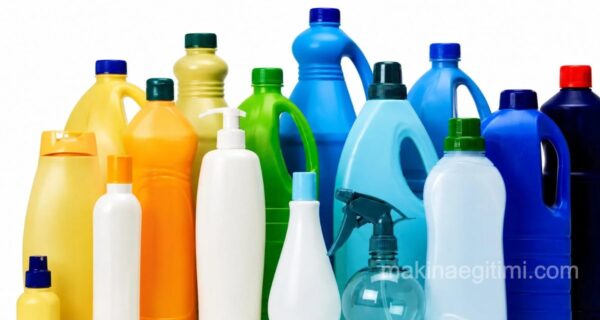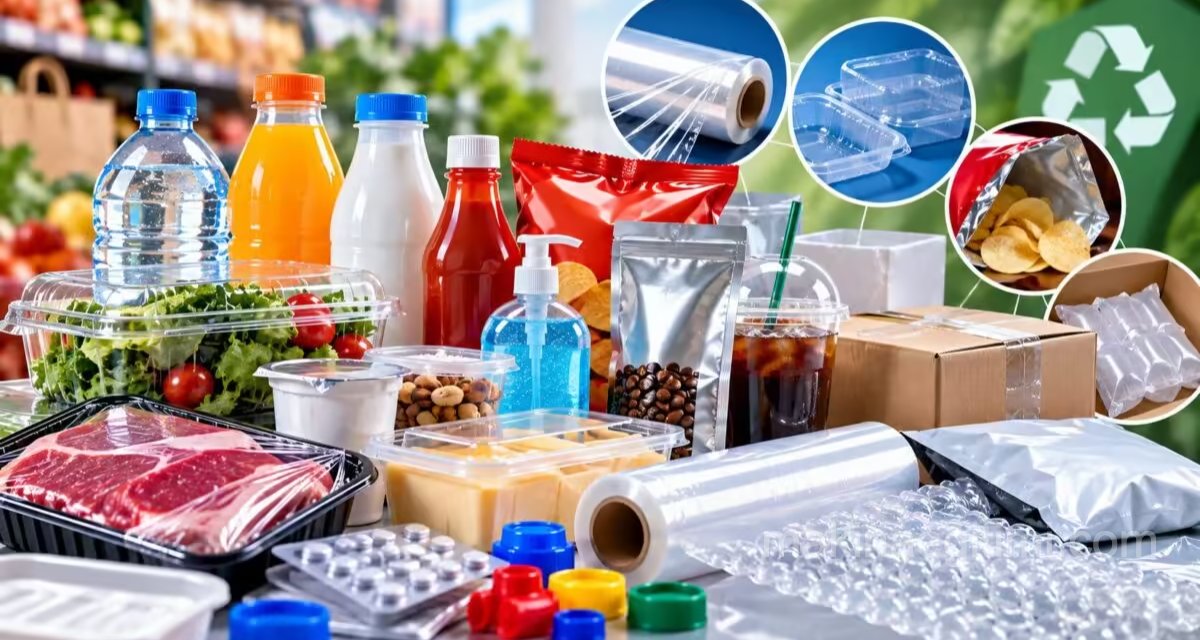
If the plastics used in the packaging industry are chosen correctly, a result suited to the purpose is achieved. Above all, plastic is lightweight, non-toxic, odorless and tasteless, and generally transparent. It also has a certain resistance to chemical substances.
In the packaging industry, it’s used most often as tape, containers, wraps (sleeves), varnish, and paint.
Types of Plastics Used in Packaging
ADHESIVE TAPE: Made by casting a cellulose melt. It’s fully transparent and one of the most widely used materials.
POLYETHYLENE TAPE: Made from polyethylene, not fully transparent (milky white), and resistant to temperatures between -6°C and -80°C.

RIGID POLYVINYL CHLORIDE TAPE: Used in places where high mechanical properties are needed. This type of tape can also be welded.

POLYVINYLIDENE CHLORIDE FILM (THIN SHEET): This material’s most distinctive property is that it shrinks, that is, contracts, in boiling water. Because of this property, it’s widely used for packaging meat, poultry, and similar foodstuffs. After the item to be packaged is placed inside plastic formed into a bag shape, the air is removed from the bag and the opening is heat-sealed shut. If the bag, along with its contents, is dipped into boiling water, the plastic immediately shrinks, taking the shape of the material inside it and fully covering its top surface.

HYDROCHLORINATED RUBBER FILM, CELLULOSE ACETATE FILM, POLYAMIDE FILM, COMPOSITE FILMS (lined or laminated films)
The main components of composite films are: polyethylene-aluminum, fabric, soft PVC-film, etc. Plastic containers are generally made of phenoplast, aminoplast, polystyrene, cellulose acetate, or polyethylene. For bottles, polyethylene and PVC are used. The regular tetrahedron-shaped packaging pouches called “Tetra Pak” are made using paper tape impregnated with polyethylene.
In manufacturing these four-cornered, four-sided packages, the longitudinal seam of the material, which is slowly formed into a tube shape moving from top to bottom, is welded first.
Then the liquid to be packaged (for example, fruit juice) is poured through a nozzle inserted into the tube, and cross-moving welding electrodes then form the edges of the regular tetrahedron.
This packaging method was first used in Sweden on large dairy farms for packaging milk and cream. Today, it’s also used in our country for packaging fruit juice.
Plastics sold under the name QUICK PACKAGING MATERIAL are poured in molten form onto goods and used to protect them from the effects of outside air. Ethyl cellulose, used for this purpose, is mixed with oil, a softening agent, resin, or wax. Large-volume goods are first wrapped in a net (mesh) (the net size is around 30 x 30 cm).
After this, liquid polymerizate is sprayed onto the net. During spraying, this material forms long threads that fully cover the net. To increase durability, a layer of aluminum is usually also sprayed on. This method is used both to protect goods from outdoor conditions, and especially for coating machine parts for long-term protection.
Related Posts